

Archaeologists excavating the ancient settlement of Odirmon in southern Uzbekistan have uncovered a ritual altar marked by repeated exposure to fire alongside an unusual decorated ossuary used to hold human remains. The discoveries provide new evidence for the religious and funerary traditions of a settlement that flourished between roughly the 3rd century BCE and the 3rd century CE.
The finds were made at Odirmon in the Qamashi district of Uzbekistan’s Qashqadaryo region, where archaeological excavations are being carried out this year under Sanjar Abdurakhimov of the Samarkand Archaeological Institute. According to Uzbekistan’s Cultural Heritage Agency, this is the first excavation campaign of its kind conducted at the site.
A ritual space used again and again
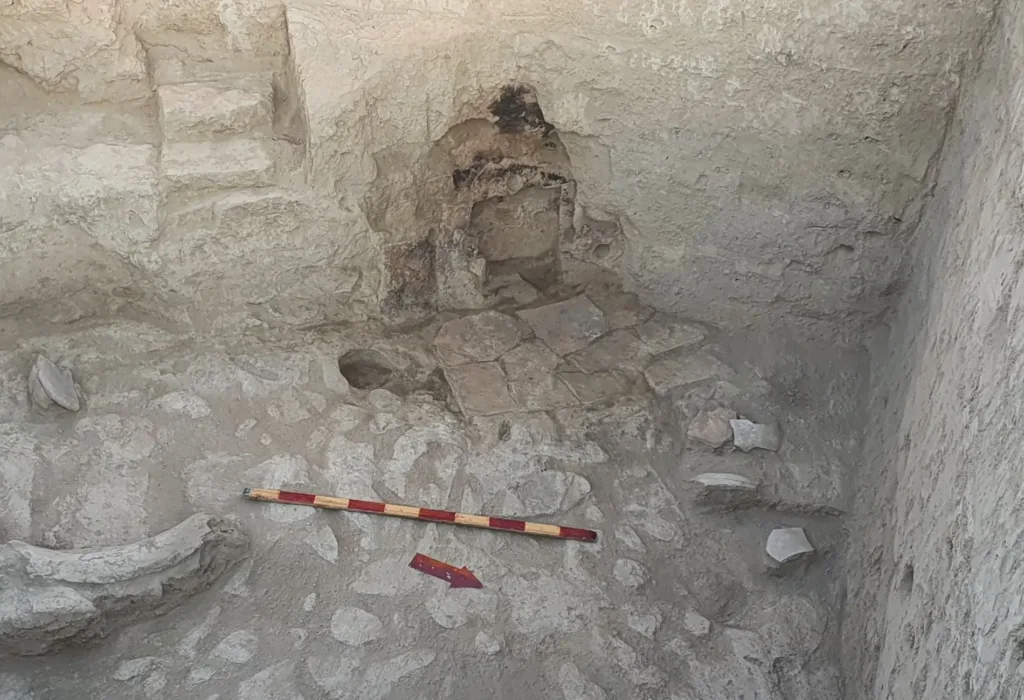
The altar was uncovered in the northeastern part of the settlement. Measuring about 70 centimeters high and 90 centimeters wide, the structure preserves clear traces of burning, indicating that fire played a recurring role in the ceremonies performed there.
Its floor was carefully paved with fired rectangular bricks measuring approximately 18 by 28 centimeters and only 2.5 centimeters thick. Around the altar, archaeologists found a substantial layer of clay plaster between 2.5 and 3 centimeters thick.
More revealing than the construction itself are the repeated layers of renewed plaster. Rather than representing a structure used briefly and then abandoned, the repairs suggest that the altar remained important for an extended period, with its ritual space repeatedly maintained and resurfaced.
The fire traces are particularly intriguing in the wider archaeological setting of southern Sogdiana. Ritual architecture involving fire is known elsewhere in the Qashqadaryo region, including at the major ancient center of Yerkurgan, where excavations identified a temple containing a fire altar. The Odirmon structure, however, has not yet been formally identified with a specific religion, and the evidence should not be pushed beyond what the excavation has established.
A decorated container for the dead
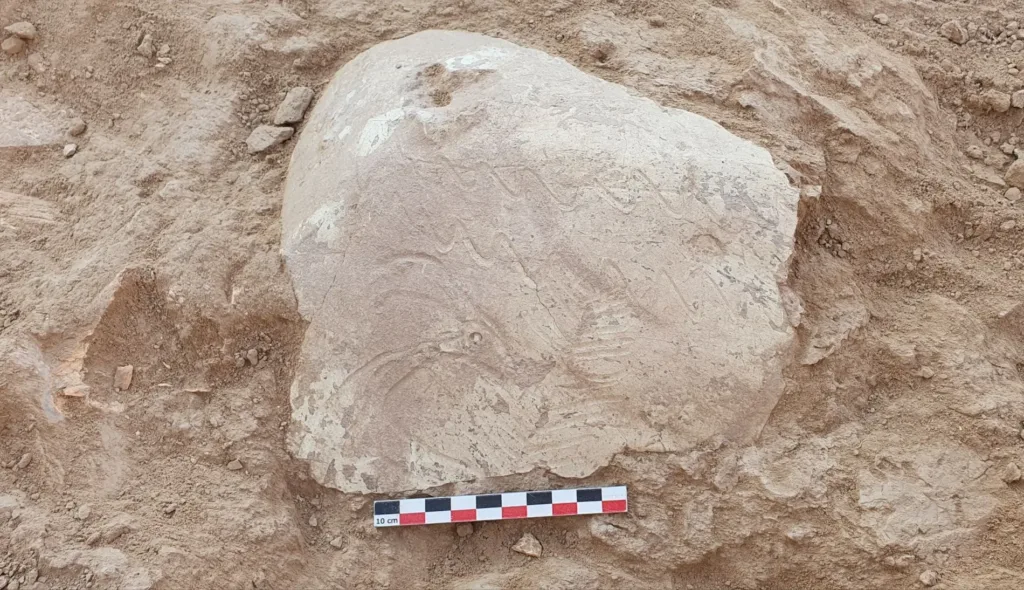
The second discovery may prove even more unusual. Archaeologists recovered an ossuary, a container designed to hold the bones of the deceased after the body had undergone an earlier stage of funerary treatment.
Its exterior carries decorative images that researchers currently describe as resembling a deer and an archa tree, the Central Asian juniper. The object is still undergoing restoration, and specialists expect that cleaning and conservation will reveal the designs in greater detail.
That caution is important because imagery on Central Asian ossuaries was rarely purely decorative. In Sogdiana, surviving examples frequently carry religious scenes, priests, animals, plants, and symbols connected with death and beliefs about the afterlife. Ossuary burial was widespread across Sogdiana and neighboring regions and is often associated with local forms of Zoroastrian or Mazdean funerary practice.
The precise meaning of the deer and tree-like motif at Odirmon remains unknown. Until the object has been fully restored and securely dated within its archaeological context, linking the imagery to a particular deity or belief system would be premature.
Odirmon was far more than a small settlement
Earlier fieldwork suggests that the significance of Odirmon extends well beyond the newly excavated ritual area. A study by Abdurakhimov based on field surveys conducted in 2023 describes Odirmontepa, also known locally as Odirmon Shahar, as an ancient urban settlement covering almost 35 hectares in the southern Sogdian region.
Researchers identified surviving defensive walls and concluded that the settlement had been divided into four quarters, with roads separating different parts of the town. The citadel was rectangular and itself enclosed by defensive walls.
More than 50 fragments of ancient pottery were collected during that earlier survey, including parts of large storage vessels, jars, smaller containers and drinking vessels. Comparisons with ceramics from major regional centers such as Afrasiab and Yerkurgan placed much of this material between the 3rd century BCE and the 2nd century CE. The Cultural Heritage Agency’s current preliminary chronology extends occupation at Odirmon into the 3rd century CE.
A rare glimpse into belief at ancient Odirmon
The newly discovered altar and ossuary therefore add a different dimension to a site previously known largely through its urban layout and ceramics. Instead of showing only how people lived, built and stored goods, the finds begin to reveal how the inhabitants of Odirmon approached ritual, death and remembrance.
The connection between the altar and the ossuary is not yet clear, and archaeologists have not stated that they belonged to the same ritual system. But their discovery during the first major excavation campaign at a large ancient settlement in southern Sogdiana makes Odirmon a site worth watching closely.
Further excavation, together with the restoration of the decorated ossuary, may determine whether the deer and juniper-like imagery belonged to a broader regional religious tradition or represented something more specific to the community that once lived at Odirmon.
