
Around 850 years ago, settlers arriving in the Jerusalem region appear to have brought more than their language, customs and religious traditions. They also carried with them something far more domestic: the way they heated their homes.
A new study published in the Israel Antiquities Authority’s scientific journal ‘Atiqot examines a rare group of 12th-century fireplaces discovered in two Crusader-period villages north of Jerusalem. The installations, built directly into house walls and originally connected to chimneys that carried smoke outside, were unlike anything previously known in the local domestic architecture of the period.
Researchers Michael Chernin, Zubair Adawi and Yehiel Zelinger argue that these fireplaces were introduced by Frankish settlers from Western Europe, particularly eastern and southern France. In other words, the fireplaces may preserve evidence not simply of how people kept warm, but of where some of Jerusalem’s medieval settlers had come from.
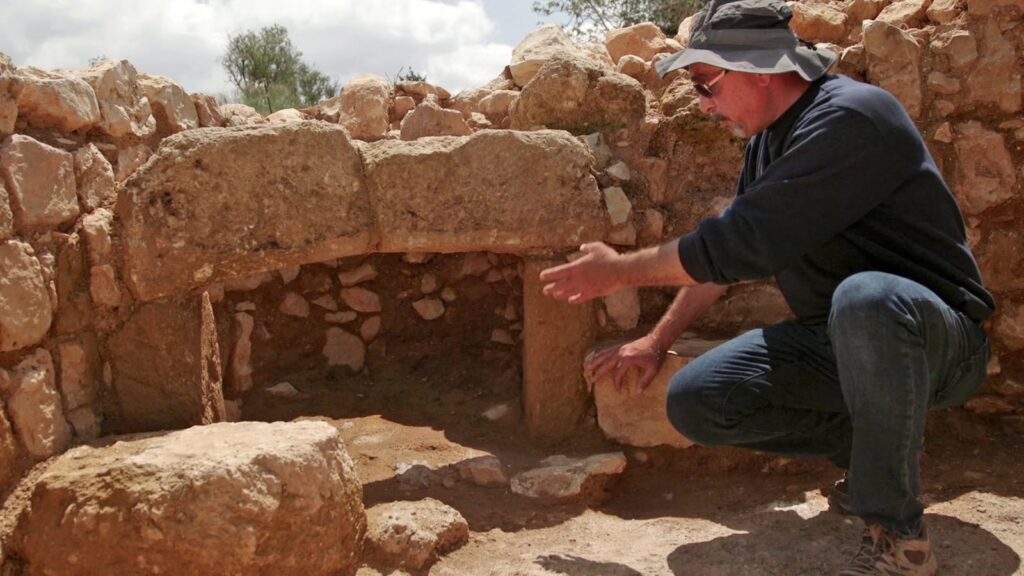
Soot still marks where fires once burned
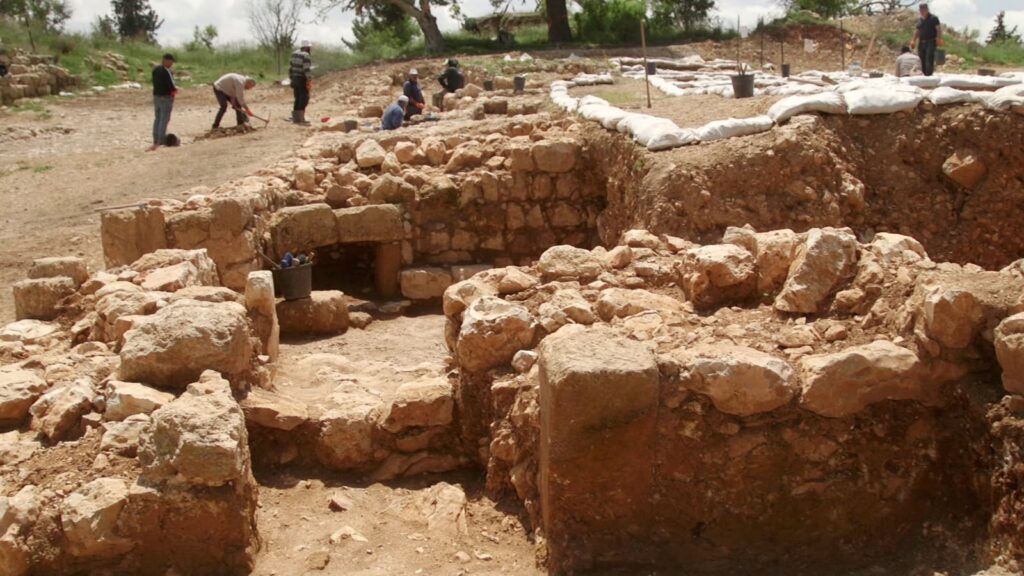
The strongest evidence comes from Khirbat el-Kurum, in Jerusalem’s modern Ramot neighborhood, and Wadi el-Ḥaramiya farther north. Both were planned “street villages,” with houses arranged along a central road in a settlement pattern already familiar in medieval Western Europe.
At Khirbat el-Kurum, archaeologists have identified fireplaces in roughly nine or ten of about 25 houses. Wadi el-Ḥaramiya produced another example, making the two settlements the only sites in the Kingdom of Jerusalem where such installations have so far been securely identified.
Some are little more than semicircular niches today, but others preserve unusually revealing details. Archaeologists found stone floors blackened by fire, ash and soot, while one installation retained its complete stone lintel. The surviving evidence allowed the researchers to distinguish them from simple open hearths: these were purpose-built fireplaces designed to direct smoke upward and out of the house.
Coins also help narrow their age. Evidence from the settlements, including coins connected with the reign of King Amalric I, led the researchers to date the fireplaces to approximately 1163–1187, the final decades of the First Kingdom of Jerusalem.
A piece of France beside Jerusalem
The fireplace design itself provides another clue. Early medieval chimneys were uncommon even in Europe, with some of the earliest archaeological examples appearing in France. By the 12th century, wall-integrated fireplaces were found particularly in Burgundy and parts of southern France.
The Jerusalem examples closely resemble these French traditions. Historical records strengthen the connection: documents concerning Frankish settlements around Jerusalem record migrants from Burgundy, Provence, Gascony and other regions of what is now France. The study therefore proposes that settlers familiar with fireplaces at home reproduced the same architectural feature after arriving in the eastern Mediterranean.
One specific form may reveal an even narrower connection. Corner fireplaces found at Khirbat el-Kurum resemble examples associated with southwestern France, leading the researchers to suggest that this particular design may have arrived with migrants from that region.
An unexpected luxury in a rural village
Perhaps the most surprising aspect of the discovery is not that the fireplaces existed, but where they were found.
In Western Europe, built fireplaces of this period were generally associated with castles, monasteries and higher-status urban residences rather than ordinary rural villages. Yet around Jerusalem they were incorporated directly into village homes.
The researchers suggest this could indicate that at least some Frankish settlers living in these rural communities enjoyed a relatively high socioeconomic status. Some may even have come from urban backgrounds rather than from the European peasantry, bringing domestic expectations with them when they settled in the Kingdom of Jerusalem.
Not every house had one. At Khirbat el-Kurum, fireplaces occur in about 35–40 percent of known residences, while at Wadi el-Ḥaramiya one was identified among four excavated houses. Their limited distribution may therefore reflect differences in wealth, background, or regional origin among the settlers.
A technology that vanished again
The architectural tradition did not last.
According to the study, these Western-style chimneys were unknown in the Holy Land before the Crusader period. After the end of Crusader rule, they disappeared from the region’s architectural record and only returned centuries later under Ottoman influence. The first written evidence for Ottoman chimney construction cited by the researchers dates to 1559, when chimney-equipped ovens were installed in Jerusalem’s Haseki Sultan Imaret.
Today, only around ten domestic fireplaces belonging to this unusual Crusader-era group are known from the two settlements.
Their survival offers an unusually intimate glimpse into migration during the Crusades. Instead of weapons, fortifications or monumental churches, the evidence comes from the corner of a house—where someone accustomed to a colder European home once lit a fire and recreated a small piece of the world they had left behind.
Chernin, M., Adawi, Z., & Zelinger, Y. (2026). Chimneys in twelfth-century, Crusader-period residential architecture in the Jerusalem area. ‘Atiqot, 121, 1–38. Israel Antiquities Authority.
