
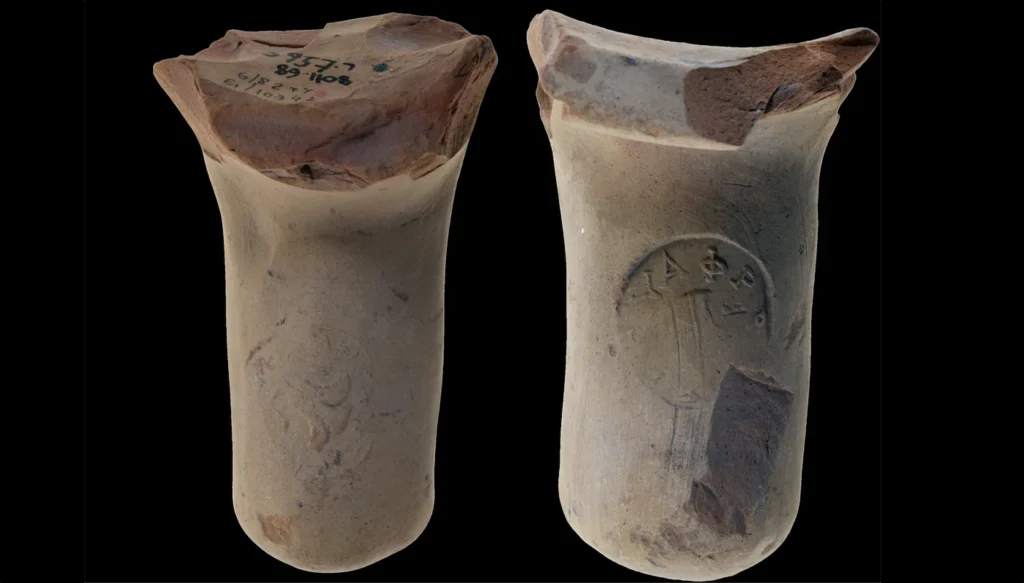
A handful of broken wine jar handles from Hellenistic Jerusalem has given scientists an unusually precise record of Earth’s magnetic field, while also adding new evidence to one of the city’s most debated archaeological questions: the location and date of the Seleucid Akra fortress.
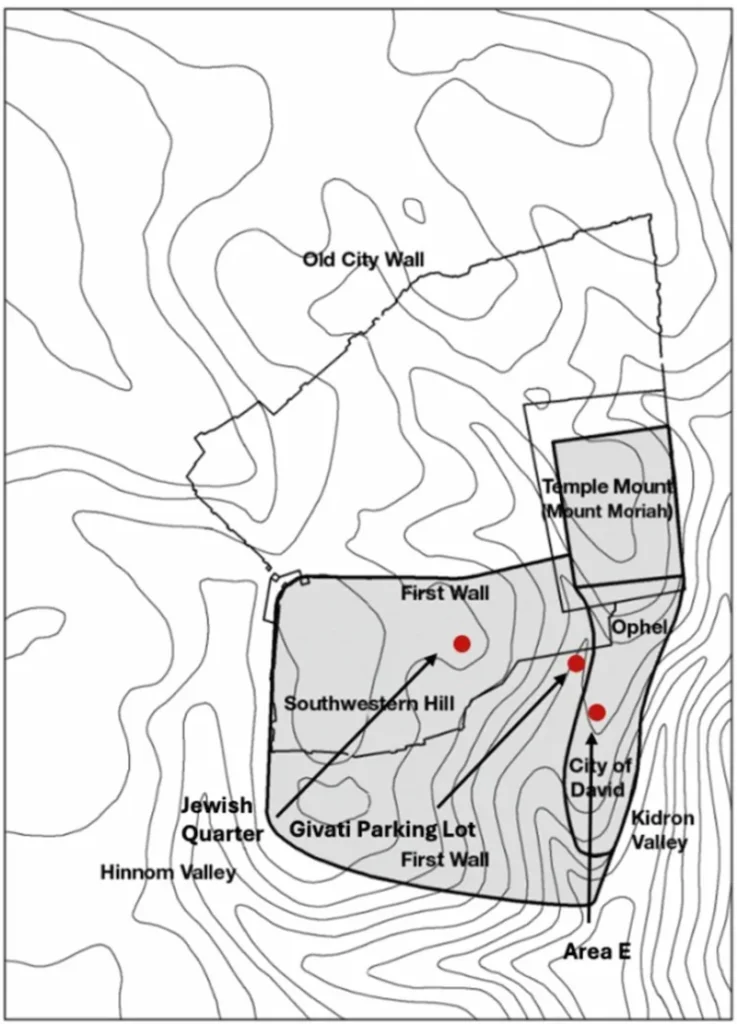
In a new study published in Archaeometry, researchers from Tel Aviv University, Ariel University, the University of California San Diego, and the Israel Antiquities Authority analysed stamped Rhodian amphora handles and locally made storage jars from Jerusalem. The ceramic fragments, recovered from the City of David, the Jewish Quarter, and the Givati Parking Lot excavations, date mainly between the third and first centuries BCE.
The results show that Earth’s magnetic field in the eastern Mediterranean weakened sharply during the first half of the second century BCE. More than that, the study demonstrates how stamped wine jars from Rhodes can serve as a rare scientific clock for archaeologists working in Hellenistic sites.
Ancient pottery that recorded Earth’s magnetic field
When clay vessels are fired in a kiln, iron-bearing minerals inside the ceramic align with Earth’s magnetic field. Once the vessel cools, that magnetic signal remains locked into the clay.
Thousands of years later, researchers can take tiny chips from broken pottery, heat them under controlled laboratory conditions, and measure the ancient magnetic intensity preserved inside. This method, known as archaeointensity analysis, helps reconstruct how Earth’s magnetic field changed over time.
The challenge is dating. A magnetic measurement becomes much more valuable when the object’s production date is already known. That is why Rhodian amphora handles are so important.
Rhodian amphorae were widely used to transport wine across the Hellenistic Mediterranean. Many were stamped with the name of the fabricant and the name of an annually appointed official, or eponym. Because these officials served for one year, some stamped handles can be dated to a single year or a very narrow time range.
For archaeomagnetic research, that level of chronological control is exceptional.
A sharp magnetic decline in the second century BCE
The team examined 17 stamped Rhodian amphora handles and seven locally produced Hellenistic storage jars from Jerusalem. Not every sample passed the strict laboratory quality filters, but the successful results produced a clear pattern.
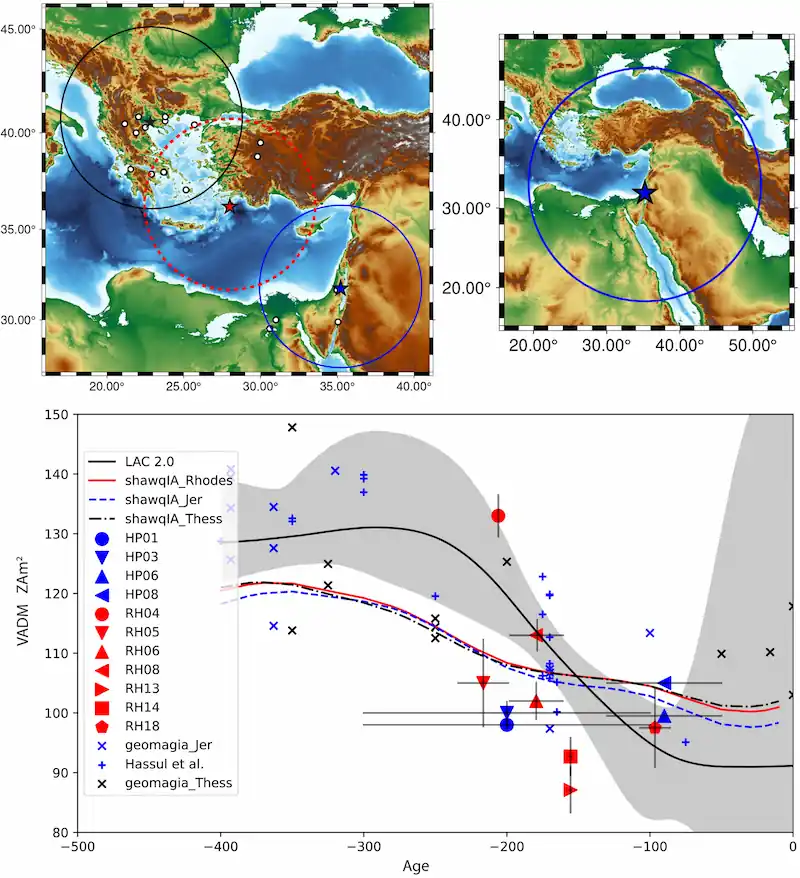
The Rhodian handles recorded a major drop in geomagnetic field intensity. Around 206 BCE, one sample produced a virtual axial dipole moment of 133 ZAm². By about 156–155 BCE, another sample recorded values as low as 87.1 ZAm².
In practical terms, the magnetic field lost more than 30 percent of its intensity in roughly half a century. The researchers calculate the decline at about 0.8 ZAm² per year.
This rapid weakening had already been suggested by previous Levantine datasets, but the Rhodian handles give the pattern unusually fine resolution. Large regional magnetic models tend to smooth out short-lived changes. The stamped amphorae, by contrast, preserve a tighter sequence of dated points.
The study therefore strengthens the case that Earth’s magnetic field was far more dynamic during antiquity than broad models alone suggest.
Wine jars as a new chronological tool
The findings do not only help geophysicists. They also feed back into archaeology.
Because the magnetic field was declining so sharply during the early second century BCE, different intensity values can help place some amphora handles more precisely within their already known date ranges.
One handle dated broadly to 234–199 BCE appears, according to its magnetic value, to belong near the later end of that interval. Another dated to 198–161 BCE fits better near the beginning of its range, around 199 or 198 BCE. A third sample from the same broad interval appears more likely to belong near the later part, around 161 BCE, when the field had already weakened.
This means archaeointensity measurements can support traditional ceramic epigraphy. In some cases, they may help refine the sequence of Rhodian eponyms and fabricants, a subject still discussed by specialists.
For Hellenistic archaeology, this matters. The period between the third and first centuries BCE in Jerusalem is harder to reconstruct than the better-documented Iron Age and Roman periods. Architectural remains are often sparse, and many finds come from fills, dumps, or disturbed contexts rather than sealed occupation floors.
A dating method that works with common ceramic fragments could therefore become a powerful tool.
New evidence for the debated Akra fortress
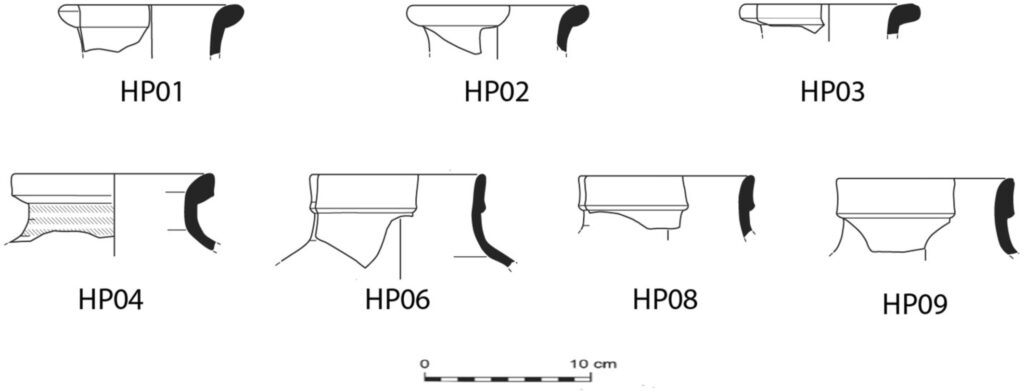
One of the most significant archaeological implications concerns a local storage jar known as HP06.
The jar came from the foundation of a glacis, a sloped defensive ramp, uncovered in the Givati Parking Lot excavations. Some archaeologists have linked this defensive system to the Seleucid Akra, the fortress associated with Antiochus IV Epiphanes, built in Jerusalem around 167/168 BCE after the city came under Seleucid control.
The identification has remained controversial. One reason is the pottery. The type represented by HP06 is usually dated no earlier than about 130 BCE. If correct, that would make it too late for the original construction phase of Antiochus IV’s fortress.
The new magnetic measurement supports the later date. By comparing the jar’s magnetic intensity with the regional reference curve, the researchers conclude that HP06 was most likely produced in the late second century BCE. That makes it highly unlikely to predate the foundation of the Akra.
The authors are careful in their interpretation. The glacis itself could have been built later than the structure it protected. Even so, the new data strengthen the argument that this defensive ramp should not be assigned to the original phase of the Seleucid fortress.
A magnetic signal across the eastern Mediterranean
The study also addresses a broader question: how far can archaeomagnetic dating curves be applied?
Rhodes lies between the southern Levant and the Balkans, roughly 800 kilometers from Jerusalem and about 700 kilometers from Thessaloniki. By comparing the Rhodian data with existing datasets from both regions, the researchers found that the magnetic pattern appears broadly coherent across distances of at least 1,500 kilometers.
That conclusion is important for future archaeological dating. If confirmed by more data, reference curves built from the southern Levant may be useful beyond Israel, Jordan, Lebanon, Syria, and Cyprus. Regions such as lower Egypt, Mesopotamia, and southern Anatolia could also benefit from expanded archaeomagnetic frameworks.
The authors remain cautious. The dataset is still limited, and more high-quality samples are needed before the geographic limits of this coherence can be defined with confidence.
Thousands of stamped handles remain to be studied
The study analysed only a small number of Rhodian handles. Yet thousands of stamped examples are known from archaeological sites across the eastern Mediterranean.
That makes them an almost untapped archive. Each handle may contain two kinds of information at once: a historical date preserved in its stamp and a magnetic record preserved in its clay.
For archaeology, the method could refine the dating of Hellenistic pottery, trade networks, and urban phases. For geophysics, it offers a denser record of how Earth’s magnetic field behaved before modern instruments existed.
In Jerusalem, a few broken wine jar handles have already done both. They traced a sudden weakening of the planet’s magnetic field and added new evidence to the long-running debate over the city’s Seleucid fortress.
Hochma, Y., Tauxe, L., Sandhaus, D., Lipschits, O., & Ben-Yosef, E. (2026). Geomagnetic intensity of Hellenistic pottery and stamped Rhodian wine amphorae from Jerusalem. Archaeometry, 1–11. https://doi.org/10.1111/arcm.70186
Cover Image Credit: Israel Antiquities Authority – Hochma et al., 2026
