

Childhood in the Netherlands between the 17th and 19th centuries could be far harsher than what many children experience today. At an age when a four-year-old would now be expected to play, learn and depend almost entirely on adults, some children were already being put to work.
This was not an isolated practice. Child labour was a widespread part of post-medieval industrialization across Europe, and in the Netherlands it expanded sharply as textile manufacturing grew from the late 16th century onward. By the beginning of the 17th century, children had become part of the workforce in many communities, employed in agriculture, dairy production, tobacco processing, workshops and factories.
Historical records cited in a new study show just how early that working life could begin. Children commonly entered employment at around six or seven, while one record from Moordrecht describes a child as young as four working in a rope factory for as many as 15 hours a day. In textile production, children and apprentices could face working days stretching to 17 hours.
For children growing up in the countryside, the work looked different but could be physically demanding. They planted, weeded, raked and cared for animals, while children in dairy regions began milking cows and helping with cheesemaking from around the age of nine. As they grew older, their responsibilities became heavier and more specialized.
Their bodies, however, were still growing.
Now researchers from Leiden University have examined whether some of that physical burden remained visible centuries later. Their study, published in the International Journal of Paleopathology, analysed the remains of 143 children, adolescents and young adults from three Dutch communities dating between roughly 1650 and 1850, looking for changes associated with repeated spinal loading and mechanical stress.
Three communities, three very different childhoods
The researchers compared individuals from Middenbeemster, Arnhem and Delft, communities with sharply different economic and social backgrounds.
Middenbeemster represented a rural dairy-farming population. Historical evidence indicates that children there participated in livestock care and cheesemaking, with records showing that Beemster children were already milking cows and assisting in cheese production by around nine years old.
Arnhem, by contrast, was an urban industrial centre associated with textile production, tobacco processing, brickmaking and paper milling. The cemetery sample examined by the researchers appears to have included people from relatively low social strata, making childhood participation in labour likely for many of those buried there.
Delft provided a very different comparison. Individuals buried inside the Nieuwe Kerk choir came largely from affluent sections of society, including wealthy merchants, established families and elites, and therefore represented children far less likely to have experienced the same forms of manual labour.
The researchers divided the 143 individuals into four age groups: children aged roughly 3–6, juveniles aged 7–12, adolescents aged 13–18, and early young adults aged 19–25. They examined the cervical, thoracic and lumbar vertebrae for several types of pathological change.
What researchers found in their spines
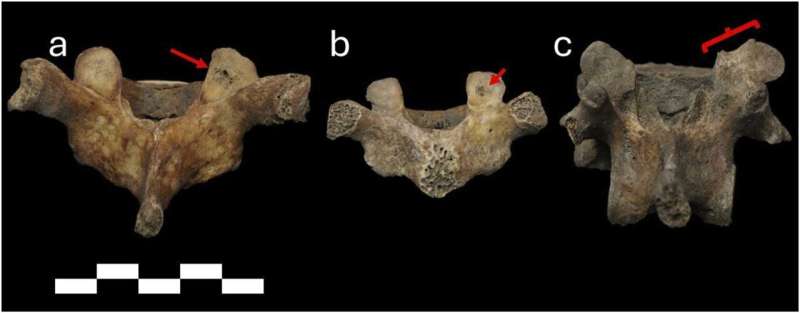
The team focused on facet joint osteoarthritis, Schmorl’s nodes and changes along the margins of the vertebral bodies. None of these conditions has a single cause, but all can be associated with repeated mechanical loading, compression and stress on the spine. The authors therefore examined not only whether lesions were present, but also where along the spine they occurred.
One community stood out repeatedly: Middenbeemster.
Individuals from the rural dairy community had significantly higher overall rates of spinal pathology than those from either Arnhem or Delft. Lesions were particularly common in the thoracic spine, reaching a prevalence of 62.63 percent in the upper thoracic vertebrae and 68.37 percent in the lower thoracic region.
The pattern was also visible among younger individuals. Children from Middenbeemster showed a greater overall likelihood of spinal pathology than their counterparts from Arnhem and Delft, while adolescents from the rural community again showed particularly high rates of lesions.
Schmorl’s nodes followed a similar pattern. Across the population as a whole, Middenbeemster had significantly more of these vertebral defects than Arnhem or Delft, with especially pronounced differences among adolescents in the lower thoracic and lumbar spine.
Why dairy work may have left such a strong mark
The distribution of the lesions is important because it may reflect how those children used their bodies.
Historical descriptions of cheesemaking include lifting heavy milk basins and cheese moulds, churning milk in to curds, caring for cattle and repeatedly bending during work. The researchers argue that this combination of lifting, compression, flexion and extension fits the concentration of lesions seen in the thoracic and lumbar vertebrae of the Middenbeemster population.
The results even suggest that some rural labour may have placed greater mechanical strain on the spine than many forms of urban industrial work.
That does not mean factory childhood was easy. Children in urban industries endured extremely long hours and difficult working conditions. But tasks such as carding wool, spinning fibres and sewing may have placed less axial load on the spine than repeated heavy lifting and agricultural work, although children in Arnhem still showed evidence consistent with substantial spinal compression.
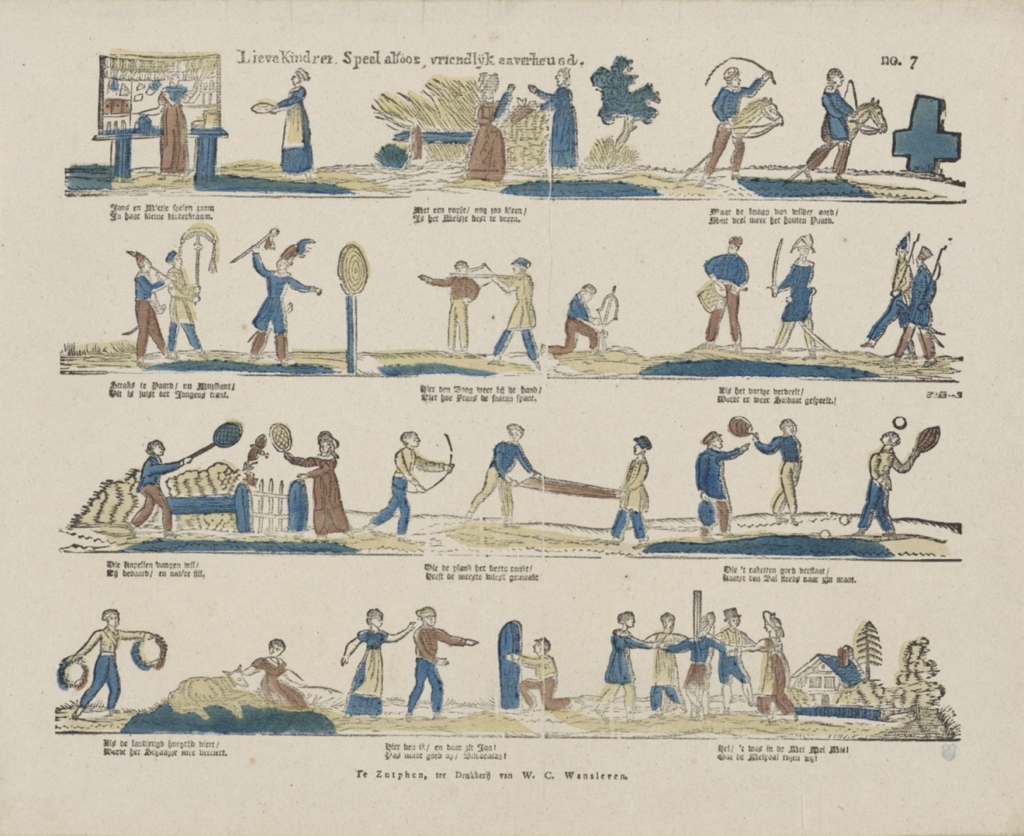
The comparison with Delft is also revealing. Affluent children were not necessarily physically inactive, and the authors note that play, education and prolonged sitting may also have affected spinal health. What distinguishes the three populations is not simply whether lesions existed, but their frequency and distribution across the spine.
Child labour written into growing bones
The authors are careful not to claim that every lesion was caused directly by work. Osteoarthritis, Schmorl’s nodes and other spinal changes are multifactorial, and factors such as genetics and body weight cannot be ruled out.
But the age of the individuals, the differences between the three communities and the close match between the skeletal patterns and historically documented labour practices lead the researchers to argue that intensive manual work likely placed substantial biomechanical stress on growing spines.
That is what gives the study its wider significance. Historical documents can tell us when children went to work, what jobs they performed and how many hours they spent doing them. Their skeletons offer something different: a possible record of what those working lives demanded from bodies that had not yet finished growing.
For many of these children, work did not begin after childhood. Work was part of childhood itself.
Tutwiler, A., & Schats, R. (2026). Built on the backs of children: A comparative analysis of spinal joint disease in non-adults from three post-medieval (1650–1850 CE) Dutch communities with documented histories of child labour. International Journal of Paleopathology, 54, 59–71. https://doi.org/10.1016/j.ijpp.2026.07.002
