
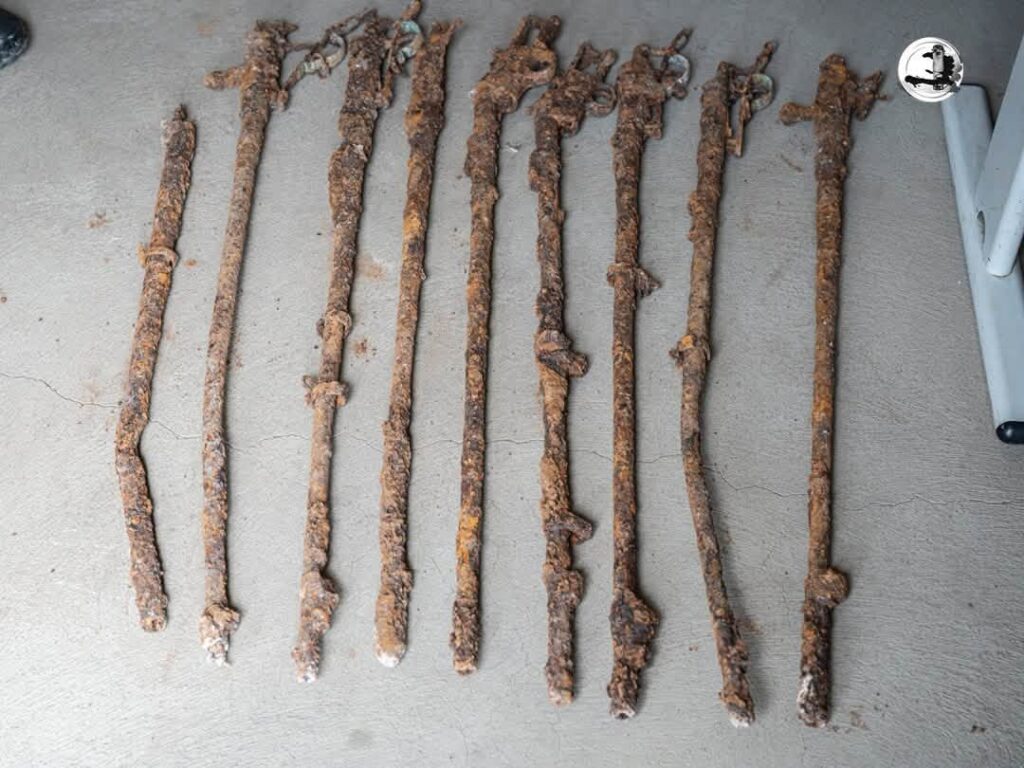
A cache of 20 antique firearms found in Haiti during construction work may include naval or infantry weapons from the late 18th century. The objects were uncovered on the grounds of the Conservative Baptist Church in Grande-Rivière-du-Nord, a historic commune in northern Haiti.
The discovery was made accidentally while workers were carrying out earthmoving operations in the church courtyard. Haiti’s Ministry of Culture and Communication announced the find on July 16, stating that some of the weapons could date to the period before Haitian independence.
The National Bureau of Ethnology, known as the BNE, has begun an archaeological investigation. Specialists have cautioned that the age and historical context of the weapons have not yet been confirmed.
Nine long guns and 11 handguns recovered
The initial inventory identified nine long guns and 11 handguns. Several metal objects were also documented, together with fragments of pottery and faience, a type of glazed ceramic.
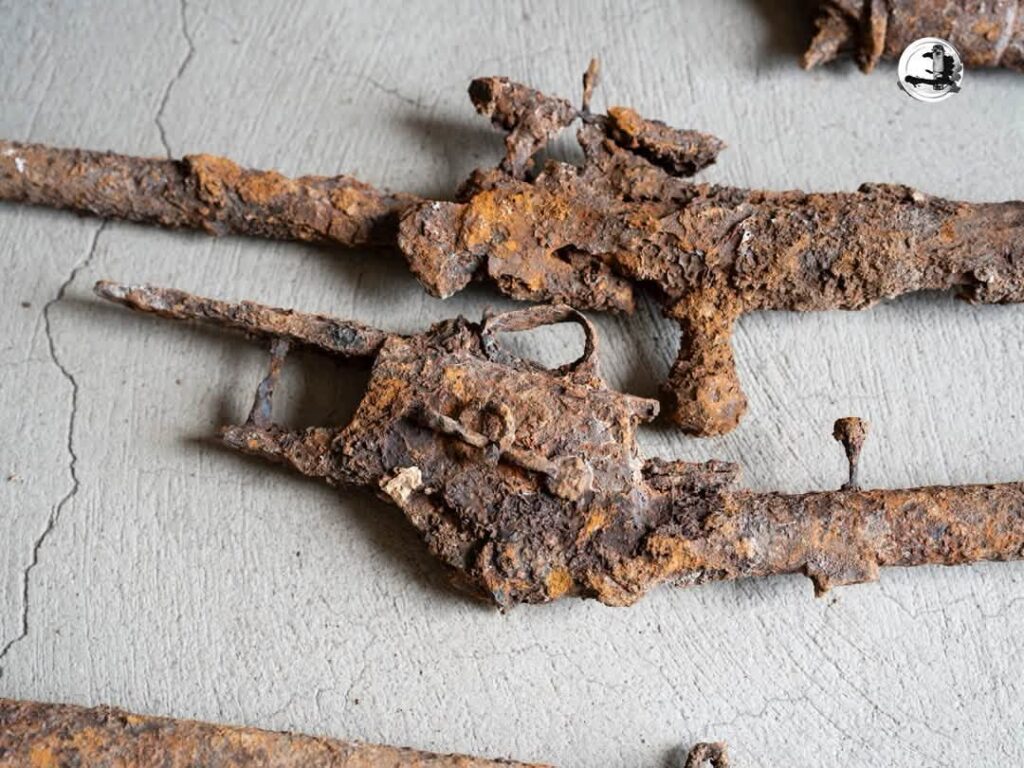
Preliminary examination suggests that some of the long guns share characteristics with weapons carried by naval or infantry forces during the closing decades of the 18th century. Detailed cleaning and technical analysis will be required before researchers can identify their models, places of manufacture or exact dates.
The collection’s arrangement may also prove important. Archaeologists will need to determine whether the firearms were stored together intentionally, discarded after falling out of use, or buried during a period of conflict.
No official explanation has yet been given for why so many weapons were deposited in a single location.
Archaeological investigation begins
BNE Director General Erol Josué visited the site with a technical team and archaeologist Dr. Joseph Sony Jean. Their work includes documenting the objects, evaluating their condition, and identifying the immediate conservation measures needed to prevent further deterioration.
The delegation also met Grande-Rivière-du-Nord Mayor Jovenel Jean, police officials, and representatives of the church and a nearby school to discuss securing the discovery area.
Researchers are expected to examine the weapons’ construction methods, surviving components and corrosion patterns. Associated ceramic and metal finds could provide additional dating evidence, especially if they were buried at the same time as the firearms.
Reports have raised the possibility that the church grounds lie near the remains of an earlier fortified site. The BNE, however, has not confirmed that the weapons came from a fort or that they are connected to any known military structure, plantation or historical event.
A discovery in a region tied to the Haitian Revolution
If the late 18th-century date is confirmed, the firearms would belong to one of the most consequential periods in Haitian history. The final years of the century saw the collapse of French colonial rule in Saint-Domingue and the beginning of the Haitian Revolution in 1791, which culminated in independence in 1804.
Grande-Rivière-du-Nord occupied an important place within the colonial plantation landscape of northern Saint-Domingue. The surrounding area is also closely associated with Jean-Jacques Dessalines, one of the central leaders of the Haitian Revolution, who was born enslaved at Cormiers in the Grande-Rivière region in 1758.
That historical background makes the discovery particularly significant, but researchers have not linked the weapons directly to Dessalines, the revolution or any specific colonial plantation.
Further excavation around the original pit may reveal whether other artifacts or structural remains survive below the church grounds. Until laboratory analysis is completed, the weapons’ origin and reason for burial will remain uncertain.
Cover Image Credit: National Bureau of Ethnology (BNE) via Facebook
