
10 November 2025 The Future is the Product of the Past

Bronze Bust of Egyptian Goddess Isis Unearthed in Satala, the Base of Legio XV Apollinaris

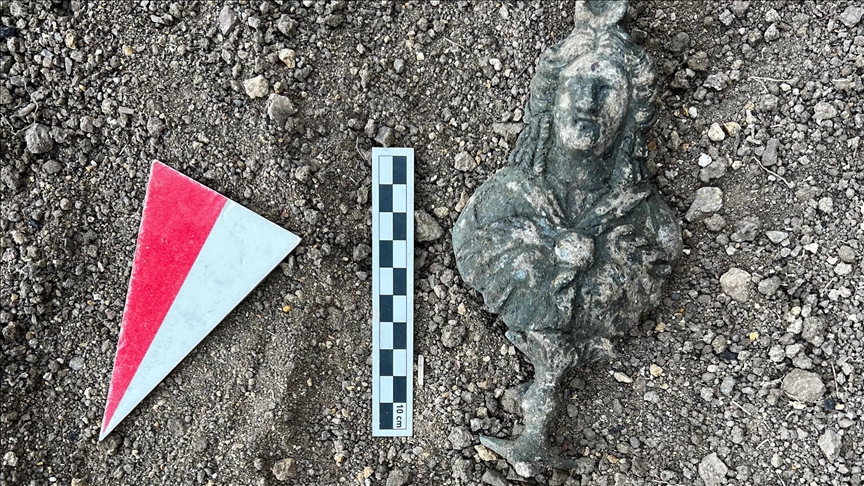
Archaeologists excavating the ancient city of Satala in northeastern Turkey have uncovered a rare 20-centimeter bronze bust of the Egyptian goddess Isis. The discovery offers new insights into the cultural and religious landscape of the Roman Empire’s eastern frontier.

Discovery in the Necropolis of Satala

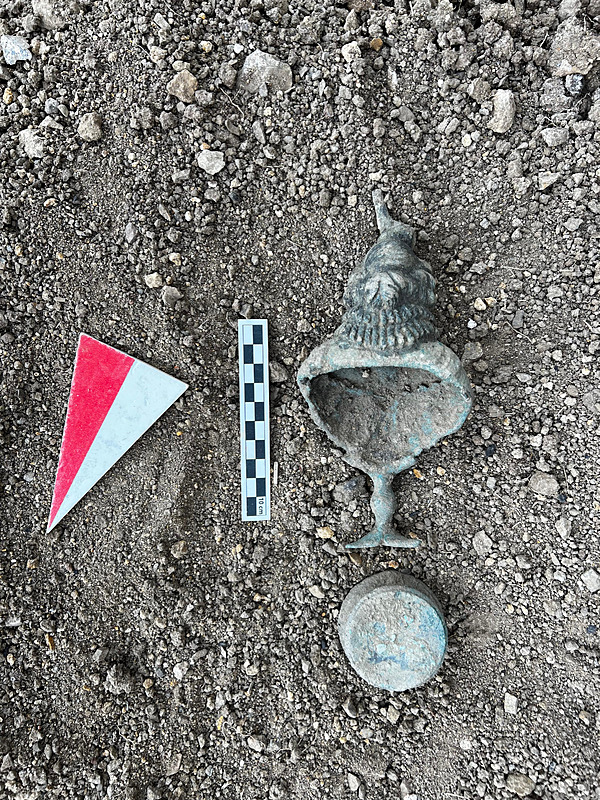
The find was made during ongoing excavations in the necropolis area of Satala Ancient City, located in the Kelkit district of Gümüşhane province. Excavation director Dr. Elif Yavuz Çakmur, from Karadeniz Technical University’s Department of Archaeology, confirmed that the bust was discovered separated from its base but remarkably well preserved.

“This is a surprising and very important discovery,” said Dr. Çakmur. “We know the legions here followed the cults of Mithra and the Twelve Gods. The presence of Isis, however, reveals the extent of religious diversity within the Roman army and shows how Eastern deities were embraced across the empire.”

Details of the Bronze Bust

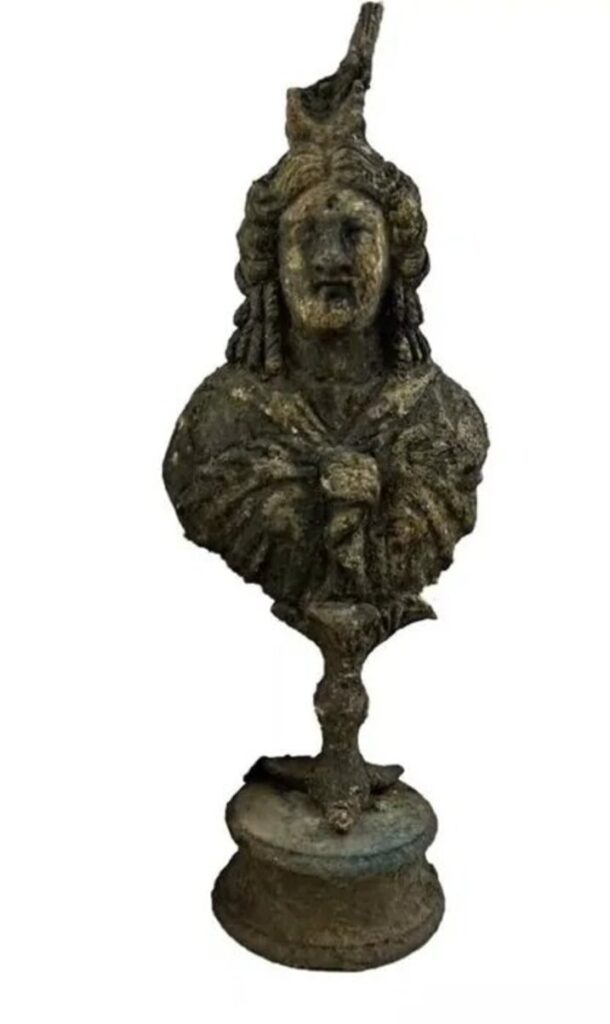
The artifact depicts the goddess Isis standing on a three-legged base that emerges from a three-leaf calyx design — a typical motif symbolizing life and rebirth. On her head are two ears of corn, representing fertility and abundance, while a tasseled shawl tied at the front covers her shoulders, reflecting the style seen in Greco-Roman depictions of the goddess.

Restoration work on the bust is currently underway. Once the process is complete, the artifact will be displayed at the Gümüşhane City Museum. Further metallurgical and stylistic analysis will help archaeologists determine its precise age and workshop origin.


📣 Our WhatsApp channel is now LIVE! Stay up-to-date with the latest news and updates, just click here to follow us on WhatsApp and never miss a thing!!


Archaeologists excavating the ancient city of Satala in northeastern Turkey have uncovered a rare 20-centimeter bronze bust of the Egyptian goddess Isis. Credit: AA

A Major Archaeological Find for Anatolia

This discovery marks the first bust found in Satala since the 1870s, when a statue of Aphrodite was unearthed. Experts describe it as a rare and meaningful addition to the understanding of religious diversity within Roman legions.

Satala, located near Sadak Village, served as the headquarters of Legio XV Apollinaris, one of the main Roman legions stationed in Anatolia. Founded in the 1st century CE, Satala functioned as both a military base and administrative hub connecting Cappadocia, Anatolia, and the Black Sea. The site remained active until the Byzantine period, when it faced incursions from the Sassanid Empire in the 7th century.

Recent excavations at Satala have revealed significant remains, including a legionary cemetery carved into bedrock and several Roman military artifacts, confirming the site’s importance as one of the most intact legionary bases in the Roman East.

Egyptian Influence in the Roman World

The discovery of an Egyptian goddess in a Roman garrison highlights the deep cultural interconnections across the Roman Empire. The worship of Isis, originally an Egyptian deity symbolizing motherhood and magic, spread widely throughout the Mediterranean following Egypt’s integration into the Roman Empire in 30 BCE.

Her cult became particularly popular among Roman soldiers and merchants, who often adopted foreign gods encountered during their service. The bust found in Satala may have belonged to a soldier or officer who personally worshipped Isis, reflecting the fusion of Egyptian, Anatolian, and Roman religious traditions.

The artifact depicts the goddess Isis standing on a three-legged base that emerges from a three-leaf calyx design. Credit: AA

Symbol of Cultural Exchange Across Empires

The Satala Isis bust not only enriches our understanding of Roman frontier life but also provides tangible evidence of the religious and cultural exchange between Egypt and Anatolia. As Dr. Çakmur’s team continues restoration and analysis, the artifact is expected to become a highlight of the Gümüşhane City Museum’s collection, drawing attention from both scholars and visitors.

This remarkable discovery once again confirms Satala’s status as one of Anatolia’s most important archaeological sites, offering a window into the complex web of faiths, symbols, and identities that defined the ancient world.

Cover Image Credit: AA

Related Articles

Teacher unearthed stone with ancient ogham writing from Ireland in Coventry garden

9 May 2024

9 May 2024

A geography teacher, Graham Senior, stumbled across a rock with mysterious incisions while tidying his overgrown garden in Coventry, England. ...

Hoysala temples inch closer towards UNESCO recognition

7 February 2022

7 February 2022

The Indian Union government recently proposed the Somanathapura temple in Mysuru district and Chennakeshava and Hoysaleshwara temples in Belur and...

Kashmir’s Forgotten Temple? Shivlings and Ancient Idols Found Beneath Sacred Spring

4 August 2025

4 August 2025

A routine restoration of the Karkoot Nag spring in the Salia area of Aishmuqam, Anantnag district, Jammu & Kashmir, has...

Three-Year-Old Discovers 3,800-Year-Old Canaanite Seal at Archaeological Site of Tel Azekah

2 April 2025

2 April 2025

At the site of the famous battle between David and Goliath, a three-year-old girl named Ziv Nitzan discovered a scarab-shaped...

The newly discovered fossils are 200,000 years old in Denisova Cave

29 November 2021

29 November 2021

Scientists have discovered the earliest remains of a human lineage known as the Denisovans. Researchers have identified stone artifacts connected...

2700-year-old Assyrian carvings found near Mashki Gate destroyed by Isis

20 October 2022

20 October 2022

The U.S. and Iraqi archaeologists have unearthed ancient rock carvings believed to be more than 2,700 years old in Iraq’s...

Two rock chambers thought to be dining rooms unearthed at ‘House of Muses’ in southeastern Turkey

27 July 2021

27 July 2021

House of Muses, a Roman-era house named after the muse mosaics found in the area located in the ancient city...

From Bronze Age to Buddhism: Xinjiang’s Archaeological Journey Through Time and Recent Discoveries

4 March 2025

4 March 2025

Recent archaeological investigations in the Xinjiang Uygur Autonomous Region have significantly enhanced our understanding of the area’s historical context and...

1,000-Year-Old Mass Grave in Peru Shows Victims Bludgeoned with Star-Headed Maces

26 May 2025

26 May 2025

Archaeologists from the University of Wrocław have uncovered a 1,000-year-old mass grave at the El Curaca site in southern Peru,...

Oldest known arrowheads uncovered in the Americas

24 December 2022

24 December 2022

Archaeologists from Oregon State University have discovered projectile points in Idaho that are thousands of years older than any that...

Evidence of Necromancy during Roman era in the Te’omim Cave, Jerusalem Hills: Oil Lamps, Spearheads, and Skulls

14 July 2023

14 July 2023

Te’omim Cave in the Jerusalem Hills may once have served as a local oracle where people communed with the dead...

7,000-Year-Old Eneolithic Settlement Unearthed in Dagestan

3 October 2025

3 October 2025

Archaeologists from the Institute of Archaeology of the Russian Academy of Sciences (RAS) have announced one of the most significant...

Syria uncovered a large intact mosaic that dates back to the Roman era

12 October 2022

12 October 2022

Syria uncovered a large intact mosaic that dates back to the Roman era, in the central town of Rastan, describing...

1,600-year-old steelyard weight found in Turkey’s ancient city of Hadrianopolis

1 December 2021

1 December 2021

Archeologists have discovered a 1,600-year-old steelyard weight during excavations in the ancient city of Hadrianopolis, located in the Eskipazar district...

1,800-Year-Old Sanctuary to Mithras discovered in Spain

8 February 2023

8 February 2023

Archaeologists excavating at Villa del Mitra in Cabra, Spain, have uncovered a sanctuary dedicated to the god Mithras, along with...