
Archaeologists uncover one of the best-preserved Urartian mural complexes deep under Van, Türkiye
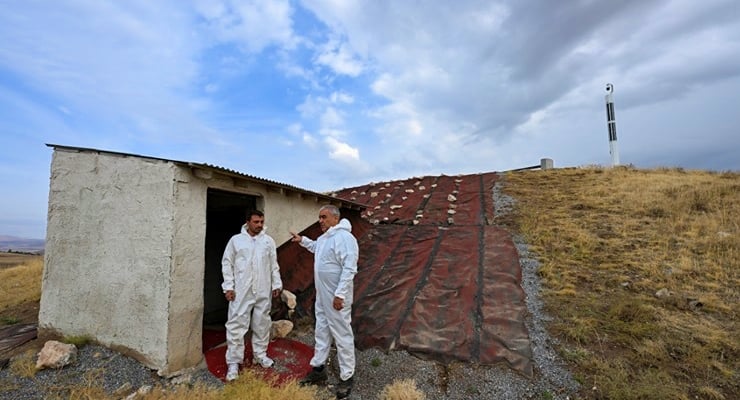
In the rugged highlands of eastern Türkiye, a team of archaeologists has unearthed one of the most extraordinary Urartian sites ever discovered. Hidden beneath Garibin Tepe, a remote hill about 30 kilometers from the city of Van, lies an underground architectural complex dating back nearly three millennia — complete with brilliantly painted murals depicting gods, animals, and ritual scenes.
The discovery, made after a halted illegal excavation in 2022, has stunned researchers and is now considered a milestone in Urartian archaeology. Beneath a narrow tunnel entrance, archaeologists from Atatürk University, led by Professor Mehmet Işıklı, descended more than six meters underground to reveal a labyrinthine network of chambers and corridors—a monumental structure that may have served as a royal or ceremonial space.
An Underground Wonder of the Urartian World
The Urartian civilization, which flourished around Lake Van between the 9th and 6th centuries BCE, is often remembered for its massive fortresses, metalwork, and irrigation engineering. Because surviving examples of Urartian painting are exceptionally scarce, this discovery stands as a true revelation for archaeology and ancient art alike.
“This is a discovery that reshapes what we know about Urartian art and architecture,” said Prof. Dr. Işıklı. “We are standing in what may have been a sacred or royal chamber—its walls alive with colors and figures that have not been seen for almost three thousand years.”
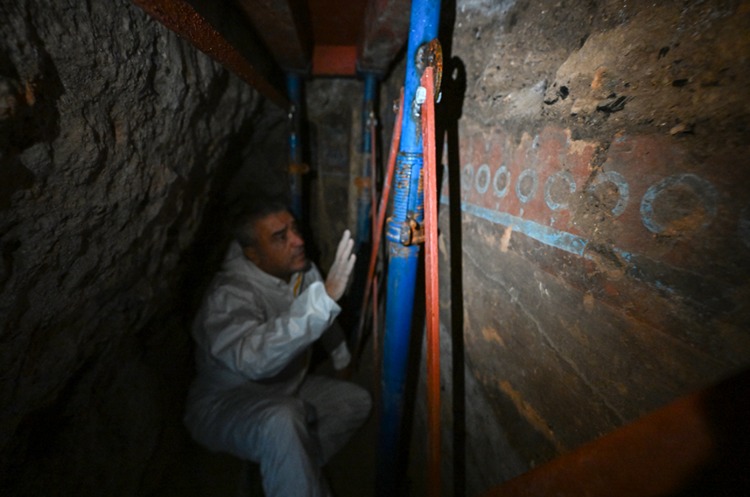
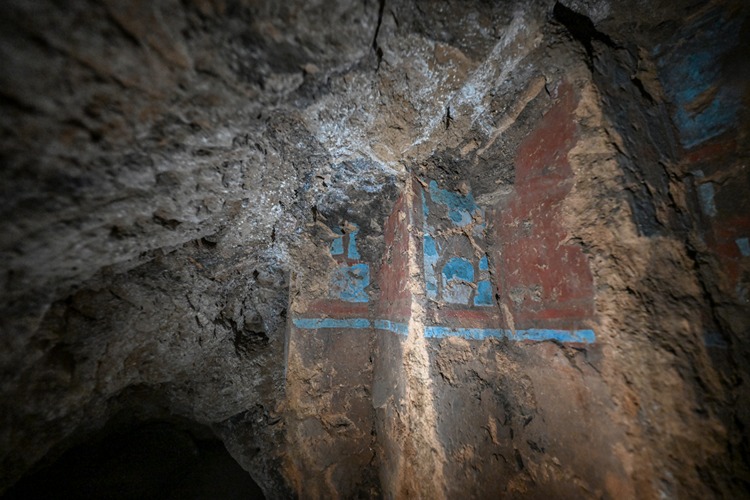
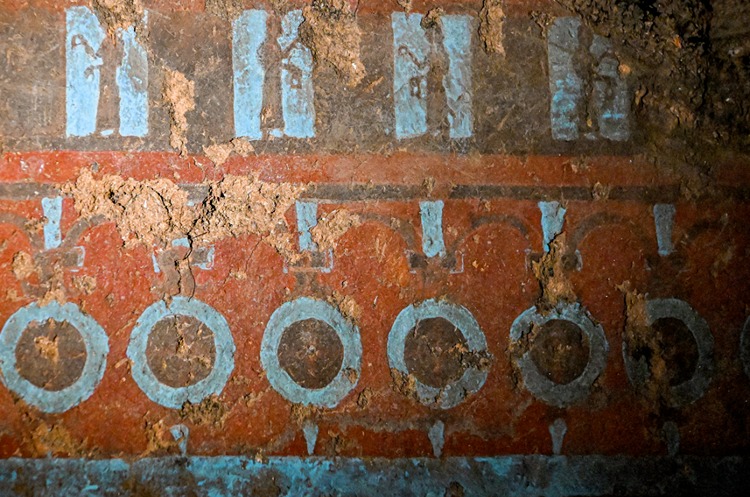
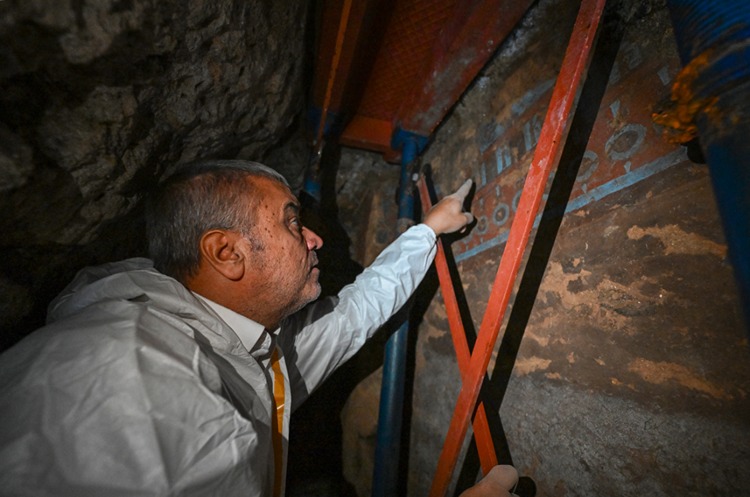
Within the dimly lit tunnels, researchers found three horizontal bands of paintings, each featuring divine, human, and animal motifs rendered in organic pigments on mudbrick. Despite the fragile materials, the images retain traces of vibrant reds, ochres, and blacks — proof of the Urartians’ mastery of natural dyes and symbolic composition.
The Significance of Garibin Tepe
Garibin Tepe, long overlooked as a barren mound, now promises to become one of the key archaeological sites in the Near East. Unlike the better-known fortress ruins above ground, this subterranean complex reveals an artistic and spiritual dimension of Urartian life that has never before been witnessed in such detail.
Similar wall paintings had only been documented at Altıntepe near Erzincan, discovered in the 1950s, and in Arin Berd (in modern Armenia)—but the Garibin Tepe murals are believed to be older and better preserved. The site’s enclosed nature protected it from centuries of erosion, creating a unique time capsule beneath Anatolia’s soil.
“Finding painted walls in an intact underground space is like discovering a buried cathedral,” noted Işıklı. “It suggests a level of artistic planning and ritual significance far beyond what we’ve seen from Urartian remains before.”
A Discovery That Blends Art and Architecture
The underground complex consists of multiple interconnected rooms and narrow corridors, leading scholars to believe it was part of a larger ceremonial center. The painted figures may represent Urartian deities, processions, or mythological scenes tied to royal or religious rituals.
Archaeologists are particularly intrigued by the symbolic alignment of the figures—three distinct layers possibly representing the celestial, earthly, and animal realms. This tripartite design, seen in Mesopotamian and Anatolian iconography, could shed new light on Urartian beliefs about the cosmos and the afterlife.
“What we are seeing here is not just decoration,” explained Işıklı. “It’s a carefully planned narrative space — one that connects the divine and the human through art and architecture.”
Preserving a Fragile Treasure
Though the main focus remains on exploration and documentation, the team has also taken essential measures to stabilize and protect the delicate murals. Iron supports reinforce the ceilings, humidity monitors regulate the microclimate, and entry into the chambers is strictly controlled.
A large protective tent structure is being designed to cover the mound, preventing water damage and enabling safe excavation during future seasons. Conservation specialists from the Istanbul Restoration and Conservation Laboratory regularly conduct inspections to ensure the murals’ stability.
Yet, despite these measures, Prof. Işıklı emphasizes that the real story lies in the discovery itself. “Conservation is crucial,” he said, “but what excites us most is what these paintings reveal — the creativity, spirituality, and complexity of a people who lived nearly 3,000 years ago.”
Unlocking the Secrets of the Urartian Kingdom
For decades, the Urartian Kingdom has remained one of the least understood ancient powers of the Near East. Known from Assyrian inscriptions and fortress ruins, it was a civilization of remarkable engineering prowess and spiritualtic dimension to that story — one painted in color and symbolism rather than stone and iron.
As excavations continue, the team hopes to uncover more rooms and murals, possibly revealing inscriptions or artifacts that could help identify the site’s function. Some believe Garibin Tepe may have been part of a royal palace complex or a sacred sanctuary, hidden for centuries beneath layers of volcanic earth.
A Window into an Ancient Imagination
Standing at the edge of Garibin Tepe today, surrounded by arid hills and Lake Van’s distant shimmer, it’s almost impossible to imagine the world that once thrived below. Yet, thanks to this discovery, a fragment of that world — its art, beliefs, and aesthetic genius — has resurfaced.
“When you step into the tunnel,” Işıklı said, “you feel as if time itself has stopped. These walls were painted by hands that lived nearly 30 centuries ago — and they still speak to us.”
Cover Image Credit: AA
