
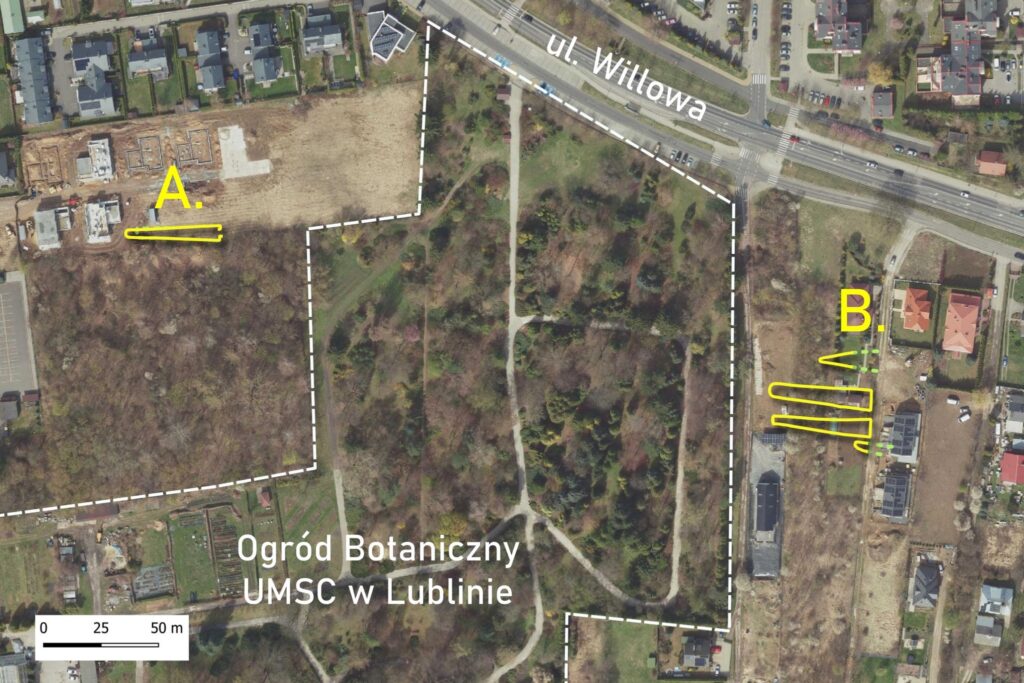
A remarkable archaeological discovery in eastern Poland is shedding new light on prehistoric Europe. Rescue excavations conducted in the Sławinek district of Lublin have uncovered the remains of a massive megalithic tomb, offering fresh insights into Neolithic burial traditions and early agricultural communities.
The excavation, led by the archaeological company Archeja Jacek Tkaczyk, began in 2025 in connection with a planned residential housing development along Sławinkowska Street. The site lies within the boundaries of a protected archaeological area, identified as AZP 77-81/105-3, where earlier traces of ancient settlement were first discovered during infrastructure works on nearby Willowa Street.
A Window into the Neolithic Era
The newly uncovered structure dates back to the Neolithic period, a transformative era beginning in the 6th millennium BC when early farming communities emerged across what is now Poland. These groups introduced agriculture, animal domestication, and pottery production—marking a significant shift from hunter-gatherer lifestyles.
Among the earliest cultures recorded in the Lublin region is the Funnelbeaker culture (circa 4th millennium to early 3rd millennium BC). This culture is particularly known for its distinctive burial customs, including the construction of monumental tombs known as megaliths.
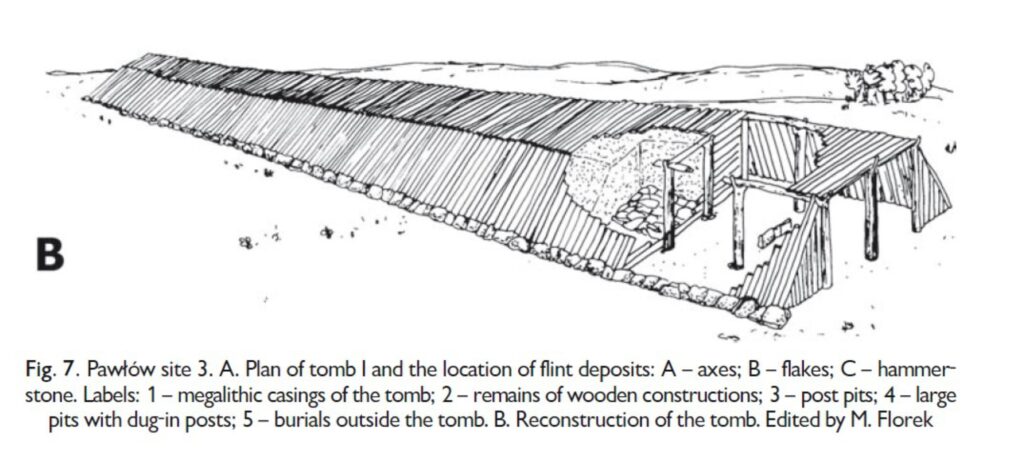
The term “megalith” derives from Greek, meaning “great stone,” though in southern regions like Lublin, where large stones were scarce, communities adapted their techniques. Instead of stone, they constructed timber-based burial structures known as megadendrons.
The Megadendron Tomb
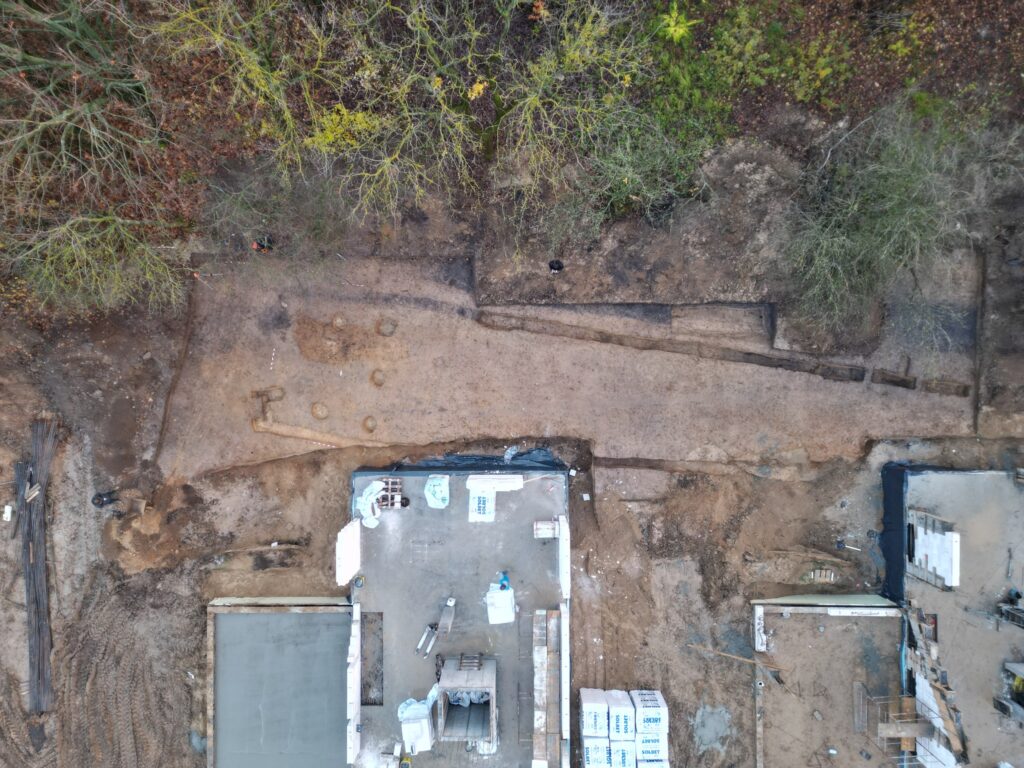
The tomb discovered at Sławinek represents a classic example of this wooden megalithic architecture. Built using deeply embedded wooden posts and covered with an elongated earthen mound, the structure originally formed a long triangular shape aligned along an east–west axis.
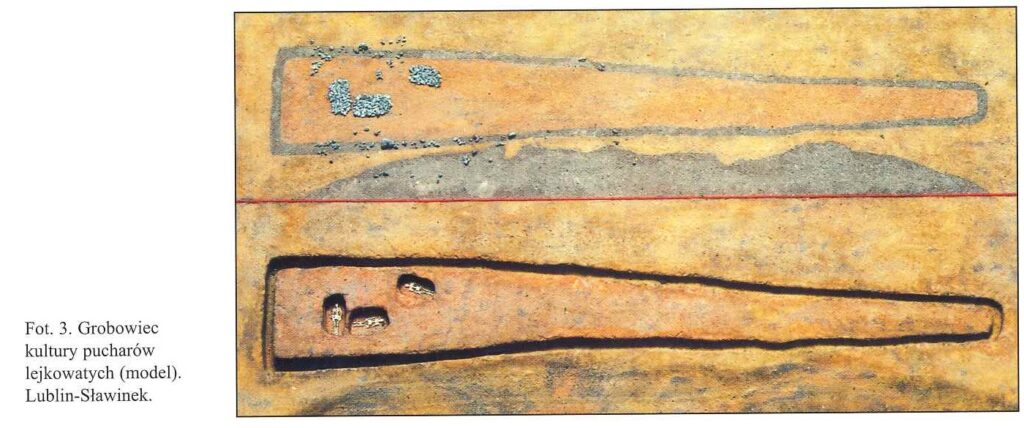
According to findings released by the Lublin Voivodeship Conservator of Monuments, the tomb measured approximately 42 meters in length. Its width reached about 5.2 meters at the eastern end, narrowing to 3.3 meters toward the western tip. Along its southern side, archaeologists identified a ditch nearly 30 meters long and up to 2.5 meters wide—likely created during the construction process to source soil for the mound.
Although no human remains were found within the structure, experts suggest it may have functioned as a cenotaph—a symbolic burial site without an actual interment. Such structures are known in Neolithic contexts and may have held ritual or commemorative significance.
Artefacts and Material Culture
Despite the absence of skeletal remains, the excavation yielded important artefacts that provide clues about the people who built the tomb. Archaeologists recovered fragments of pottery vessels and flint tools, including partially worked materials made from distinctive local resources such as Sieciechów flint and so-called “chocolate flint.”
These discoveries highlight the technological sophistication of Funnelbeaker communities, who were skilled in tool production and ceramic craftsmanship. The artefacts also contribute to a broader understanding of trade networks and resource use in prehistoric Poland.
A Site of Ongoing Discovery
The Sławinek findings are part of a larger archaeological landscape that has been studied for decades. Excavations conducted since the 1960s along Willowa Street—located near the current site—have identified at least three or four additional megalithic tombs. These earlier investigations, led by archaeologist Marta Polańska, established the area as a significant Neolithic burial ground.
More recently, in 2023, further excavations carried out by Michał Kubera confirmed the presence of additional structures, expanding knowledge of this multi-cultural archaeological site. The newly discovered tomb at Sławinkowska Street is believed to be the fifth of its kind in the area.
Interestingly, one previously documented tomb described in a 1999 publication extended over 50 meters and contained three skeletal burials covered with stone pavements—demonstrating variation in burial practices even within the same cultural framework.
Social and Ritual Significance
Megalithic tombs such as those found in Lublin were likely reserved for prominent members of Neolithic communities. Burials often included grave goods like pottery, stone tools, and ornaments, indicating a belief in an afterlife or the importance of social status.
The presence of cenotaphs, however, suggests that not all structures served purely funerary purposes. Some may have functioned as symbolic monuments, possibly linked to ancestral worship or territorial claims.
Continuing Research
Archaeological work at the Sławinek site is ongoing, and researchers continue to analyze the findings to better understand the scale and significance of the cemetery. Each new discovery adds another piece to the puzzle of how early farming societies lived, organized themselves, and commemorated their dead.
As development continues to intersect with heritage preservation, the discoveries in Lublin serve as a powerful reminder of the deep historical layers beneath modern cities—and the enduring legacy of Europe’s first agricultural communities.
Lubelski Wojewódzki Konserwator Zabytków
Cover Image Credit: Lubelski Wojewódzki Konserwator Zabytków
