
On the Roman Empire’s northern frontier, overlooking the Danube in what is now Bulgaria, archaeologists are gradually revealing the kind of home that only one of Rome’s most powerful military officers could have occupied.
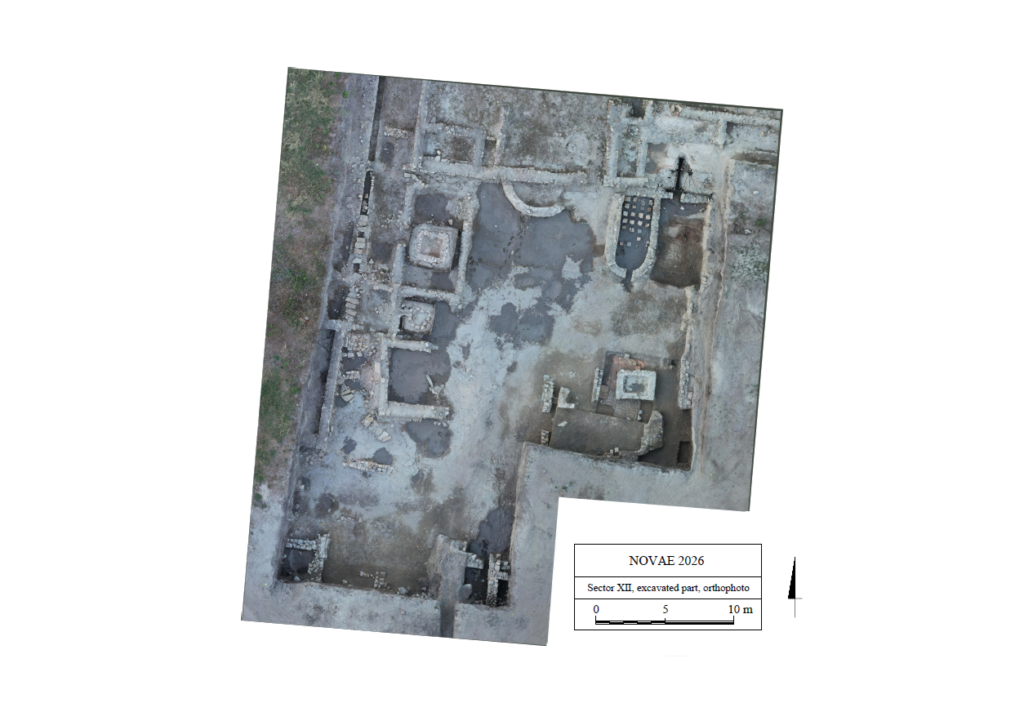
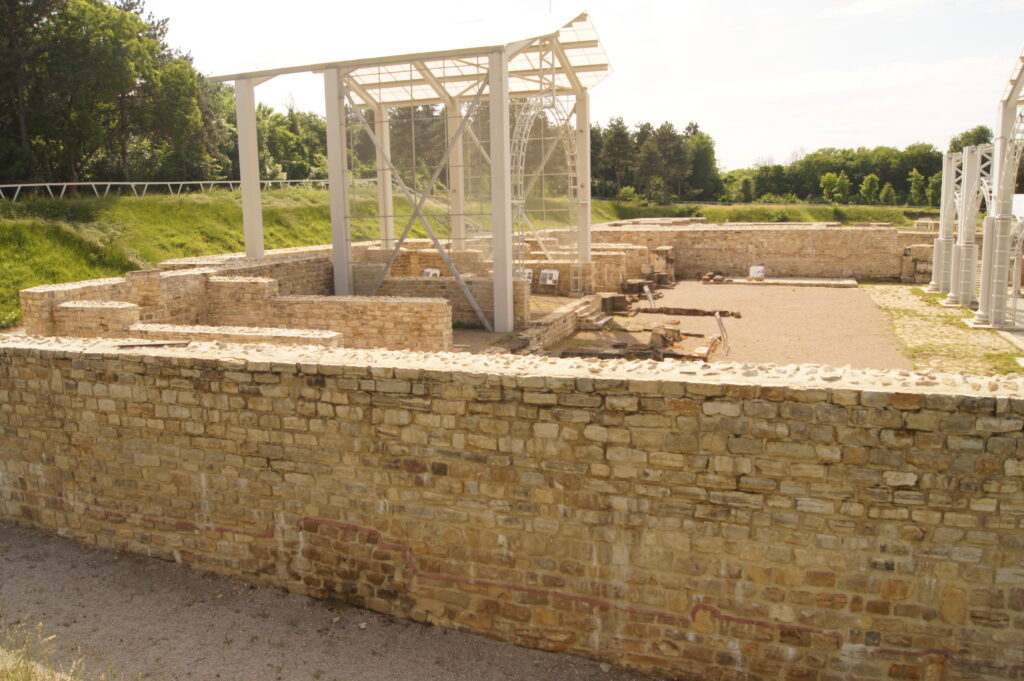
At Novae, the longtime base of Legio I Italica, a monumental residence has now been exposed across more than 3,000 square meters. Researchers believe the entire complex may originally have covered around 4,500 square meters, making it one of the largest buildings inside the fortress.
Everything uncovered so far points to an elite residence rather than ordinary military quarters. There were private baths, decorated walls, carefully laid floors, and expensive furnishings — luxuries that would have been far beyond the reach of the thousands of soldiers stationed only a short distance away.
Archaeologists believe the building may have been the praetorium, the official residence of the legionary commander. If that interpretation is confirmed, Novae could preserve an unusually complete example of where the man responsible for an entire Roman legion lived, worked, and received visitors nearly 2,000 years ago.
A commander’s house inside a military fortress
A Roman legionary fortress was not simply a barracks surrounded by walls. It functioned almost like a heavily organized town, with headquarters, workshops, hospitals, warehouses, temples and bathhouses laid out around the daily needs of several thousand soldiers.
At the center of that world stood the legionary legate, a senator appointed to command the legion and represent imperial authority on the frontier. His residence therefore needed to be much more than a comfortable home. It also served as a place for administration, official meetings, and the social life expected of a member of Rome’s elite.
The scale of the building at Novae fits that role. According to Prof. Piotr Dyczek of the University of Warsaw, it would have been the third-largest building in the fortress, after the legionary headquarters and the military hospital.
This year’s excavations added important details to that picture. Archaeologists uncovered further pools belonging to a private bath complex, along with fragments of painted plaster and a carefully made floor composed of differently colored bricks.
Such features give the ruins a more personal dimension. The commander of Legio I Italica was not simply sleeping behind the same defensive walls as his soldiers; he appears to have lived in surroundings designed to reflect his wealth, rank and proximity to imperial power.
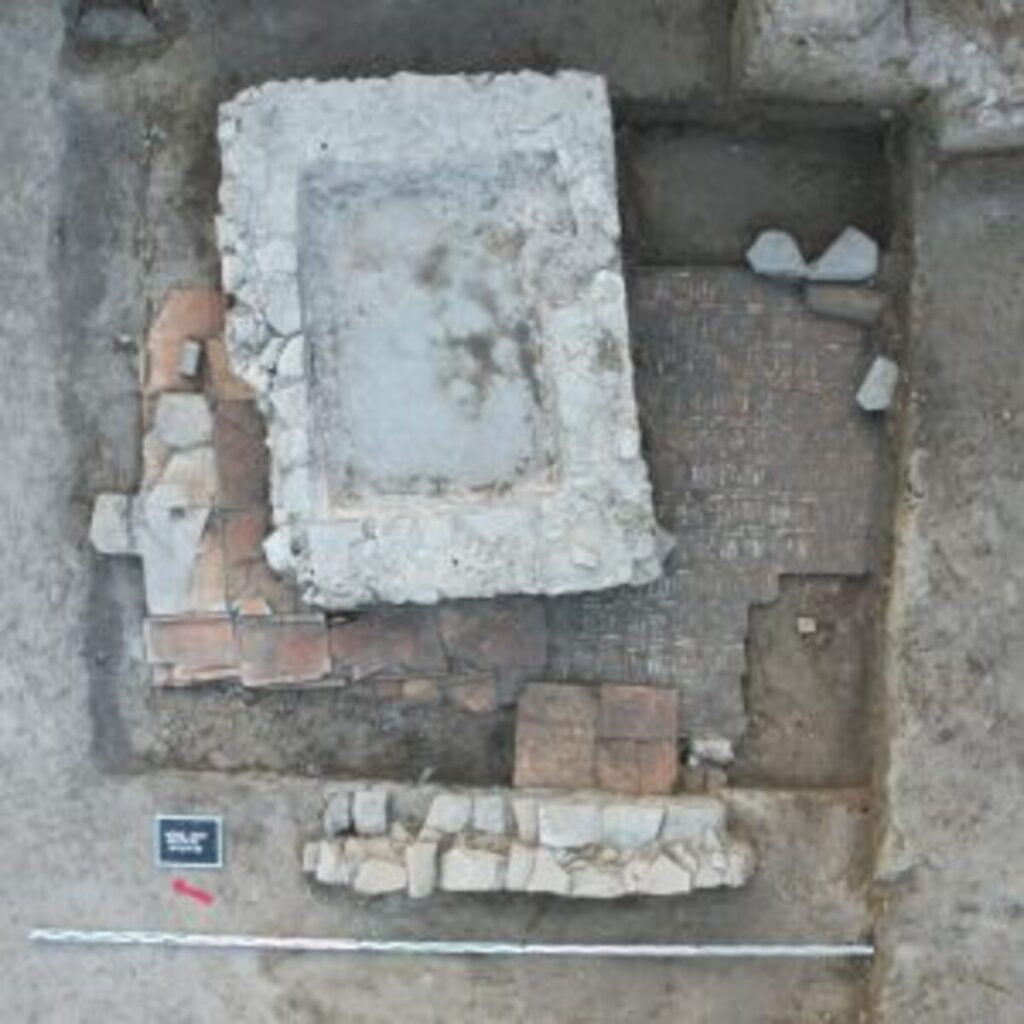
Roman floors uncovered at Novae. Photo: Krzysztof Narloch / University of Warsaw.
Private baths, painted walls and luxury objects
The private baths are among the strongest clues to the identity of the building’s occupant. Soldiers at Novae had access to communal bathing facilities, as was common throughout the Roman military world, but a large private bath suite inside a residence belonged to an entirely different level of life.
Archaeologists have also recovered bronze furniture fittings, expensive pottery and other objects associated with high-status domestic spaces. Together with the painted walls and decorative flooring, they suggest a residence designed not merely for comfort but also for display.
That matters because the physical homes of legionary commanders are surprisingly difficult to study in detail. Many Roman military sites were heavily rebuilt in later centuries or now lie beneath modern settlements, leaving only fragments of their elite residences accessible to archaeologists.
Novae is different. If excavation continues to confirm the current interpretation, researchers may be able to reconstruct much more than the floor plan of a Roman officer’s house. They could begin to understand how public authority and private life overlapped within the home of a commander stationed on one of Rome’s most important frontiers.
Mithras, Priapus and the emperor
The residence has produced impressive architecture, but some of the season’s smallest finds may prove equally revealing.
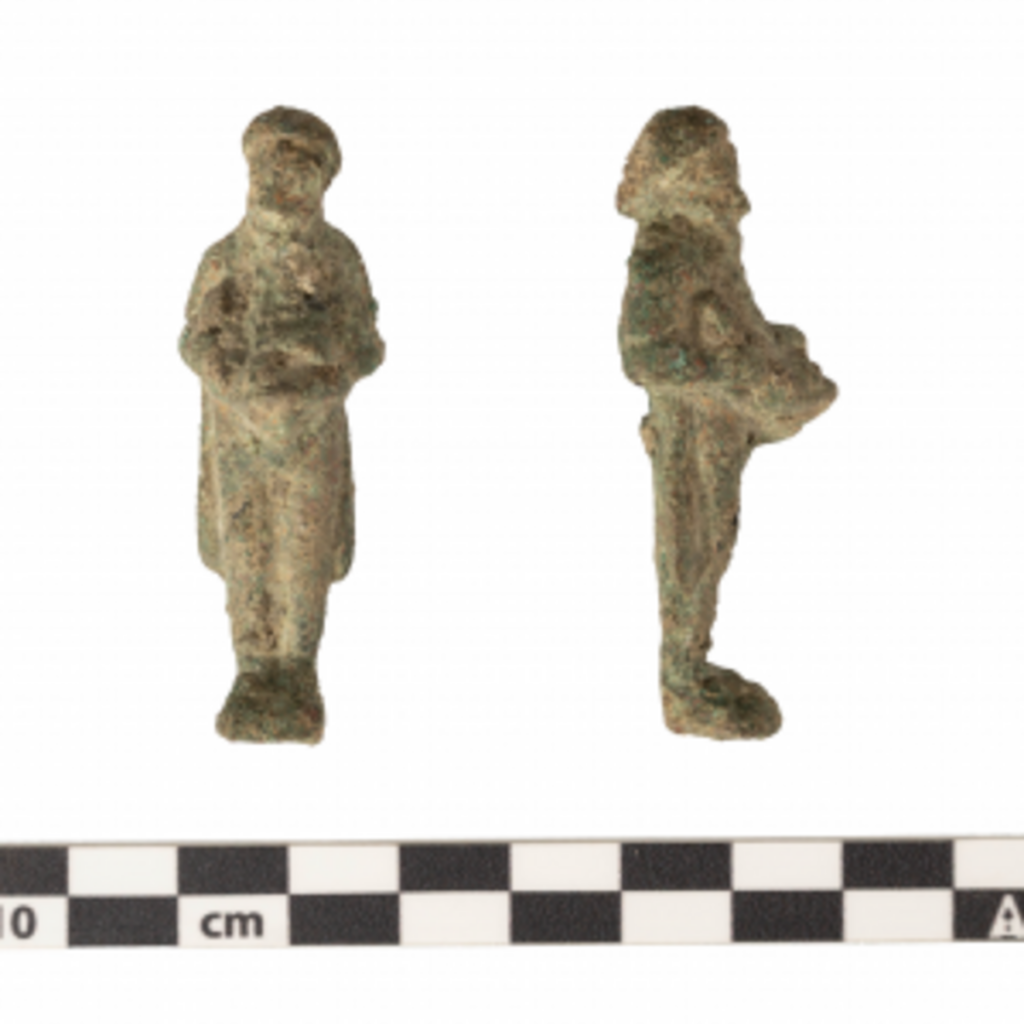
Among them is a bronze figurine of Priapus, the Greco-Roman god associated with fertility, gardens and abundance. The University of Warsaw says only five comparable examples are known from the Lower Danube region, making the Novae figurine an unusually rare find.
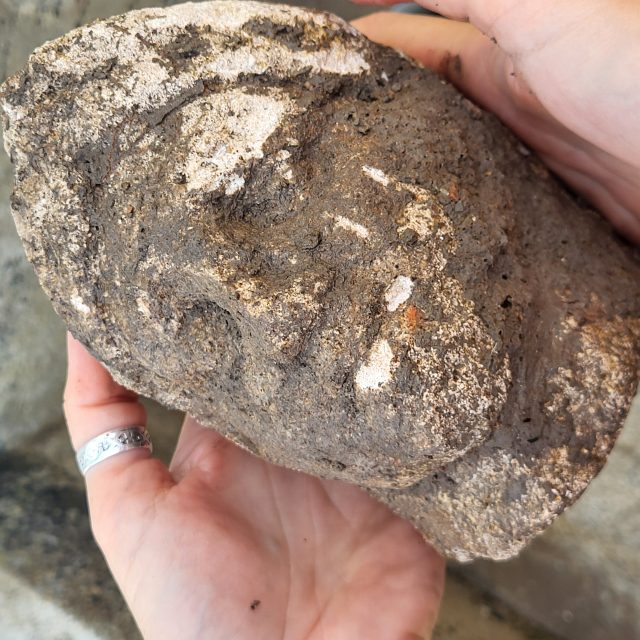
A head representing Mithras was also discovered, together with part of a marble head that once belonged to an official imperial portrait. These finds bring religion and imperial identity into the same space as luxury and domestic life, showing how closely those worlds could overlap in a major Roman military center.
Archaeologists also recovered two inscribed altars, including one that survived almost intact with its full inscription. Another unusual object is a pinecone-shaped architectural finial, a decorative feature rarely found in this part of the Lower Danube, while a fragment from a gold ring setting adds another glimpse of personal wealth.
Rather than forming a random collection of valuable objects, the discoveries begin to suggest the atmosphere of Novae at its height: soldiers moving through the fortress, officers conducting business, religious cults practiced within the community, and imperial imagery reminding everyone where authority ultimately came from.
A very different community arrived later
The excavations are also showing that Novae’s story did not end with the Roman army.
For the first time at the site, archaeologists have uncovered late antique structures associated with the presence of the Avars, who emerged as a major power in Central and Eastern Europe during the sixth century CE. Their presence south of the Danube remains an important subject of archaeological debate.
At Novae, researchers found one comparatively large building alongside several much smaller semi-subterranean houses. The smaller structures measured only around five square meters and contained hearths, creating a striking contrast with the monumental Roman buildings beneath and around them.
An Avar earring found with the remains is especially significant. Dyczek described it as extremely rare for the region and possibly the first object of its type discovered in northern Bulgaria.
The finds therefore offer more than evidence of a later occupation. They may help archaeologists trace how populations moved across the Danube after Roman control weakened and how former imperial centers were reused by communities living in a very different political world.
Novae still has unanswered questions
Novae lies near the modern Bulgarian town of Svishtov, where the Danube once marked one of the most heavily defended frontiers of the Roman Empire. The fortress was established in the first century CE and became the permanent base of Legio I Italica, whose soldiers remained closely associated with the site for centuries.
The fortified area covered almost 18 hectares and included a legionary headquarters, hospital, bath complexes, and other monumental buildings. Polish-Bulgarian archaeologists have investigated the site continuously since 1960, gradually reconstructing the military and civilian life that developed along this stretch of the river.
Even after more than six decades of excavation, the landscape is still producing new evidence. Exceptionally low water levels in the Danube this year allowed archaeologists to inspect sections of the riverbank that are normally submerged, where they documented ancient architectural fragments, pottery and roof tiles.
Those finds could help answer another long-standing question: where exactly Novae’s river port was located. For a military fortress dependent on communication and supply along the Danube, such a harbor would have been a vital part of everyday life.
Yet the great residence now emerging inside the fortress may offer something even more immediate. Beyond walls, measurements and floor plans, it gives archaeologists a chance to reconstruct the world of one individual at the top of the Roman military hierarchy — the commander who lived in luxury while thousands of legionaries served just beyond his doors.
