
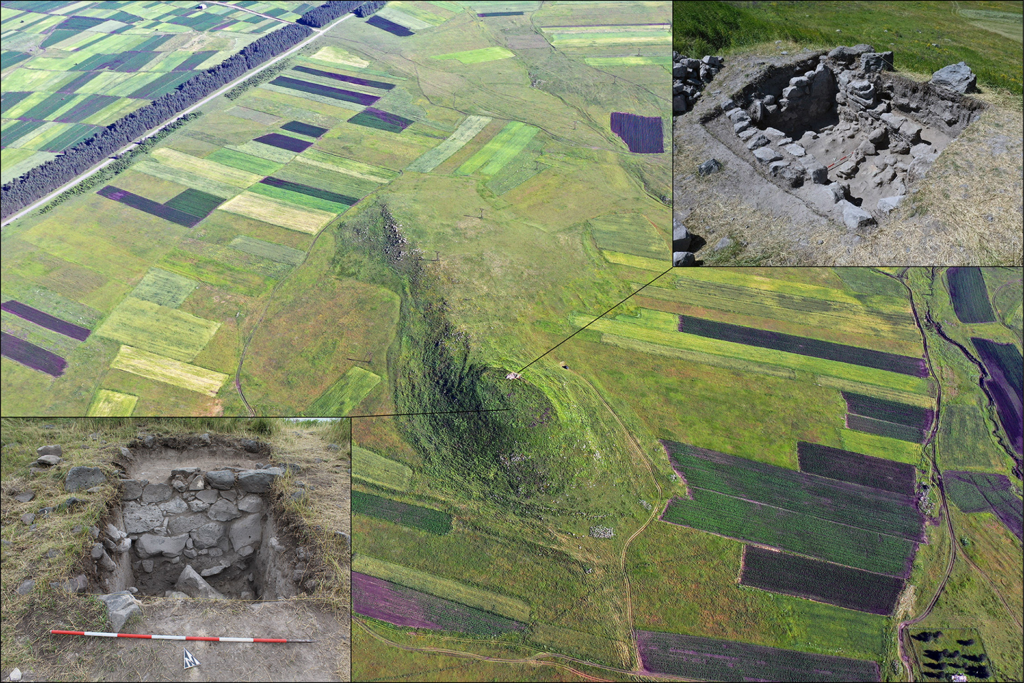
An eight-year archaeological project reveals a complex highland civilization, uncovering 168 ancient sites, ancient fortifications, and rare symbolic artifacts that redefine the Caucasus as a dynamic cultural crossroads.
High in the windswept plateaus of southern Georgia, where volcanic lakes shimmer beneath towering peaks and winters stretch long and unforgiving, archaeologists are uncovering a forgotten world. For centuries, the Javakheti Plateau remained one of the least explored regions of the South Caucasus. Now, a groundbreaking international research effort is transforming that silence into a vivid story of resilience, ritual, and human ingenuity.
After eight years of intensive fieldwork, the Samtskhe-Javakheti Archaeological Project—a collaboration between Georgian and Italian researchers—has revealed a landscape far richer and more complex than previously imagined. The team has documented 168 archaeological sites and conducted excavations at key locations, uncovering evidence that challenges long-held assumptions about this remote highland frontier.
A Frontier, Not a Periphery
Traditionally dismissed as a marginal zone, the Javakheti Plateau is now emerging as a dynamic crossroads between the Caucasus highlands and the surrounding Eurasian steppes. Researchers argue that this region was not isolated but deeply interconnected, serving as a meeting point for cultures, technologies, and belief systems.
Using advanced techniques such as remote sensing, GPS mapping, and geographic information systems (GIS), archaeologists have mapped settlement patterns across the plateau. Their findings reveal a striking pattern: rather than continuous habitation, communities returned to the same strategic locations over millennia, adapting to environmental and social changes.
Fortifications dominate the landscape—massive stone structures often built without mortar, known as “cyclopean architecture.” Once thought to be permanent defensive strongholds, these sites may have also functioned as temporary refuges for mobile pastoralist groups navigating seasonal migrations or periods of conflict.
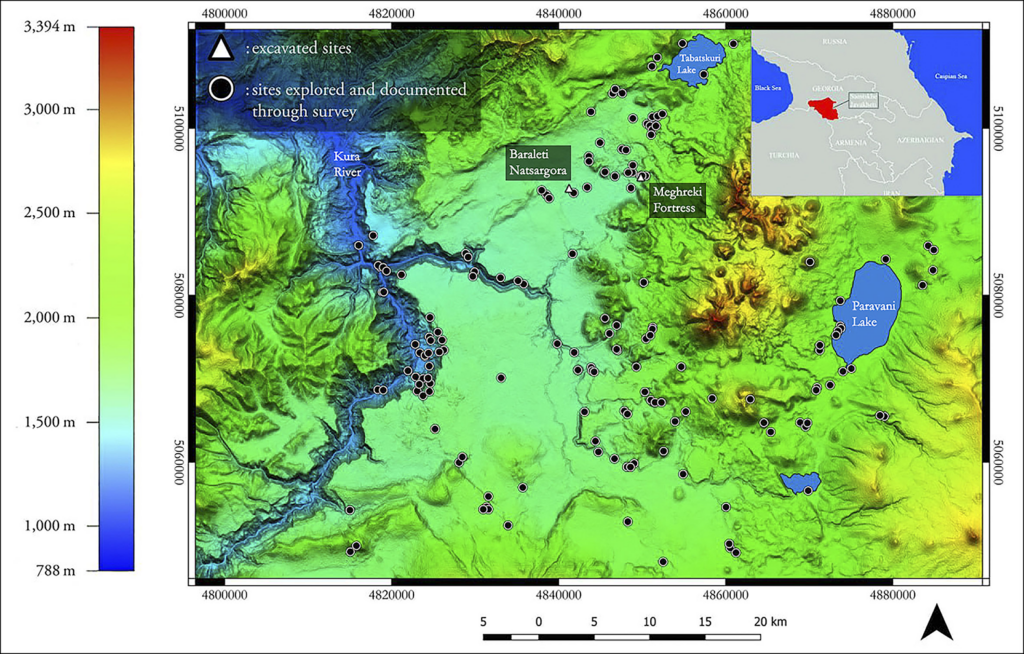
The Hill of Ashes: Baraleti Natsargora
One of the most compelling discoveries comes from Baraleti Natsargora, a mound whose name translates to “hill of ashes.” Excavations have confirmed the accuracy of this ancient label. Beneath the surface lie multiple layers of occupation, each marked by evidence of repeated burning events.
Archaeologists uncovered defensive walls, domestic structures, and clay installations dating from the Early Bronze Age to the Iron Age (approximately 3500–500 BCE). These findings suggest cycles of destruction and rebuilding, hinting at a turbulent past shaped by both human conflict and environmental pressures.
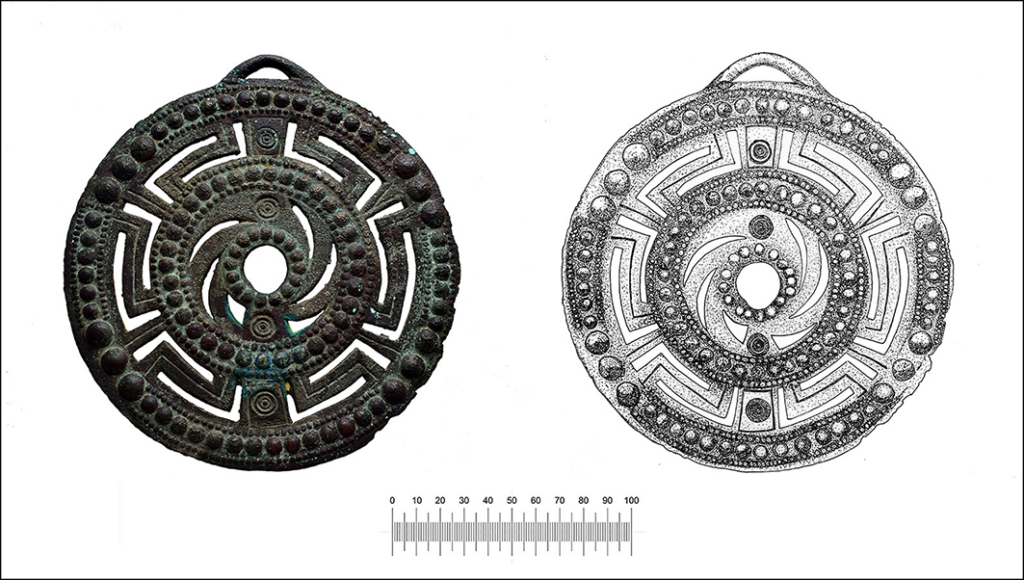
Yet the most striking artifact from Baraleti is not architectural, but symbolic: a finely crafted bronze solar disc. Adorned with concentric patterns, angular motifs, and carefully spaced perforations, the object reflects a sophisticated tradition of metalworking tied to solar imagery and ritual practice.
Similar discs found in southern Georgia have often been associated with female burials, suggesting that the Baraleti example may have originated from a nearby, still-undiscovered grave. The artifact offers a rare glimpse into the symbolic world of these ancient communities—one where celestial imagery and social identity were closely intertwined.
Meghreki Fortress and the Mystery of Clay Plaques
Further east, the Meghreki Fortress presents another layer of intrigue. Accidentally exposed during modern road construction, the site has revealed a remarkably deep and continuous occupational sequence, spanning from the Early Bronze Age through the medieval period.
Excavations have uncovered complex architectural remains, including perimeter walls, storage facilities, and domestic compounds. But it is the discovery of decorated clay plaques that has captured the attention of researchers.
These plaques, found embedded in clay installations such as ovens or raised platforms, feature geometric designs incised and painted in red, white, and dark blue. Such decoration is rare in the South Caucasus, making the Meghreki finds particularly significant.
Scholars believe these plaques may have marked spaces of special importance—perhaps ritual areas within domestic settings or indicators of elevated social status. Their presence suggests a blending of everyday life with symbolic expression, where homes were not merely shelters but also sites of cultural meaning.
Rethinking Life in the Highlands
Together, the discoveries at Baraleti and Meghreki are reshaping our understanding of life in the ancient Caucasus. Far from being isolated or primitive, the communities of the Javakheti Plateau appear to have been highly adaptive, creatively responding to the challenges of a harsh environment.
The archaeological record points to a society defined not only by fortification and defense but also by mobility, innovation, and cultural continuity. Settlement patterns indicate a flexible approach to habitation, while artifacts such as solar discs and decorated plaques reveal complex belief systems and artistic traditions.
Importantly, these findings contribute to broader debates about how ancient societies navigated frontier environments. The Javakheti Plateau emerges as a case study in resilience—a place where human communities balanced stability and movement, tradition and change.
A New Chapter in Caucasus Archaeology
The work of the Samtskhe-Javakheti Project is far from complete. With hundreds of sites already identified, researchers are planning expanded excavations, refined ceramic analyses, and comprehensive radiocarbon dating programs to establish more precise chronologies.
Future studies will also integrate environmental data and ethnographic comparisons to better understand how ancient populations moved across the landscape and interacted with neighboring regions. These efforts promise to deepen insights into the connections between highland and lowland societies.
As the layers of stone and ash continue to yield their secrets, one thing is clear: the story of the Javakheti Plateau is no longer one of isolation. It is a story of connection, adaptation, and enduring human creativity.
In the high mountains of southern Georgia, the past is not buried—it is rising, piece by piece, to reshape our understanding of an entire region.
Dan R, Chilingarashvili T, Vitolo P, et al. Layers of stone and ash: new perspectives from the Samtskhe-Javakheti archaeological project. Antiquity. Published online 2026:1-8. doi:10.15184/aqy.2026.10331
Cover Image Credit: Aerial view of Baraleti with excavation areas (© Samtskhe-Javakheti Project). Dan R, et. al., 2026, Antiquity.
