
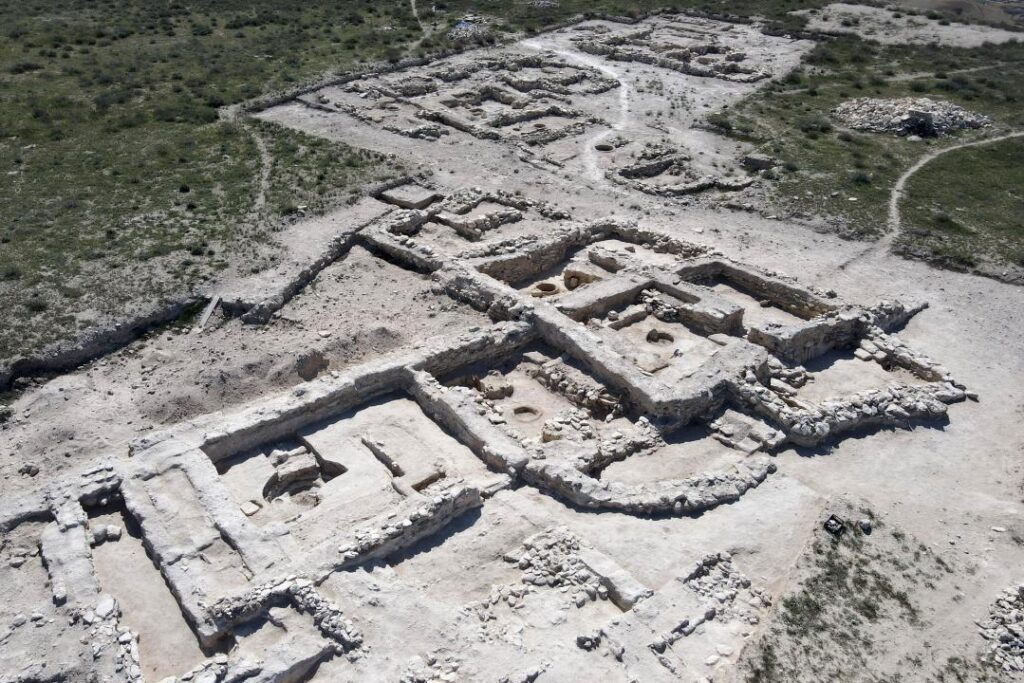
On the eastern shore of the Caspian Sea, the ruins of Karakabak are beginning to reveal a larger story: an ancient city in Kazakhstan that once connected local craft production with the wider trade networks of Eurasia.
New research at the Karakabak settlement in Mangystau Region suggests that the site was far more than a local coastal community. Archaeologists now describe it as a major craft, production, and trade center that operated between the 1st and 6th centuries AD, at a time when goods, money, and cultural influences moved across Central Asia, the Caspian world, Iran, the Caucasus, and beyond.
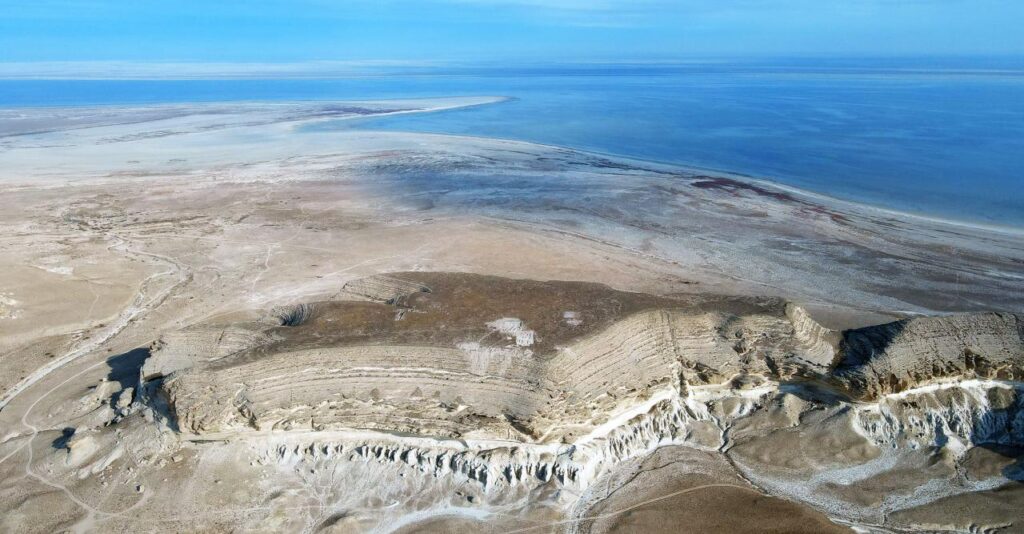
The site lies in Tupkaragan District, on the eastern shore of the Caspian Sea. For international readers, this location matters. Mangystau sits at a natural meeting point between maritime movement across the Caspian and overland routes leading toward Central Asia, the Volga region, the Caucasus, and the Middle East. Karakabak now appears to have been one of the places where those worlds met.
A Caspian settlement with wider horizons
Karakabak was discovered in 2006 during a regional project to document archaeological monuments in Mangystau. Since 2022, research has been financed and conducted by the A.Kh. Margulan Institute of Archaeology, one of Kazakhstan’s leading scientific institutions in the field.
The work has already produced a substantial academic record. According to Kazakhstan’s Ministry of Science and Higher Education, 24 scientific works have been published on the site, including three monographs and nine Scopus-indexed articles.
That scholarly output is important because Karakabak is not being presented only as a spectacular discovery. It is being studied as a complex archaeological landscape, one that can help explain how the eastern Caspian coast functioned in antiquity.
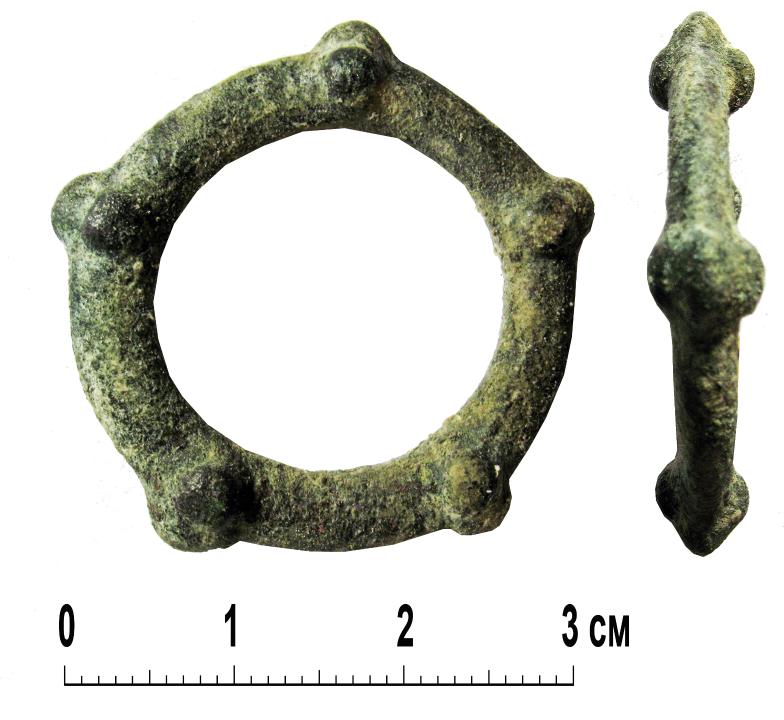
Excavations have revealed evidence of metallurgy, jewelry production, glassmaking, and ceramics. These traces point to a settled community with specialized crafts and organized production. The finds also include locally made objects as well as imported materials from different parts of Eurasia.
In other words, Karakabak was not isolated. It was connected.
Coins from Parthia, Sogdiana, Iran, Byzantium, and China
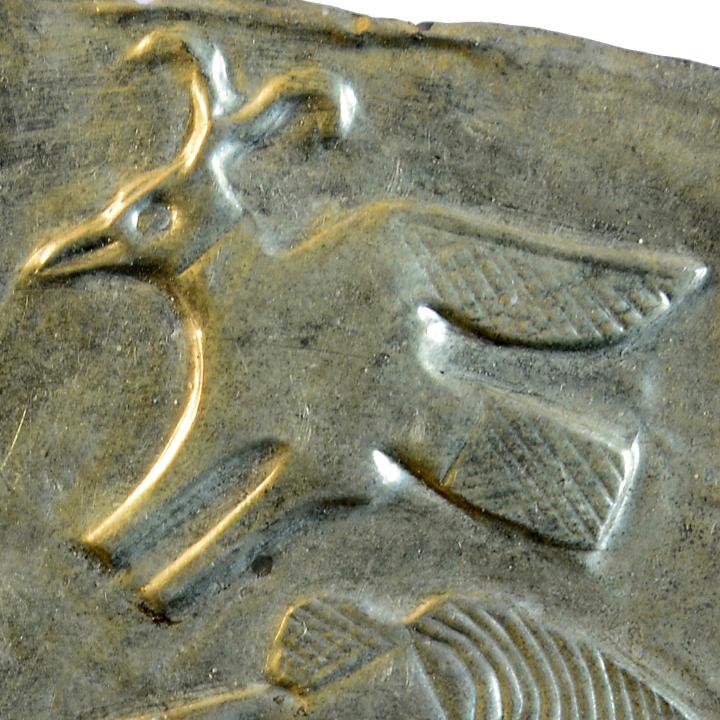
The strongest evidence for those connections comes from a remarkable group of ancient coins. More than 150 coins have been found at the site, dated from the 1st century AD to the first half of the 6th century.
Archaeologist Andrey Astafyev noted that the collection includes emissions from Parthia, ancient Khwarezm, Bukharan Sogdiana, Sasanian Iran, the Kushano-Sasanian state, the Byzantine Empire, and China.
For archaeologists, such a coin assemblage is rarely just a matter of money. Coins travel with merchants, soldiers, officials, pilgrims, and migrants. They move through markets and ports. They can survive long after political borders have shifted. At Karakabak, their variety suggests a settlement tied to a broad economic zone rather than a single regional exchange network.
The presence of coins linked to Iran, Central Asia, Byzantium, and China strengthens the argument that Mangystau played an active role in long-distance trade between East and West.
A possible branch of the Silk Road
Researchers now believe that one branch of the Silk Road may have passed through Mangystau, connecting Central Asia with the Caspian region and Eastern Europe.
This does not mean Karakabak was a “Silk Road city” in the simplified tourist sense of the phrase. The evidence is more interesting than that. It points to a flexible network of movement, where sea routes, caravan paths, craft production, and regional exchange overlapped.
The archaeological material also suggests the existence of a previously unknown Azov-Caspian trade corridor. If confirmed by further study, this route would help explain how goods and contacts moved between the Caspian Sea, the North Caucasus, the Azov region, the Lower and Middle Volga, the southern Urals, Central Asia, and the Middle East.
Karakabak may have acted as one of the key nodes in that corridor.
This is where the discovery becomes larger than one settlement. It challenges the old habit of treating the Caspian steppe mainly as a space of nomadic movement. Mangystau may also have supported urban centers, workshops, ports, and commercial communities linked to far-reaching networks.
A sixth-century jug and the everyday life of Karakabak
Recent excavations have also produced a valuable historical artifact: an ancient jug dated, according to preliminary assessment, to the 6th century AD.
The object may appear modest beside the coin collection, but it could prove equally useful. Pottery can reveal local habits, food storage practices, workshop traditions, and technological choices. Detailed analysis of the vessel may help researchers understand daily life in Karakabak during its later phase.
The find also fits the broader pim the site. Karakabak was not simply a stopping point for passing traders. It had its own population, crafts, and material culture.
Could Karakabak be Ptolemy’s Aspabota?
One of the more intriguing hypotheses connects Karakabak with Aspabota, a city mentioned on the map of the ancient Greek geographer Claudius Ptolemy. Researchers have suggested that Aspabota may have been located on the eastern coast of the Caspian Sea.
For now, this remains a hypothesis, not a settled identification. But it gives the site an additional layer of significance. If future research supports the link, Karakabak could become part of a much older geographical tradition recorded in classical sources.
Even without that identification, the settlement is already reshaping the archaeological map of western Kazakhstan.
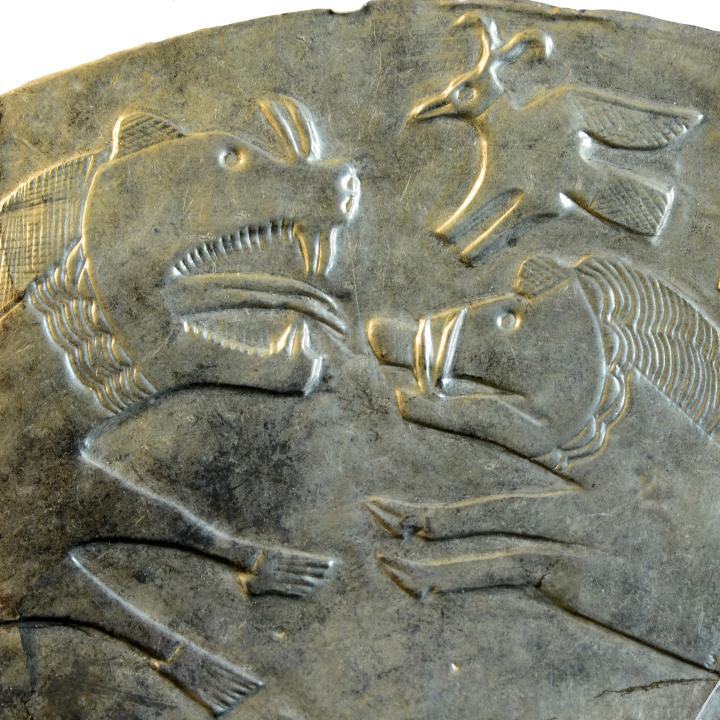
Kazakhstan’s Caspian coast enters a larger Eurasian story
The discoveries at Karakabak show that Mangystau was not a marginal zone on the edge of ancient trade. It was part of the system.
The finds point to contact with China, India, Rome, Byzantium, Iran, Central Asia, and the Caspian world. They also show that the Great Steppe was not defined only by mobility and pastoral life. It included settlements, craft production, trade hubs, and coastal communities that connected distant regions.
“Karakabak allows us to look differently at the history of Mangystau and Kazakhstan’s place in ancient international communications,” Andrey Astafyev said.
Further excavations may clarify the settlement’s layout, its economy, and its role in the suspected Azov-Caspian corridor. For now, the evidence already makes one thing clear: on the Caspian coast of Kazakhstan, Karakabak was once a place where routes converged, goods changed hands, and the wider Eurasian world left its mark.
Ministry of Science and Higher Education of the Republic of Kazakhstan
Cover Image Credit: Press Service of the Ministry of Science and Higher Education of the Republic of Kazakhstan
