
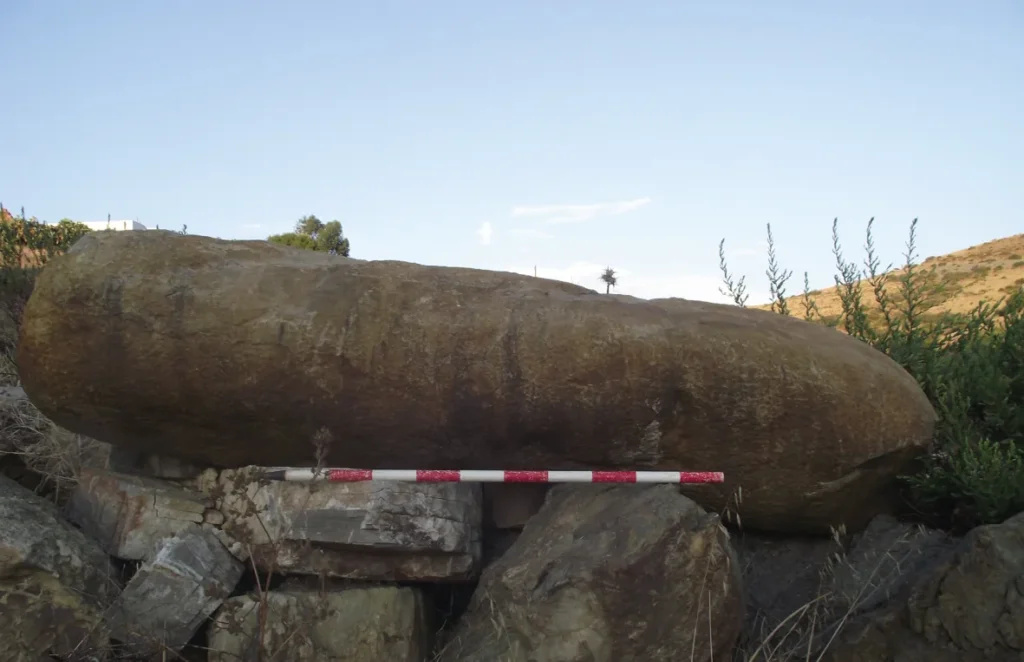
A significant archaeological discovery in northern Morocco’s Tangier Peninsula, situated just south of the Strait of Gibraltar, has led to the unearthing of three ancient cemeteries, including a stone burial estimated to date back approximately 4,000 years. This significant discovery, published on May 13 in the African Archaeological Review, sheds light on the prehistoric funerary customs and cultural evolution of a region that has long been overlooked in archaeological studies.
For centuries, the prehistoric period of North Africa west of Egypt has remained a relatively obscure chapter in archaeological narratives, despite extensive investigations across the continent. This latest study, spearheaded by doctoral researcher Hamza Benattia, sought to address this knowledge gap by meticulously examining sites across the northwestern Tangier Peninsula, focusing on the period between 3000 and 500 B.C.
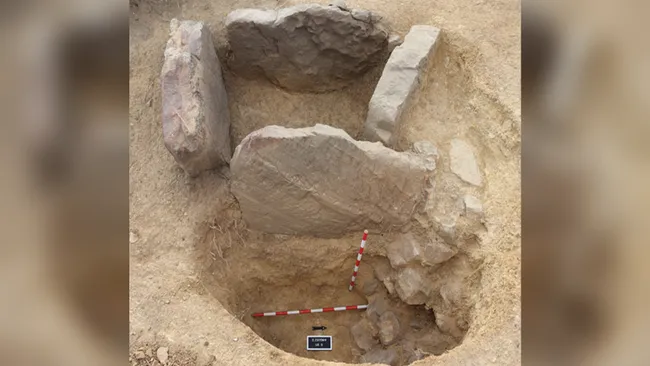
The team’s efforts revealed three distinct cemetery sites, characterized by the presence of “cist burials” – rectangular graves painstakingly carved into the bedrock and sealed with substantial stone slabs. The sheer effort involved in constructing these tombs underscores the profound significance that burial rites held for the ancient inhabitants of this region.
A pivotal aspect of the research involved the radiocarbon dating of human remains discovered within one of these cist burials. The analysis definitively placed the tomb’s construction around 2000 B.C., marking a crucial milestone as the first radiocarbon-dated cist burial ever identified in northwest Africa. This finding provides an indispensable chronological anchor for future archaeological endeavors in the area.
“These burials showcase a rich mosaic of funerary traditions,” the researchers emphasized, highlighting the intricate cultural landscape of these early societies. Such discoveries are instrumental in filling critical lacunae in our understanding of the social and ritual customs that shaped prehistoric communities in Morocco.
Adding another layer of intrigue to the findings was the discovery of approximately a dozen rock shelters adorned with circular engravings, commonly known as “cup marks.” These markings were often arranged in deliberate patterns, such as concentric circles and parallel lines, suggesting potential ritualistic or territorial significance. Furthermore, the presence of nearby standing stones hints at their possible function as boundary markers, reinforcing the notion that these sites held considerable ceremonial and social importance.
Beyond the cemeteries, the rock art within the shelters presented a fascinating glimpse into the symbolic world of these ancient people. Alongside geometric designs, researchers documented anthropomorphic and human-like figures, potentially representing deities or prominent members of the community. Notably, several “remarkable” etchings depicted “bi-triangulars” – a motif of eight opposed triangles stacked upon each other. Intriguingly, similar drawings have been found in Ibiza, where they are often interpreted as feminine representations.
Lead researcher Hamza Benattia noted the broader implications of these discoveries, stating that the “ritual landscapes of the Tangier Peninsula are far more complex and widespread than previously assumed…with their closest parallels in late prehistoric southern Iberia and the Sahara.”
The Tangier Peninsula’s unique geostrategic location, serving as a vital link between Europe and Africa and connecting the Atlantic and the Mediterranean since the Late Stone Age, appears to have fostered a rich and interconnected cultural sphere. The findings of this study underscore the region’s significant role in trans-regional networks, challenging traditional narratives and urging a reevaluation of colonial biases that have historically shaped scholarly discourse in North African archaeology. By illuminating the social, cultural, and economic dynamics of northwestern Africa, this research offers compelling new insights into the broader dynamics of the late prehistoric western Mediterranean and inner Atlantic world.
Benattia, H., Onrubia-Pintado, J. & Bokbot, Y. Cemeteries, Rock Art and Other Ritual Monuments of the Tangier Peninsula, Northwestern Africa, in Wider Trans-Regional Perspective (c. 3000–500 BC). Afr Archaeol Rev (2025). https://doi.org/10.1007/s10437-025-09621-z
Cover Image Credit: One of the standing stones the team found, which might have been used to mark territory. Credit: Hamza Benattia
