11 January 2026 The Future is the Product of the Past

Archaeologists discover traces of ancient Jalula, the city that witnessed the famous battle of the same name 1386 years ago

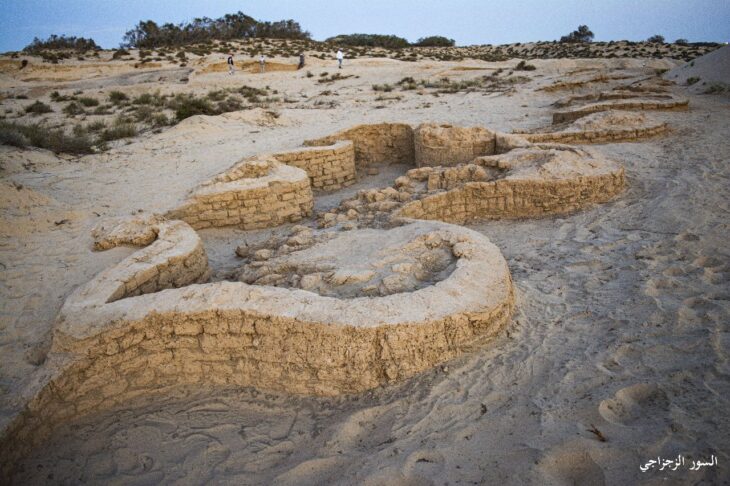
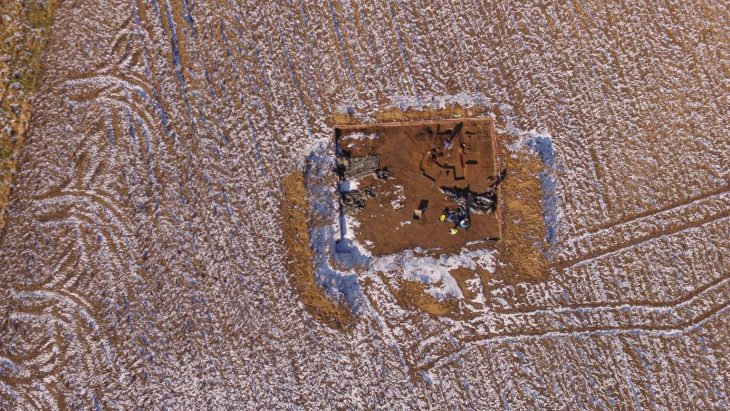
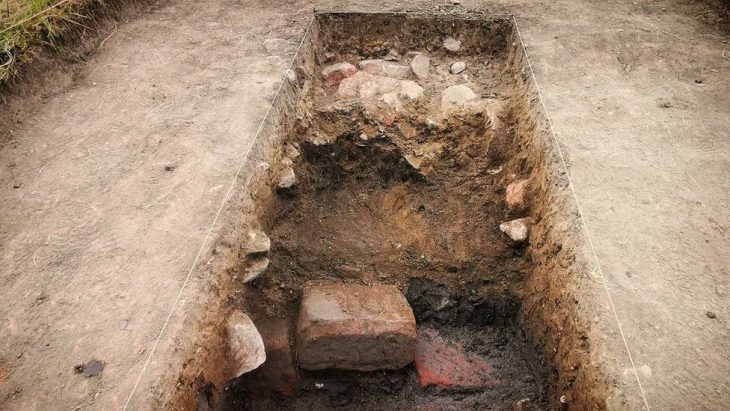
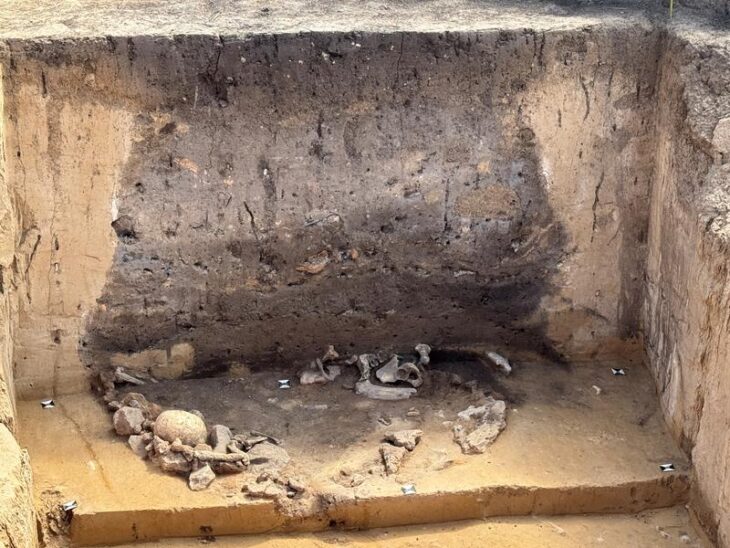
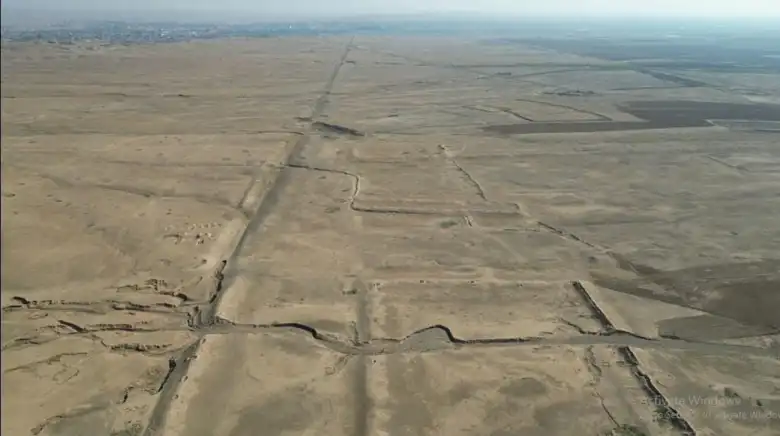
The  Iraqi State Board of Antiquities and Heritage (SBAH) has announced the discovery of the boundaries and various structures of the ancient city of Jalula.

Professor Ali Obeid Shalgham, Director-General of the Directorate of the Iraqi State Board of Antiquities and Heritage (SBAH), stated that the exploration process lasted several months and was overseen by researcher Ahmed Abdul Jabbar Khamas from the Antiquities and Heritage Inspection of Diyala.

Determining the limits of the ancient city of Jalula, which is situated north of the Diyala province and was the site of the well-known battle between Muslims and Sasanian Persians, was the primary objective of this endeavor.

Jalula was a strategically important location with routes leading to Iraq, Krasan, and Azerbaijan. It is worth noting that this ancient city should not be confused with modern Jalula, founded in 1958, which is on the opposite bank near the village of Bahiza.
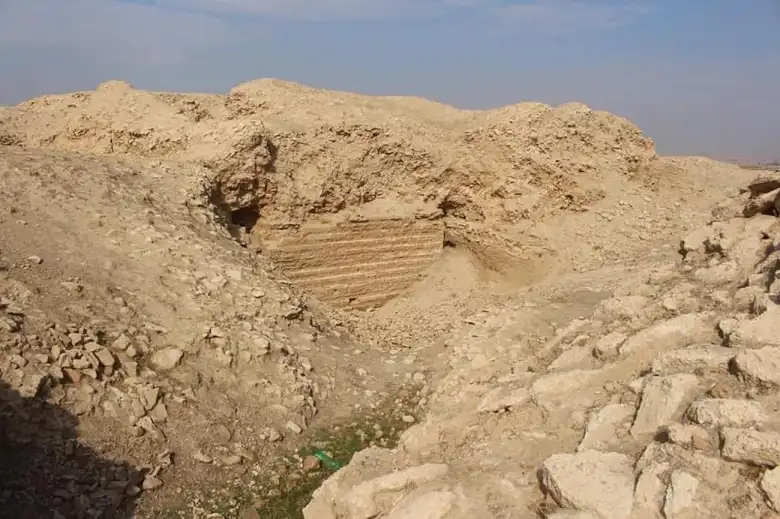
Photo: Iraq State Board of Antiquities and Heritage

The Sasanians chose it as the best place to settle and resist Islamic armies’ advances, especially after the fall of Dastagird (Daskara) near Shahban in 628 AD.


📣 Our WhatsApp channel is now LIVE! Stay up-to-date with the latest news and updates, just click here to follow us on WhatsApp and never miss a thing!!


The Battle of Jalula was fought between the Sassanid Empire and the Rashidun Caliphate (AD 637). The Caliph Umar plan was first to clear the way north before any decisive action against Tikrit and Mosul and he appointed Hashim ibn Uthba to the expedition to Jalula. The Persian forces at Jalula were commanded by General Mihran.

Almost every Arab historiographer provides information about “the great battle” of Jalula. In fact, the famous Arab historian Khalifah ibn Khayyat, calls this war the victory of victories.
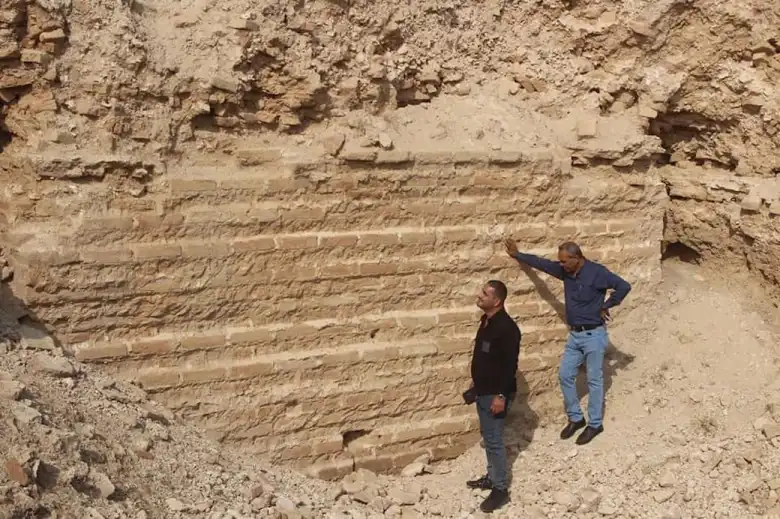
Photo: Iraq State Board of Antiquities and Heritage

Shalgham, said: “Archaeological survey operations are ongoing and also contributed to the discovery and recording of a number of archaeological sites and settlements from the history of the country.”

This archaeological find offers a deeper understanding of the historical events that shaped ancient Jalula and its strategic significance in the larger historical context, in addition to illuminating the region’s rich past.

State Board of Antiquities & Heritage of Iraq

Cover Photo: Iraq State Board of Antiquities and Heritage
Related Articles

An inscription containing the Turk name was discovered for the first time in Anatolia

3 September 2022

3 September 2022

For the first time in the pre-Islamic Early period Turkish history, an inscription bearing the inscription expression “Turk” and written...

Archaeologists Find One of the Long-Lost Holy Cities in Jordan

13 July 2025

13 July 2025

A remarkable archaeological discovery in Jordan has brought one of the Holy Land’s long-lost cities back to light. Researchers now...

Spectacular 222-gram Gold Necklace Unearthed in Poland, Possibly of Goth Origin

10 August 2025

10 August 2025

A spectacular archaeological find has emerged from the forests near Kalisz, Poland — a massive bent gold necklace weighing an...

Celtic gold rainbow cup coin discovered in Bavaria

12 September 2023

12 September 2023

An extremely rare “rainbow cup” Celtic coin dated to the second or first century B.C. has been discovered next to...

Newly Uncovered Bronze Age Megasettlement in Wicklow Challenges Long-Held Beliefs About Ireland’s First Towns

2 January 2026

2 January 2026

A major archaeological discovery in County Wicklow may rewrite what historians thought they knew about the origins of urban life...

Ruins of the 700-year-old wharf, possibly used by royalty, found in Oslo

6 March 2023

6 March 2023

An excavation by NIKU archaeologists in Oslo’s seaside neighborhood of Bjørvika has uncovered the remains of a long section of...

Tutankhamun of Kazakhstan, “Golden Man”

1 August 2024

1 August 2024

The Golden Man, the main symbol of Kazakhstan’s independence, is a warrior’s costume from about the 5th century BC that...

Volunteer archaeologists discovered a 1900-year-old silver military decoration in Vindolanda

17 June 2023

17 June 2023

Volunteer archaeologists have discovered a 1900-year-old military decoration (Phalera) that was awarded to distinguished soldiers and troops in the Roman...

Rare Medieval Amethyst Jewel Discovered in Castle Kolno’s Moat

24 July 2025

24 July 2025

A stunning medieval amethyst jewel, believed to date back over 600 years, has been discovered in the moat of the...

Roman-era structures unearthed in northwestern Turkiye dam site rescue excavations

18 May 2024

18 May 2024

Rescue excavations at the Reşitköy Dam site in the northwestern Turkiye province of Balıkesir have unearthed Roman structures, including a...

In Ryazan, the first birch bark letters were discovered

13 September 2021

13 September 2021

The first birch bark letters were found at the Vvedensky excavation site in the Kremlin in Pereyaslavl Ryazan (modern Ryazan)....

The excavations in Selinunte, Italy, which has the largest Agora in the Ancient World, “The results have gone well beyond expectations”

29 July 2022

29 July 2022

In the Selinunte, one of the most important archaeological sites of the Greek period in Italy, the outlines of the...

Analysis Of Roman Coins sheds light on the Roman financial crisis

17 April 2022

17 April 2022

New scientific analysis of the composition of Roman denarii has brought fresh understanding to a financial crisis briefly mentioned by...

5,000-Year-Old Matrilineal Society Discovered in China: DNA Unveils Ancient Female-Led Clans

30 July 2025

30 July 2025

In a remarkable study, scientists have uncovered genetic evidence of a rare matrilineal society in Neolithic China, where women determined...

A Special structure Contemporary to Göbeklitepe found at Gre Fılla Höyük in Eastern Turkey

4 August 2022

4 August 2022

Pit-bottomed structures dating to the Pre-Pottery Neolithic period were found at Gre Fılla Höyük (Gre Fılla Mound) in the province...