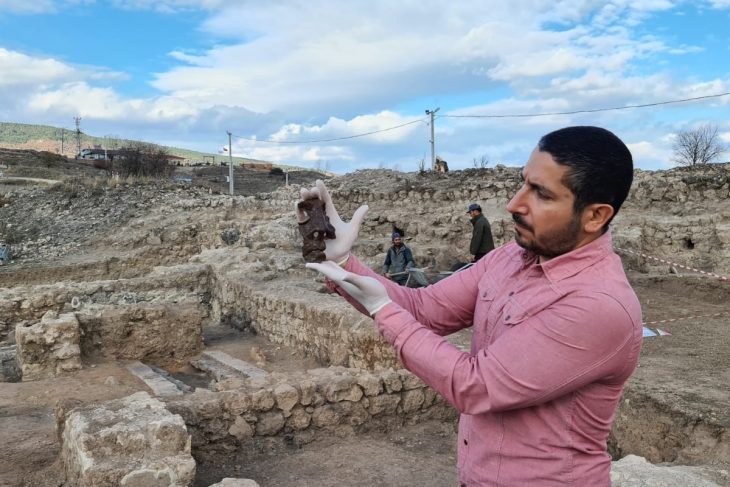
Archaeologists have discovered new evidence proving that birch bark writing in medieval Novgorod continued even after the region was annexed by Moscow in the late 15th century. The findings were presented during the 40th All-Russian Conference “Novgorod and Novgorod Land: History and Archaeology,” where academician Alexei Gippius of the Russian Academy of Sciences revealed results from the 2025 excavation season.
The discoveries further solidify the importance of Veliky Novgorod as one of medieval Eastern Europe’s most literate societies and provide new insight into taxation, trade, legal practices, and daily life from the 12th to early 16th centuries.
Six New Birch Bark Letters Discovered
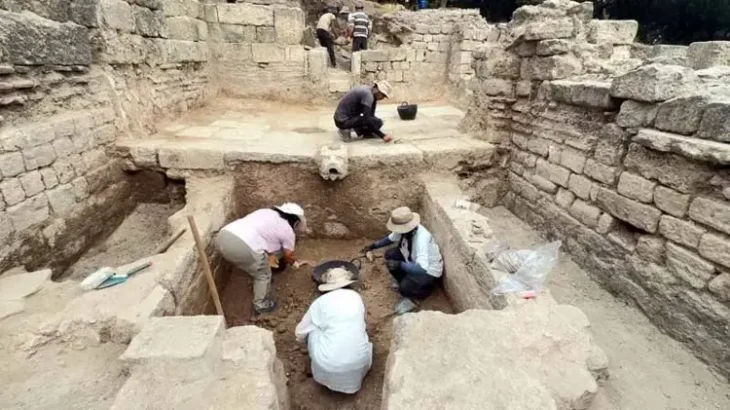
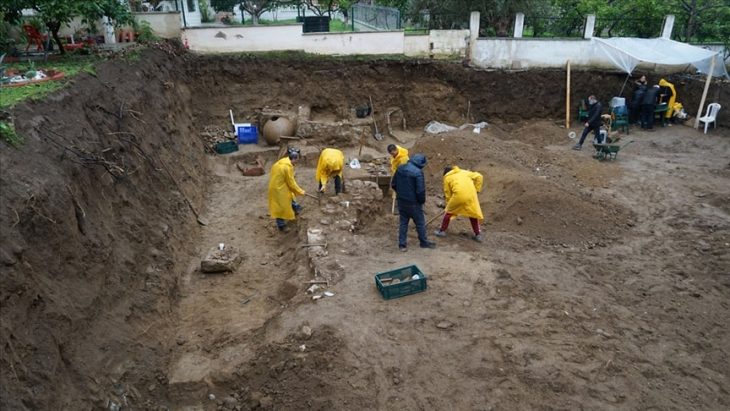
During the 2025 archaeological season, researchers uncovered six birch bark documents, numbered 1232 through 1237. Four were found at the Trinity excavation site, one at the Ioannovsky site, and one near Ekaterininskaya Gorka, close to the Victory Monument.
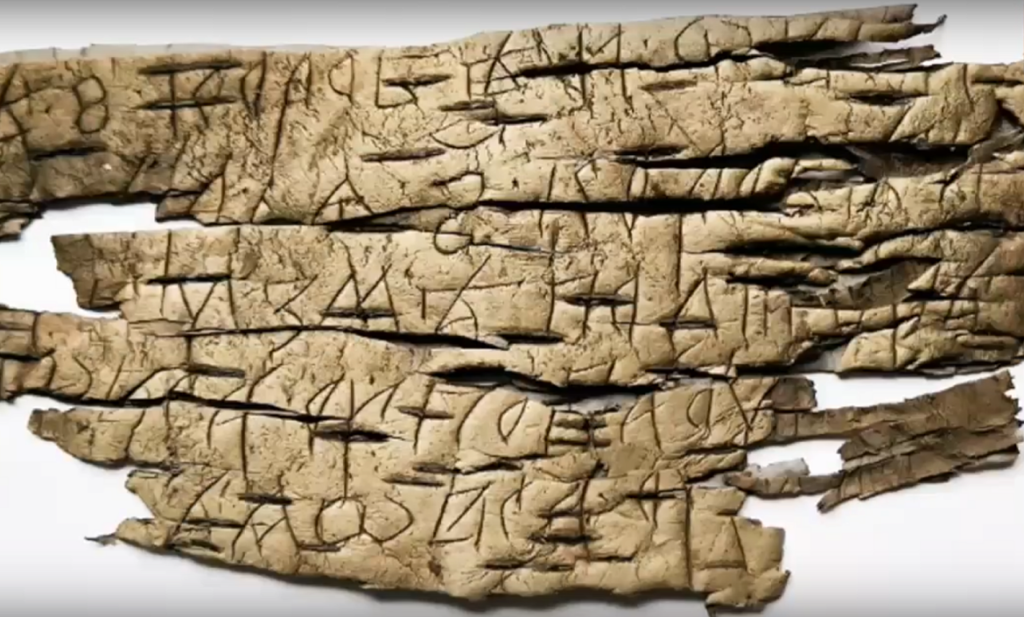
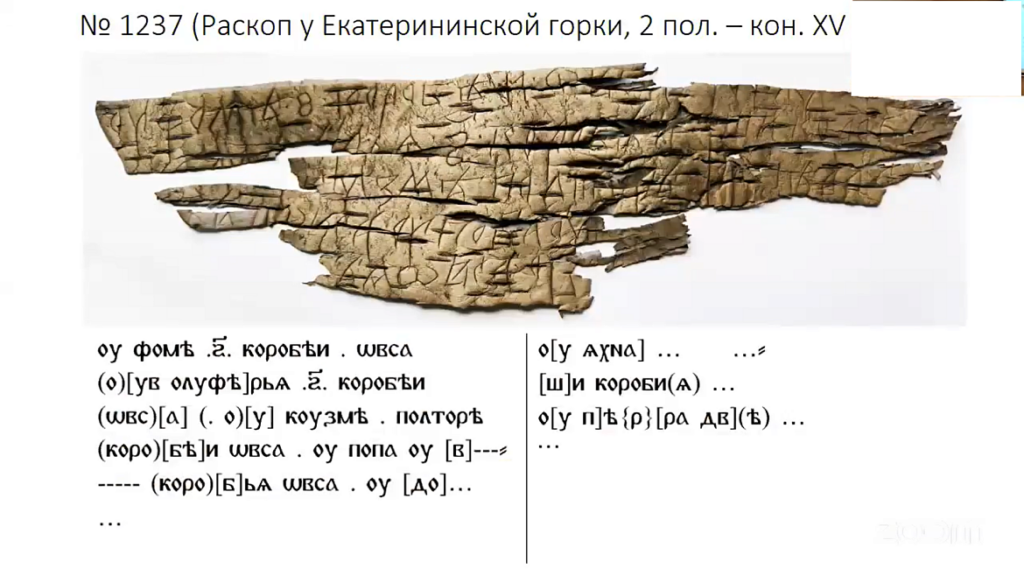
The most historically significant revelation comes from Document No. 1237, dated to the late 15th or early 16th century. This dating is crucial because it demonstrates that the tradition of writing on birch bark did not disappear in the 15th century, as previously believed, but continued into the so-called Moscow period following Novgorod’s annexation by the Grand Duchy of Moscow under Ivan III in 1478.
According to Petr Gaidukov, advisor to the director of the Institute of Archaeology of the Russian Academy of Sciences, the letter contains a list of goods stored in baskets, specifically oats and rye. Initially thought to belong to the 16th century, further examination placed it at the transition between the 15th and 16th centuries.
📣 Our WhatsApp channel is now LIVE! Stay up-to-date with the latest news and updates, just click here to follow us on WhatsApp and never miss a thing!!
This finding challenges long-held assumptions about the decline of Novgorod’s independent written culture after Moscow’s political consolidation.
A 12th-Century Tax Record from Kargopol
Perhaps the most valuable artifact, however, is Document No. 1232, dating back to the late 12th century. This letter records tribute collection from Volosovo Pogost, stating: “This is the tribute from Volosovo Pogost worth 80 and 8 grivnas.”
The reference connects to territories near modern-day Kargopol, which were under Novgorod’s control during the medieval period. The document provides rare quantitative data on tribute payments and strengthens historical understanding of Novgorod’s vast economic network, which stretched deep into northern Russia.
These records demonstrate the sophisticated administrative system of the Novgorod Republic, which functioned as a major commercial hub along the Baltic trade routes.
Legal Notes and Debt Lists Reveal Daily Life
Other letters offer glimpses into legal and social matters.
Document No. 1234, though partially cut in the Middle Ages, contains a fragment referencing the dispatch of a bailiff to a debtor: “Send the bailiff to him.” This indicates structured legal enforcement mechanisms in medieval Novgorod.
Document No. 1235, reconstructed from fragments, contains a debt register listing amounts in kunas and rezanas — early forms of currency used in medieval Rus. The document mentions several personal names, including Pervyata, Rokhlo, Dalko, and the particularly rare archaic name “Zhitozhizn.”
Linguistically, this name is especially interesting. It combines two ancient Slavic name roots — “Zhit” and “Zhizn” — which rarely appear together. Such findings are invaluable for scholars studying Old East Slavic naming traditions and language evolution.
Document No. 1236 preserves a brief domestic message: “Dmitry sent word with Puneya to his mother…” Meanwhile, Document No. 1233, dating to the 14th century and discovered at the Ioannovsky excavation site, appears to be a respectful note addressed to a boyar widow and her sons, including blessings for their health.
Together, these letters portray a literate society engaged in trade, governance, family communication, and legal proceedings.
The Birch Bark Writing System: A Medieval Innovation
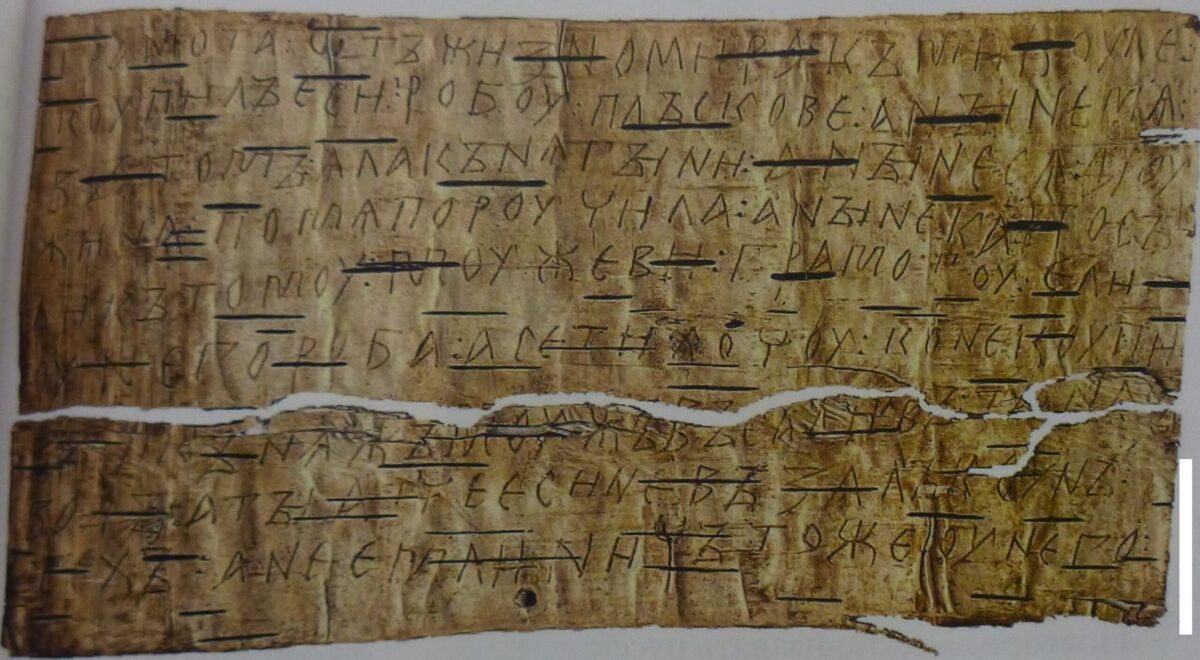
Birch bark writing was a unique and practical communication system widely used in medieval Novgorod and other East Slavic territories between the 11th and 15th centuries. Instead of expensive parchment, residents used thin layers of birch bark, which were readily available in northern forests.
Text was inscribed using a stylus rather than ink, scratching letters directly into the bark’s inner surface. The writing system employed the Cyrillic alphabet, adapted from the script developed by Saints Cyril and Methodius in the 9th century.
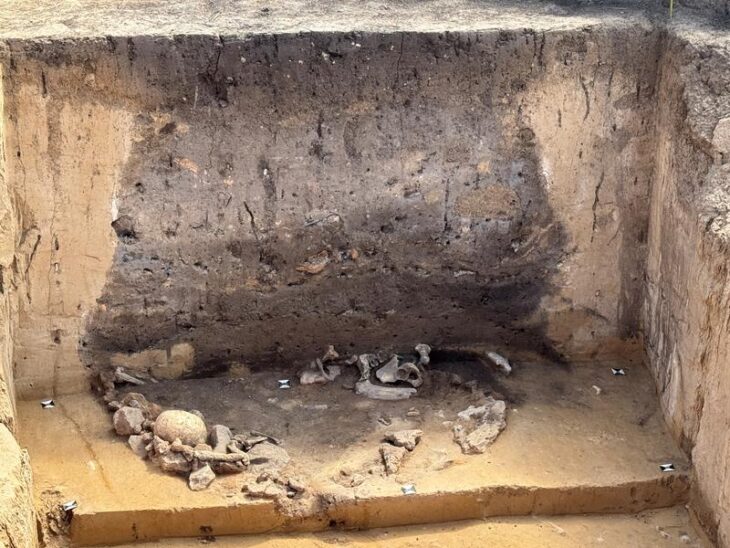
The durability of birch bark in Novgorod’s waterlogged soil — which preserves organic material remarkably well — has allowed archaeologists to recover more than 1,200 birch bark documents since the first discovery in 1951.
Unlike many medieval European societies where literacy was largely confined to clergy and elites, Novgorod’s birch bark letters suggest widespread functional literacy. Messages were written by merchants, craftsmen, women, and even children. Some previously discovered letters include school exercises and drawings made by young boys learning to write.
The 2025 findings further extend the known timeline of this writing tradition, proving that it survived political transformation and integration into Moscow’s centralized state.
Rewriting Medieval Russian Literacy
The continuation of birch bark documentation into the Moscow period forces historians to reconsider assumptions about cultural decline following Novgorod’s annexation. Instead, the evidence suggests continuity in administrative practices and everyday literacy.
As excavation work continues in Veliky Novgorod, archaeologists hope to uncover further documents that may reshape understanding of medieval Russian society.
For now, the six newly discovered birch bark letters serve as tangible proof that even amid political upheaval, the written word endured — scratched carefully into bark, preserved beneath the soil for centuries, and now helping historians rewrite the story of early Russian civilization.
Cover Image Credit: Birch-bark letter no. 109, c. 12th century, Veliky Novgorod. Public Domain