
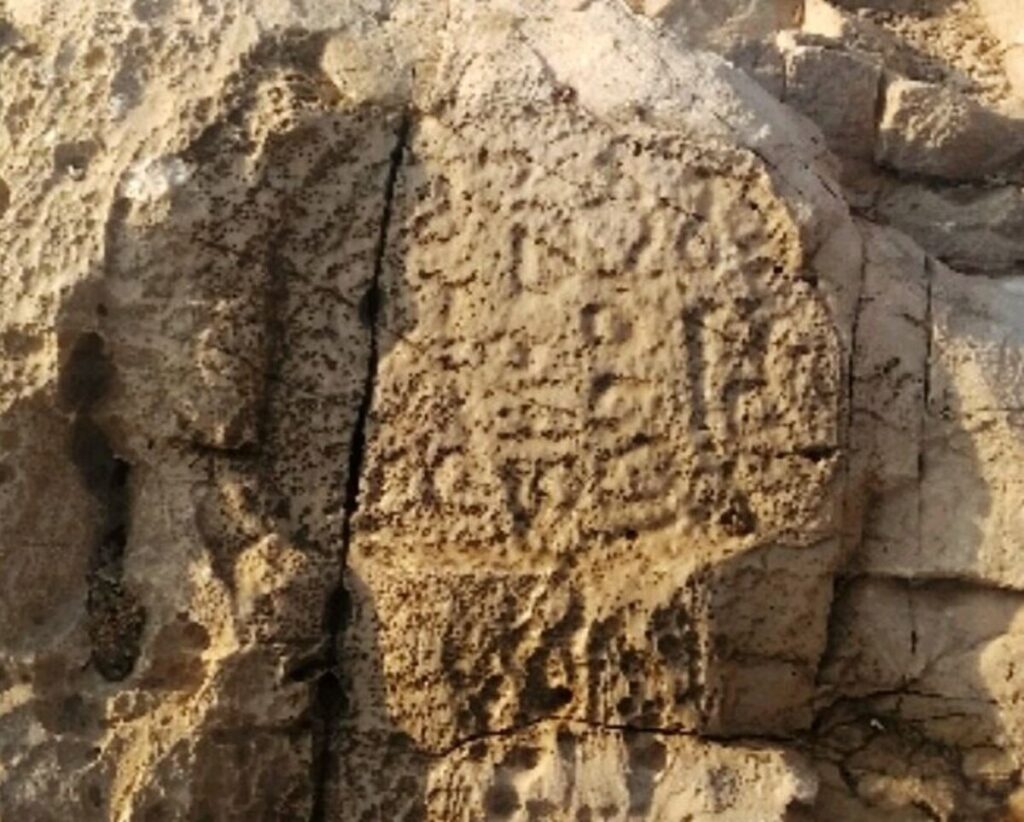
Archaeologists have discovered a funerary inscription dating to the final centuries of the Sasanian Empire in southern Iran, offering new evidence of how ancient Zoroastrian communities treated their dead. Found in a carved rock frame north of the ancient city of Estakhr, the inscription sheds light on religious traditions that regarded the preservation of nature’s sacred elements as an essential part of the journey after death.
The discovery comes from the Marvdasht Plain in Fars Province, a region known for its extraordinary concentration of pre-Islamic monuments and inscriptions. According to Tehran Times, archaeologist Abolhassan Atabaki identified the inscription as a Pahlavi text associated with a Zoroastrian burial from the late Sasanian period, before the empire’s collapse in the seventh century CE.
Although researchers have not yet released a complete transcription or translation, the inscription adds another piece to the archaeological record of a region where religious beliefs shaped funerary customs for centuries.
Why Didn’t Zoroastrians Bury Their Dead?
Zoroastrianism, one of the world’s oldest living religions, arose in ancient Iran and became the state religion of the Sasanian Empire (224–651 CE). Its teachings, attributed to the prophet Zarathustra, centre on the struggle between truth and falsehood, the weight of moral choice, and the eventual triumph of good.
Death posed a particular problem. Zoroastrians considered earth, water, and fire sacred elements that required protection from contamination. For this reason, Zoroastrians avoided burying their dead, believing that decomposing bodies would contaminate the sacred earth
The Vendidad, a collection of Zoroastrian religious laws within the Avesta, describes the pollution associated with death and prescribes measures to protect the living and the natural environment. Rather than burying or cremating bodies, many communities practiced exposure, placing the deceased in designated open-air locations where scavenging birds and animals could remove the flesh.
Atabaki explained that these beliefs led communities to relocate mortuary practices to elevated, rocky terrain and mountainous regions. These geographical settings facilitated the natural decomposition of the deceased while preventing direct contact with arable land or aqueous resources.
From the Sun’s Rays to the Final Resting Place
Sunlight played an important role in Zoroastrian funerary traditions. A ritual known as khorshid-negahreshni, or the exposure of the deceased to the sun’s gaze, reflected religious beliefs surrounding purification and the soul’s passage beyond death.
Zoroastrian tradition held that the soul lingered near the body for three nights. On the fourth day it approached the Chinvat Bridge, where its thoughts, words and deeds decided its fate. This view of the afterlife gave funerary rites a spiritual weight that went far beyond the practical disposal of the corpse.
Once the flesh had been removed and the bones further cleaned by the elements, relatives could gather them into ossuaries, or astodans. Examples carved into rock faces or built of stone and ceramic are well known to archaeologists.
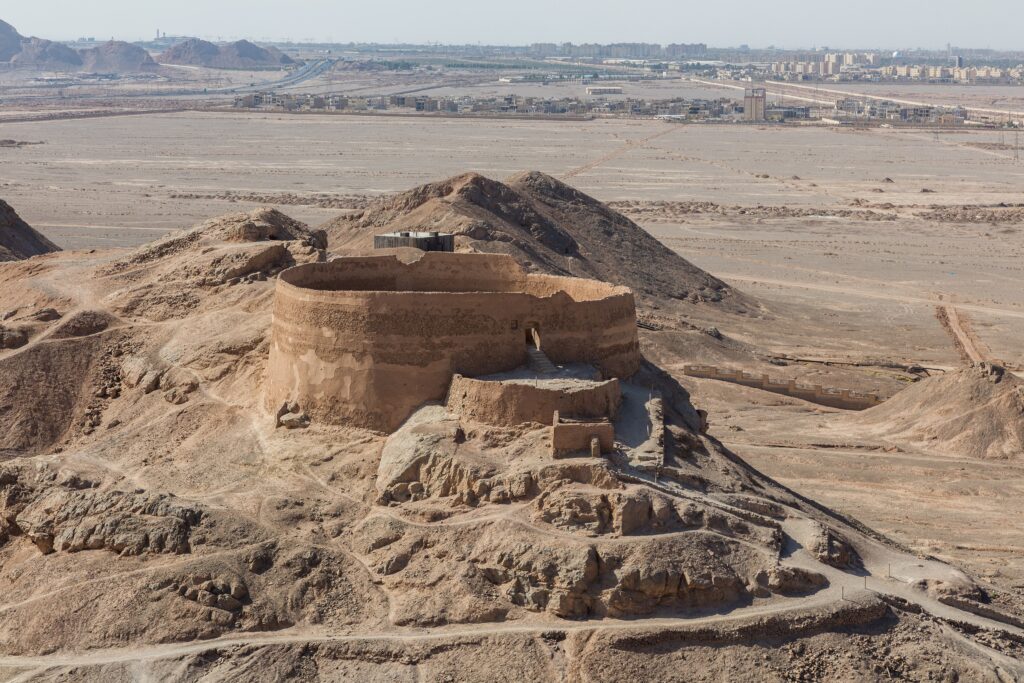
These practices also help explain the distinctive funerary landscape of Sasanian Iran. The familiar enclosed Towers of Silence developed more prominently in later periods, while earlier communities frequently relied on open exposure grounds and separate repositories for bones.
Yet funerary customs were not uniform. Historical sources and archaeological finds show considerable variation, shaped by regional tradition, social status, and economic means.
Marvdasht’s Remarkable Collection of Sasanian Inscriptions
Historian Najmeh Ebrahimi points out that Sasanian communities used a wide range of funerary structures: rock-cut chambers, stone cairns, burial towers, jar burials, and ossuaries. The diversity suggests that religious rules interacted with local custom and the resources available to each family.
The Marvdasht Plain holds particular importance for understanding these traditions. According to Ebrahimi, researchers have identified and examined more than 50 Sasanian inscriptions across the region, which also contains Iran’s largest known concentration of funerary inscriptions from the period.
The nearby ancient city of Estakhr served as the ceremonial capital and ancestral center of the Sasanian dynasty, while Ctesiphon remained the empire’s principal political capital. Estakhr also held considerable religious importance, reflecting the close relationship between royal authority and Zoroastrian institutions during the Sasanian period.
The newly discovered inscription strengthens that historical picture. Further examination of its Pahlavi text may eventually reveal information about the deceased, the circumstances of the burial, or the individuals responsible for preparing the funerary monument.
For now, the carved inscription offers another tangible connection to a society in which death rituals expressed both respect for the departed and a profound concern for the purity of the natural world.
