Archaeologists working south of Rome have uncovered an exceptionally well-preserved section of the ancient burial ground known as the Ostiense Necropolis, revealing elaborately decorated imperial tombs alongside simpler graves from late antiquity. The discovery offers a rare glimpse into centuries of Roman funerary traditions and social change.
The newly revealed funerary complex emerged during preventive excavations conducted before the construction of a student residence in the San Paolo Fuori le Mura district, an area located along the historic Via Ostiense. This ancient consular road once linked the capital with the port city of Ostia Antica, stretching roughly 30 kilometers and serving as one of the main arteries of Roman commerce and communication.
The archaeological work, carried out under the supervision of the Italian Ministry of Culture, has revealed a previously unknown sector of the Ostiense Necropolis, one of the largest burial grounds of ancient Rome. Evidence indicates that the necropolis developed over several centuries, from the late Roman Republic through the late Imperial period, reflecting the evolving customs and social structures of the ancient metropolis.
Imperial Tomb Complex Beneath the Modern City
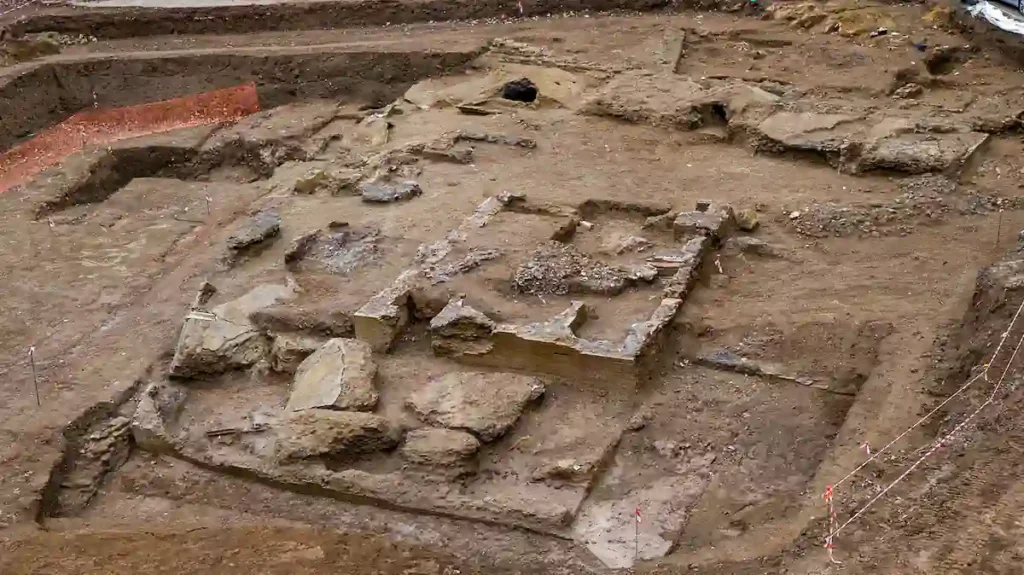
The excavation team, led by archaeologist Diletta Menghinello of the Soprintendenza Speciale di Roma, identified a cluster of five imperial-era funerary buildings located roughly one meter below the current street level. Each structure features a quadrangular layout and remnants of vaulted ceilings, arranged along a northeast-southwest axis.
Two smaller constructions positioned in front of the main tombs may have served auxiliary functions related to ritual practices or the organization of the burial space. A sixth structure, built in a similar style but oriented perpendicular to the others, suggests the complex may have been arranged around a central courtyard or open area.
📣 Our WhatsApp channel is now LIVE! Stay up-to-date with the latest news and updates, just click here to follow us on WhatsApp and never miss a thing!!
Such architectural planning indicates the possibility that the tombs belonged to a family group, burial association, or community collective—arrangements common in Roman funerary culture.
Although excavation is still in its early stages, Menghinello and her team believe these tombs likely functioned as columbaria—communal burial chambers containing niches designed to house cremation urns.
Frescoes, Stucco, and Winged Victories
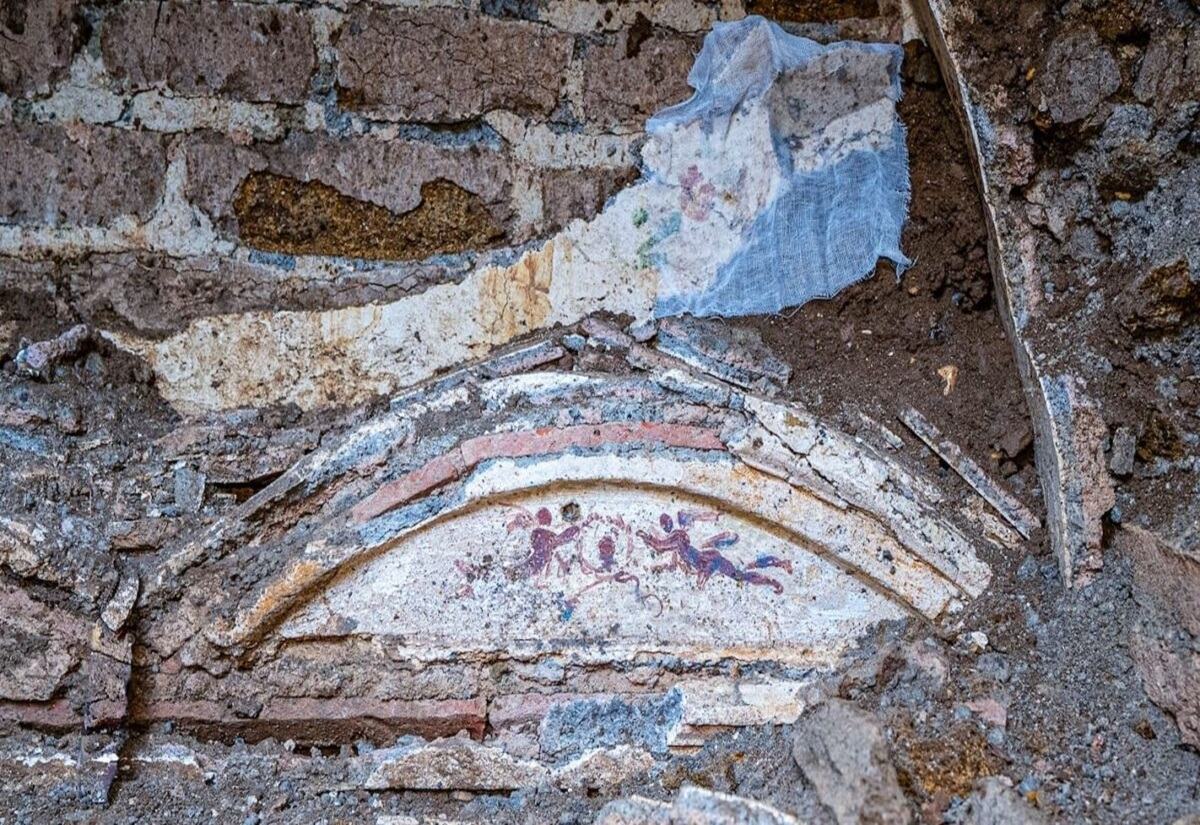
Even at this preliminary phase, archaeologists have documented remarkably rich decorative elements inside the chambers. The walls preserve fragments of painted frescoes featuring colored bands and plant motifs, as well as delicate stucco ornamentation.
Among the most striking details are small shrine-like niches decorated with figures typical of Roman funerary symbolism. These include orantes, female figures depicted in prayer, and winged representations of Victory—images associated with spiritual transcendence and triumph over death.
The presence of such artistic decoration suggests that the individuals buried here may have belonged to the urban middle classes or organized professional groups rather than Rome’s wealthiest elite.
Further excavation could reveal grave goods, inscriptions naming the deceased, and the original flooring of the chambers. Such discoveries would provide valuable insights into burial practices and the identities of the people interred there.
Mysterious Chambers and Ritual Spaces
In the section closest to the ancient roadway, archaeologists also uncovered an apsidal chamber and a larger brick-built room containing traces of mosaic flooring. The precise function of these spaces remains uncertain.
Researchers believe they may have been used for ritual activities associated with funerary ceremonies. In Roman tradition, families often gathered in cemetery spaces to share commemorative meals honoring the dead—ceremonies known as silicernia.
If confirmed, these structures would illustrate how burial complexes served not only as places of interment but also as communal spaces where the living maintained symbolic relationships with their ancestors.
A Shift in Burial Traditions
The excavation also revealed a striking chronological contrast within the necropolis. Behind the monumental imperial tombs, archaeologists identified a later burial area dating to late antiquity.
A long wall built of tuff blocks separates the earlier imperial complex from this later cemetery. On the other side, the burials are markedly simpler: shallow pits dug directly into the ground, often layered closely on top of one another.
Grave goods found in these later burials are sparse, suggesting a population with fewer resources or changing funerary customs in the final centuries of the Roman Empire.
The transition from richly decorated tomb structures to modest pit burials reflects broader social and economic shifts during late antiquity, when the empire faced political instability and declining urban wealth.
Archaeology Meets Modern Development
Italy’s Minister of Culture, Alessandro Giuli, described the discovery as an important addition to the archaeological landscape of Rome. He emphasized that preventive archaeology—conducted before modern construction projects—plays a crucial role in revealing the hidden layers of the city’s past.
Authorities are now exploring ways to integrate the remains into the new building project while ensuring their preservation and accessibility.
According to heritage officials, the goal is not only to protect the structures but also to allow future visitors to experience them firsthand, demonstrating how archaeological conservation can coexist with urban development.
Expanding the Map of Ancient Rome
The discovery complements other known areas of the Ostiense Necropolis, including the nearby burial zones of Sepolcreto Ostiense and Rupe di San Paolo. Together, these sites help archaeologists reconstruct the vast funerary landscape that once surrounded ancient Rome.
Experts believe the newly uncovered tombs could significantly enhance understanding of the necropolis’s layout and internal organization. Studies of skeletal remains, inscriptions, and artifacts may also shed light on the lives of Rome’s middle and lower social groups—communities often overshadowed in historical records by the empire’s elites.
For archaeologists, the excavation represents another reminder that beneath Rome’s modern streets lies a city layered with millennia of history.
As work continues along the ancient Via Ostiense, researchers remain hopeful that the necropolis will yield further discoveries—each new tomb adding another chapter to the story of how Romans lived, remembered, and honored their dead.
Cover Image Credit: Ministero della Cultura