
A remarkable archaeological discovery in Panama is shedding new light on the power, ritual life, and social organization of pre-Hispanic societies in Central America. The Ministry of Culture of Panama (MiCultura) has confirmed the excavation of “Tomb 3,” a more than 1,000-year-old high-status burial at the El Caño Archaeological Site in Coclé province.
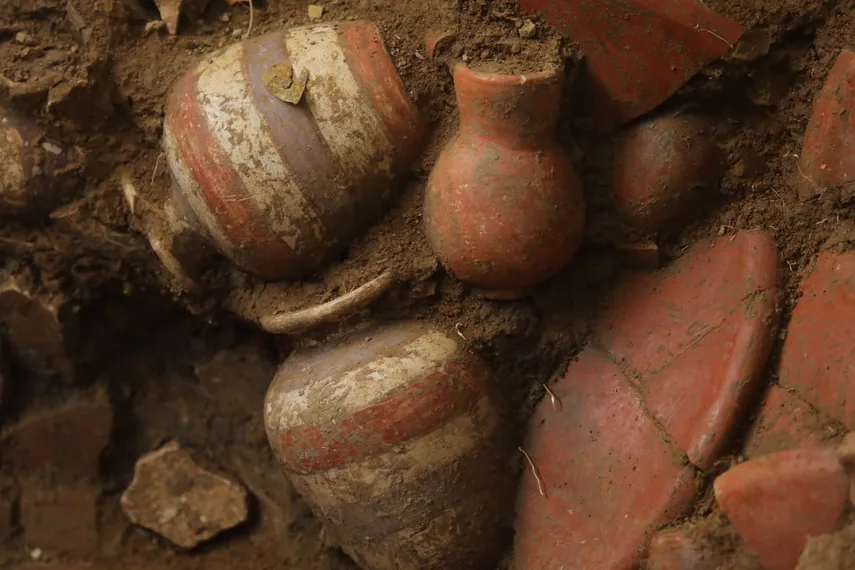
The newly excavated tomb, located in the district of Natá de los Caballeros about 200 kilometers southwest of Panama City, contains multiple human remains accompanied by elaborate gold ornaments and finely crafted ceramics. Officials describe the find as one of the most significant recent discoveries for Panamanian archaeology and for the broader study of pre-Hispanic societies across the Central American isthmus.
A Major Discovery in Coclé Province
The excavation forms part of the 2026 archaeological season at El Caño, a site that has been under systematic investigation for nearly two decades. Funded by the Ministry of Culture in collaboration with the Fundación El Caño, the project continues to reveal the complexity and sophistication of the societies that flourished in Panama’s central provinces between the 8th and 11th centuries AD.
Although Tomb 3 was initially identified in 2009 due to a high concentration of ceramic materials and metal fragments, only during the current excavation season was its full structure uncovered. Archaeologists revealed a complex funerary context consisting of a principal burial accompanied by several other individuals and a rich array of offerings.
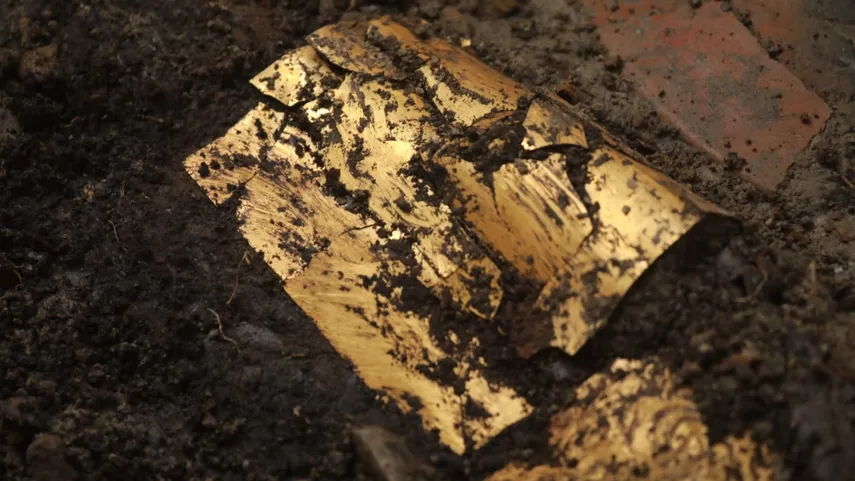
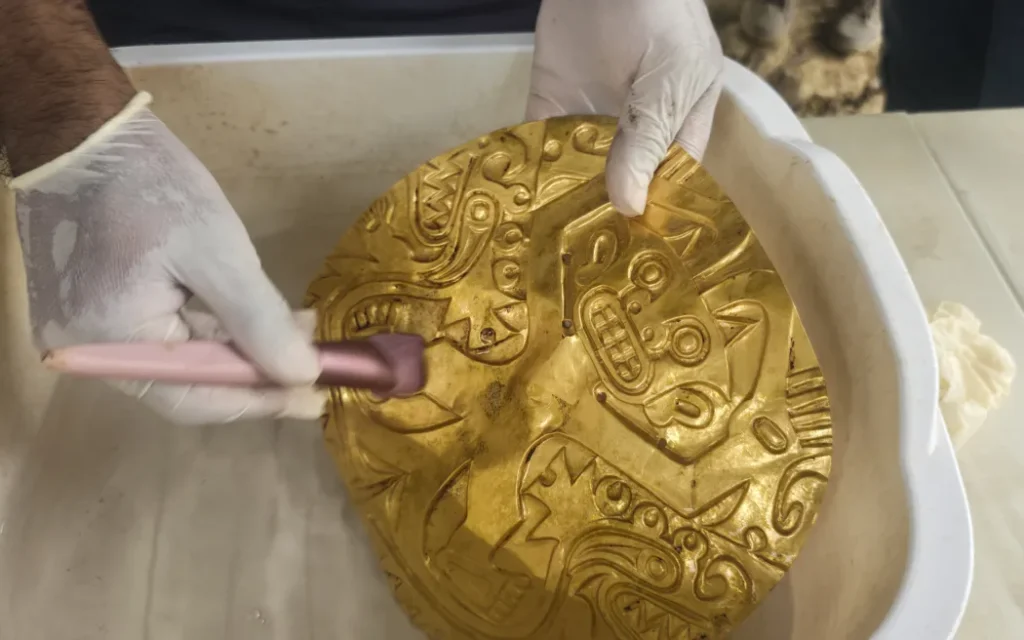
According to project lead archaeologist Julia Mayo, the tomb dates between 800 and 1000 AD. The central individual, laid out in an extended position, was surrounded by prestigious objects indicating elevated social rank. These included gold pectorals, earrings, and bracelets, some decorated with iconography representing bats and crocodiles—motifs associated with local artistic traditions.
“The individual with the gold was the one with the highest social status in the group,” Mayo explained, highlighting the clear hierarchical structure reflected in the burial.
Gold, Ceramics, and Social Power
The abundance and quality of the funerary offerings in Tomb 3 confirm that El Caño was part of a broader regional network of interaction and exchange. The site has long been associated with elite burials and ceremonial activity, functioning as a major pre-Hispanic cemetery for roughly 200 years.
To date, at least nine similar tombs have been discovered at El Caño. However, Tomb 3 expands the known funerary record and offers fresh data for understanding political authority, ritual practices, and long-distance trade networks during a peak period of sociopolitical development in the region.
Particularly significant are the stylistic and technological similarities between artifacts recovered at El Caño and those found at Sitio Conte, another major archaeological site in Coclé province. These parallels strengthen the hypothesis that communities in the region shared a common cultural tradition and maintained close political and economic ties.
The metal objects found in Tomb 3—especially the finely crafted gold ornaments—demonstrate advanced metallurgical knowledge and access to valuable resources. Such items were not merely decorative but served as powerful symbols of authority, reinforcing elite status within the community both in life and in death.
Rethinking Pre-Hispanic Leadership in Panama
From a scientific perspective, Tomb 3 provides critical evidence for reevaluating theoretical models about the emergence and consolidation of complex chiefdoms in the Isthmus of Panama. The scale and richness of the burial suggest centralized political structures capable of mobilizing labor, organizing elaborate ceremonies, and sustaining extensive exchange networks.
The spatial organization of the burial and the deliberate placement of bodies and objects also reveal a sophisticated belief system. Experts emphasize that, for these societies, death was not viewed as an end but as a transition to another realm where social rank remained meaningful. The display of material wealth in the principal burial may have functioned as both a spiritual provision and a social statement—reinforcing the legitimacy and authority of ruling elites before the broader community.
By expanding the sample of known elite burials, Tomb 3 allows researchers to examine variability in funerary practices and possible changes over time. This new evidence will help refine chronologies and clarify how leadership structures evolved during a critical phase of regional history.
Cultural Heritage and National Identity
Beyond its academic value, the discovery carries significant cultural and educational importance for modern Panama. During a site visit, Panama’s Minister of Culture emphasized the government’s commitment to strengthening research and promoting El Caño as a center for investigation and public education.
Officials highlighted ongoing efforts to advance the El Caño Museum project, which aims to serve as a hub for research and learning for both Panamanians and international visitors interested in the country’s deep historical roots.
The Ministry described the discovery as “of great importance for Panamanian archaeology and the study of pre-Hispanic societies of the Central American isthmus.” By responsibly disseminating research findings, the project seeks to bring science closer to society and foster respect for archaeological heritage.
For local communities in Coclé, discoveries like Tomb 3 reinforce a sense of cultural identity and pride in a sophisticated ancestral past. The finely detailed goldwork and ceramics testify to advanced craftsmanship and artistic expression more than a millennium ago.
Continuing the Story of El Caño
The excavation of Tomb 3 reaffirms the importance of sustained investment in archaeological research in Panama. Each newly uncovered context at El Caño contributes not only spectacular artifacts but also solid scientific knowledge about the societies that once inhabited the region.
As investigations continue, Tomb 3 stands as another chapter in an unfolding story—one that reveals the complexity, power, and enduring legacy of Panama’s pre-Hispanic civilizations.
The Ministry of Culture of Panama (MiCultura)
Cover Image Credit: The Ministry of Culture of Panama
