

In late antique Rome, a bad hair day could become a legal matter. In AD 416, emperors Honorius and Theodosius II prohibited long hair inside Rome and its surrounding districts—at roughly the same time that an influential philosopher was portraying bald men as healthier, wiser, and altogether more trustworthy.
The unusual connection between Roman hairstyle laws and the ancient Eulogy of Baldness is examined by historian Javier Arce in a study published in the journal Pyrenae. His research suggests that Rome’s long-hair ban was not simply an eccentric attempt to regulate personal grooming. It formed part of a wider struggle over status, public order and the growing popularity of fashions associated with peoples the Romans called “barbarians.”
Rome’s 1,600-year-old long hair ban
The law was issued on December 12, AD 416, from Ravenna, where Emperor Honorius was then based. It ordered that no one be permitted to wear “longer locks” within the sacred city of Rome.
Long hair was not the only target. The same legislation prohibited clothing made from animal skins, even when worn by enslaved people. Free individuals who ignored the order faced legal punishment, while enslaved offenders could be sentenced to public labour. The regulation also applied beyond the city walls to neighbouring regions.
At first glance, the law appears to have been directed at foreigners—particularly Goths, Franks or other Germanic groups traditionally depicted with long hair and fur garments. Arce, however, identifies a problem with that explanation.
If the law was aimed only at foreign residents, Rome would have needed to contain such a large and visible “barbarian” population that their appearance had become a major urban concern. Arce proposes a more plausible alternative: Roman citizens themselves had begun copying foreign hairstyles and clothing.
The imperial government may therefore have been trying to stop Romans from looking too much like the people who had recently challenged—and in some cases defeated—the empire.
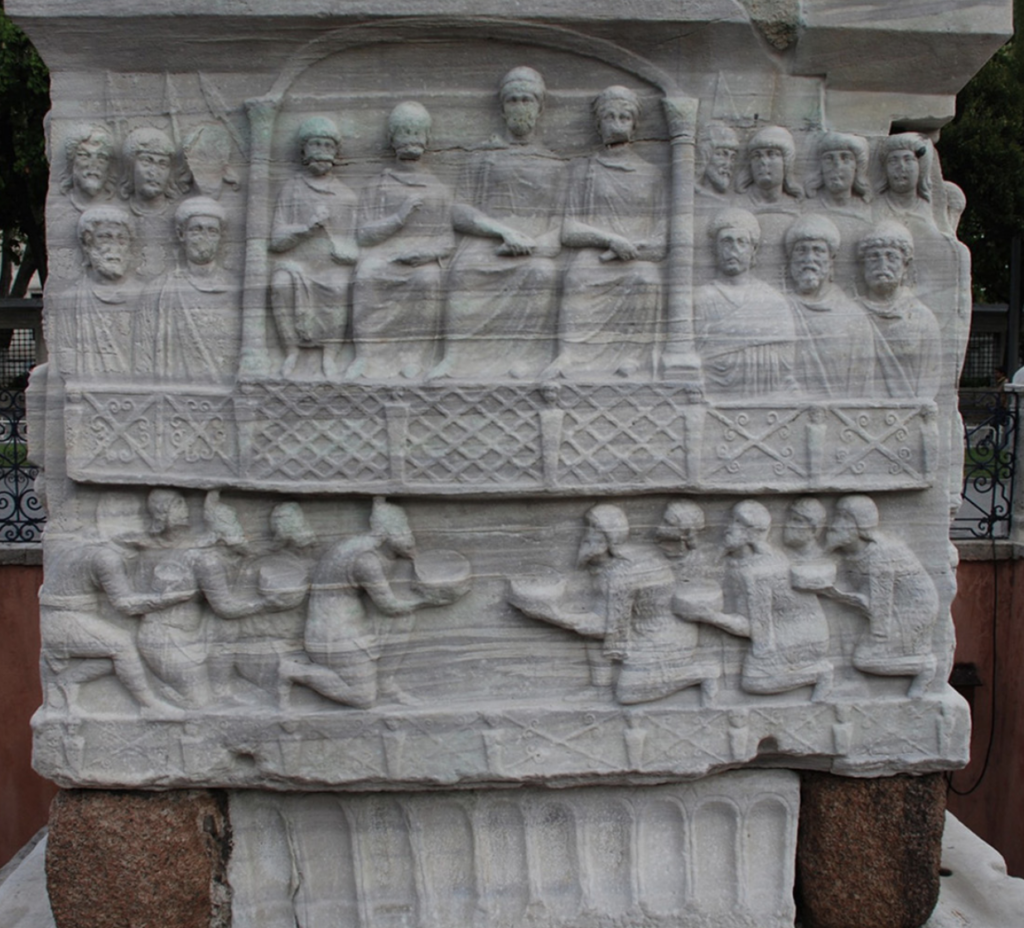
Hair was never just hair in the Roman world
Roman authorities had long treated clothing and appearance as tools of social control. Augustus reportedly sought to revive traditional dress and instructed officials to prevent people from entering the Forum without the toga.
Later emperors attempted to assign recognisable forms of dress to officials, social ranks and enslaved people. The aim was practical as well as symbolic: clothing allowed rank to be recognised immediately and reduced the risk that enslaved, free and elite inhabitants might be confused with one another.
Other late Roman laws banned senators from wearing certain military garments and restricted trousers, boots and clothing associated with eastern or foreign customs. Appearance helped define who belonged to which social group—and who might represent a threat.
The AD 416 long-hair ban fits comfortably within this tradition. It was less a regulation for Roman barbers than an effort to preserve the visible hierarchy of Roman society.
Urban security may also have played a role. Late antique city prefects feared riots capable of damaging homes, markets and shops. Officials were expected to monitor public behaviour closely, including clothing and outward appearance. Arce describes the law as a form of lex vestiaria: legislation governing dress and presentation.
Long hair signalled power
The symbolism of long hair was more complicated than a simple distinction between Romans and foreigners.
Among the Franks, long hair was reportedly reserved for the royal family. Kings allowed their hair to grow from childhood, carefully washing and arranging it, while people of lower status were required to keep theirs cut short.
A similar pattern may have existed among the Goths. Available evidence suggests that long hair was particularly associated with nobles, military commanders, palace officials and royal guards rather than the population as a whole.
Long hair was therefore not merely an ethnic marker. It was a badge of rank and political authority.
That helps explain why forcibly removing someone’s hair could constitute a severe punishment. Among the Goths and Visigoths, decalvatio—the cutting or removal of hair—could publicly disgrace an offender and prevent that person from later claiming power. Hair was treated as if it carried part of an individual’s status, legitimacy and even sacred authority.
For Romans who adopted the fashion, the appeal may have been precisely this association with military strength and aristocratic prestige.
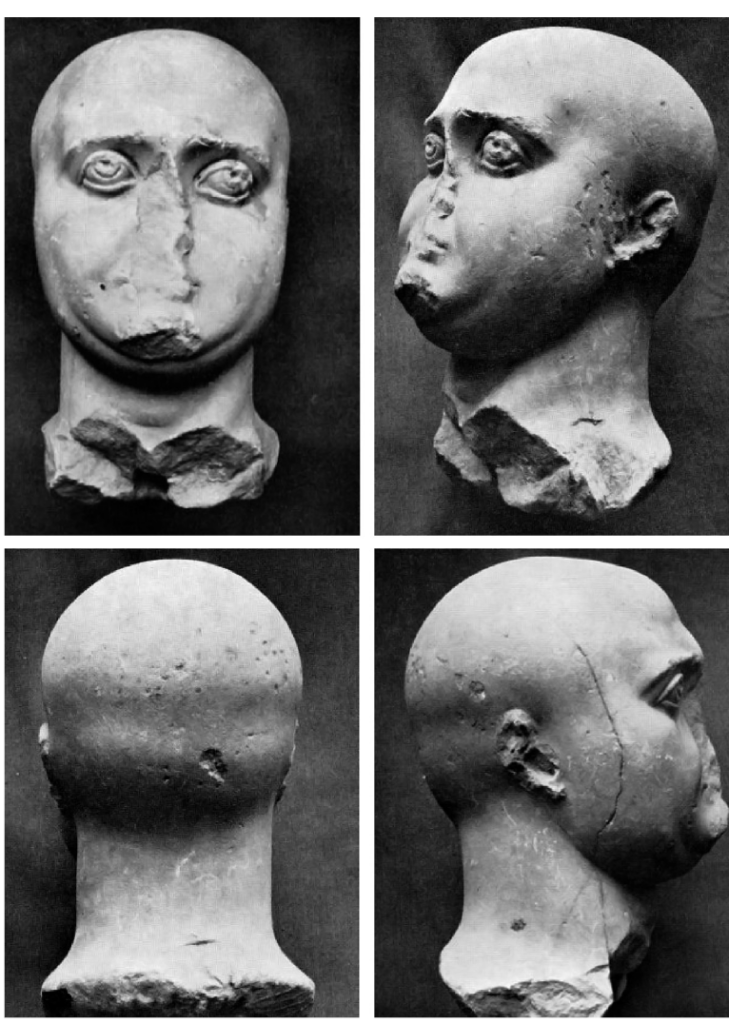
Six years after the sack of Rome
The timing of the law is particularly significant. In AD 410, only six years before the ban, the Visigothic king Alaric had captured and sacked Rome.
Against this background, a Roman walking through the city in long hair and animal skins would have represented more than an adventurous fashion choice. The look could evoke the very groups associated with Rome’s humiliation.
Arce argues that Germanic hairstyles and clothing had become common enough among Romans to provoke official resistance. The law was therefore aimed at containing a cultural “Germanisation” of Roman society and restoring the traditional distinctions on which imperial order depended.
The anxiety was cultural, but it was also political. To imitate the appearance of powerful Goths or Germans might suggest admiration for their military success, their elite status or their increasing influence inside the empire.
Why baldness suddenly looked respectable
Around AD 400, only a few years before the Roman long-hair ban, Synesius of Cyrene wrote his Eulogy of Baldness.
Synesius was a philosopher, rhetorician and student of Hypatia of Alexandria who later became bishop of Ptolemais. His text was partly a sophisticated joke: it answered an earlier Eulogy of Hair written by Dio Chrysostom.
Yet the humour rested on recognisable cultural assumptions.
Synesius attacked long-haired men as seductive, unreliable and overly concerned with appearance. Bald men, by contrast, represented wisdom, good health, priestly dignity and even the geometry of the sun. Socrates—perhaps antiquity’s most famous bald intellectual—naturally appeared on the favourable side of the argument.
The work was not an official government manifesto, and Arce does not claim that it directly caused Honorius’ law. The connection is presented as a historical hypothesis.
Nevertheless, the two texts reflect a similar cultural atmosphere. Long hair could be associated with foreign power, moral suspicion and political danger, while baldness could be recast as a sign of discipline, Roman respectability and intellectual authority.
A hairstyle caught between fashion and politics
The Roman ban on long hair was not really about whether citizens looked better with a close cut. It concerned what their appearance communicated in a city still shaken by invasion, social unrest and the growing influence of Germanic elites.
A long-haired Roman might appear fashionable. To imperial officials, however, he could also look socially disruptive, politically ambiguous and uncomfortably similar to Rome’s enemies.
Baldness, meanwhile, received one of history’s most elaborate public-relations campaigns: less hair, Synesius effectively argued, meant more wisdom.
For late Roman authorities, the safest hairstyle may simply have been the one that caused the fewest questions.
Arce, J. (2026). La prohibición de llevar el pelo largo en la Roma tardoantigua (CTh, XIV, 10, 4) y el tratado Elogio de la calvicie de Sinesio de Cirene. Pyrenae, 57(2), 115–125. https://doi.org/10.1344/Pyrenae2026.vol57num2.5
