
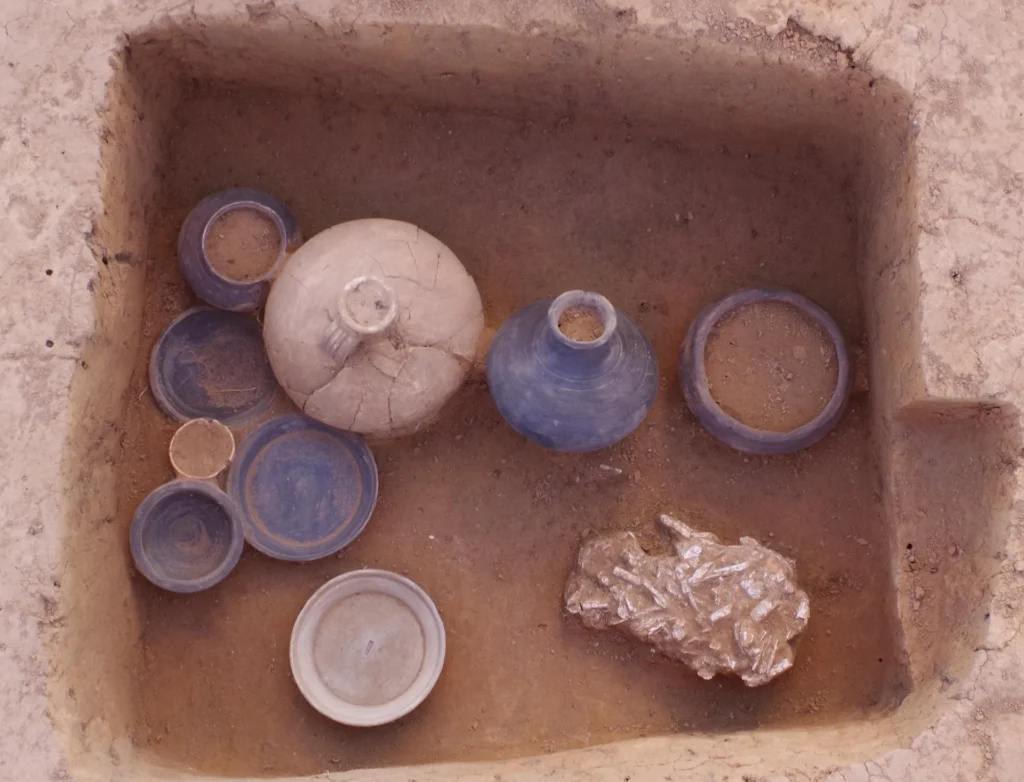
A major archaeological discovery in Annay-sous-Lens, northern France, is shedding new light on rural life, burial customs, and road networks during the Roman Empire. Archaeologists from Inrap have uncovered a large Gallo-Roman necropolis and a remarkably preserved Roman-era road during preventive excavations in the Pas-de-Calais region.
A Rescue Excavation in the Heart of the Mining Basin
The discovery was made at a site known as Le bois des mottes in Annay-sous-Lens, located in the former mining basin of northern France. The excavation was carried out by the French National Institute for Preventive Archaeological Research (Inrap) as part of a development project involving new housing construction on a 9,500-square-meter plot.
Because the construction risked damaging potential archaeological remains, a preventive diagnostic was ordered in 2022 by regional heritage authorities. The results proved significant enough to justify a full excavation, which took place in spring 2024 and mobilized a team of five archaeologists, including a specialist in funerary anthropology.
Traces of a Landscape Shaped by War and Industry
In total, archaeologists recorded 263 archaeological features at the site. Surprisingly, the majority of these remains date not to antiquity but to the 20th century, reflecting the area’s turbulent modern history.
Numerous pits filled with debris—including barbed wire, metal posts, rubble, and even plastic—testify to intense activity during the two World Wars. Large sediment extraction pits were also identified along the western and southern edges of the site. These are believed to be linked to brick-making kilns that operated in the commune until the mid-20th century.
These recent disturbances significantly altered the landscape and, in some areas, damaged older archaeological layers.
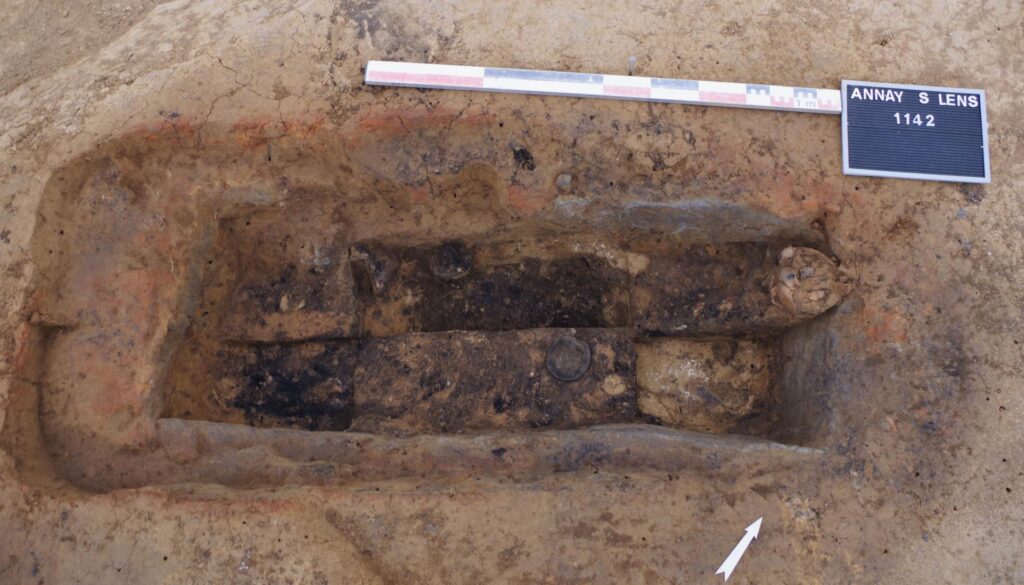
Funerary pyre. Credit: Nina Diner-Stephan, Inrap
A Structuring Road from the Early Roman Empire
Despite this heavy impact, the excavation revealed exceptionally important remains from the early 1st century AD, when the region was part of the territory of the Atrebates, a Gallic people integrated into the Roman Empire.
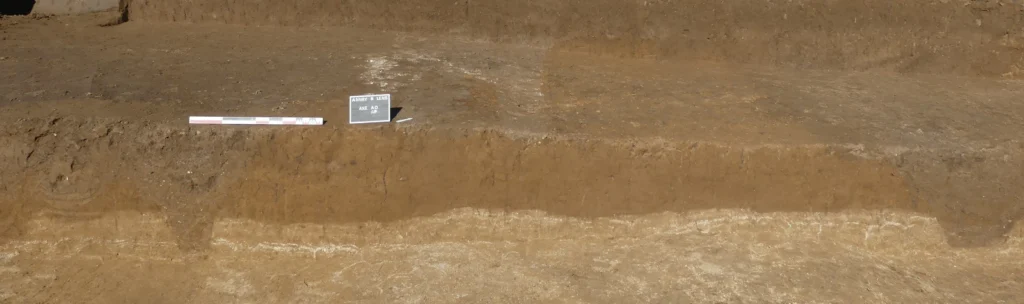
One of the most remarkable discoveries is a Roman road extending over 155 meters. Oriented northwest–southeast and perpendicular to the major ancient route connecting Lens and Tournai, this road likely served as a secondary route, linking rural settlements to the main Roman road network.
Although the original walking surface has mostly disappeared, archaeologists identified compacted limestone layers used to prepare or resurface the road. Bordering ditches—particularly well preserved in the northern section—show signs of repeated re-cutting, indicating regular maintenance.
This road provides rare and valuable insight into how Roman infrastructure structured rural landscapes in northern Gaul.
A Large and Unusual Gallo-Roman Necropolis
East of the ancient road, in the southeastern part of the excavation area, archaeologists uncovered a necropolis containing 38 funerary structures, making it one of the most significant discoveries of the site.
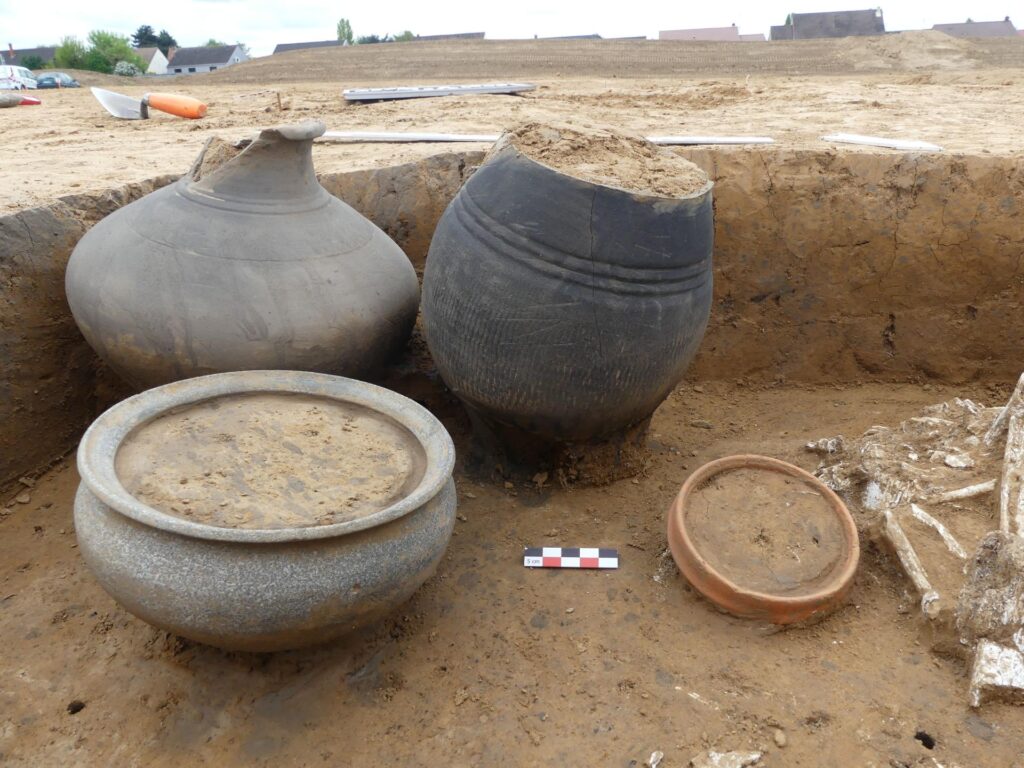
Most of the graves—35 in total—are secondary cremation burials dating to the 1st century AD. In these graves, the cremated remains of the deceased were carefully placed in quadrangular pits, often inside ceramic vessels and sometimes accompanied by food offerings.
Two additional structures were identified as funerary pyres. These oblong pits show intense traces of burning, with reddened walls, charcoal-rich sediment, carbonized wood, bone fragments, and pieces of pottery. The evidence suggests repeated use and high-temperature cremation rituals.
According to archaeologists, the close proximity of the pyres to the burial area is unusual, as such structures were typically located farther away. This spatial arrangement raises new questions about local funerary practices.
A Lone Burial from the Late Roman Empire
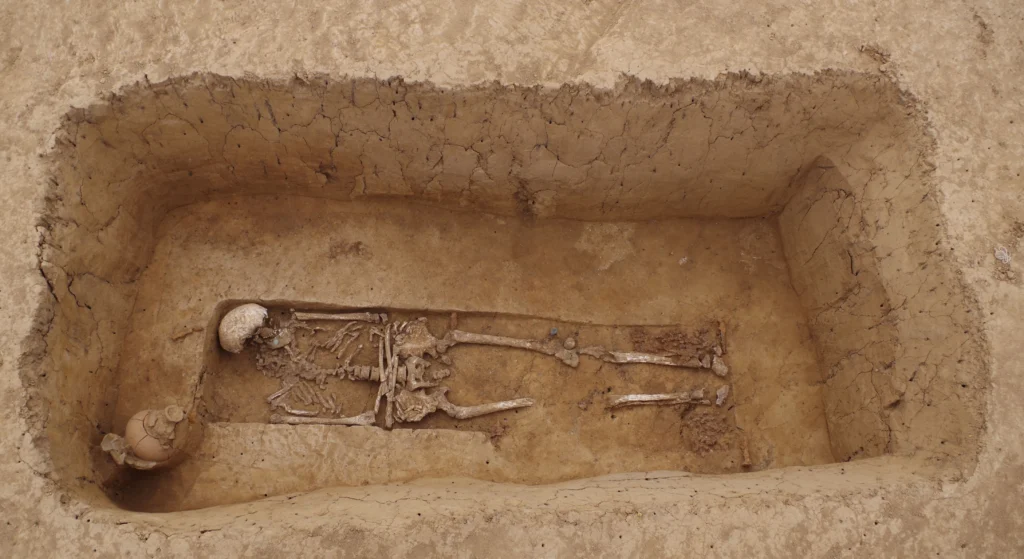
Perhaps the most intriguing discovery is a single inhumation burial, found isolated near the Roman road and clearly distinct from the earlier cremation graves.
The deceased was buried on their back in a large rectangular pit, likely inside a wooden coffin indicated by the presence of iron nails. Grave goods included ceramic vessels, a pair of shoes, and two coins placed on the jaw and near the knee—classic elements of Late Roman funerary customs.
The associated artifacts date this burial to the 3rd or 4th century AD, making it significantly later than the rest of the necropolis. Why this individual was buried alone, centuries after the cremation cemetery ceased to be used, remains a mystery.
Ongoing Research and Open Questions
Post-excavation studies are now underway and are expected to address several unresolved questions. Archaeologists hope to better understand the nature of the early Roman occupation north of the road, the organization and chronological coherence of the necropolis, and the reason behindthe isolated Late Empire burial.
Comparisons with nearby archaeological sites may also help determine whether another, now-lost road once crossed the area.
These discoveries at Annay-sous-Lens offer a rare glimpse into the daily life, infrastructure, and funerary traditions of Roman Gaul, while also highlighting how centuries of human activity—from antiquity to modern warfare—have shaped and reshaped the same landscape.
Cover Image Credit: Secondary cremation deposit. Nina Diner-Stephan, Inrap
