
An 800-year-old castle in Ireland, long believed to have been demolished, has been found in a place where generations of people had unknowingly passed by its medieval walls.
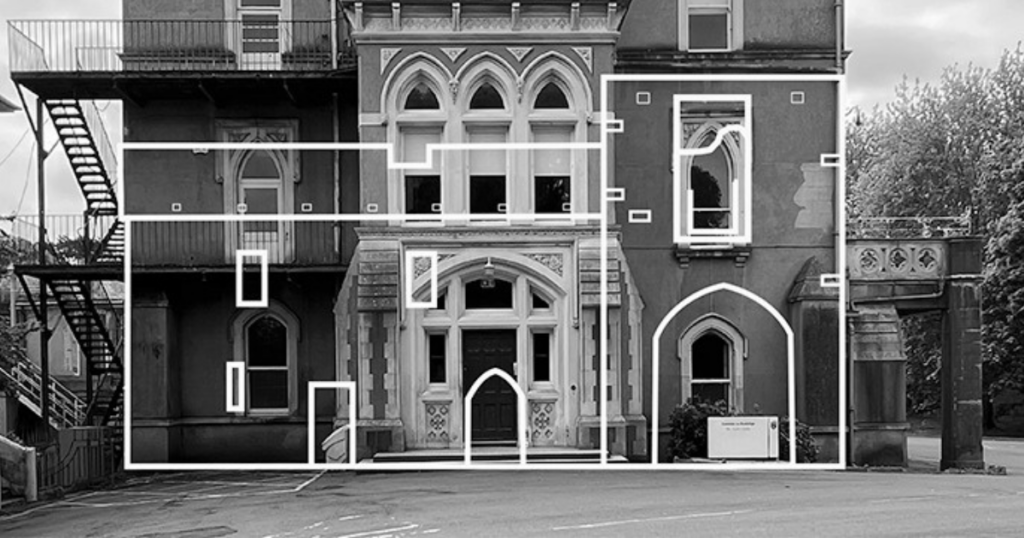
The discovery in Dublin has overturned a long-held assumption about Roebuck Castle, a Norman stronghold built in the early 13th century. Rather than disappearing during later redevelopment, substantial parts of the fortress survived, incorporated into a building that looks almost entirely Victorian from the outside.
Professor Tadhg O’Keeffe, a medieval architectural historian at University College Dublin (UCD), identified the surviving walls and architectural features beneath the plaster of the university’s present-day Roebuck Castle. His findings, published in Archaeology Ireland, suggest the building may now be the oldest standing structure on any university campus in Ireland.
A Castle That Disappeared Without Being Demolished
Roebuck Castle stood on one of the principal approaches to medieval Dublin. Its origins date to the decades following the Anglo-Norman invasion of Ireland in 1169, when fortified residences became important features of the surrounding landscape.
The castle underwent several alterations during the Middle Ages. Its occupants included a medieval Lord High Chancellor of Ireland, while a longstanding tradition holds that James II stayed there in 1689, after losing his throne. The royal association, however, remains a historical tradition rather than a firmly established archaeological fact.
By the 18th century, the fortress had fallen into ruin. Many similar buildings across south Dublin had already disappeared, their stonework dismantled and reused in more comfortable houses.
Roebuck was thought to have suffered a comparable fate. Subsequent Georgian and Victorian redevelopment transformed the property so extensively that its medieval origins were no longer apparent from the outside.
Yet the old walls remained. Instead of clearing away the fortress, later builders had worked around its surviving masonry, incorporating the medieval structure into the enlarged residence. Even the courtyard behind the present building occupies the original castle courtyard.
The 1765 Painting That Helped Solve the Mystery
The crucial evidence came from an unexpected source: an artist who visited the ruined castle more than 260 years ago.
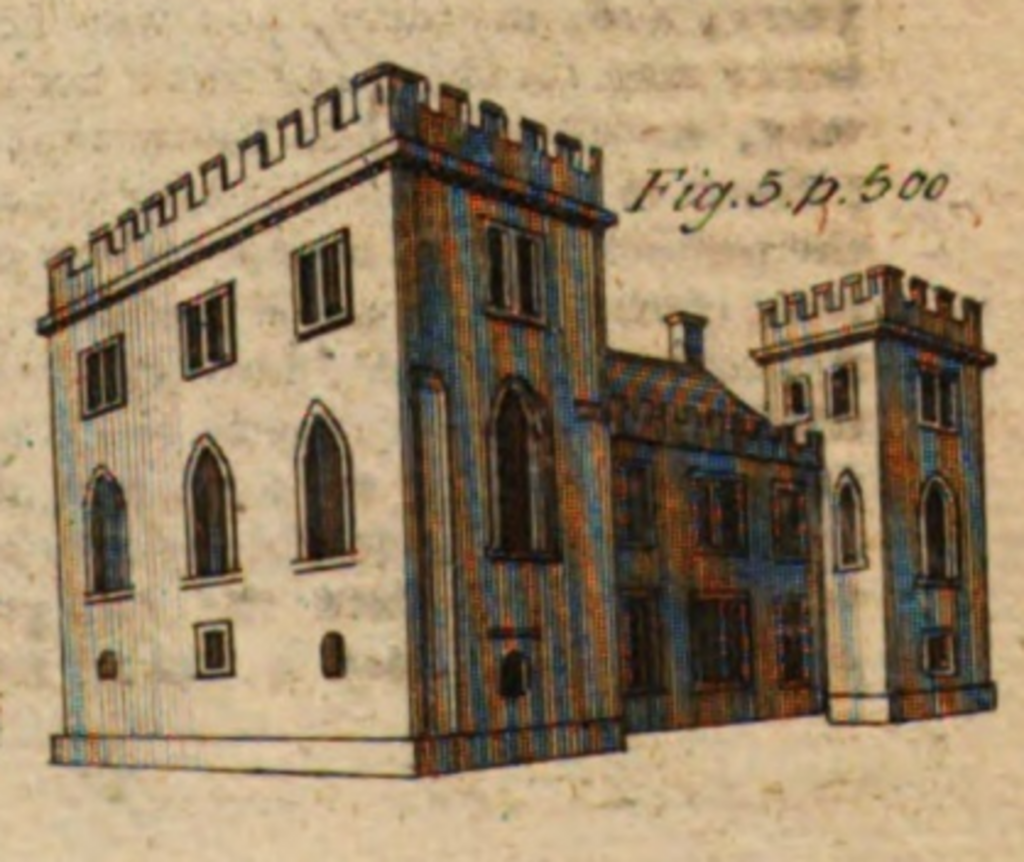
Around 1765, Gabriel Beranger, a Dutch-born artist of Huguenot descent living in Dublin, recorded Roebuck Castle in a series of watercolours. His illustrations preserved not only the appearance of the ruined building but also smaller architectural features that would prove valuable to researchers centuries later.
One of those watercolours survives in the National Library of Ireland under the title Rabuck [Roebuck] Castle, near Mount Merrion. Measuring 22.7 by 28.7 centimetres, it depicts the ruins with two men standing in the courtyard and two others behind a foreground wall, one of whom holds an image of the castle.
For O’Keeffe, the value of Beranger’s work lay in the architectural details. By comparing the artist’s observations with the present building, he could trace the structural history of the fortress and identify medieval features that had survived later alterations.
The discovery did not require unearthing a completely buried castle. Its walls were already standing, concealed beneath plaster and surrounded by more recent construction.
Ireland’s Hidden Medieval History
The revelation adds an important chapter to the history of south Dublin, where many medieval strongholds have vanished. Roebuck offers an opportunity to study a Norman fortress that survived not through preservation in its original form, but through centuries of architectural adaptation.
The site was not entirely unknown to heritage authorities before the research. Roebuck Castle had already been recorded as an archaeological monument and protected structure in university planning documentation. What the new investigation establishes is the survival of substantial medieval fabric within the building itself.
Further archaeological research is needed to establish the precise construction date of its earliest sections. Nevertheless, O’Keeffe considers an early 13th-century origin convincing, making the castle a potentially exceptional survivor of Ireland’s Norman past.
For the university, the discovery has also changed the identity of a familiar building. What appeared to be a Victorian residence is now understood to contain a fortress that has stood for roughly eight centuries, its medieval walls preserved by the very alterations that once made historians believe it had disappeared.

