
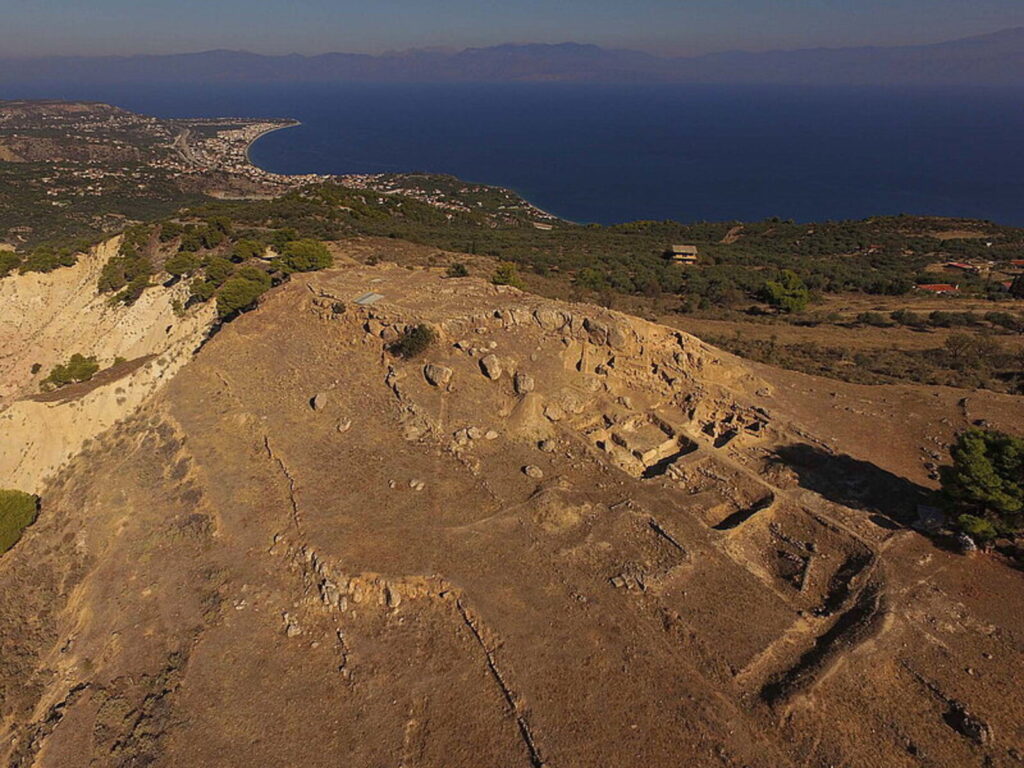
A devastating fire swept through the Mycenaean settlement of Aigeira around the middle of the 12th century BC, destroying buildings across both its hilltop center and the settlement below. But the disaster did not bring life at Aigeira to an end. Almost immediately, the community began rebuilding — and this time, protection became a priority.
The new settlement rose directly over the ruins and gained a massive fortification wall, while archaeologists believe parts of the lower town may also have been enclosed. The scale of the project suggests that Aigeira still had the organization, labor, and resources needed to undertake a major defensive building program even after a destructive catastrophe.
A fire that reached far beyond the acropolis
Aigeira stands high above the Gulf of Corinth in Achaia, on the northern Peloponnese. Archaeologists have investigated the site for decades, and excavations on the acropolis during the 1970s and 1980s revealed several phases of Late Mycenaean occupation.
One of the most striking discoveries was a thick layer of fire debris marking the destruction of an early settlement phase. Later excavations between 2011 and 2016 showed that the disaster had been much larger than first understood.
Researchers identified an extensive Bronze Age “lower town” on the plateau south and east of the acropolis. Together with the hilltop settlement, Aigeira may have covered as much as 12,000 square meters. The same substantial fire horizon appeared in this lower settlement, suggesting that much or possibly all of Aigeira was struck by a single major fire.
The evidence therefore points not to the destruction of an isolated building or neighborhood, but to a catastrophe that affected a sizeable Mycenaean community. What happened next makes Aigeira particularly unusual.
Rebuilding began almost immediately
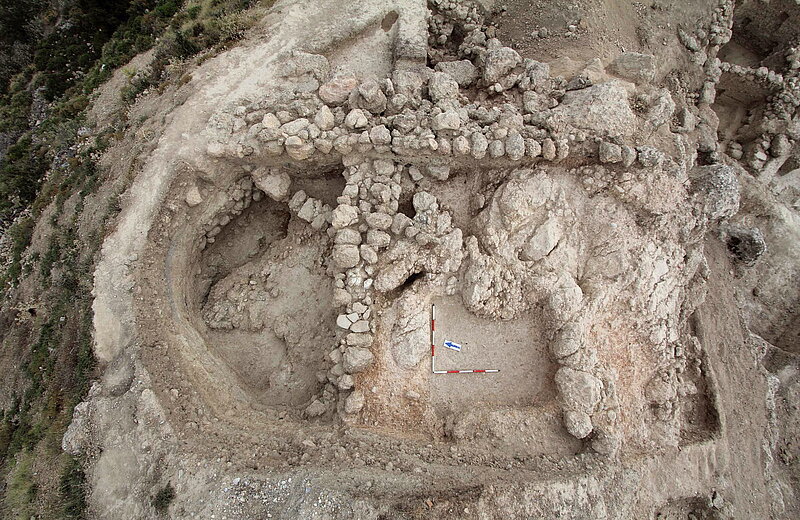
According to the Austrian Archaeological Institute, reconstruction began immediately after the catastrophe. A successor settlement was built directly above the burned remains, and the acropolis was enclosed by a massive defensive wall. Archaeologists also believe that at least parts of the lower town may have received new fortifications.
The wall represented more than a physical response to destruction. Building such a fortification required planning, coordinated labor, and an authority capable of organizing a large construction project.
For researchers, this suggests that the social structure of the community had survived the fire. Rather than collapsing after the disaster, Aigeira retained enough organization to rebuild on a substantial scale and reshape its settlement around a heightened concern for security.
The timing makes the fortification even more significant. Aigeira is currently the only known site in the Peloponnese that received new fortifications during this late phase of the Bronze Age, according to the Austrian Archaeological Institute.
Houses, workshops and traces of everyday life
Earlier excavations on the acropolis help show what kind of community lived behind those walls. The Late Bronze Age occupation belongs to the post-palatial Mycenaean period, particularly the 12th century BC. Excavations have revealed houses, storage areas, and places where goods were produced and consumed. Finds include pottery, terracotta figurines, bronze knives, and spindle whorls, while evidence also points to pottery production and probably bronze working.
One phase included a large multi-roomed building enclosed by the fortification wall. Archaeologists have also identified a cult room, which, together with evidence for storage, production and feasting, suggests that at least some inhabitants held relatively high social status.
These remains make the post-fire story more tangible. The rebuilt Aigeira was not simply a refuge surrounded by walls. People continued storing food, producing goods, gathering and organizing life within a settlement that had been substantially redesigned after the catastrophe.
Research in the lower town is now also providing information about animal use, household activity and the wider economy of Bronze Age Aigeira, expanding the picture beyond the fortified acropolis itself.
A community that eventually disappeared
The fortified settlement did not last indefinitely. Aigeira’s Mycenaean occupation continued through several phases and appears to have ended around 1100 BC.
So far, archaeologists have found no material dating to the Submycenaean, Protogeometric or Early Geometric periods. That gap raises the possibility that the site became uninhabited during the early first millennium BC, although researchers remain cautious about interpreting the absence of finds as definitive proof of abandonment.
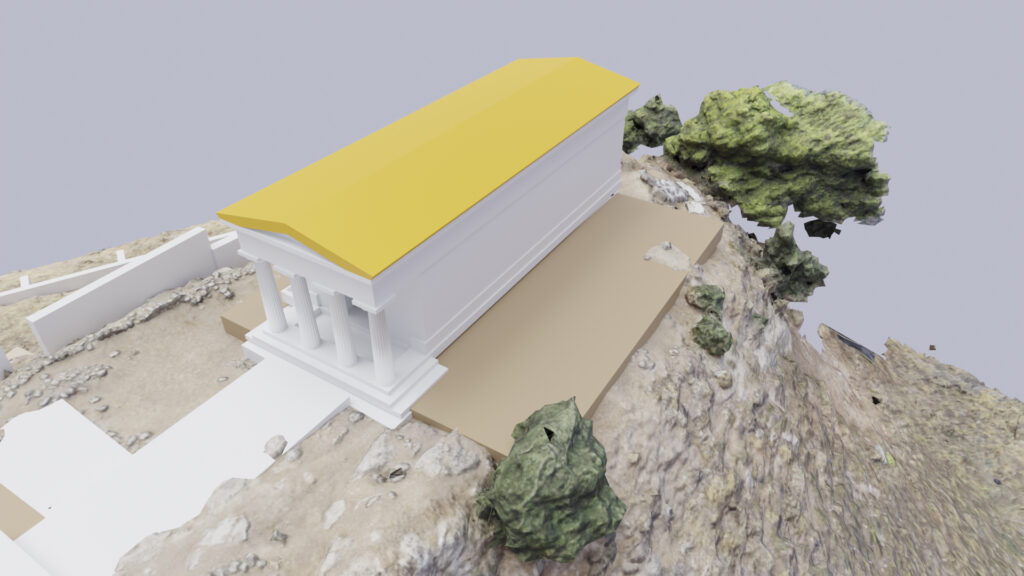
Centuries later, activity returned to the acropolis in a very different form. Ceramic finds increase markedly from the second half of the 8th century BC, when an early Greek sanctuary developed there. Geophysical investigations also suggest that a settlement associated with the sanctuary may have occupied parts of the same plateau where the Bronze Age lower town had once stood.
That long history makes the fire horizon at Aigeira more than evidence of a single disaster. It captures a moment when a Mycenaean community faced the destruction of much of its settlement and responded not by abandoning the site, but by rebuilding it almost immediately and surrounding its most important areas with stronger defenses.
For a settlement living through the unsettled world that followed the collapse of the Mycenaean palace system, the new walls suggest that rebuilding Aigeira also meant preparing for whatever might come next.
