
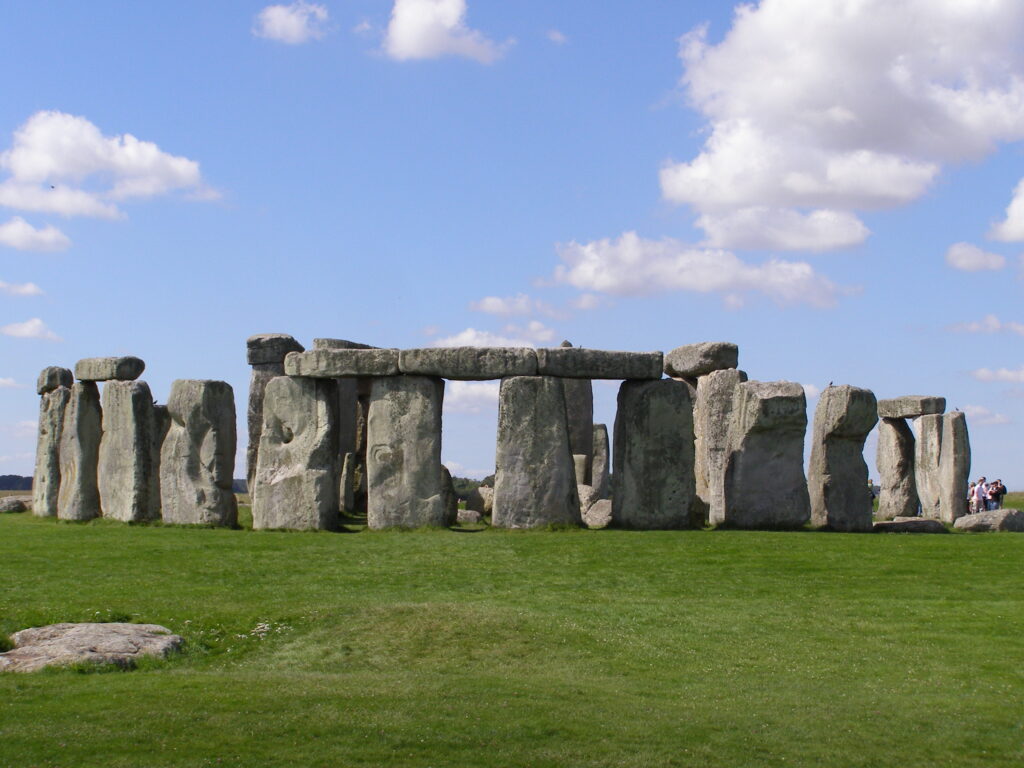
A newly identified prehistoric structure near Stonehenge may push the story of solar alignment in the famous landscape back by at least 500 years.
Wessex Archaeology has announced the discovery of a 5,000-year-old timber monument at Bulford in Wiltshire, about 5 km from Stonehenge. Led by archaeologist Phil Harding, the excavation revealed what may be the earliest known solstice-aligned structure in the Stonehenge landscape, long before the great sarsen stones were raised.
Two lost posts and a precise view of the sun
Almost nothing of the monument survives above ground. What remains are two large post pits, once holding wooden poles set about 120 metres apart. Yet their placement appears to have been anything but accidental.
Analysis carried out for Wessex Archaeology by Dr Fabio Silva, a skyscape archaeologist at Stone x Sky and the Skyscape Academy, showed that the line between the posts aligned with the rising sun at the summer solstice and the setting sun at the winter solstice. According to the analysis, the alignment was accurate to within one degree.
Radiocarbon dating places the site around 2950 BC, broadly contemporary with the earliest earthwork phase of Stonehenge but roughly 500 years older than the famous stone settings. For archaeologists, that timing is crucial. It suggests that people were already marking the solar cycle in this part of Wiltshire before Stonehenge became the monument known today.
Harding described the find as one of the greatest discoveries of his career. He noted that the line of the structure ran about 50 degrees from north, close to the direction of the midsummer sunrise. For him, the simplicity of the monument makes it even more striking. Before stone circles and monumental architecture, people may have used timber posts, sightlines and the horizon to shape ritual time.
A possible prototype for Stonehenge
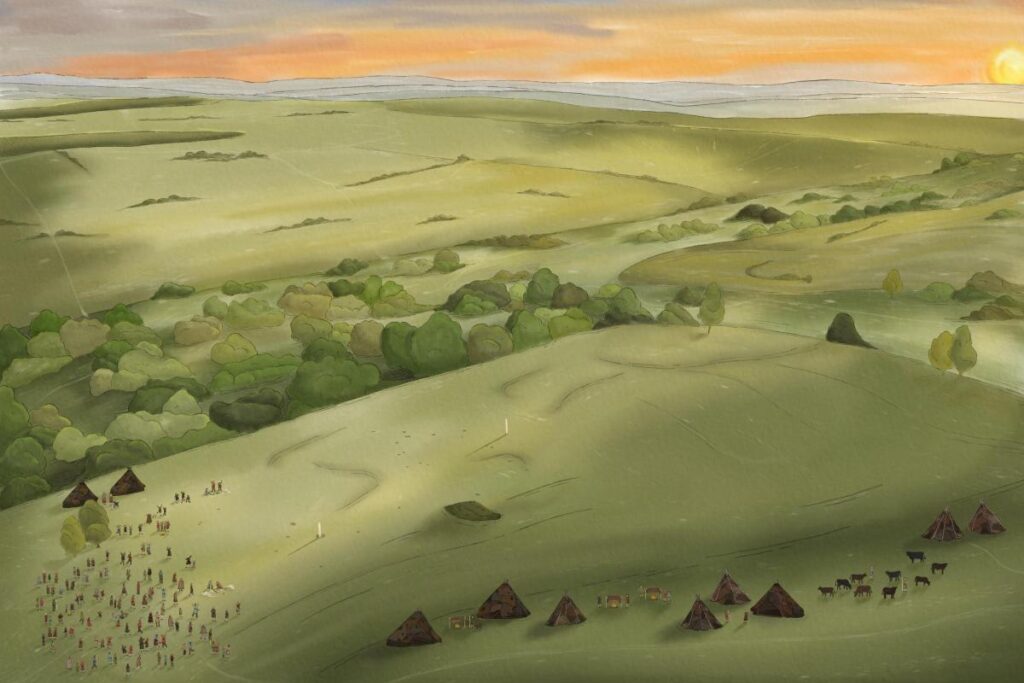
The Bulford structure has been described as a possible “prototype” for the later solstice alignment at Stonehenge. The idea does not mean that Bulford was Stonehenge itself, but that both may belong to a longer local tradition of watching, marking and celebrating the sun’s movement.
Dr Silva said the discovery helps place Stonehenge within a deeper history rather than treating it as a sudden invention. The alignment shows that communities in the area were already engaging with both the summer and winter solstices centuries before the sarsen stones were erected.
Wessex Archaeology suggests that a similar timber alignment may once have existed during the earliest phase of Stonehenge. If it did, later construction work could have removed every trace.
Feasting, ritual and a rare flint knife
The discovery came from excavations carried out between 2015 and 2017 during the Ministry of Defence’s Army Basing Programme. The work, undertaken on behalf of the Ministry of Defence and the Defence Infrastructure Organisation, took place south of the Salisbury Plain Training Area before the construction of accommodation for service personnel.
The wider site produced 48 pits, radiocarbon dated to around 2950 BC. Finds included pottery, animal bone, worked flints and charcoal. Together, these suggest that large numbers of people gathered at Bulford over a relatively short period, possibly for seasonal ceremonies linked to the solar cycle.
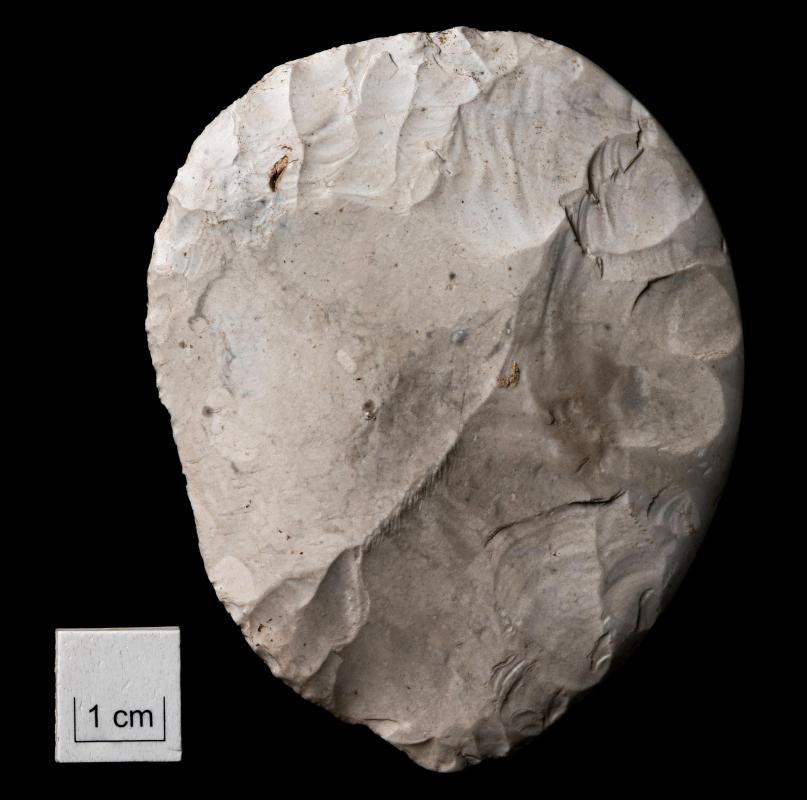
One pit produced an especially rare object: a disc-shaped flint knife. Harding has suggested that its circular form may have carried symbolic meaning, perhaps referring to the sun itself. The object was deliberately placed, possibly in what the team interprets as a viewing station.
Dr Matt Leivers, Senior Research Manager at Wessex Archaeology, said the discovery is fundamental because it is the earliest known example in the area of people building a structure directly aimed at the solstice. He stressed that the solstice was not only about timekeeping. For prehistoric communities, it was likely tied to religion, cosmology and the hope that the world would remain ordered, fertile and safe.
Stonehenge was not the beginning
The Bulford monument changes the way archaeologists can read the wider Stonehenge landscape. It suggests that the famous stone circle emerged from older practices already rooted in the land, the sky and communal ceremony.
Richard Osgood, Senior Archaeologist at the MoD’s Defence Infrastructure Organisation, said the discovery was completely unexpected. What first appeared to be an unremarkable set of archaeological features has, after deeper study, reshaped understanding of the ceremonial landscape around Stonehenge.
The post pits are not accessible to the public, but the research will be published in an upcoming article for the newsletter of The Prehistoric Society. The discovery will also feature in a major publication on the Army Basing Programme, due to be released later this year through Wessex Archaeology’s Open Library.
Excavations were undertaken with support from Tetra Tech Europe, and English Heritage supported the public presentation of the story.
For thousands of people gathering at Stonehenge each June, the summer solstice still feels ancient. The Bulford discovery now suggests that the ritual pull of that sunrise may be older than the stones themselves.
Cover Image Credit: Public Domain
