
For more than two decades, a rectangular stone enclosure in southern Greenland held a question archaeologists could not answer. Now, a skeleton discovered inside its walls has provided the missing evidence, revealing a previously unknown medieval Norse church near the former settlement of Erik the Red.
The discovery at Qinngua, near Narsarsuaq, marks the first identification of a new Norse church in Greenland in more than 60 years. But the importance of the find extends beyond its religious function. With six churches now identified in this relatively small region, archaeologists are reconsidering how wealthy families and local leaders competed for influence in Greenland’s medieval society.
A Skeleton That Solved a 20-Year Archaeological Mystery
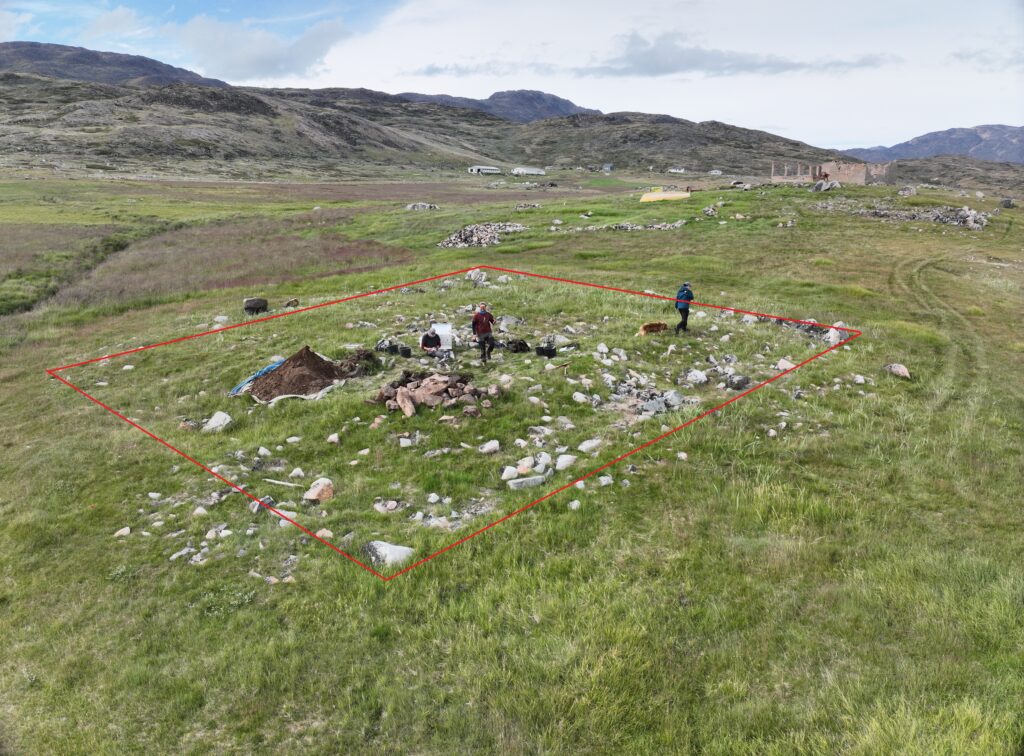
The ruins at Qinngua had attracted attention since the National Museum of Denmark began investigating the site in the 2000s. A rectangular stone wall enclosed another stone building, a layout that strongly suggested a church surrounded by a burial ground.
Yet something was missing. Despite earlier investigations, archaeologists had never found a grave. Without evidence of a cemetery, they could not establish whether the building had served as a place of Christian worship.
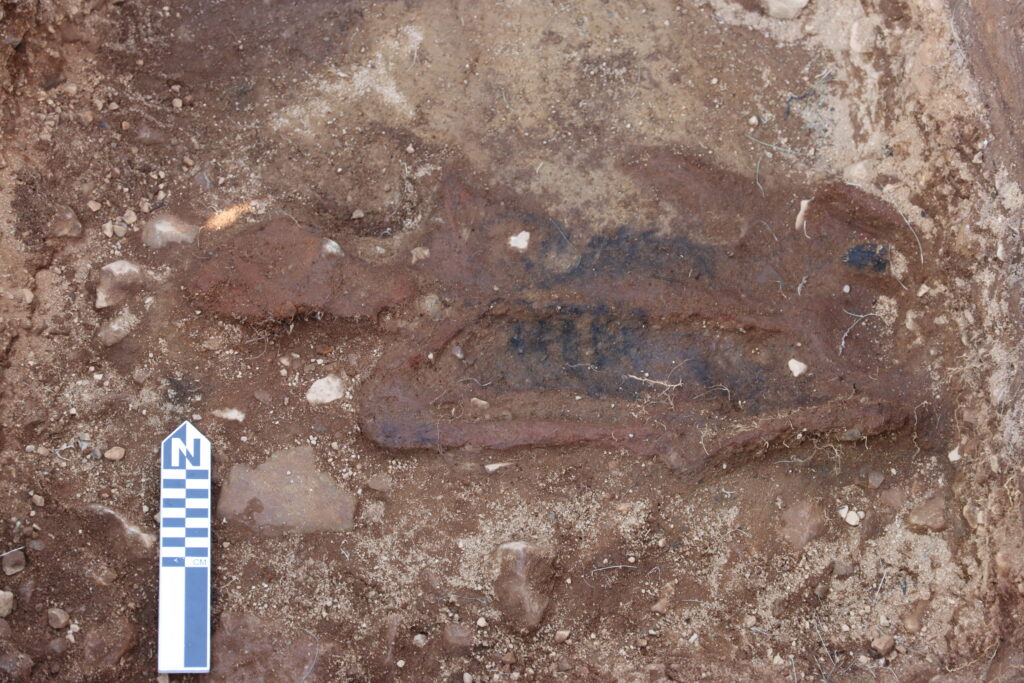
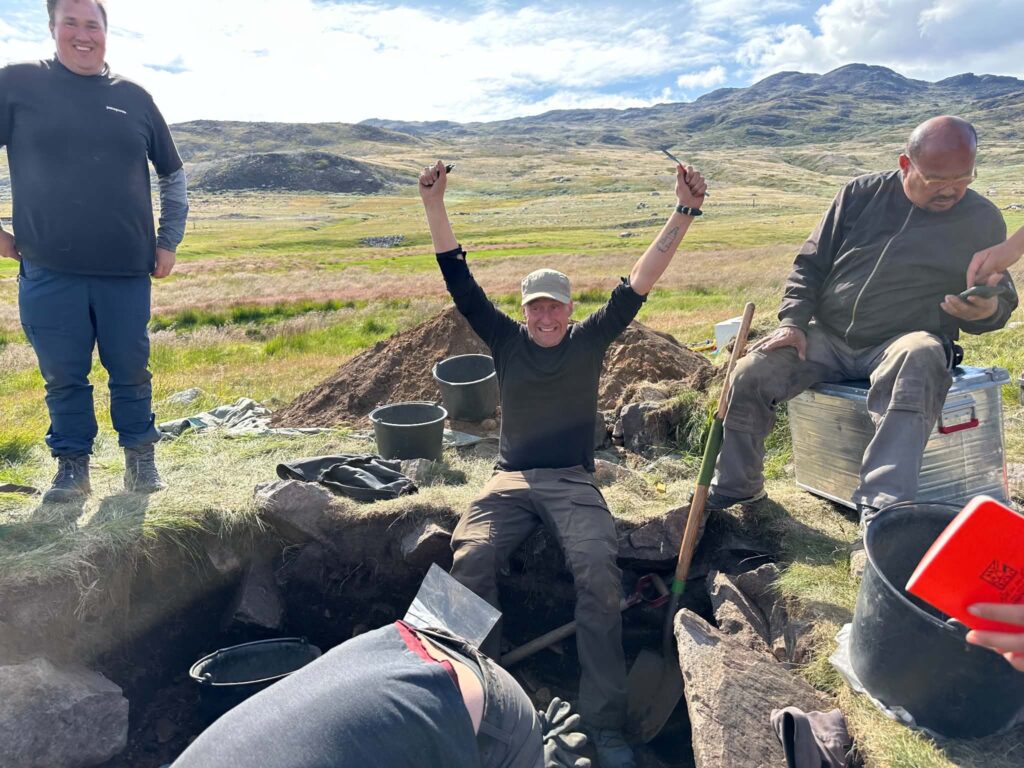
During an excavation in August 2026, an international research team finally uncovered a skeleton. The deceased had been buried with the head facing east, an orientation that researchers identified as consistent with Christian burial customs at the site. The discovery established the presence of a cemetery and provided the evidence needed to identify the building as a church.
Christian Edelfelt Koch Madsen, senior researcher at the National Museum of Denmark and research coordinator of the project, described the grave as the “smoking gun” that settled the question.
The burial also fits the broader archaeological context. Norse settlers buried their dead in cemeteries, while traditional Inuit burial practices involved stone-covered chambers. Together with the arrangement of the ruins and medieval written sources, the skeleton leaves researchers confident about the building’s religious identity.
The discovery emerged from a collaboration involving the National Museum of Denmark, Greenland National Museum and Archives, the University Museum of Bergen, and UNESCO Kujataa.
Could the Ruins Be a Church Mentioned in Medieval Texts?
The church’s precise age remains uncertain, but its architecture offers important clues. Its relatively large dimensions and numerous worked stones suggest a construction date between AD 1100 and 1300. The position of the skeleton’s arms alongside the body may indicate an early medieval burial, although researchers are still analysing samples.
This makes the building particularly interesting. The last Norse churches discovered in Greenland more than six decades ago belonged to an earlier period and were abandoned relatively quickly. The Qinngua church, by contrast, may have remained in use well into the Middle Ages, potentially providing evidence of how Norse communities developed over several centuries.
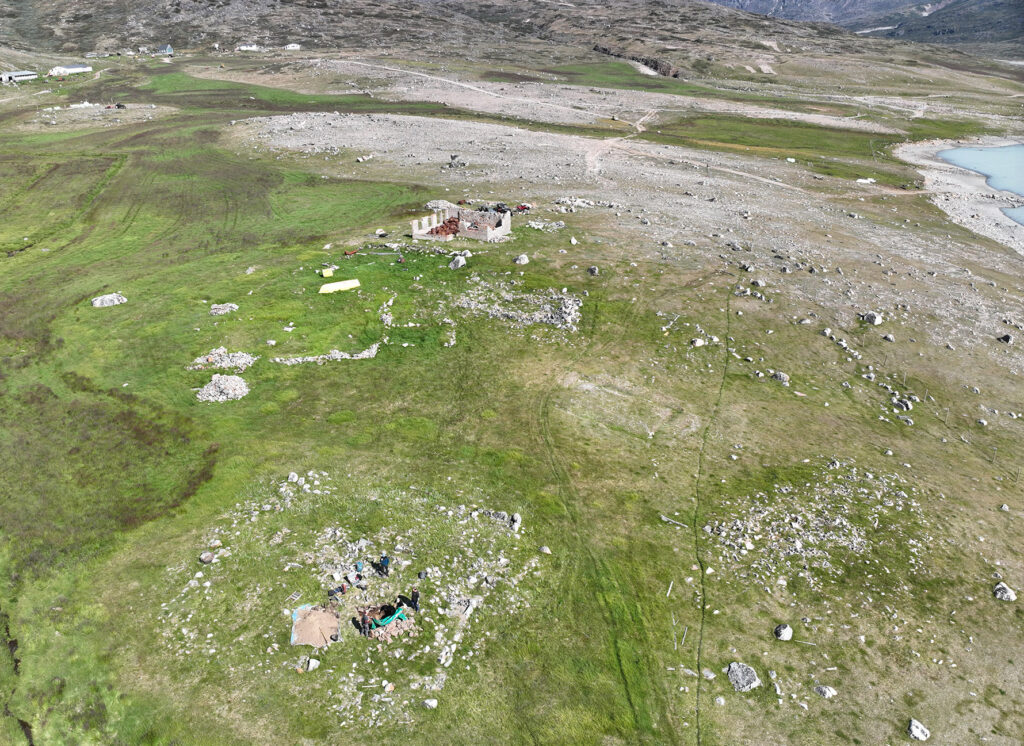
The surrounding landscape offers another possibility. Medieval written accounts mention a church called Kirkja undir Sólarfjöllum, meaning the Church under the Sunny Mountains. The name appears to fit Qinngua’s setting, where mountains rise near Greenland’s ice sheet in an area that frequently experiences sunny weather.
Researchers have not established that the newly discovered building is the church described in those accounts. Nevertheless, its location is consistent with the historical description, raising the possibility that other churches known only from medieval texts could still be waiting to be found.
Konrad Smiarowski, a researcher at the University Museum of Bergen and co-leader of the project, points to medieval sources such as Flateyjarbók and the descriptions of Greenland associated with Ívar Bárðarson. When combined with the physical landscape and known settlement locations, these accounts could guide future archaeological investigations.
The remains of two or three farms near the church add another intriguing detail. Their proximity may indicate the beginnings of a small village-like community rather than an isolated religious building serving a single farmstead.
Six Churches Near Erik the Red’s Settlement: A Competition for Power?
The most revealing aspect of the discovery may be its location. Qinngua lies near Brattahlíð, the principal settlement and chieftain’s seat of Erik the Red, who established a Norse community in Greenland around the end of the 10th century.
Archaeologists have now identified six churches in this relatively small area. Yet only three appear to have remained in use into the Middle Ages, leaving researchers to explain why so many religious buildings were constructed close together and why some apparently disappeared from use.
One possibility is that church building became a way for prominent families to demonstrate wealth and social standing. In medieval Norse society, churches were more than places of worship. They could also serve as centres of local authority, reflecting the influence of those who financed their construction and maintained them.
Madsen suggests that the concentration of churches may reflect a competition for power and position. Some participants in that contest might eventually have abandoned their buildings, perhaps including the newly discovered church. Whether Qinngua followed that pattern remains an open question, particularly given the preliminary evidence that the building continued operating during the Middle Ages.
The interpretation changes how archaeologists might understand the area surrounding Erik the Red’s former seat. Rather than viewing its churches simply as evidence of Christianity’s spread, researchers can investigate whether their construction and abandonment reveal changes in the balance of power between local communities.
Smiarowski similarly emphasises the political and social significance of religious buildings. Understanding the distribution of churches around Tunulliarfik Fjord, historically known as Erik’s Fjord, may help explain how Norse society responded to changing circumstances.
The newly uncovered building therefore offers something more than another point on Greenland’s archaeological map. It may preserve evidence of the relationships, ambitions, and rivalries that shaped a medieval community far from mainland Europe.
A New Clue to the Disappearance of Greenland’s Norse Communities
Norse settlers established communities in southern Greenland around AD 980 and maintained them for centuries. By the 15th century, however, those settlements had disappeared, leaving behind farmsteads, churches, cemeteries, and a historical question that continues to attract archaeological research.
Scholars have proposed several explanations for the decline, including environmental changes, economic pressures, and the difficulties of maintaining communities across the North Atlantic. No single explanation has resolved every aspect of the disappearance.
The Qinngua church may contribute to that discussion because it appears to belong to a period between the establishment of the Norse settlements and their eventual abandonment. Its construction, use, and possible closure could reveal how the region changed during the Middle Ages.
The nearby farms and burial ground provide opportunities to investigate more than religious practices alone. Establishing their chronology and relationship to the church may help researchers determine how the local community developed and whether its organisation changed over time.
For Smiarowski, the discovery adds another piece to the unresolved history of Norse Greenland. Further work could help researchers understand how its inhabitants adapted to climatic and social challenges before their settlements disappeared.
The skeleton found at Qinngua cannot explain why an entire society vanished. But it has confirmed that another church once stood in the landscape surrounding Erik the Red’s settlement, revealing a previously unrecognised part of the region’s medieval history.
