
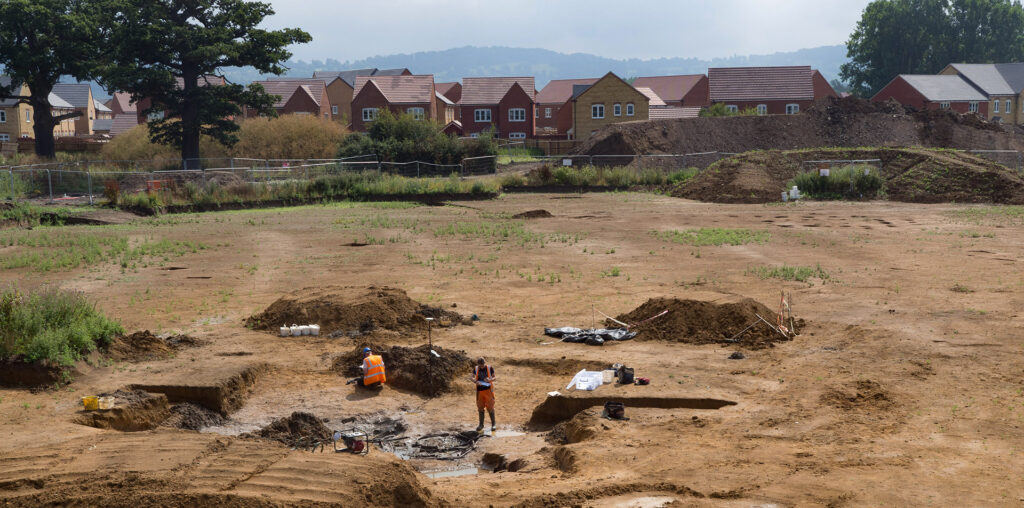
Archaeologists excavating south of Gloucester, England, have uncovered a remarkably preserved Bronze Age waterhole containing 150 wooden elements, including a log ladder, platforms, and a reused wooden trough. Dating to between 1500 and 1100 BC, the structure offers a rare glimpse into prehistoric woodworking—and raises an intriguing question about why its builders invested so much effort in securing water when a stream flowed nearby.
The discovery was detailed in a September 22 announcement by Cotswold Archaeology, which has been investigating the site and analysing its surviving timber structures. Unlike most Bronze Age wooden remains, which are frequently recovered as displaced fragments, much of this construction survives in its original position.
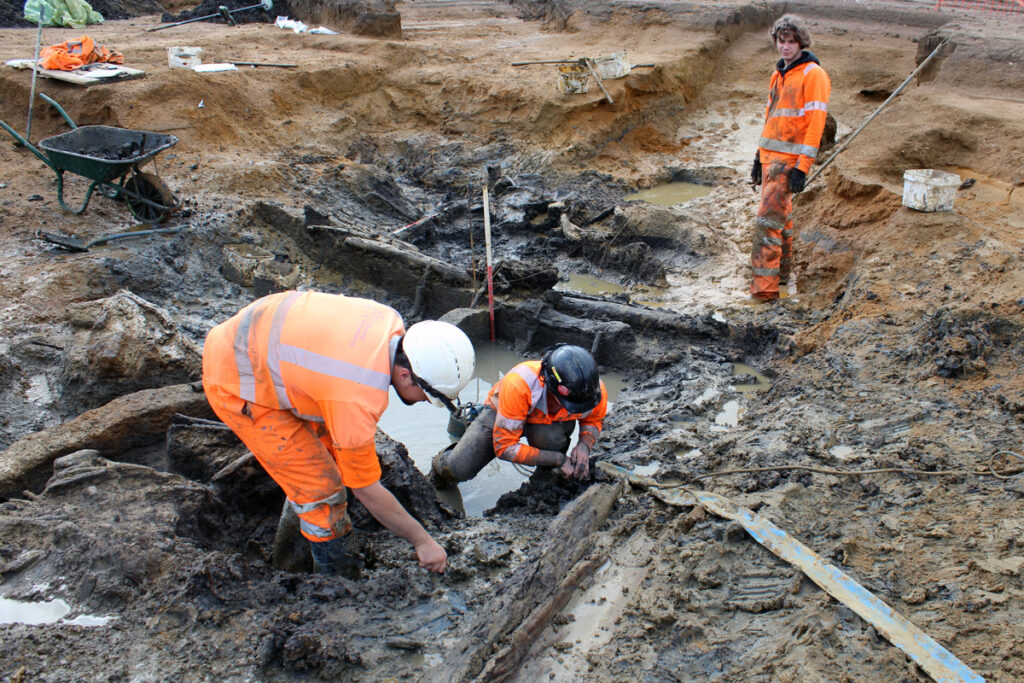
The waterlogged conditions preserved not only the wood itself but also evidence of how prehistoric craftspeople shaped, assembled, and adapted the structure over time.
A Wooden Ladder Leading Into the Water
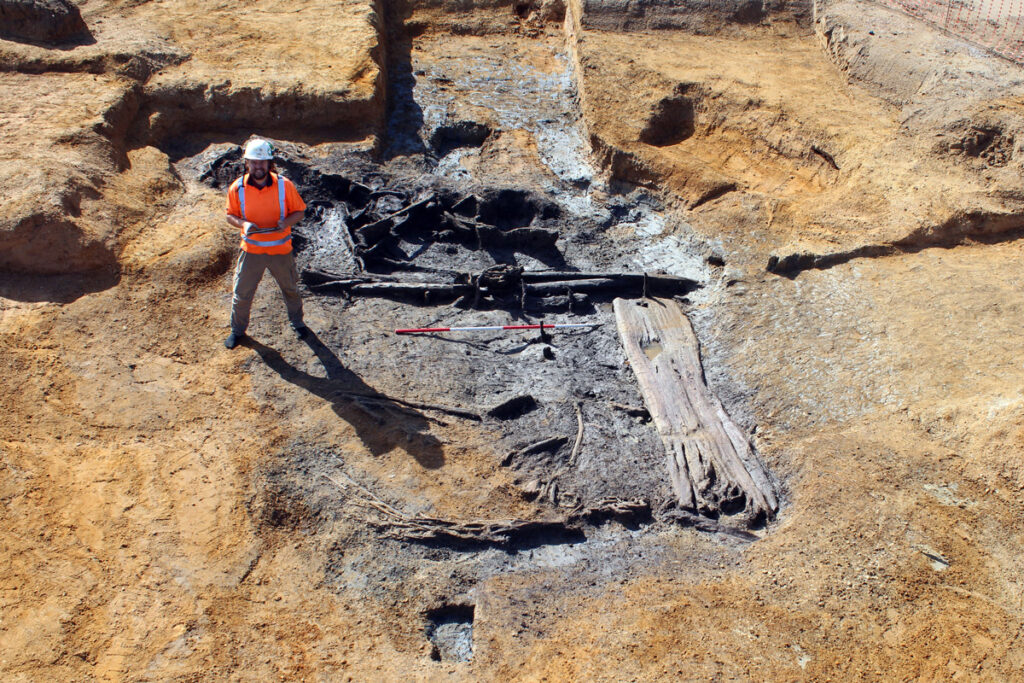
At the centre of the discovery is an elaborate arrangement of timbers designed to provide access to the waterhole, which reached a depth of approximately two metres.
The excavated remains include a wooden platform supported by a series of log planks. A log ladder, trimmed to a point and driven into the natural ground, provided access to the platform near the bottom. At least two sets of woven-branch walls, known as wattle, reinforced the sides and helped prevent erosion.
Together, these features reveal considerably more than a simple pit dug to collect water. Its builders had to contend with unstable ground, construct a usable route into the excavation, and reinforce the structure against the surrounding soil.
One particularly unusual discovery was a wooden trough wedged between the planks and the northwestern edge of the waterhole. Rather than being made specifically for this structure, the trough appears to have been reused.
Similar vessels have been recovered from other Bronze Age sites, including Must Farm in Cambridgeshire, and are sometimes associated with burnt mounds and possible food preparation activities. Its presence at Gloucester therefore introduces another possibility: the waterhole may have served purposes beyond watering animals.
Why Build an Elaborate Waterhole Beside a Stream?
Bronze Age waterholes are commonly interpreted as places where livestock could drink. Yet the Gloucester structure presents a problem for that explanation.
A local brook flowed nearby, providing another potential source of water. Why, then, would people spend considerable time and effort building a reinforced waterhole with platforms, a ladder, and carefully arranged wooden walls?
According to Cotswold Archaeology, the construction may indicate that its builders required a particularly reliable water supply. The precise purpose remains unresolved, and there is currently insufficient evidence to identify a specific activity.
Analysis has also revealed that the waterhole underwent changes during its lifetime. Archaeologists have identified evidence for two or three phases of use, including periods before and after the addition of the timber structures.
The wood itself offers clues about those modifications. Of the 150 surviving wooden elements, 55 display direct evidence of working, particularly splitting and marks left by axes. These traces are especially visible on the ladder and trough.
Oak, possibly ash, and other hardwoods were among the materials used. Further examination could establish how different components were prepared, whether they were reused from earlier constructions, and how the waterhole developed through successive phases.
Such evidence is particularly valuable because the organic materials used in everyday Bronze Age construction rarely survive in their original positions.
A Prehistoric Landscape of Water, Work and Burial
The exceptional preservation extends beyond the wooden structure. Plant remains recovered from the waterhole include nettles, thistles, docks, and brambles, suggesting that the surrounding landscape contained rough, open grassland and scrub.
Large quantities of insect remains, including water fleas, provide additional evidence for the ancient environment. Together, the biological finds point to a landscape incorporating wet ground, water habitats, hedgerows, and woodland edges.
The waterhole may have remained open into the Iron Age. Small pits, apparently used for storage or rubbish disposal, were subsequently dug around it, suggesting that the location continued to attract human activity.
Elsewhere on the site, archaeologists uncovered 13 human cremation burials without urns, along with the crouched burial of a child. Although these remains are consistent with prehistoric burial traditions, they have not yet been dated, and any direct relationship with the Bronze Age waterhole remains unproven.
The latest discovery also has an intriguing counterpart just 20 metres to the south.
During an earlier excavation, archaeologists identified another Bronze Age waterhole containing traces of wattle lining. At its base lay half of a wooden trough that had been broken in antiquity. Researchers have suggested that the object might have been deliberately deposited during a ritual marking the waterhole’s abandonment, although this interpretation remains tentative.
The presence of two nearby waterholes, both containing wooden troughs, raises further questions about how the landscape was used and why these objects ended up in structures built to hold water.
For now, the Gloucester discovery provides an unusually detailed record of Middle Bronze Age carpentry. As analysis continues, the surviving timbers may help archaeologists reconstruct not only how the waterhole was built and altered, but also what its builders needed it for.
