
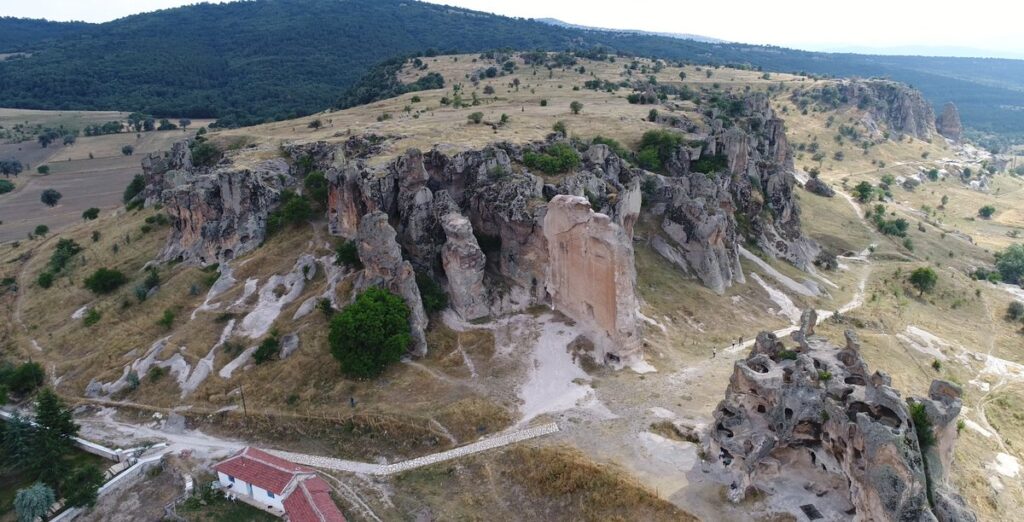
For generations, archaeologists could see where defensive walls once crossed the rocky landscape of Yazılıkaya, also known as Midas Castle. Grooves, cuttings and sockets carved into the bedrock preserved the architectural footprint of a fortification system whose masonry had largely disappeared. Now, excavations at the monumental Phrygian site in central Türkiye have exposed something far more tangible: a substantial section of the wall itself.
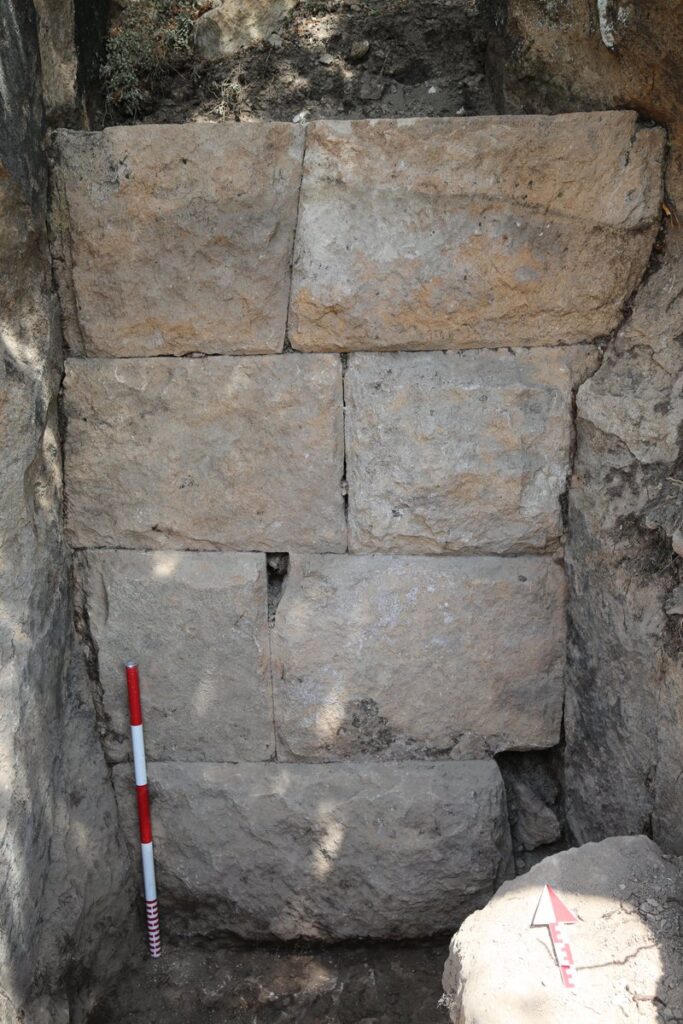
A trial trench opened in an area interpreted as a watchtower revealed a fortification wall surviving to a height of approximately 2.60 meters. Builders constructed it from four courses of carefully worked, bossed stone blocks, and the structure appears to have closed a vulnerable passage between natural rocky outcrops.
The discovery provides unusually direct evidence for how the inhabitants of Midas Castle transformed an already formidable landscape into a deliberately fortified stronghold.
A wall where the rocks left a gap
Excavation director Professor Yusuf Polat of Anadolu University said the newly exposed masonry changes what archaeologists can document about the castle’s defensive architecture. The plateau is naturally surrounded by steep volcanic tuff formations, effectively creating a stone barrier around much of the settlement.
Previous research showed that where those cliffs were interrupted, builders cut stepped beds and sockets into the bedrock to support masonry walls. Researchers had also documented small surviving sections on the southeastern side of the fortress. The newly excavated structure, however, preserves that system on a much more substantial scale.
Most importantly, the wall does not simply stand beside the rocks. According to Polat, it closes the passage between them, showing how Phrygian builders used natural geology as part of the fortification itself rather than attempting to construct a continuous artificial wall around the entire plateau.
The result was an economical but sophisticated defensive system: cliffs where cliffs were sufficient, masonry where nature left openings.
Ceramics may help reveal when the fortress was enclosed
Archaeologists recovered pottery dating to the eighth and seventh centuries BCE from the excavation trench. Polat cautions that the ceramics do not simply provide a construction date for the exposed wall, but their archaeological context suggests that the process of enclosing and strengthening the perimeter of Midas Castle may have taken shape after the seventh century BCE.
The newly exposed masonry provides direct physical evidence for the fortification, while the ceramics could help archaeologists piece together when and how the defensive network around Midas Castle developed.
Research at the site has long indicated substantial activity during the Middle Phrygian period. Earlier surveys found Phrygian pottery ranging broadly from the ninth to sixth centuries BCE, with particularly strong evidence from the eighth century.
Excavations conducted in 2024 already targeted the defensive system of Midas Castle as well as the nearby Agdistis sanctuary, showing that understanding how the plateau was protected has become one of the central questions of the renewed archaeological project.
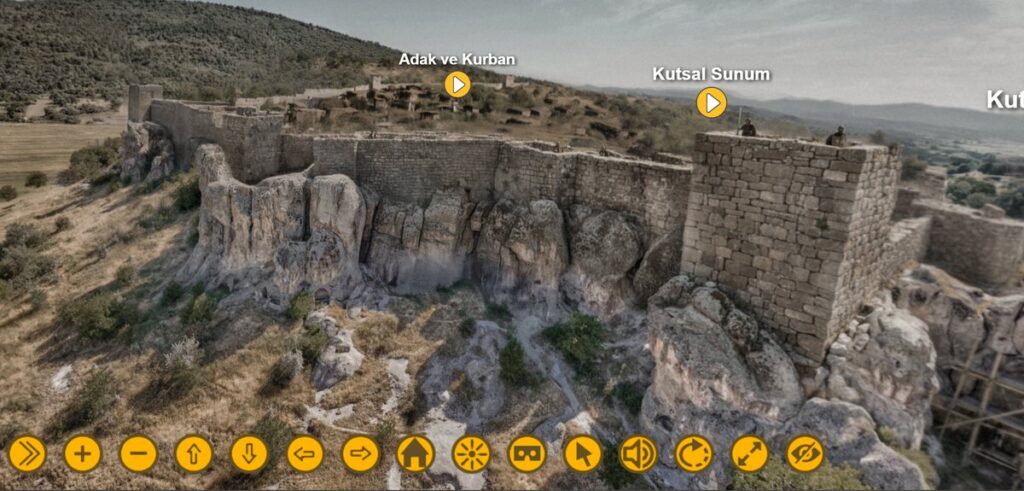
Credit: Prof. Dr. Yusuf Polat / Yazılıkaya–Midas Castle Excavations
More than a fortress
That defensive investment makes sense because Yazılıkaya/Midas Castle was more than an isolated military position. Located in the mountainous Phrygian landscape south of Eskişehir, the settlement occupied a naturally protected plateau surrounded by deep valleys and steep tuff formations.
Polat has described Yazılıkaya/Midas as one of the most important sacred landscapes of Phrygian civilization, surrounded by a wider network of fortified sites controlling routes through the valley.
Its most famous monument is the enormous rock-cut façade generally known as the Midas Monument. Nearly 17 meters across and high, the façade carries geometric decoration and an Old Phrygian inscription naming Midas, while its architectural form appears to reproduce the façade of a real building in stone.
The chronology of the monument itself remains debated. Earlier interpretations placed it at various points between the eighth and sixth centuries BCE, while a 2023 study argued that architectural parallels favor a date in the first half of the sixth century BCE.
Across the plateau, archaeologists have identified further rock-cut altars, niches, cisterns, passages and ritual spaces associated with Phrygian religious practice and particularly the worship of the Mother Goddess Matar. Recent excavations around the Agdistis sanctuary have also begun revealing how ritual activity was organized around one of the site’s monumental rock-cut altars.
The defenses of a sacred landscape are becoming visible
The wider Yazılıkaya Valley contained several fortified settlements positioned on elevated ground overlooking routes into the region. Polat’s research argues that these fortresses were not randomly distributed military outposts but formed part of a broader system that helped control access to a landscape containing some of Phrygia’s most important religious monuments.
That makes the newly exposed wall particularly significant. For decades, archaeologists could reconstruct much of the fortification only from the negative evidence left behind, including grooves cut into rock, stepped foundations and sockets where blocks had once stood.
The new excavation reverses that perspective. At one of the points where the natural rock barrier opened, archaeologists can now see the architecture that once completed it: four surviving courses of carefully shaped masonry rising between the cliffs.
Midas Castle’s defenses are therefore no longer visible only as scars cut into the rock. A substantial part of the wall that once closed the ancient stronghold has now emerged alongside them.
Prof. Dr. Yusuf Polat, Director of the Yazılıkaya/Midas Castle Excavations, statement shared on X.
