
15 February 2026 The Future is the Product of the Past

A 1,000-Year-Old Bronze Wheel Cross Discovered in Brandenburg

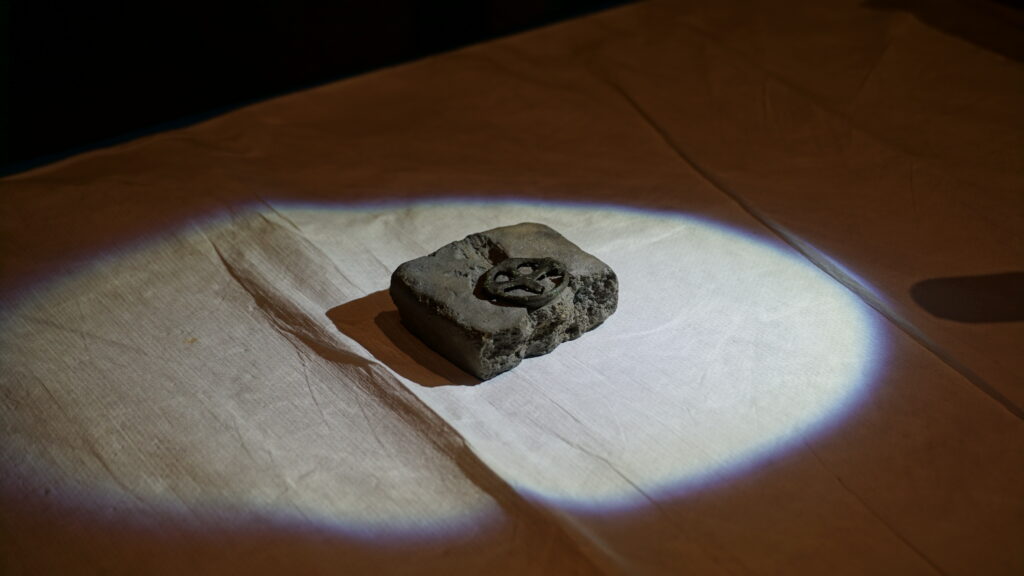
A small bronze cross, recently unearthed in western Brandenburg, is reshaping how archaeologists understand the spread of Christianity in early medieval northeastern Germany. Dated to the 10th or early 11th century, the object is remarkable not for its size, but for an unprecedented archaeological match that connects it directly to a casting mold discovered more than four decades ago.

The wheel-shaped cross was found in the Havelland region by Juliane Rangnow, a certified volunteer heritage guardian working under official authorization. When specialists examined the piece at the Brandenburg State Office for Heritage Management and Archaeological Museum, they made a striking realization: the cross fits exactly into a bronze mold excavated in 1983 at a Slavic hillfort in Berlin-Spandau.

No other cast object from that mold had ever been found—until now.

A Perfect Match Across Four Decades

The Spandau mold, often referred to by scholars as the “Spandau Cross,” has long been regarded as one of the earliest material indicators of Christian symbolism between the Elbe and Oder rivers. Found near the remains of an early wooden church, it hinted at local production of Christian objects during a period when written sources dominate the historical record.

The newly discovered cross changes that picture dramatically. Detailed measurements and restoration work conducted at the Brandenburg State Office for Heritage Management and Archaeological Museum confirmed that the Havelland cross and the Spandau mold belong together. According to archaeologists, this is a unique case for the period: a medieval casting mold and its corresponding finished object reunited after more than 1,000 years.


📣 Our WhatsApp channel is now LIVE! Stay up-to-date with the latest news and updates, just click here to follow us on WhatsApp and never miss a thing!!


“This kind of match is virtually unheard of,” said Franz Schopper, emphasizing the importance of long-term heritage documentation and collaboration between professionals and trained volunteers.
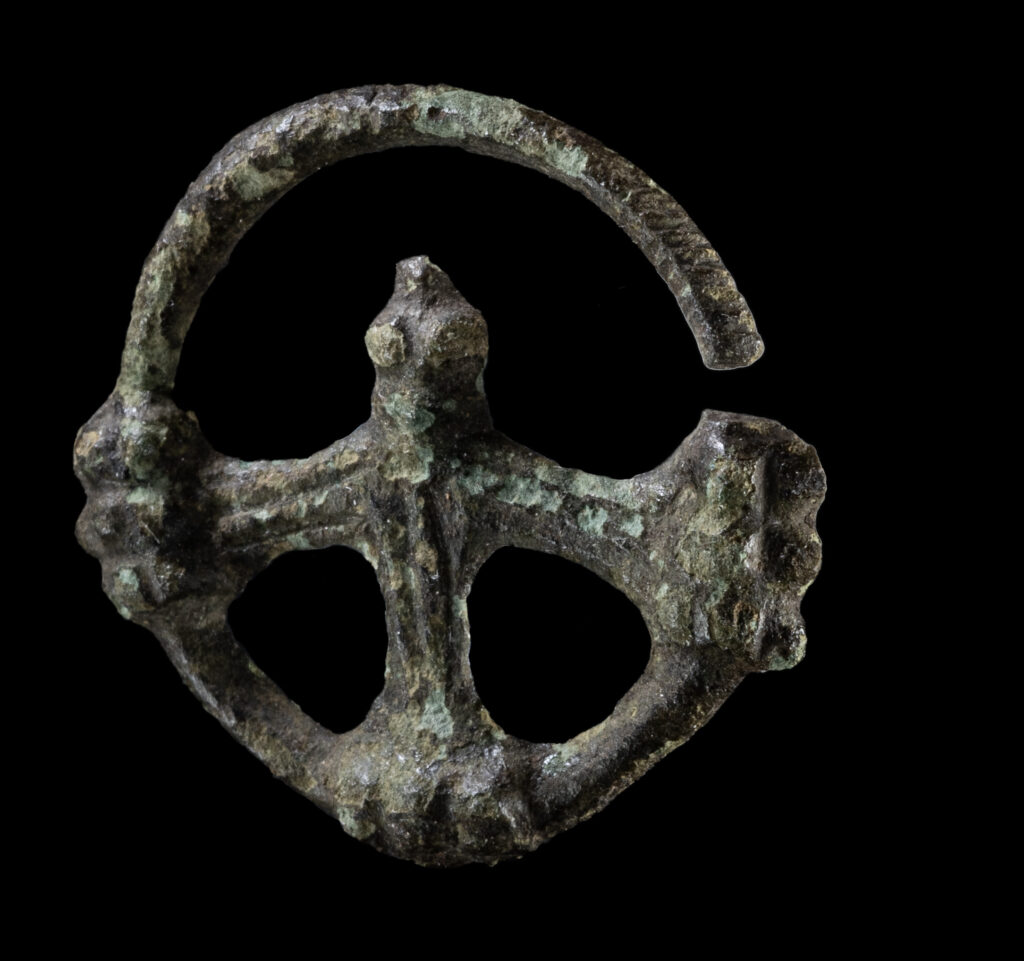
The wheel-shaped cross was found in the Havelland region by Juliane Rangnow, a certified volunteer heritage guardian working under official authorization. Credit: Brandenburg Ministry of Science, Research and Culture (Germany)

The wheel-shaped cross was found in the Havelland region by Juliane Rangnow, a certified volunteer heritage guardian working under official authorization. Credit: Brandenburg Ministry of Science, Research and Culture (Germany)

Christianity Before the Uprising of 983

Beyond its technical uniqueness, the cross carries deep historical implications. The object dates to a volatile era, when the Slavic-inhabited regions of today’s Berlin and Brandenburg were under growing influence from the East Frankish Kingdom, the precursor to the Holy Roman Empire.

Christian symbols from this early phase are rare in the archaeological record. Most evidence for the first wave of Christianization comes from written sources, which describe resistance among Slavic communities. That resistance would culminate in the Lutician uprising of 983, when local groups rejected Frankish authority and suppressed Christian institutions for more than a century.

The cross suggests that Christianity had already spread more widely—and more locally—than previously assumed. Matthias Wemhoff notes that the mold’s existence implies serial production, likely serving a mobile population and a broader regional market well before the uprising.

Found by a Volunteer, Preserved by a Network

Rangnow discovered the cross during a permitted metal-detector survey at a known archaeological site. The same location also yielded coins, gilded jewelry fragments, and iron weapons from the 10th and 11th centuries, indicating sustained activity rather than an isolated loss.

Holding the object, Rangnow described the experience as “a bridge to the past”—a sentiment echoed by Brandenburg’s Minister of Culture Manja Schüle, who highlighted the find as a testament to the role of trained volunteers in protecting cultural heritage.

Brandenburg currently works with around 350 certified volunteer archaeological conservators, all of whom undergo formal training and operate under strict legal frameworks.
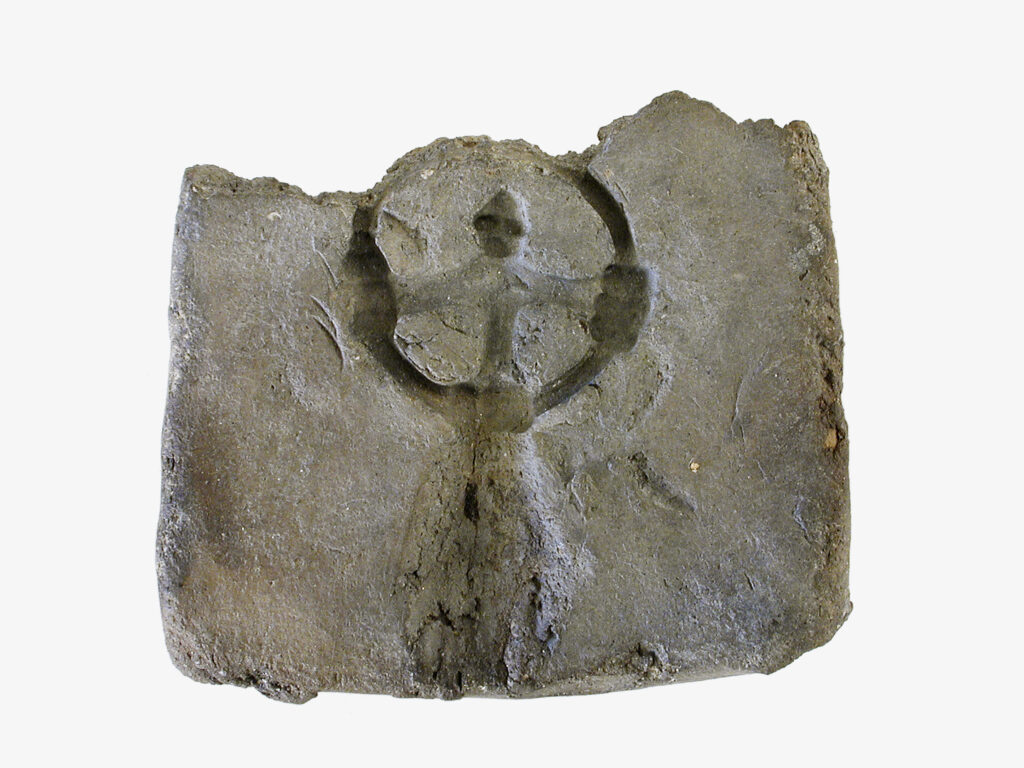
The cross is remarkable not for its size, but for an unprecedented archaeological match that connects it directly to a casting mold discovered more than four decades ago. Credit: Brandenburg Ministry of Science, Research and Culture (Germany)

On Display to the Public

Both the bronze wheel cross and its original casting mold will be displayed together at the Archaeological State Museum Brandenburg from 24 January to 11 March 2026. The exhibition offers visitors a rare opportunity to see an early medieval production chain reunited—an object and the very form that shaped it.

For archaeologists, the discovery is more than spectacular. It is a tangible reminder that even small finds can carry outsized historical weight, especially when patience, documentation, and collaboration allow the past to speak with unexpected clarity.

Ministerium für Wissenschaft, Forschung und Kultur -Brandenburg Ministry of Science, Research and Culture (Germany)

Cover Image Credit: Brandenburg Ministry of Science, Research and Culture (Germany)

Related Articles

Archaeologists Discover Monumental Uruk-Period Building in Kani Shaie, Northern Iraq

29 October 2025

29 October 2025

A research team from the University of Coimbra’s Center for Studies in Archaeology, Arts and Heritage Sciences (CEAACP) has announced...

Ancient ceremonial chariot found in Pompeii

27 February 2021

27 February 2021

The Archaeological Park announced that a gorgeous Roman chariot was found “almost intact” near Pompeii, where it was buried, calling...

Viking Gold Treasure Unearthed on Isle of Man by Veteran Metal Detectorist

2 June 2025

2 June 2025

A remarkable piece of Viking gold has been unearthed on the Isle of Man, shedding new light on the island’s...

From Justinian’s Glory to Ruin: The Last Stand of Montenegro Triconch Church

10 August 2025

10 August 2025

In the heart of Bar, just off the bustling Ulica Maršala Tita, lie the weathered remains of the Triconch Church...

The Stonehenge road tunnel is illegal, according to the High Court

23 June 2021

23 June 2021

The transport secretary’s decision to allow a road tunnel to be built near Stonehenge was unlawful, according to the high...

Unique work of Minoan art, the Pylos Combat Agate must be the David of the Prehistoric era

21 November 2021

21 November 2021

Found in a Greek tomb dating back 3,500 years, the artifact is so well designed that it looks as lively...

Rare textiles and dwellings discovered in the submerged Neolithic settlement near Rome

6 June 2023

6 June 2023

Underwater archaeologists have discovered rare, well-preserved textiles, basketry, and cordage from the early Neolithic period in an area near Rome,...

Treasure hunters revealed a 2,700-year-old Urartian temple In the east of Turkey

18 June 2022

18 June 2022

Treasure hunters revealed a 2,700-year-old Urartian temple A group of treasure hunters, who were digging illegally to find treasure in...

An extremely Rare Half-Shekel Coin From Year Three of the Great Revolt discovered

21 December 2022

21 December 2022

Recent excavations by archaeologists from the Hebrew University in the Ophel area south of the Temple Mount uncovered the remains...

1500-year-old Medallion Rescued From Treasure Hunters on Display in Çorum Museum

3 May 2021

3 May 2021

A 1,500-year-old gold medallion portraying a figure of Jesus Christ has been exhibited at a museum in Turkey’s northern province...

Nearly 300-million-year-old Oldest known fossilized reptile skin found in Oklahoma cave resembles that of modern crocodiles

17 January 2024

17 January 2024

Paleontologists say they’ve identified and described the oldest fossilized reptile skin ever found. A team of paleontologists from the University...

Newly discovered inscribed brick may reveal Elamite water supply system in Western Iran

15 January 2024

15 January 2024

Archaeologists discovered a brick inscribed with Akkadian script, marking the Elamite water supply system, alongside some intricately patterned bricks in...

Ancient objects found in Jerusalem could be hand grenades used 1000 years ago, New study says

27 April 2022

27 April 2022

New analysis into the residue inside ancient ceramic pots from 11th–12th century Jerusalem has found that they were potentially used...

Ancient Roman Theatre Seat Reveals Name of Prominent Priestess

12 November 2025

12 November 2025

Archaeologists working at the ancient city of Apollonia ad Rhyndacum in Gölyazı, Türkiye, have uncovered a remarkable piece of history:...

Ancient Mosaic Room Featuring “Solomon’s Knot” Unearthed in Smyrna to Ward Off the Evil Eye

5 January 2026

5 January 2026

Archaeologists working in the heart of İzmir have uncovered a remarkable mosaic-floored room in the ancient city of Smyrna, revealing...