4 January 2026 The Future is the Product of the Past

1700-year-old Roman shoes and craft district found in France

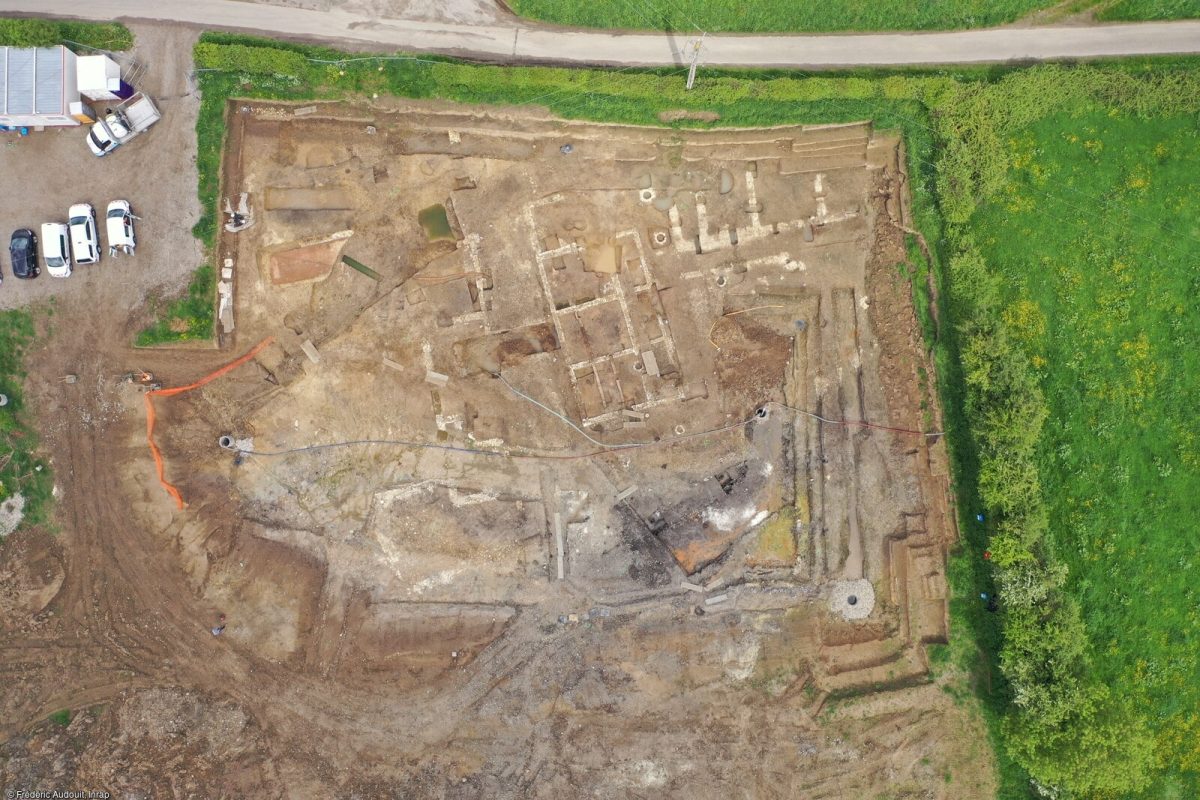
An ancient Roman craft district was discovered by archaeologists working in the southwest of the town of Therouanne near a channel, according to a news release from the French National Institute for Preventive Archaeological Research (INRAP).

The ancient site uncovered during excavations corresponds to a craft area that flourished during the Early Imperial period, along the “Lys” channel, southeast of the city.

The craft district, which was sealed by the sediment of a nearby channel, was over 1,700 years old but remarkably well preserved, according to experts.

Numerous pairs of leather shoes with rough, studded soles were found during the canal’s excavation, according to the press release. The nearly black, dark-brown leather shoes are visible in the photos. Other fragments of cut leather — pieces of unfinished footwear — indicated a shoemaker once worked in the area.
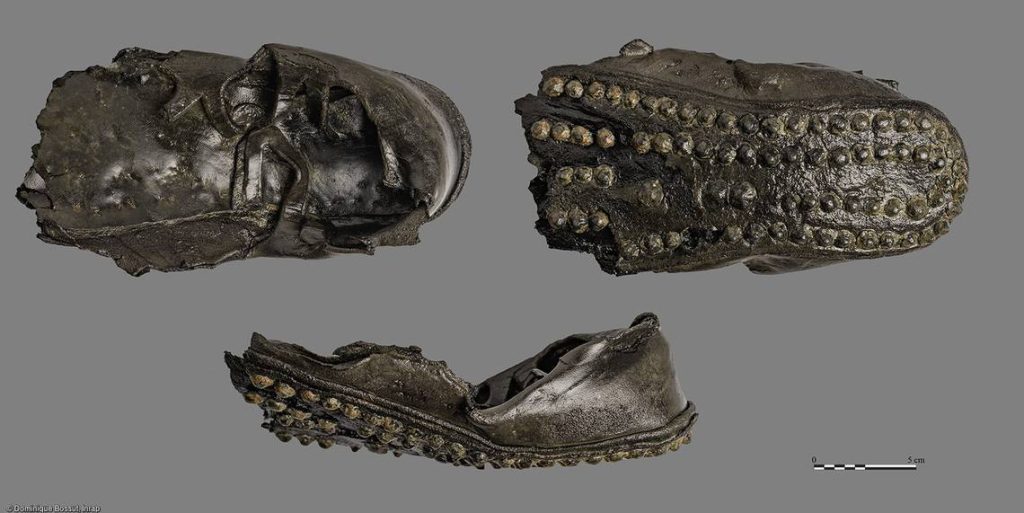
Close-up photos of some ancient Roman shoes found in the canal. Photo: Dominique Bossut - Inrap
Close-up photos of some ancient Roman shoes found in the canal. Photo: Dominique Bossut – Inrap

Here, leather work is represented by the discovery, still in the fillings of the canal, of numerous leather shoes with studded soles and numerous triangular scraps of leather, clues to the probable presence in the sector of a shoemaker and a tannery which, like the butchers, would have used the river as a dumping ground.


📣 Our WhatsApp channel is now LIVE! Stay up-to-date with the latest news and updates, just click here to follow us on WhatsApp and never miss a thing!!


Archaeologists also discovered a structure with several ovens. According to the release, they found two blue glass cylinders inside the ruins, one in the oven and another off to the side. The unfinished projects indicated the structure was a glassmaker’s workshop.
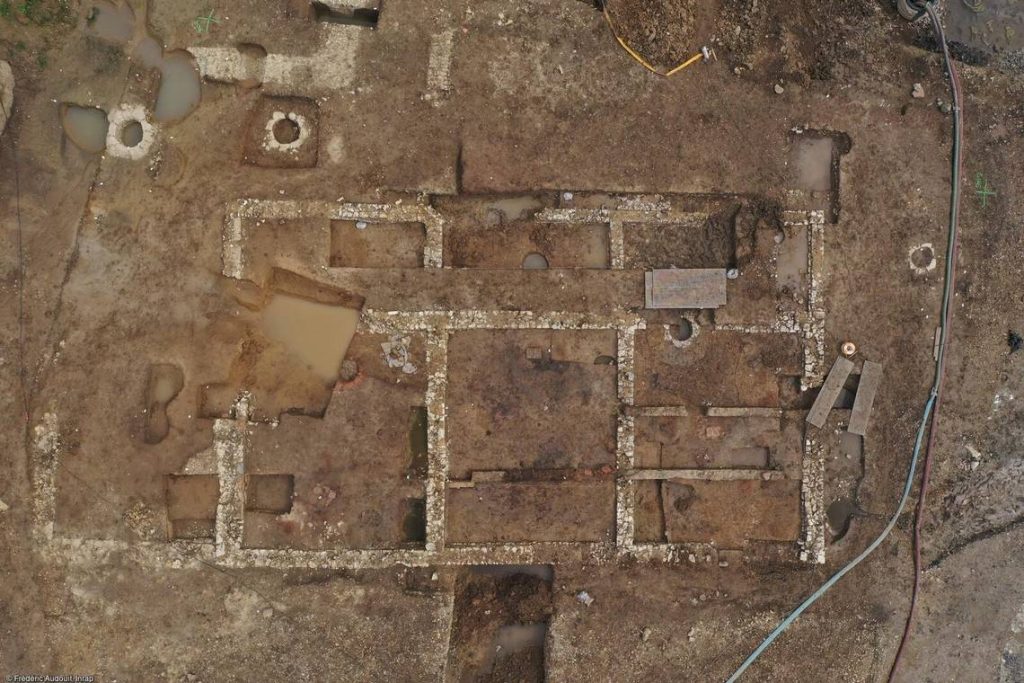
Ruins of the glassmaker’s workshop. Photo: Frédéric Audouit-Inrap

In the canal, archaeologists found a significant number of one kind of cow bone. According to the press release, the bones were leftovers from a nearby butchery and bore signs of butchering.

Ruins of a canal, road and another large structure were found nearby, archaeologists said. The discovery of a canal built during the ancient period is the first in Nord-Pas-de-Calais.

INRAP

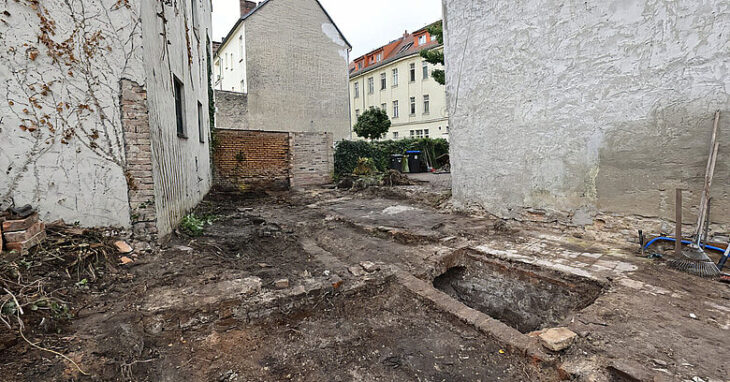
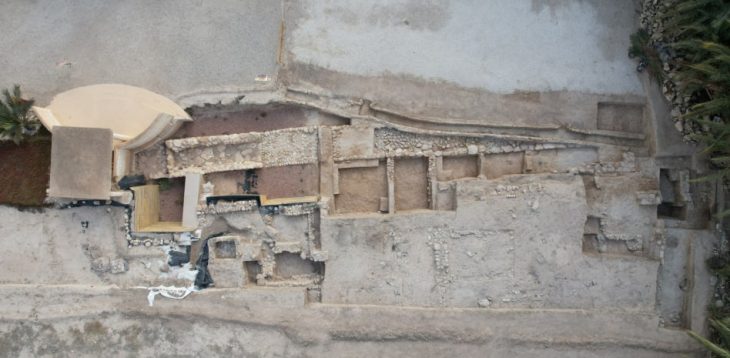
Cover Photo: General view of the Thérouanne excavation complex (Pas-de-Calais) in 2023. Photo: Frederic Audouit, Inrap
Related Articles

Ancient rituals recorded on 2,000-year-old bamboo slips deciphered

18 December 2023

18 December 2023

Scholars of China’s Tsinghua University have deciphered five documents recorded on bamboo slips dating back to the Warring States period...

The 3,200-year-old perfume of Tapputi, the first female chemist in history, came to life again

24 July 2022

24 July 2022

One of the scent formulas written in Akkadian on clay tablets by Tapputi, known as the world’s first female perfumer...

New fortifications unearthed in Porsuk Mound excavations

11 August 2021

11 August 2021

In the excavations of Porsuk Mound, which is an important Hittite settlement and where traces of settlement remains can be...

3,000-year-old Treasure on the Iberian Peninsula made with material from a meteorite

7 February 2024

7 February 2024

Scientists have recently discovered that some of the pieces in the amazing Bronze Age collection known as the Villena Treasure,...

One of the World’s Oldest Streets Unearthed at Canhasan 3 in Türkiye, Dating Back 9,750 Years

26 August 2025

26 August 2025

Nearly 10,000 years ago, long before the rise of cities, a community in central Anatolia was already experimenting with new...

The ancestors of many animal species alive today may have lived in a delta in what is now China, new research suggests

20 April 2022

20 April 2022

The ancestors of many animal species alive today may have lived in a delta in what is now China, new...

An engraving on an almost 2,000-year-old knife believed to be the oldest runes ever found in Denmark has been discovered by archaeologists

22 January 2024

22 January 2024

Archaeologists have found a small knife with a completely unique runic inscription that can be dated almost 2000 years ago....

Gadebridge Park Roman Villa Marks England’s Largest Private Roman Swimming Pool

28 September 2025

28 September 2025

Beneath the grass and walkways of Gadebridge Park lies one of England’s most extraordinary Roman relics: a villa complex with...

Roman camp of 10,000 people discovered in northern Portugal

2 July 2021

2 July 2021

A camp used by 10,000 Roman soldiers sent to conquer northwestern Iberia has been discovered in the Portuguese city of...

Archaeologists may have uncovered a 13th-century castle in Shropshire

7 August 2021

7 August 2021

Archaeologists have been working on a mound of land in Wem, Shropshire, that belongs to Soulton Hall, Elizabethan mansion and...

Rare Piece Of Metal Armor Found At 17th-Century Fort In Maryland

1 March 2024

1 March 2024

A piece of body armor was unearthed during excavations at a 17th-century colonial fort in Maryland, a Mid-Atlantic state of...

Archaeologists uncovered a ‘golden tomb’ during excavations in Armenia

26 March 2023

26 March 2023

A team of archaeologists made up of Polish and Armenian scientists has discovered a “golden tomb” containing two skeletons in...

3,500-year-old perfectly preserved ancient frozen bear found in Siberian

28 February 2023

28 February 2023

As the permafrost on Bolshoy Lyakhovsky Island in eastern Siberia melted, a mummified brown bear that lived more than three...

A woman in the Czech Republic found a medieval jackpot during a walk

29 May 2024

29 May 2024

A woman walking in the town of Kutná Hora in the Central Bohemian Region of the Czech Republic found a...

An extraordinary archaeological discovery in Spain: A new decorated stela has been found in context, in the 3000-year-old funerary complex

15 October 2023

15 October 2023 2

Archaeologists have discovered a new decorated stela in the 3000-year-old burial complex of Las Capellanías in Cañaveral de León (Huelva,...