
15 February 2026 The Future is the Product of the Past

Ancient Hawaiian Petroglyphs Reappear on Oahu’s Shoreline After Years Beneath the Sand

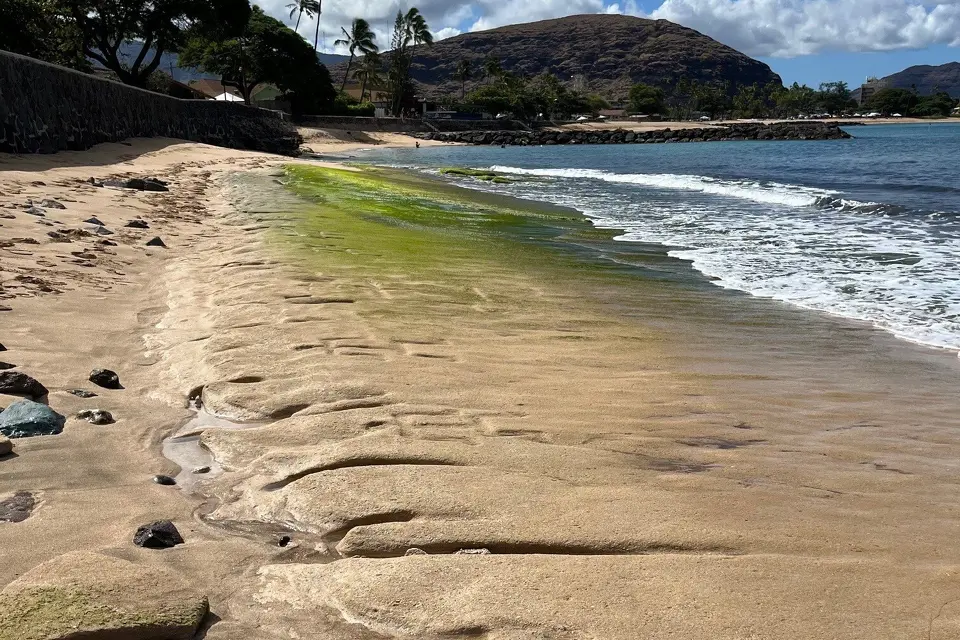
A remarkable piece of Hawaii’s cultural legacy has resurfaced this month, as ancient Hawaiian petroglyphs were once again exposed along the west coast of Oahu. These large carvings, etched into sandstone centuries ago, emerged due to shifting sands and seasonal wave action—revealing 26 mysterious figures that have remained mostly hidden since their last appearance in 2016.

Located along the shoreline near a U.S. Army recreation center on the Waianae Coast, these petroglyphs are believed to be between 500 to over 1,000 years old. Most are anthropomorphic stick figures, some remarkably detailed, including two massive figures that feature defined fingers—a rare detail in Hawaiian rock carvings. The largest measures over eight feet tall and nearly eight feet wide.

“This is a natural process,” explained Nathan Wilkes, external communications chief for the U.S. Army Garrison Hawaii, “where the ocean and currents gradually uncover, and then later recover, these glyphs over time.”

The Hawaiian petroglyphs stretch across 115 feet of sandstone near the shoreline and become visible at low tide when the waves and current temporarily sweep the sand away. Covered for much of the year, their reemergence is often driven by seasonal weather, especially during storm activity from May to November, when stronger Pacific currents churn up sand and sediment.

While the site is open to the public, full access is somewhat restricted, as the adjacent military recreation area requires valid military identification. This limited access has sparked ongoing debate about the preservation of cultural heritage versus property use, especially considering the site’s deep importance to Native Hawaiians.


📣 Our WhatsApp channel is now LIVE! Stay up-to-date with the latest news and updates, just click here to follow us on WhatsApp and never miss a thing!!


To local families with generational ties to the coastline, the petroglyphs are far more than archaeological features. They are spiritual messages and ancestral symbols. In an interview with the U.S. Army in 2017, Native Hawaiian Glen Kila, whose family lineage on the Waianae Coast stretches back to the first Polynesian migrations, said one petroglyph with outstretched fingers reminded him of Maui the demigod, a central figure in Hawaiian mythology.
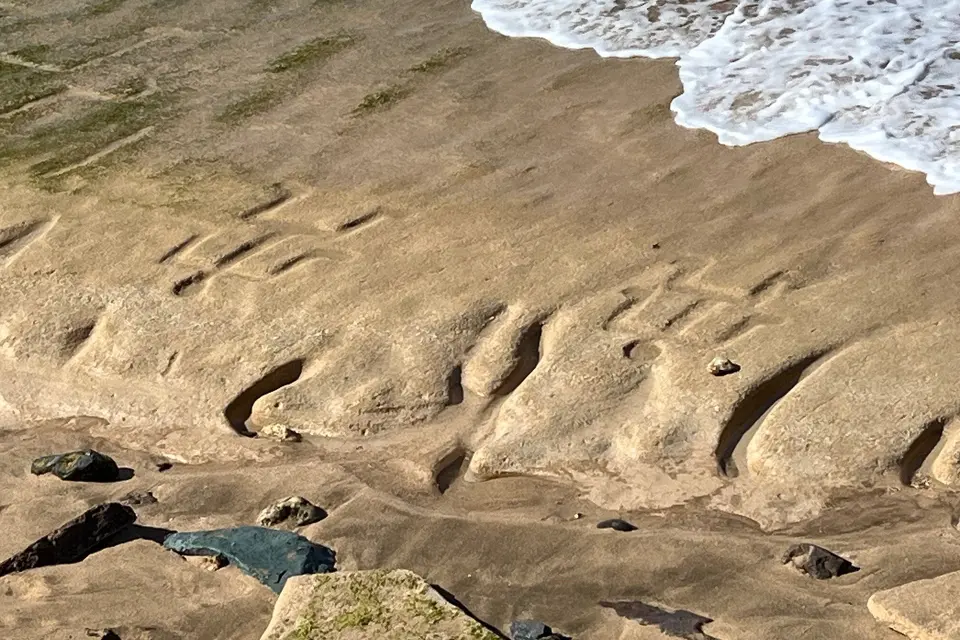
The petroglyphs include many anthropomorphic stick-figure carvings in sandstone. Credit: U.S. Army Garrison Hawaii

“My interpretation, just by looking at it, was Maui,” Kila shared. “Because of the way the fingers stretch from the east to the west—it’s symbolic of the rising and setting sun. That is a spiritual symbol, much like the cross in Christianity.”

Many scholars believe the Hawaiian petroglyphs may represent ceremonial narratives or cosmological cycles. The inclusion of raised arms in certain figures could signify sunrise and sunset or other ritual movements tied to natural events and spiritual beliefs. Their meanings, however, remain open to interpretation.

Carved by hand into relatively soft sandstone, these petroglyphs are vulnerable to erosion, weathering, and human impact. As a result, archaeologists and Army cultural resource specialists regularly monitor the area to ensure long-term protection. Still, they acknowledge that the ocean itself plays a vital role in revealing and concealing the ancient artwork—making each reappearance both a natural wonder and a fleeting glimpse into Hawaii’s deep past.

The land where these petroglyphs rest holds a complex legacy. Once home to Native Hawaiian communities, the area was acquired by the U.S. military in the early 20th century. Some families resisted relocation, exchanging lands inland to stay near ancestral territory. The presence of these carvings, pressed into stone along the edge of military-controlled land, underscores the tension between historical roots and modern land use.

As the sands begin to shift again in coming months, the petroglyphs may once more vanish beneath the shoreline—awaiting their next reappearance. Their brief visibility offers a unique reminder of Hawaii’s living cultural heritage and the resilience of Native Hawaiian identity across generations.

Cover Image Credit: U.S. Army Garrison Hawaii

Related Articles

The largest marine turtle fossil of its kind ever discovered in Europe unearthed in Spain

21 November 2022

21 November 2022

In northern Spain, scientists discovered the remains of a new species of enormous marine turtle. The prehistoric creature is the...

Medieval subterranean corridors found by accident in northeast Iran

1 October 2022

1 October 2022

The workers working on a routine road construction project near Shahr-e Belqeys (City of Belqeys) in northeast Iran made an...

Arkeologists decipher hieroglyphics of a vessel found in the archaeological rescue of the Mayan Train

16 May 2022

16 May 2022

Based on the analysis of eleven glyphic cartouches inscribed into a ceramic pot, discovered in October 2021 during archaeological rescue...

Game Bone Stones from a Roman Military Strategy Game Found in Hadrianopolis Ancient City, Türkiye

10 January 2025

10 January 2025

During the excavations in Hadrianopolis Ancient City in Eskipazar district of Karabük, 2 bone game stones belonging to the military...

Archaeologists uncovered a ‘golden tomb’ during excavations in Armenia

26 March 2023

26 March 2023

A team of archaeologists made up of Polish and Armenian scientists has discovered a “golden tomb” containing two skeletons in...

Treasure of 1,290 Ancient Roman Coins Discovered by Amateur Archaeologist in Switzerland

16 April 2022

16 April 2022

An amateur archeologist has found a big treasure trove of over 1,290 priceless, ancient Roman coins dating back to the...

Rare Early Medieval Pendant Used to Identify a Princely Official Found in Staraya Ladoga

5 February 2026

5 February 2026

Archaeologists in Old Ladoga have discovered a rare medieval pendant bearing the Rurikid trident — an object believed to have...

A new study provides evidence that modern humans, coexisted in the same region with Neanderthals for thousands of years

11 February 2024

11 February 2024

A genetic analysis of bone fragments excavated from an archaeological site in Ranis, Germany provides conclusive evidence that modern humans...

The identities of the occupants of the unspoiled 4th-century BCE Royal Tombs at Vergina in northern Greece have been identified

26 January 2024

26 January 2024

The identities of the occupants of the unspoiled 4th-century BCE Royal Tombs at Vergina in northern Greece have been identified....

The World’s Earliest Ground Stone Needles Found in Western Tibetan Plateau

26 June 2024

26 June 2024

In western Tibet, six peculiar stone artifacts were discovered in 2020 by archaeologists excavating close to the shore of Lake...

Extraordinary Discovery at Göbeklitepe: 12,000-Year-Old Human Statue Found Inside Wall

19 September 2025

19 September 2025

Türkiye’s Minister of Culture and Tourism Mehmet Nuri Ersoy has announced a groundbreaking archaeological discovery at Göbeklitepe, the world-renowned UNESCO...

Hidden 13th-century carving of ‘face of Christ’ discovered in Ballymore, Ireland

12 May 2022

12 May 2022

At Ballymore, in the county of Westmeath, Ireland, sunlight led to an interesting and special discovery. The sunlight revealed that...

One of Europe’s Most Important Medieval Numismatic Finds: Rare First Crusade Silver Coins Unearthed in Croatia

4 December 2025

4 December 2025

A groundbreaking archaeological discovery in Croatia is being hailed as one of the most important medieval numismatic finds ever recorded...

Archaeologists Found an Egyptian Temple Slotted into a Cliff Face, Probably Dedicated to a Lion-Headed Goddess Repit

15 December 2024

15 December 2024

Archaeologists have uncovered a hidden gateway leading to a 2,100-year-old temple built into a cliff face at the ancient city...

Researchers Unearthed the First Known Neanderthal Footprints in Portugal

16 July 2025

16 July 2025

New tracksites reveal how Neanderthals navigated Portugal’s ancient dunes 80,000 years ago In a groundbreaking discovery, researchers have unearthed the...