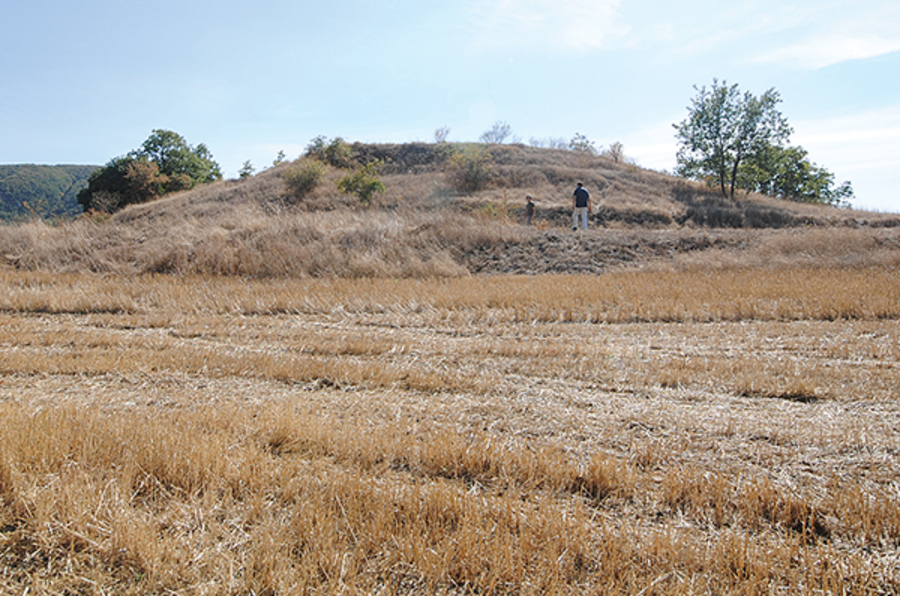
A monumental Phrygian tomb discovered in the Karaağaç Tumulus near Bilecik is rewriting what historians believed about the reach of King Midas’ kingdom.
Dated to the 8th century BCE (ca. 800–540 BCE), the burial contains rare royal artifacts—bronze vessels, inscribed ceramics, and a monumental wooden chamber—showing striking similarities to elite tombs in Gordion, the ancient capital of Phrygia. Located 160 kilometers from the political center, the tomb suggests that Phrygian royal power extended far beyond the capital, revealing a more complex and decentralized power structure in ancient Anatolia.
A Tomb with Royal Parallels
The study, led by Hüseyin Erpehlivan from Bilecik Şeyh Edebali University and published in the American Journal of Archaeology (January 2026 issue), argues that the Karaağaç burial is not a typical local elite tomb. Instead, its architectural design and grave goods show striking parallels with royal burials found in Gordion, including the famous Midas Tumulus.
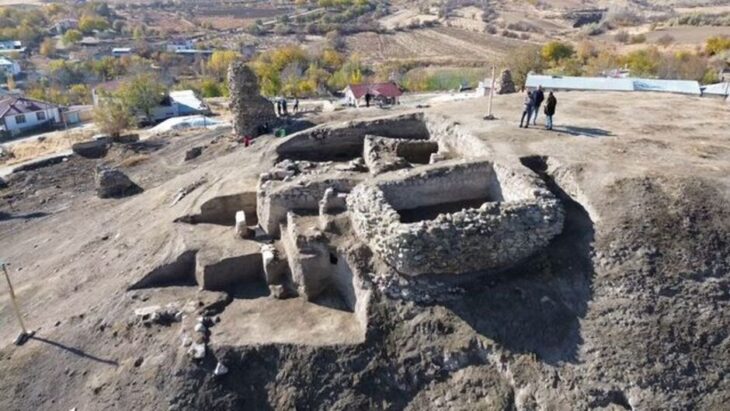
The tomb’s monumental layout features a wooden burial chamber that aligns with the elaborate construction styles seen in Phrygian royal graves. This type of funerary architecture, previously associated mainly with the royal cemetery at Gordion, implies that the individual buried at Karaağaç held a special status within the Phrygian power hierarchy.
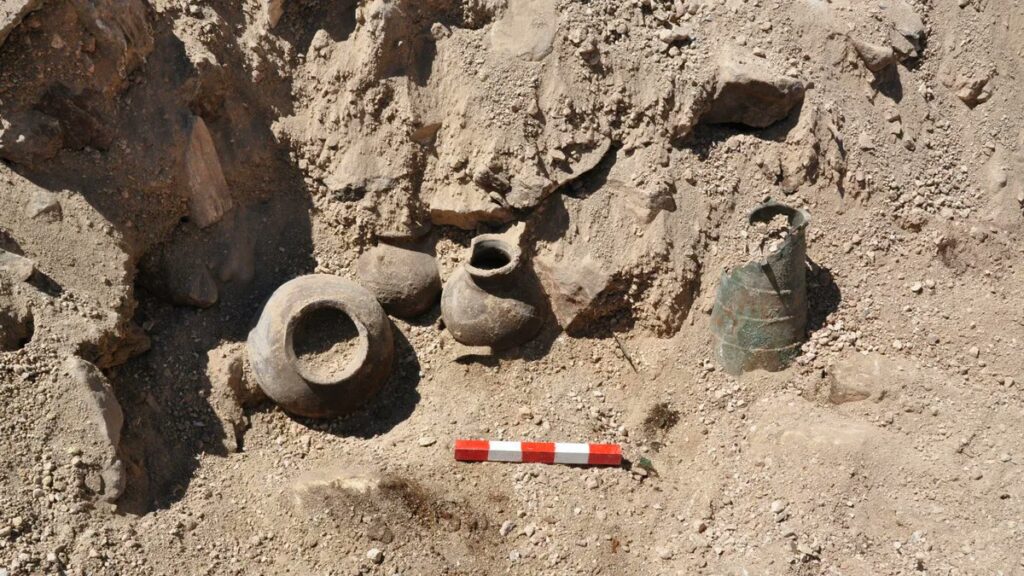
Rare Bronze Vessels and Inscribed Ceramics
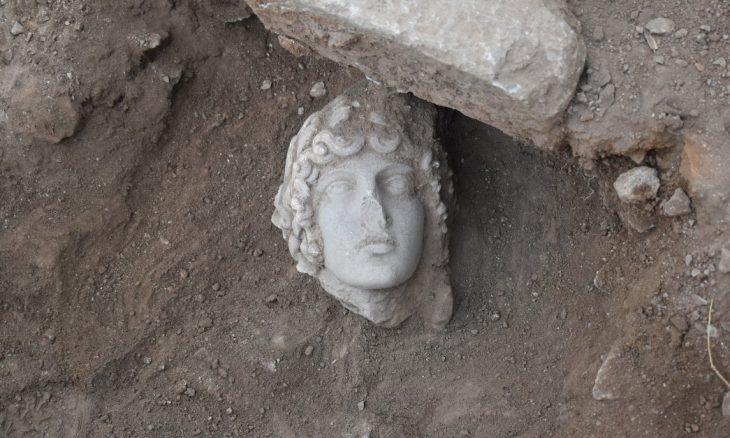
Among the most significant discoveries are bronze vessels characteristic of elite Phrygian burials. Particularly noteworthy are situlae—decorated bronze buckets featuring scenes of warfare and ceremonial procession. These objects are extremely rare and were previously documented only in the royal tombs of Gordion.
📣 Our WhatsApp channel is now LIVE! Stay up-to-date with the latest news and updates, just click here to follow us on WhatsApp and never miss a thing!!
The presence of such prestigious items at Karaağaç suggests a direct connection to the royal court, possibly indicating that the tomb belonged to a member of King Midas’ family or a high-ranking official closely linked to the royal circle.
In addition, archaeologists found a ceramic vessel inscribed with a Phrygian name. Inscribed objects are uncommon in Phrygian burial contexts and offer crucial evidence about identity, literacy, and elite ownership in the region.
A Tomb Far from the Capital
One of the most striking aspects of the study is the tomb’s distance from Gordion. Located approximately 160 kilometers away, the Karaağaç Tumulus challenges the traditional assumption that royal power and elite burial practices were concentrated solely around the capital.
According to Erpehlivan, this distance challenges the idea of Phrygia as a rigidly centralized kingdom like Assyria or Urartu. Instead, the evidence points toward a more decentralized, multi-nodal political system in which elite authority extended across a wide territory through regional power holders loyal to the royal house.
The construction of such a lavish tomb so far from the capital suggests that Phrygian elites were not confined to urban centers but played active roles throughout central Anatolia.
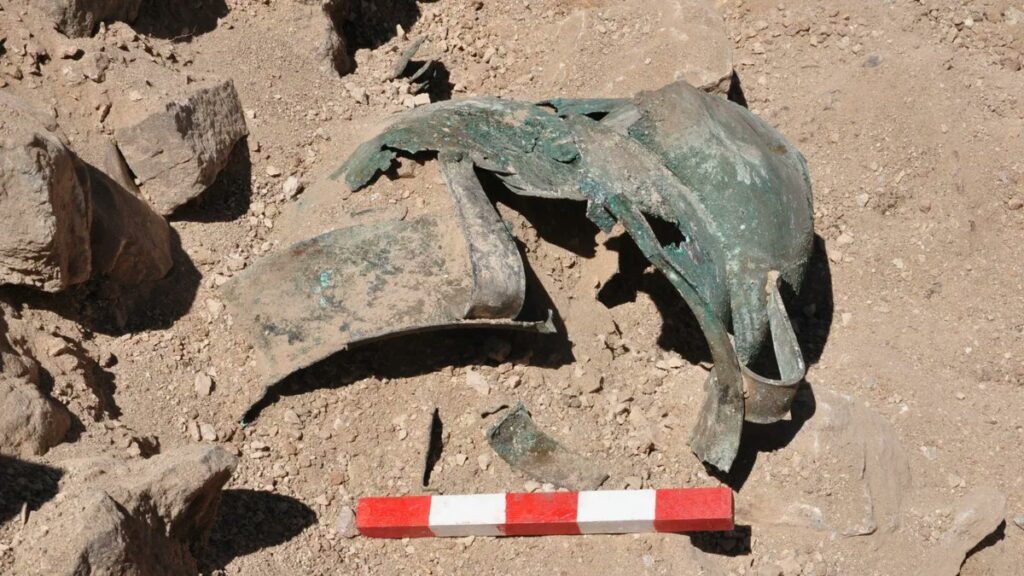
A Multi-Layered Burial Site
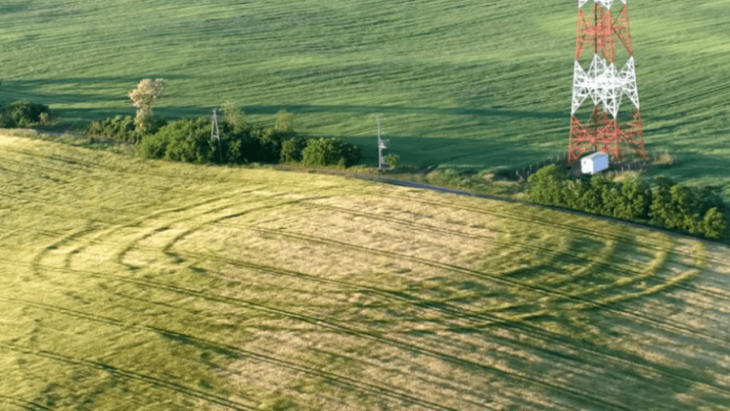
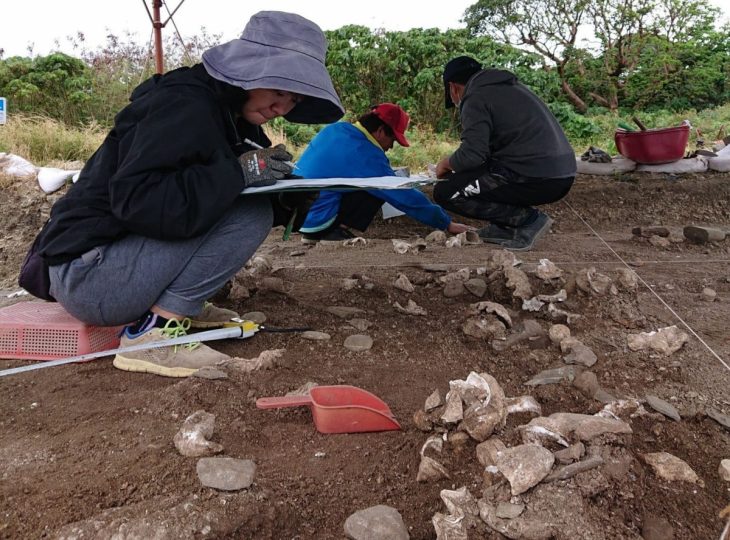
The Karaağaç Tumulus also reveals a long history of use. Excavations show that the site contains multiple layers of burial activity, including an Early Bronze Age cemetery, the main Phrygian-era tomb, and later burials from subsequent periods.
This multi-layered usage spanning nearly 3,000 years makes the site a key reference point for understanding the evolution of burial traditions in Anatolia. It demonstrates how later cultures reused ancient sacred landscapes, preserving the symbolic importance of the tumulus across millennia.
Redrawing the Map of Phrygian Power
The Karaağaç discovery is significant not only for its artifacts but also for what it reveals about Phrygian society. The combination of royal-style architecture, rare grave goods, and its distance from the capital suggests that the Phrygian elite network extended widely across the region. Whether the tomb belonged to a member of King Midas’ family or a high-ranking noble, it provides strong evidence that the Phrygian kingdom operated through a decentralized system of regional power.
As further studies and analyses continue, the Karaağaç Tumulus is likely to become one of the most important archaeological sites for understanding Iron Age Anatolia and the legacy of one of its most legendary rulers.
H. Erpehlivan (2026), “Karaağaç Tumulus: An Iron Age Elite Burial from Rural Western Phrygia”, American Journal of Archaeology, 130. https://doi.org/10.1086/738272