13 March 2026 The Future is the Product of the Past

8,200-year-old lacquerware found in China

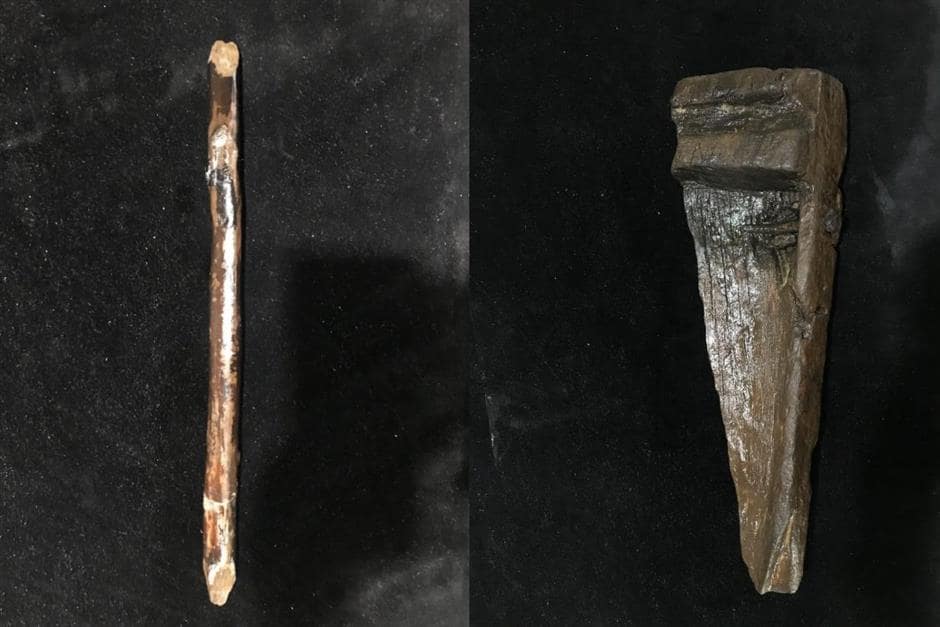
Archaeologists in eastern China’s Zhejiang Province have identified two items of lacquerware at the Jingtoushan ruins, the oldest ever found in China and one more than 8,000 years old.

The Jingtoushan ruins are located in Yuyao City, which is administered by Ningbo City.

The Jingtoushan ruins site has been identified as the earliest and deepest buried shell mound site in the coastal area of ​​China, with a history of 7,800 to 8,300 years. The site is listed as one of the top ten archaeological discoveries in China in 2020.

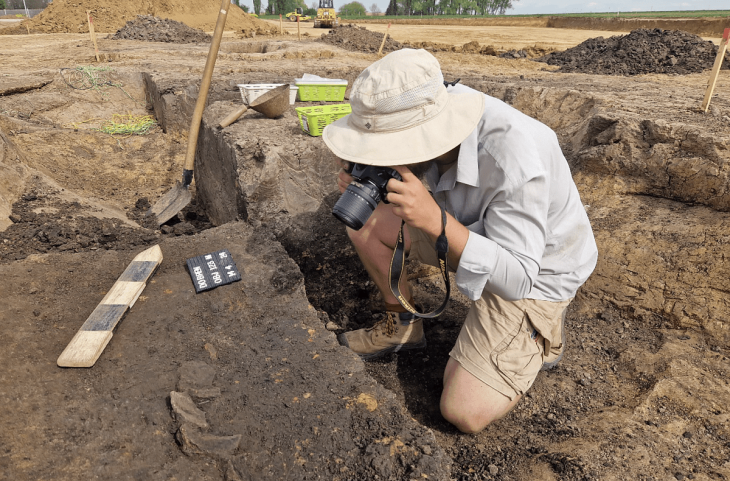
Since the excavation of the site began in September 2019, a large number of exquisite artifacts have been unearthed. In the first half of 2020, two pieces of wood with a layer of the artificial coating were unearthed. Scientists later confirmed by non-destructive infrared spectroscopy, pyrolysis mass spectrometry, and enzyme-linked immunoassay that they were two lacquerware.

The carbon-14 test showed that the two items are about 8,200 years old.


📣 Our WhatsApp channel is now LIVE! Stay up-to-date with the latest news and updates, just click here to follow us on WhatsApp and never miss a thing!!


According to Sun Guoping, the archaeological team leader at the site, the new discovery can extend the history of Chinese lacquerware to about 8,300 years ago.

“One of the lacquerware may be the remnants of a canoe or a part of the speaker of a musical instrument, while the other should be used for weaving. They are both practical and ceremonial, representing the pursuit of exquisite life by ancient human beings,” Sun added.

Source: Shine.cn
Related Articles

The Legacy of the Double-Headed Eagle: From Hittite Kings to Modern Icons

25 June 2025

25 June 2025

The double-headed eagle is one of the most enduring symbols in human history. Recognized today as an emblem of imperial...

Lost Phrygian Inscription on Arslan Kaya Monument Deciphered

23 November 2024

23 November 2024

Professor Mark Munn of Pennsylvania State University has deciphered part of the inscription on the legendary Arslan Kaya Monument (also...

Romanian Police Find the Stolen Viking Helmet

21 February 2021

21 February 2021

Romanian police specializing in heritage crimes recovered a medieval helmet of “Viking origin” on February 7, which had disappeared a...

Unearthing One of the Earliest Examples of Roman Monumental Architecture: Ancient Basin Discovered in Gabii

21 October 2025

21 October 2025

Hidden beneath the soil of an ancient city just east of Rome, archaeologists from the University of Missouri have uncovered...

31 Unknown Shipwrecks, Including a Rare Sailing Ship, Discovered in Lake Constance

13 August 2025

13 August 2025

In a groundbreaking underwater archaeology project, researchers have discovered 31 previously unknown shipwrecks lying silently on the floor of Lake...

Archaeologists uncovered an Aztec altar with human ashes in Mexico City

1 December 2021

1 December 2021

Archaeologists in Mexico have discovered a 16th-century altar in Plaza Garibaldi, the center in Mexico City famous for its revelry...

An 1800-year-old inscription was discovered in Hadrianaupolis indicating the existence of the Asclepius cult

5 September 2022

5 September 2022

An inscription pointing to the existence of the cult of Asclepius was found in the ancient city of Hadrianaupolis, which...

Ancient Roman Breakwater Discovered Underwater in Misenum: Sculptures and Architecture Reused to Tame the Sea

27 June 2025

27 June 2025

An underwater excavation off the coast of Bacoli, in southern Italy, has uncovered a remarkable Roman-era breakwater built from reused...

The oldest evidence of human use of tobacco was discovered in Utah

11 October 2021

11 October 2021

According to recent research, burnt seeds discovered in the Utah desert suggest that humans used tobacco initially and that some...

An ancient “fridge” have uncovered at the Roman legionary fortress of Novae, Bulgaria

30 September 2022

30 September 2022

Polish archaeologists, during excavations at the Roman legionnaires’ camp in Novae, discovered a container that could be described as an...

The Oldest and Most Unique Example of the ‘Etrarchic Embracement Motif’ is on Display for the First Time

19 September 2024

19 September 2024

A relief depicting two Roman emperors’ embrace of Diocletian and Maximian during a ceremonial event, each other welcomes visitors for...

“Ladies of Anavlochos”: Crete’s Puzzle in Pieces

9 May 2025

9 May 2025

Perched high on the rugged slopes of Mount Anavlochos, overlooking the azure expanse of the Mediterranean Sea, lie the silent...

Viking Sea Power May Have Emerged in the 3rd Century, During the Roman Era

23 February 2026

23 February 2026

For generations, the Viking Age has been framed as beginning in the late 8th century, marked by the raid on...

Lost Voices of Teotihuacan: Scientists May Have Deciphered the Ancient City’s Language

7 October 2025

7 October 2025

More than 1,500 years after its decline, the ancient metropolis of Teotihuacan is yielding what may be one of Mesoamerica’s...

Australia’s 1,400-year-old Mysterious Earth Rings: Evidence of Millennia of Human Effort, Not Natural Formation

21 January 2025

21 January 2025

A chain of mysterious earth rings in the Sunbury hills at the fringe of Melbourne, in Australia have been found...