
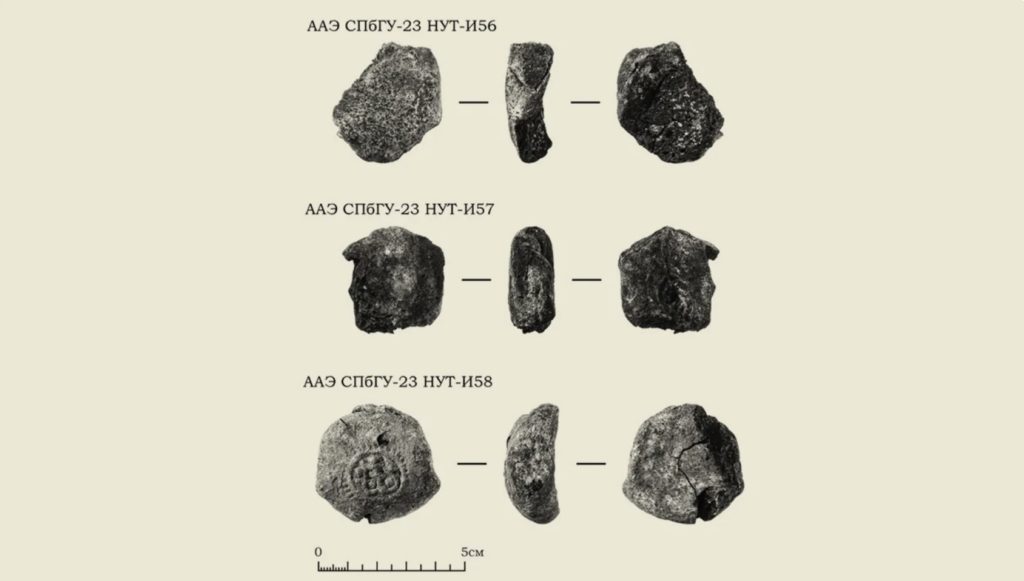
Beneath the ruins of a medieval church in Veliky Novgorod, Russia, archaeologists discovered three small loaves of bread preserved by a centuries-old fire. Two still bore the imprints of eight-pointed crosses.
Researchers identified the remarkable finds during excavations at the Church of the Dormition at the Marketplace, one of Novgorod’s historic religious buildings.
A new study by Ivan Antipov and Anastasia Trushnikova, published in the journal Old Rus’: The Questions of Middle Ages, examines the bread and its connection to medieval Christian worship.
Three Small Loaves Preserved by Fire
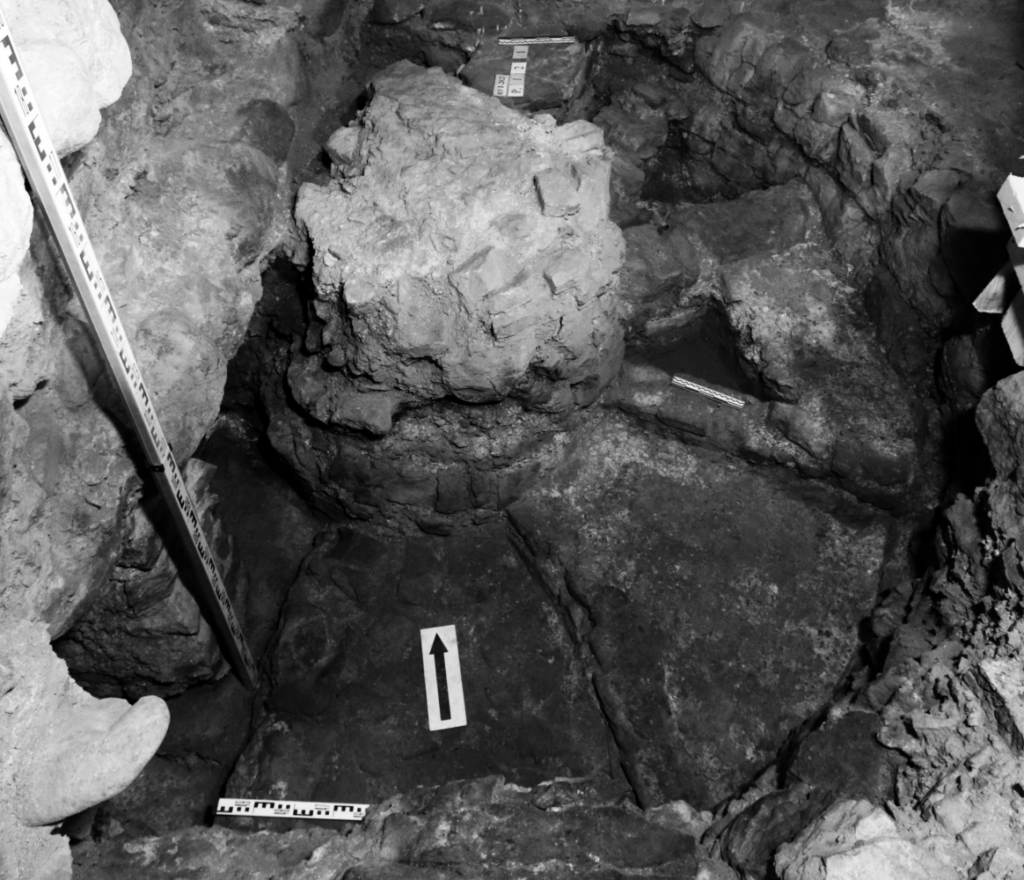
The discovery dates to excavations conducted between 2021 and 2023 by an archaeological expedition from St. Petersburg State University. While investigating the church’s interior, archaeologists uncovered the remains of a spiral staircase in the northwestern corner of the original building, which dates to 1135–1144.
The staircase had suffered extensive damage during medieval fires. Layers of burned debris and collapsed building material had accumulated over its lower steps, sealing objects that once lay inside.
Among these remains, excavators found three small, charred objects. Each measured approximately 4.5 centimeters across and no more than 1.7 centimeters high. Their remarkably low weight, between 3.64 and 6.77 grams, and their porous interiors suggested that they might be the remains of baked goods.
One specimen retained its nearly circular shape and a clearly visible eight-pointed cross inside a round medallion. A second, more deformed example preserved a similar design, while the third had suffered greater damage.
Researchers initially compared the objects with carbonized bread recovered from Pompeii. Chemical analysis conducted at the State Hermitage Museum in St. Petersburg subsequently revealed traces of starch, supporting their identification as charred flour-based products.
The archaeological setting also helped establish their age. Two medieval coins found in different fire layers, together with construction evidence and historical chronicles, suggest that the lower layer may correspond to a devastating fire recorded in 1385. Another fire probably occurred in 1399.
The earlier blaze may therefore have preserved the loaves that would otherwise have disappeared centuries ago.
Bread Made for Christian Worship
The researchers identify the three objects as prosphora, small loaves of bread associated with the Eastern Christian Eucharistic liturgy.
In Orthodox Christian practice, priests use prosphora during the preparation of the Eucharist, the central ceremony commemorating Christ’s Last Supper. Traditionally, stamps impressed on the dough before baking mark the bread with crosses or other Christian symbols.
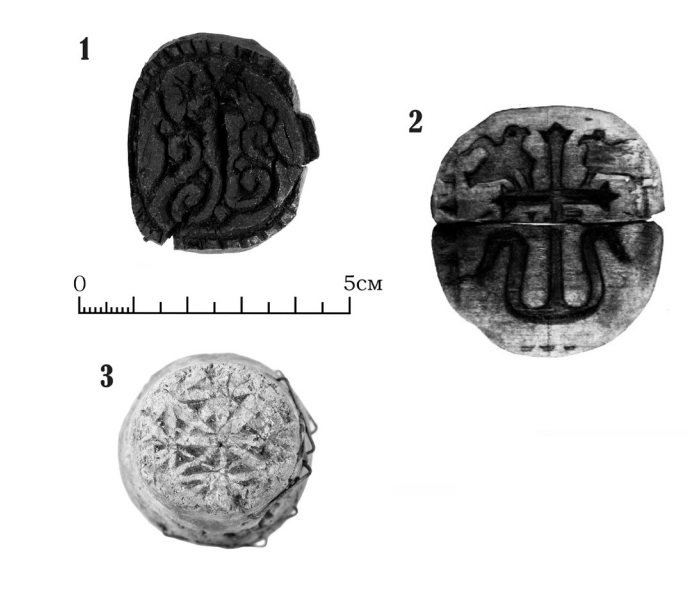
The Novgorod examples are particularly valuable because archaeologists rarely encounter the bread itself. Wooden stamps used to decorate such loaves have survived at several medieval sites, but the baked products usually decay.
The researchers note that they know of no comparable archaeological discoveries of actual prosphora from medieval Rus’. The three charred loaves thus provide unusually direct evidence of religious practices previously understood largely through written records and surviving baking stamps.
A Distinctive Tradition in Medieval Novgorod
The cross designs provide another important clue. On the best-preserved loaf, an eight-pointed cross with decorative, plant-like extensions appears inside a circular border.
This motif, often called a flourishing cross, was familiar in medieval Novgorod. Artists used similar designs on religious objects, church decorations, and other items associated with Christian worship.
The researchers compared the bread with twelve known wooden stamps discovered during earlier excavations in Novgorod. Seven of these stamps also feature variations of the flourishing cross, suggesting that local bakers followed a recognizable decorative tradition.
Some stamps were circular, while others were square or rectangular. Their different sizes indicate that medieval worshippers used several formats of religious bread, a practice also reflected in Byzantine liturgical writings.
The archaeological record also offers insight into how individuals procured this bread. Medieval sources suggest that households sometimes prepared prosphora themselves, while specialized bakers gradually assumed a larger role. By the late fourteenth century, churches also baked bread for services.
The three Novgorod loaves may have belonged to this changing religious world, where household customs and church practices existed alongside one another.
A Forgotten Space Inside the Church
The place where archaeologists found the loaves makes the discovery even more intriguing. Alongside the bread, the staircase contained fragments of bronze lamps, a book clasp, coins, grain, nutshells, and traces of beeswax.
This collection suggests that the space served purposes beyond providing access to the church’s upper galleries. The researchers believe it may have functioned partly as a storage area or sacristy, where people kept objects needed for religious services.
The fire destroyed much of what lay inside, but it also left a record of ordinary activities within the medieval church. The three small loaves, preserved among the debris, connect that larger history with the everyday preparation of Christian worship.
Антипов, И. В., & Трушникова, А. В. (2026). «Неопальне горящи»: Находки средневековых просфор в церкви Успения на Торгу в Великом Новгороде. Древняя Русь. Вопросы медиевистики, 3(105), 123–141. https://doi.org/10.25986/IRI.2026.105.3.011
