
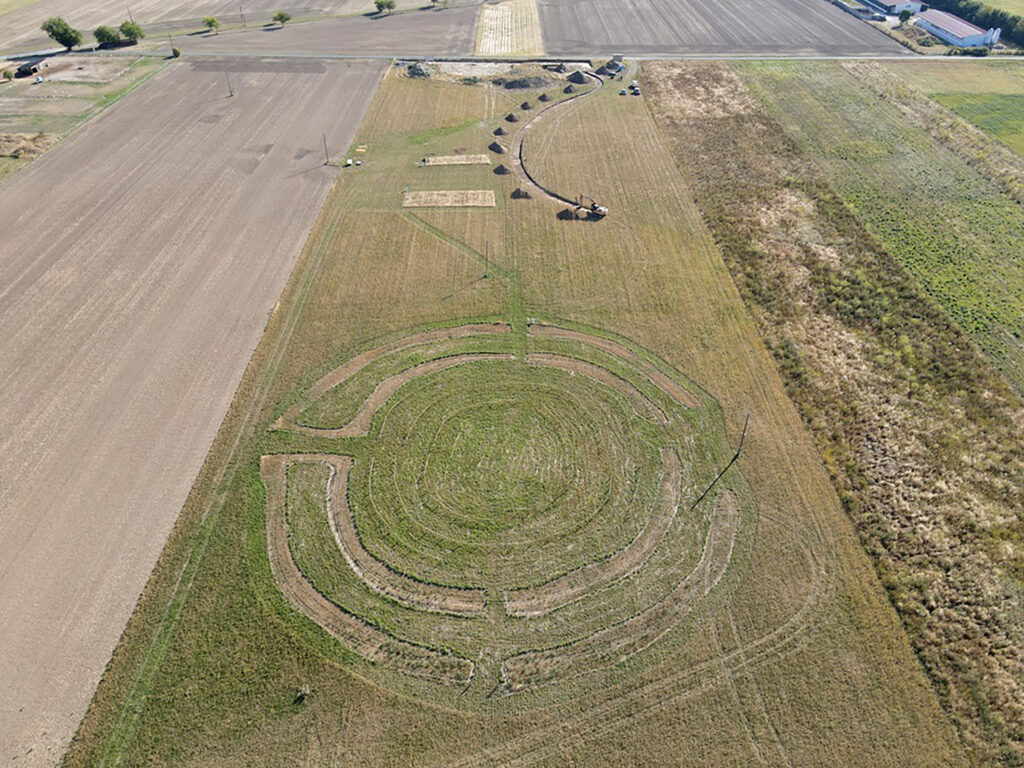
Rechnitz, Burgenland (southeastern Austria, near the Hungarian border) – Archaeologists have uncovered extraordinary traces of Neolithic life dating back more than 6,500 years. At a site featuring monumental circular enclosures, excavations have revealed postholes, ceramic fragments, pits, and ditches, offering unprecedented insights into one of Central Europe’s earliest farming communities.
Postholes, ceramic fragments, storage pits, and ditches – once only visible through geomagnetic surveys – have now been confirmed through systematic excavation.
The discoveries come as part of preparations for the construction of a new Archaeological Visitor Center and open-air “Stone Age Village” in Rechnitz. The facility, part of Burgenland’s “Masterplan Archaeology,” will include exhibition spaces, reconstructions of Neolithic life, and educational programs designed to make the prehistoric past accessible to the public. Regional governor Hans Peter Doskozil emphasized that excavation and documentation were the last necessary steps before building could begin.
A Window into the Stone Age
The excavations are led by Nikolaus Franz, head of Archaeology Burgenland, who describes the site as a “window into the Stone Age.” He emphasizes that the Neolithic period, beginning around the 6th millennium BCE in Central Europe, represented a turning point in human history: “After hundreds of thousands of years of hunting and gathering, the gradual adoption of farming and animal husbandry marked nothing less than a revolution in human settlement.”
Archaeologists believe that the settlers of Rechnitz belonged to advanced Neolithic farming groups that established permanent communities. Bioarchaeological analysis of soil samples is now underway, and the University of Vienna is conducting research on soil formation and geology to better understand how agricultural landscapes developed in the region.
Circular Enclosures: Monumental Neolithic Structures
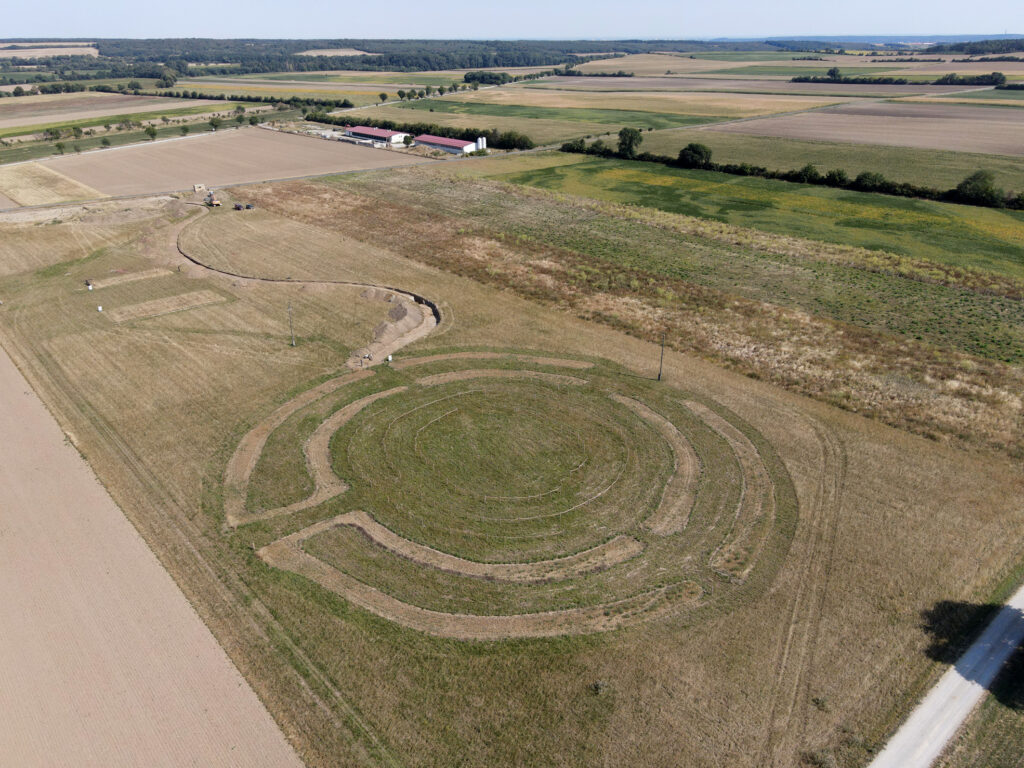
The centerpiece of Rechnitz’s archaeological significance is its circular enclosures (German: Kreisgrabenanlagen). These monumental ditch-and-bank structures, some exceeding 100 meters in diameter, were built by Neolithic societies across Central Europe between roughly 4800 and 4600 BCE. Their purpose remains debated among scholars. Some interpret them as early cultic or ritual sites, possibly aligned with solar events such as solstices, while others suggest defensive or communal functions.
Rechnitz is extraordinary because three separate circular enclosures were discovered here between 2011 and 2017—an unusual concentration that strongly suggests the area served as a regional center of significance during the Middle Neolithic. The enclosures, dating back at least 6,500 years, are now recognized as part of a network of similar structures stretching from Austria and Hungary to Germany and the Czech Republic.
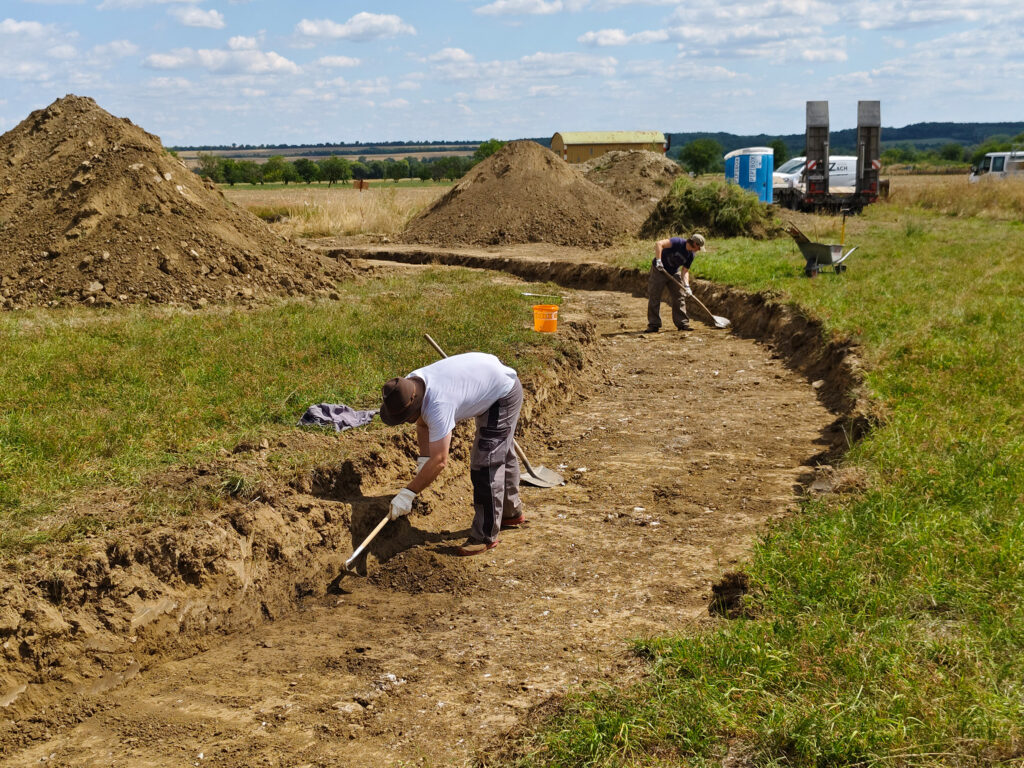
Astrid and Wilfried Tögel from Archaeology Burgenland manually cleaning the excavation area. Credit: Land Burgenland
Preparing for Public Access
The planned visitor center, under the project title “Circular Enclosure and Stone Age Village,” aims to bring this history to life for the public. Until recently, the large earthworks were hardly visible to the naked eye, discernible only through aerial photography and magnetometric surveys. The center will use reconstructions, exhibitions, and educational programs to highlight the Neolithic roots of the Burgenland region.
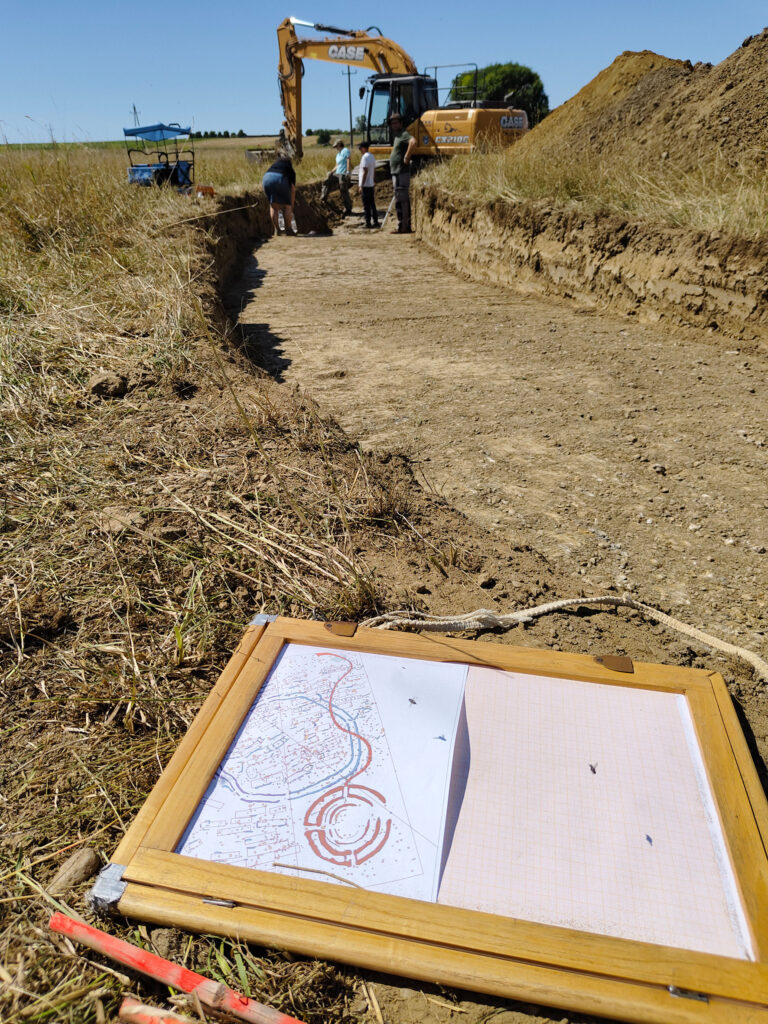
For now, archaeologists are racing against time: excavation and documentation must be completed before construction begins. The September fieldwork is expected to be the last stage of archaeological intervention, ensuring that scientific records are preserved for future study.
Broader Context of Neolithic Europe
Circular enclosures like those at Rechnitz form part of a wider prehistoric phenomenon. Known sites in Lower Austria, Slovakia, and Moravia reveal striking similarities in layout, suggesting that Neolithic communities shared architectural traditions and possibly religious or social practices across long distances. Some researchers compare them to proto-observatories, pointing to entrances aligned with sunrise or sunset during key agricultural seasons.
The discoveries in Rechnitz not only confirm the town’s importance within this network but also contribute to broader debates on how early European farmers organized their societies. With their large scale, communal effort, and enduring visibility, these monuments symbolize the transition from mobile lifestyles to rooted agricultural communities.
Looking Ahead
As Burgenland invests in cultural heritage through its Masterplan Archaeology, the Rechnitz project promises both scientific breakthroughs and tourism potential. Once completed, the visitor center will make the Neolithic world tangible for residents and visitors alike, strengthening the region’s identity as a crossroads of European prehistory.
For archaeologists, however, the true value lies in the story the soil continues to tell: how humanity took its first steps toward organized agriculture, permanent settlement, and monumental construction more than six millennia ago.
Cover Image Credit: The project site ‘Circular Enclosure & Stone Age Village Rechnitz’ seen from above. Credit: Land Burgenland
