
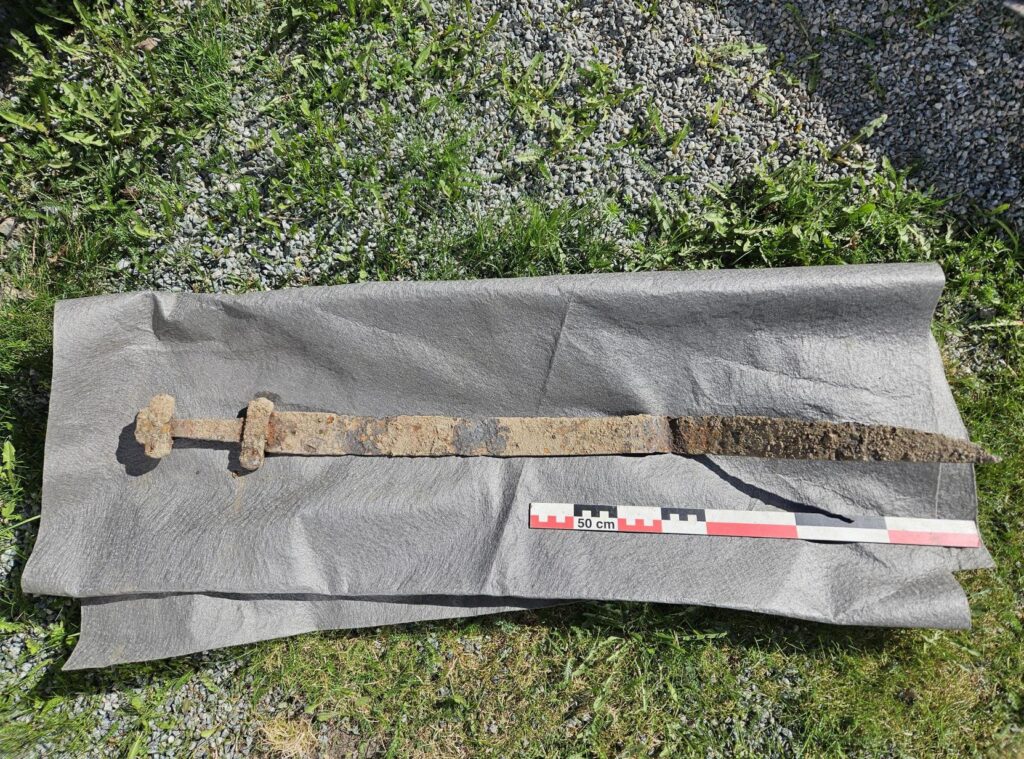
A normal school outing in Norway turned into an archaeological discovery when a six-year-old boy noticed a rusty object sticking out of a ploughed field. What he had found was not scrap metal, but a 1,300-year-old sword from the shadowy centuries before the Viking Age.
The discovery was made by Henrik Refsnes Mørtvedt, a first-grade pupil at Fredheim School, during a class trip in the Brandbu area of the Gran municipality, in Norway’s Innlandet county. According to NRK, Henrik spotted part of the object protruding from the soil while walking across a field with his classmates.
At first, the object looked ordinary: rust, earth and metal. But its shape quickly raised questions. The teachers and children did the right thing. Instead of treating it as a souvenir, they contacted local archaeologists. That decision may have saved an important piece of Norway’s early medieval past.
A sword from the age before the Vikings
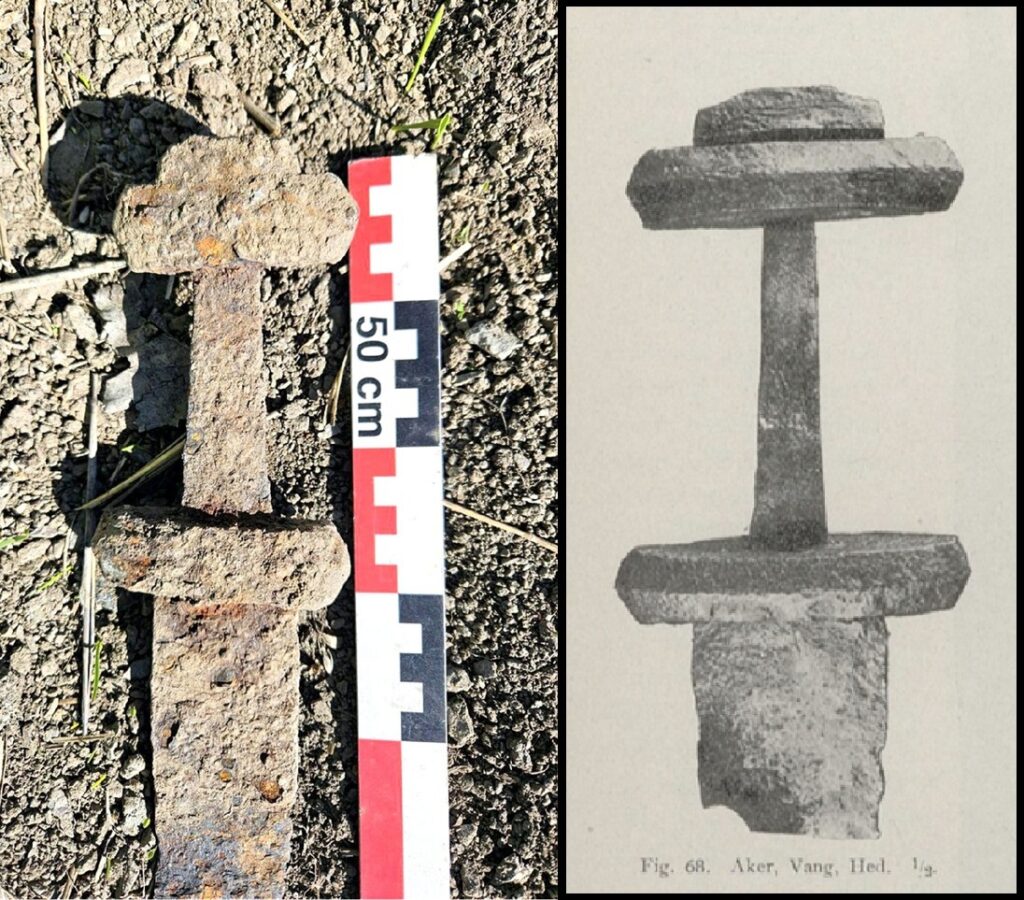
Archaeologists identified the object as a single-edged sword, meaning it was sharpened on only one side. This type of blade is often associated with the Merovingian Period in Scandinavia, roughly between AD 550 and 800, a time that immediately preceded the better-known Viking Age.
Such weapons are sometimes linked to the broader family of saxes or scramasaxes, long single-edged blades used across parts of early medieval Europe. In Norway, single-edged swords were part of a martial tradition that developed before the classic double-edged Viking sword became more familiar in the archaeological record.
The estimated age of the Brandbu sword, about 1,300 years, places it in a particularly interesting transition period. This was a time when local power networks, warrior elites and regional identities were taking shape across Scandinavia. Long before Viking ships began raiding and trading across Europe, communities in inland Norway were already connected to a world of weapons, status and territorial control.
Why Brandbu and Hadeland matter
The find was made in Hadeland, a historic district in southeastern Norway. The region has long attracted archaeological interest because of its fertile landscape, old farms, burial mounds and Iron Age remains. Finds from places like Hadeland often show that inland Norway was not isolated from wider historical changes.
A sword found in a field may seem like a small object, but it can open a larger story. Was it once part of a burial? Was it lost, disturbed by ploughing, or moved from its original context over centuries of farming? Archaeologists will now have to examine the blade, its preservation and the surrounding landscape to understand how it ended up just below the surface.
Because the sword was found in cultivated land, the discovery also highlights a common danger for archaeological objects. Ploughing can damage iron artefacts, break fragile remains and scatter evidence from ancient graves or settlements. Henrik’s sharp eye may have prevented the sword from being further damaged or lost forever.
From a child’s discovery to museum study
After the discovery was reported, the sword was transferred to the Museum of Cultural History in Oslo, where specialists will conserve and study it. Iron objects from this period are often heavily corroded, but even rusted blades can preserve important evidence. X-rays, conservation work and metallurgical analysis may reveal details about the sword’s construction, condition and possible use.
The story has attracted attention not only because of the age of the weapon, but because of who found it. Archaeology often depends on trained eyes, but discoveries also happen when ordinary people notice something unusual and report it properly. In this case, a school trip became a lesson in history, responsibility and preservation.
For the children of Fredheim School, the field in Brandbu is no longer just part of the local landscape. It is a place where the past briefly surfaced.
The sword may have belonged to a warrior, a farmer with status, or someone living through the turbulent centuries that shaped early medieval Norway. Its owner is unknown. Its original story may never be fully recovered. But thanks to a six-year-old boy who stopped to look at something strange in the soil, a fragment of that world has returned to view.
Cover Image Credit: Kulturarv i Innlandet via Facebook
