
15 February 2026 The Future is the Product of the Past

5,000-Year-Old Skull from İkiztepe Reveals Early Cranial Surgery in Anatolia

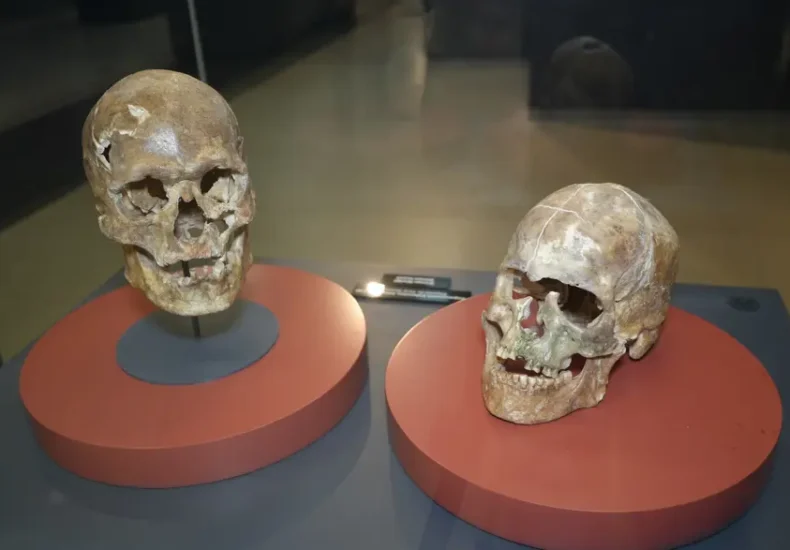
A remarkable archaeological discovery in northern Türkiye is rewriting the history of prehistoric medicine. A human skull, dating back nearly 5,000 years, has been found at İkiztepe Höyüğü (İkiztepe mound), and experts say it bears evidence of one of the earliest known cranial surgeries in Anatolia.

The skull, now displayed at the Samsun Museum, shows signs of intentional surgical intervention, suggesting that early Anatolian communities may have practiced advanced medical procedures long before formal medicine emerged in the ancient world.

Evidence of Survival After Surgery

What makes this discovery especially significant is the clear evidence that the individual survived the operation for some time. The healed edges around the surgical incision indicate that the body had time to recover, which implies knowledge of post-operative care and infection control.

Such findings challenge traditional assumptions about prehistoric healthcare and indicate that early Anatolian societies may have developed medical practices based on experience and observation.

İkiztepe Höyüğü: A Key Prehistoric Site

İkiztepe Höyüğü is one of the most important archaeological sites in the Central Black Sea region, revealing extensive burial practices and prehistoric settlement life. Excavations have uncovered a variety of burial goods, including spearheads and personal objects placed with the dead—suggesting social hierarchies and symbolic funerary rituals.


📣 Our WhatsApp channel is now LIVE! Stay up-to-date with the latest news and updates, just click here to follow us on WhatsApp and never miss a thing!!


Located near the modern city of Samsun, İkiztepe has been known for its deep cultural layers, dating back to the Chalcolithic period and continuing into the Bronze Age. The site has produced important evidence of early settlement patterns, trade, and cultural development in northern Anatolia.
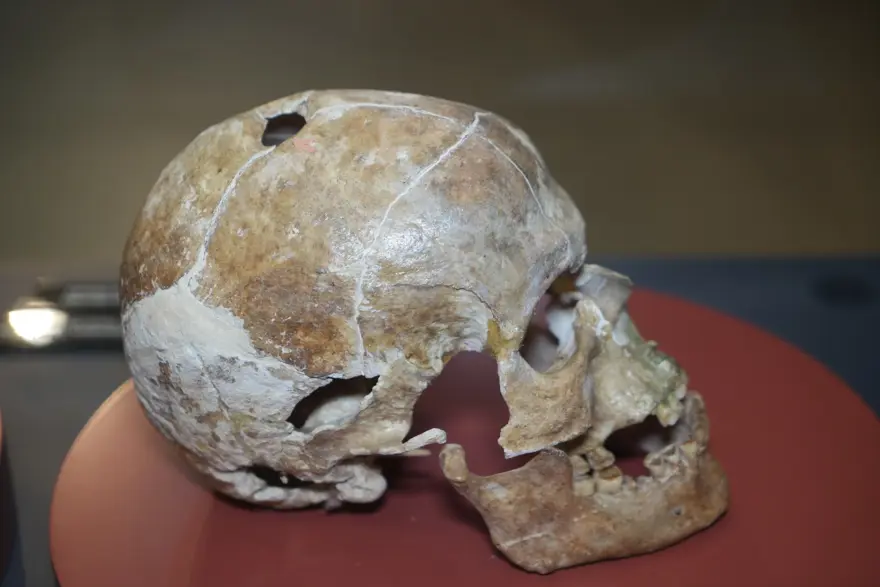
What makes this discovery especially significant is the clear evidence that the individual survived the operation for some time. Credit: İHA

Aşıklı Höyük and Çatalhöyük: Similar Medical Evidence

The İkiztepe discovery is not an isolated case. Archaeologists have found similar surgical evidence at other ancient Anatolian sites, including Aşıklı Höyük and Çatalhöyük, which are among the oldest known settlements in the region.

At Aşıklı Höyük, located in Central Anatolia, researchers have documented early signs of skull modifications and possible therapeutic interventions, suggesting that prehistoric communities may have practiced primitive forms of surgery.

Likewise, Çatalhöyük, one of the world’s most famous Neolithic sites, has yielded skeletal remains with signs of cranial manipulation, indicating that prehistoric Anatolians may have developed early medical knowledge through trial, observation, and cultural practices.

These discoveries together indicate that Anatolia was likely a center for early medical experimentation, and that prehistoric societies may have shared knowledge across regions through migration and trade.

The Importance of the Samsun Museum Collection

The skull is now housed in the Samsun Museum, alongside other notable artifacts that highlight the region’s long and diverse history. Among the museum’s most prominent exhibits are the Amisos Treasures, a collection of gold objects dating from the 7th to 5th centuries BC, showcasing the advanced craftsmanship and artistic sophistication of ancient Anatolian societies.

The museum also displays the Amisos Mosaic, a rare sand-based mosaic depicting the personification of the four seasons. This piece is considered one of the few surviving examples of its kind in Turkey and reflects the region’s rich artistic traditions.
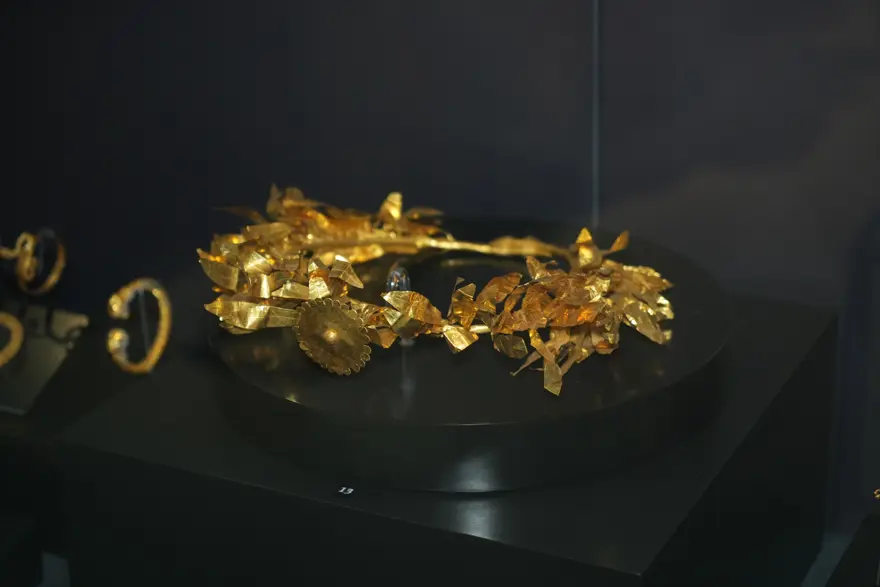
A finely crafted gold wreath from the Amisos Treasures, illustrating the advanced goldsmithing skills and elite funerary traditions of northern Anatolia during the Hellenistic period. On display at the Samsun Museum. Credit: IHA

A New Perspective on Prehistoric Anatolia

The discovery at İkiztepe adds a new dimension to our understanding of prehistoric Anatolia. It suggests that early human societies in the region were not only capable of complex social organization and artistry but also possessed advanced medical knowledge.

Experts believe that these findings could reshape the narrative of early medicine, highlighting Anatolia as a critical center for innovation in healthcare long before the rise of classical civilizations.

As visitors explore the Samsun Museum, they are reminded of the deep history that lies beneath the Black Sea region—where prehistoric surgery, elite craftsmanship, and ancient art combine to tell a story that spans thousands of years.

Cover Image Credit: İHA

Related Articles

Analysis of 13,000-Year-Old Bones Reveals Violent Raids in Prehistoric ‘Jebel Sahaba’

28 May 2021

28 May 2021

Since its discovery in the 1960s, the 13-millennium-old Jebel Sahaba cemetery (Nile Valley, Sudan) has been regarded as one of...

Ancient tomb with prayer-related murals found in China’s Shanxi

25 December 2021

25 December 2021

Archaeologists in north China’s Shanxi Province have found an ancient tomb dating back to the Jin Dynasty (1115-1234) with murals...

The colored skeletons of Çatalhöyük provide insight into the burial rituals of a fascinating society that lived 9000 years ago

18 March 2022

18 March 2022

New research provides new insights into how the inhabitants of the “oldest city in the world” in Çatalhöyük (Turkey) buried...

Rare waka unearthed from New Zealand River, after being hidden for 153 years

16 June 2023

16 June 2023

A waka -the traditional canoe of the Maori people- believed to be over 150 years old has been salvaged from...

Pharaonic Hieroglyphic Inscription of Ramses III Found in Southern Jordan

20 April 2025

20 April 2025

In a remarkable archaeological breakthrough, a hieroglyphic inscription bearing the royal cartouche of Pharaoh Ramses III (1186–1155 BC) has been...

Authorities in New York have been accused by leading academics of repatriating fake Roman artifacts to Lebanon

19 November 2023

19 November 2023

Leading academics from France and the United Kingdom have accused New York authorities of returning fake Roman artifacts to Lebanon....

China’s construction of the first archaeological museum which will house the famous Terracotta Warriors has been completed

19 April 2022

19 April 2022

Construction of the first archaeological museum in China’s northwestern province of Shaanxi, which will house the famous Terracotta Warriors, was...

Iconic Double Arch collapsed after an ancient pyramid in America, Tribes Link Fall With ‘Bad Omen’

10 August 2024

10 August 2024

Two ancient North American structures collapsed within just nine days of one another. The iconic Double Arch, also known as...

The 2000-year-old origin mystery of the Etruscans solved

25 September 2021

25 September 2021

A genetic analysis of DNA taken from ancient skeletons appears to have answered a conundrum that has captivated researchers for...

The human remains of 29 people buried as offerings in a pre-Inca temple were found at the Huaca Santa Rosa de Pucalá excavation site

23 October 2021

23 October 2021

The human remains of 29 people buried as sacrificial offerings have been discovered in a pre-Inca temple in northern Peru....

A Roman Sanctuary with Inscriptions Discovered in Cova de les Dones, One of the Largest Rock Art Sites in the Iberian Peninsula

31 January 2025

31 January 2025

A team of researchers from the universities of Alicante (UA) and Zaragoza (Unizar) have discovered a Roman temple at Cova...

Unique Gems found in Claterna, known as the ‘Pompeii of the North’

18 November 2023

18 November 2023

Italian archaeologists have unearthed 50 unique jewels during ongoing excavations at Claterna, the ancient Roman site known as the ‘Pompeii...

3,700-Year-Old Bronze Age Ceremonial Site Discovered in Derbyshire, in Northern England

23 March 2025

23 March 2025

In a remarkable revelation, archaeologists have uncovered that the Farley Moor stone, previously thought to be a solitary monument, is...

Evidence of Brain Surgery performed 3,000 years ago discovered in the ancient city of Tel Megiddo

27 February 2023

27 February 2023

Researchers have discovered a rare instance of delicate cranial surgery, possibly the earliest of its kind in the Middle East,...

1650-Year-Old Earthen Grills Unearthed in Assos Excavations

14 August 2021

14 August 2021

Excavations continue in Assos Ancient City, a rich settlement of the period, which is located within the borders of Behramkale...