
8 November 2025 The Future is the Product of the Past

4,500-Year-Old Burned House and Hellenistic Fortress Unearthed in Aşağıseyit Mound, Türkiye

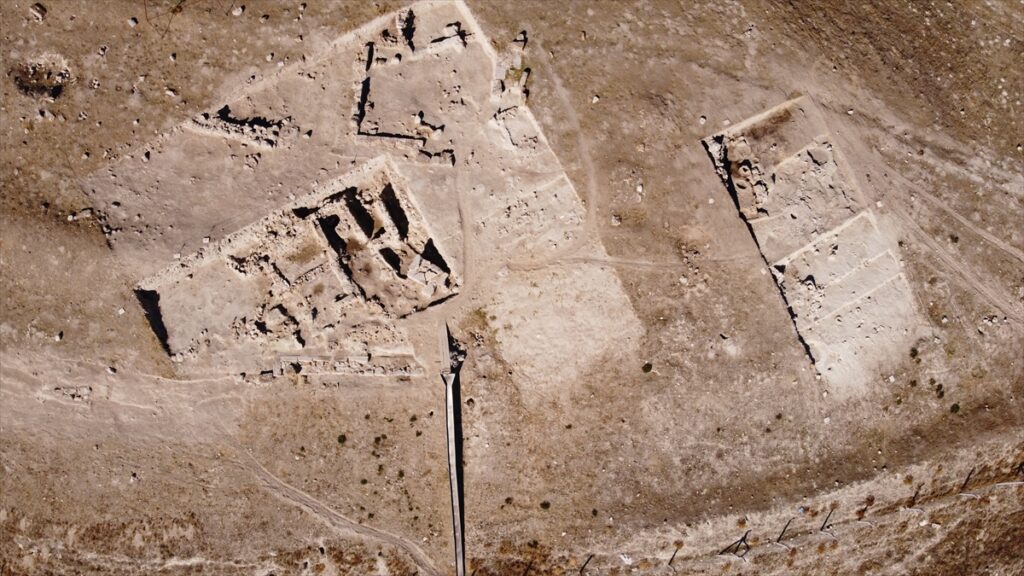
Archaeological excavations in the Aşağıseyit Mound (Aşağıseyit Höyüğü) in Denizli’s Çal district have revealed extraordinary findings that shed new light on the region’s ancient past. A team led by Assoc. Prof. Erim Konakçı from the Department of Archaeology at İzmir Democracy University has uncovered the remains of a 4,500-year-old burned house from the Early Bronze Age and 2,300-year-old defensive walls dating back to the Hellenistic period.

These discoveries provide compelling evidence that Aşağıseyit was not only an agricultural settlement but also a strategic military and cultural hub continuously inhabited from the Late Chalcolithic to the Roman period.

Aşağıseyit Mound: A Crossroads of Civilizations

Located near the Büyük Menderes River valley, Aşağıseyit Mound occupies a geographically strategic position connecting western Anatolia to the central plateau. Archaeological records indicate that the site witnessed eight distinct settlement phases, reflecting millennia of human activity. Excavations at the site, which began in 2001, have gradually unveiled layers of history representing prehistoric farming communities, Hellenistic defenses, and early urban structures.

Assoc. Prof. Konakçı emphasizes that the mound’s stratigraphy provides a continuous cultural sequence. “Each layer at Aşağıseyit tells a story — from Bronze Age households to Hellenistic fortifications — offering a rare opportunity to trace the transformation of Anatolian life over thousands of years,” he said.
Archaeologists uncovered the remains of a burned house and adjacent fortress walls dating to the Hellenistic period during this year’s excavations. Credit: AA

Life and Fire in the Early Bronze Age

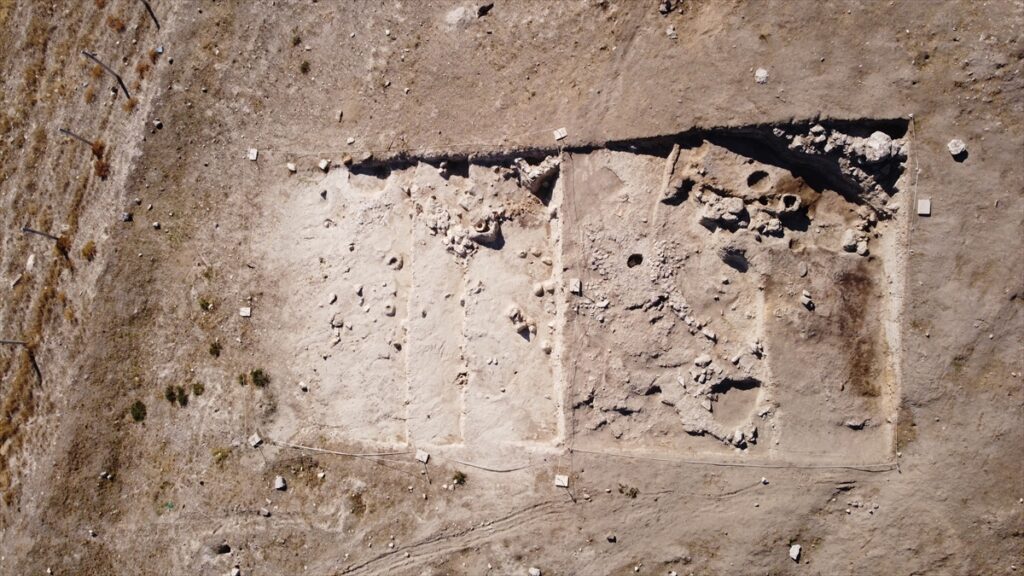
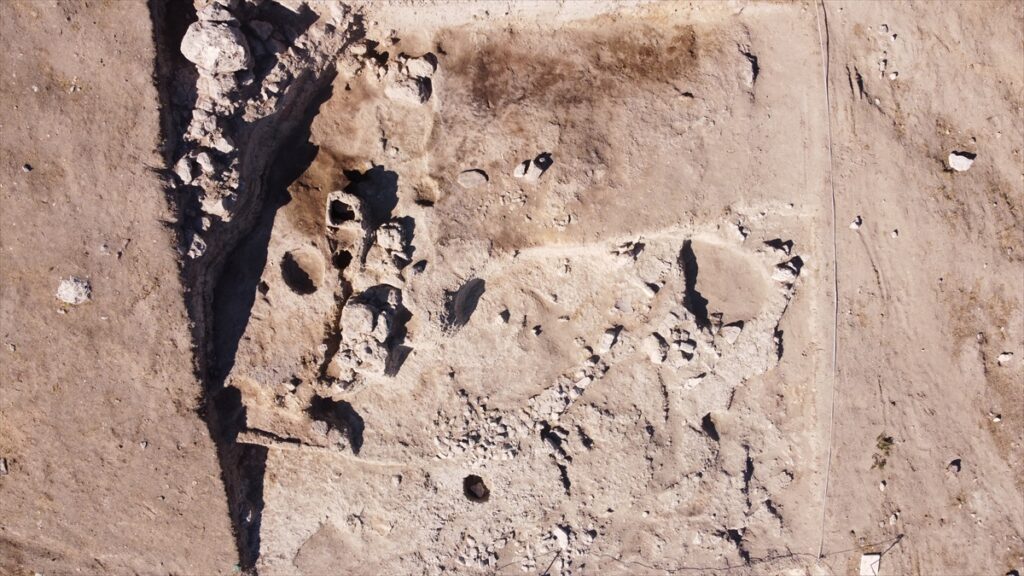
The burned house, dated to around 2500 BCE, offers a remarkable glimpse into domestic life during the Early Bronze Age. The dwelling’s north and south walls were found remarkably intact, preserving household artifacts such as pottery, figurines, bone and bronze tools, and storage vessels. Among the most significant discoveries were carbonized grape seeds, indicating that viticulture in the Çal region—today famous for its vineyards—dates back 4,500 years.


📣 Our WhatsApp channel is now LIVE! Stay up-to-date with the latest news and updates, just click here to follow us on WhatsApp and never miss a thing!!


Archaeobotanical and microresidue analyses suggest that residents cultivated grains, figs, and grapes, and practiced weaving and pottery making. Interestingly, archaeologists also found infant burials placed inside ceramic vessels, a ritual practice observed in other Anatolian Bronze Age sites, reflecting early spiritual beliefs about life and rebirth.

“The burned house represents not only a tragic event but also a time capsule,” noted Konakçı. “Through its destruction layer, we can reconstruct patterns of diet, craft, and belief that shaped the daily lives of these ancient inhabitants.”
Assoc. Prof. Erim Konakçı stated that findings from the mound indicate continuous settlement in the region from the Late Chalcolithic to the Roman period. Credit: AA

The 2,300-Year-Old Fortress: Guarding a Strategic Frontier

Another key discovery from this excavation season was a fortification wall dating to around 280 BCE, during the Hellenistic period. Built amid conflicts between the Galatians and the Seleucids, the fortress is believed to have functioned as a military observation post securing the surrounding agricultural lands and trade routes.

Because later settlements did not overlie the Hellenistic structure, archaeologists have been able to study it in its original form. This rare preservation offers valuable insights into regional defense networks in post-Alexandrian Anatolia.

“The Seleucids, after consolidating power following the Battle of the Elephants, established small fortresses and lookout stations to secure their territories,” explained Konakçı. “Aşağıseyit appears to have been one such strategic stronghold, protecting the fertile valleys of western Anatolia.”
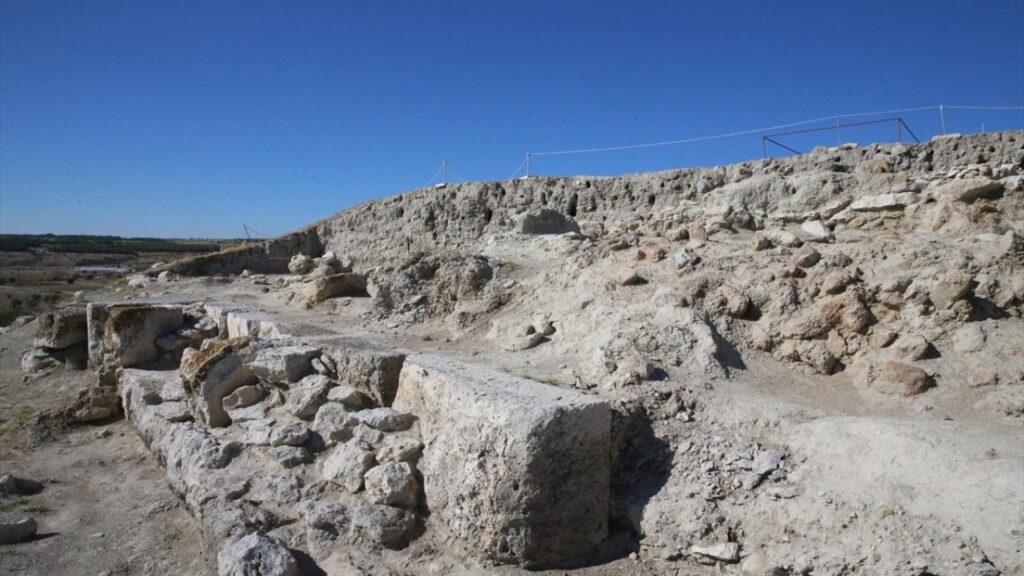
Another key discovery from this excavation season was a fortification wall dating to around 280 BCE, during the Hellenistic period. Credit: AA

A Window into Western Anatolia’s Past

The findings from Aşağıseyit Mound extend far beyond local significance. They contribute to a broader understanding of how settlement continuity, agricultural innovation, and military architecture evolved in the western Anatolian landscape. The site’s multi-layered history bridges prehistoric agrarian societies with Hellenistic statecraft and Roman urbanization.

Future research will include radiocarbon dating, micromorphological analysis, and geoarchaeological mapping to clarify how environmental and social factors shaped Aşağıseyit’s long-term occupation. Artifacts recovered from the site will be conserved and exhibited at the Denizli Archaeology Museum, enhancing both academic research and archaeotourism in the region.
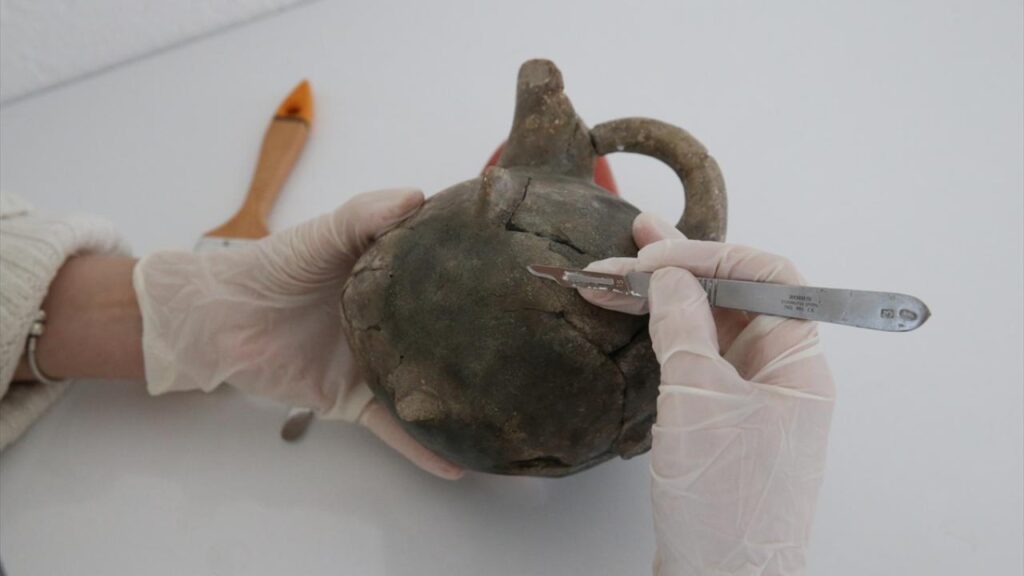
Inside the burned house, archaeologists discovered various artifacts, including pottery, figurines, and a collection of tools made of bone and bronze. Credit: AA

Preserving a Legacy Beneath the Soil

As excavations continue, Aşağıseyit Mound is emerging as one of Türkiye’s most scientifically valuable archaeological sites. The discoveries made here illuminate a vibrant human story spanning nearly five millennia—of communities that cultivated, traded, built, and worshiped on the same land that modern Denizli residents still inhabit today.

Cover Image Credit: AA

Related Articles

Four 1,900-year-old Roman swords found in Judean Desert

6 September 2023

6 September 2023

The Israel Antiquities Authority (IAA) announced the discovery of four extremely well-preserved Roman swords hidden in a cave in the...

The DNA of 4000-years-old hazelnut shells found in Kültepe

11 November 2023

11 November 2023

Excavations conducted ten years ago at the archaeological site of Kültepe Kanesh Karum, which dates back 6,000 years and is...

2,600-Year-Old Scythian Noble Warrior’s Tomb Unearthed in Siberia: Rare Battle Axe, Bronze Mirror, and More

24 August 2025

24 August 2025

Burial includes ornate belt, ram-headed buckle, bronze mirror, and horse harness elements, revealing the elite status of the Scythian Noble...

Archaeologists, First-ever Roman-era Tombs Dug Directly into the Rock Uncovered in Al Bahnasa, Egypt

8 January 2024

8 January 2024

Spanish archaeologists made a ground-breaking discovery of rock-hewn Ptolemaic and Roman tombs, mummies, coffins, golden masks, and terracotta statues in...

Archaeologists Find the “Lost” House of the Last Anglo-Saxon King Depicted on the Bayeux Tapestry

28 January 2025

28 January 2025

A team from Newcastle University and the University of Exeter have uncovered evidence that a house in England is the...

King Scorpion’s Legacy: Violence, Divinity, and the Rise of the World’s First Territorial State

30 August 2025

30 August 2025

A barren desert today, the rocky landscape east of Aswan once served as the backdrop for one of history’s most...

Botanical Findings Analysis from Biblical area of Goliath sheds Unprecedented Light on Philistine Ritual Practices

27 February 2024

27 February 2024

Bar-Ilan University researchers shed “unprecedented light” on Philistine ritual practices, such as the use of psychoactive and medicinal plants, by...

Saudi Arabia launching world’s first-ever ‘Museum in the Sky’

4 November 2021

4 November 2021

The world’s first “Museum in the Sky” flight operated by Saudia Airlines, will take off from Riyadh to AlUla today....

Rare Tales of Merlin and King Arthur Found in 13th Century Manuscript

17 April 2025

17 April 2025

In a remarkable discovery, a fragile manuscript fragment dating back to the 13th century has been found hidden within the...

Archaeologists found 5 unique sculptures representing the Kakatiya art style in Siddipet

19 July 2021

19 July 2021

13th-century statues were found near a temple tank in the Siddipet district in the northern province of Telangana, India. On...

Paleontologists have discovered a new species of giant rhino

18 June 2021

18 June 2021

Paleontologists studying in China have found a new species of gigantic rhinoceros, the world’s biggest land animal. According to a...

Beautiful’ Water-Nymph statue turns out to be Aphrodite

20 October 2023

20 October 2023

The statue of a nymph (water fairy) discovered last month during excavations in the Ancient City of Amastris was identified...

Archaeologists uncovered a ‘golden tomb’ during excavations in Armenia

26 March 2023

26 March 2023

A team of archaeologists made up of Polish and Armenian scientists has discovered a “golden tomb” containing two skeletons in...

Stone-arched tunnel discovered near Achaemenid dam in southern Iran

4 February 2022

4 February 2022

A cultural heritage protection team has recently discovered a stone-arched tunnel located near an Achaemenid embankment dam in southern Iran....

The 2800-year-old Urartians Lake, which is an engineering masterpiece of its time, is drying

13 July 2023

13 July 2023

Keşiş Lake in Van, in eastern Turkey, which was built by the Urartu King Rusa 2,800 years ago, was negatively...