
In Bronze Age communities in what is now northern Serbia, boys and girls did not have to grow up to receive the same burial treatment as adult men and women. Even children who died at a young age were generally buried according to rules that distinguished males from females, with the position of their bodies and the direction of their heads following different traditions.
A new study of 77 children and young individuals from two Bronze Age cemeteries has confirmed this practice using proteins preserved in ancient teeth. Published in Archaeological and Anthropological Sciences, the research also identified six graves that did not follow the usual pattern, raising questions about how these communities expressed gender distinctions during childhood.
Different Burial Rules for Boys and Girls
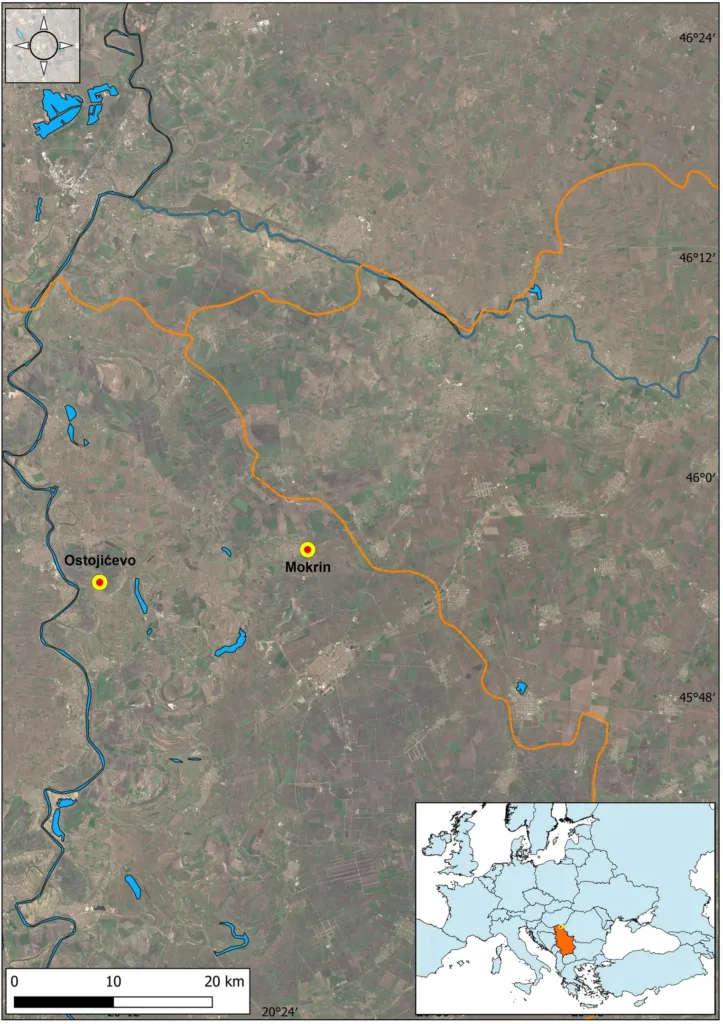
The study examines Mokrin and Ostojićevo, two cemeteries associated with the Maros culture, which occupied parts of present-day Serbia, Hungary, and Romania during the Bronze Age. Mokrin was used between approximately 2100 and 1800 BC, while the Maros cemetery at Ostojićevo dates to around 1900–1550 BC.
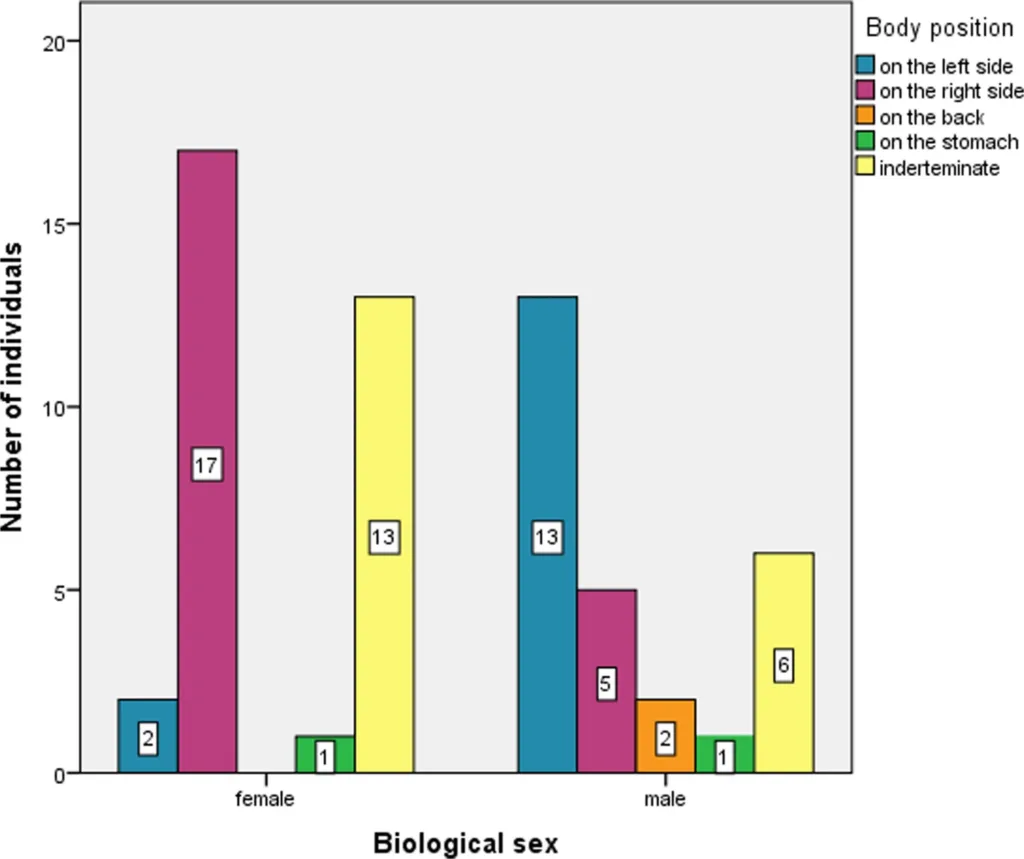
Males generally lay on their left sides, with their heads pointing north and their faces turned east. Females rested on their right sides, with their heads pointing south, also facing east. These differences were already familiar to archaeologists studying adult burials, but determining whether the same customs applied to children had remained difficult.
Young skeletons often lack the physical characteristics needed to determine biological sex reliably, making it difficult to compare children’s remains with adult burial traditions. The new research addressed this problem by using evidence preserved in ancient teeth rather than relying solely on the appearance of the skeletons.
Identifying Biological Sex Through Tooth Enamel
Mina Amzirkov of the University of Belgrade and her colleagues examined data from 128 individuals who had not yet completed physical development, ranging in age from approximately 9–12 months to 18–22 years. The researchers established the biological sex of 77 individuals, analyzing proteins preserved in tooth enamel for 76 and using results from an earlier ancient DNA study for one other.
These methods allowed the team to compare biological sex with burial arrangements without assuming that a child’s position in the grave necessarily indicated whether the individual was male or female. The results showed a clear relationship between biological sex and burial customs at both cemeteries, although the strength of that relationship varied.
At Mokrin, the direction of the body closely matched biological sex, while the association with the side on which a person rested was somewhat weaker. At Ostojićevo, the pattern was especially clear among the 17 individuals included in the body-position analysis: none of the boys lay on their right side, and none of the girls rested on their left.
Six Children’s Graves That Did Not Follow the Pattern
Despite the consistency of these customs, six graves at Mokrin differed from the expected arrangement. Four contained boys buried according to the female pattern, while two belonged to girls whose bodies followed the male tradition.
Three of the boys were approximately four to seven years old, and their graves were numbered 25, 103, and 236. Photographs from the original excavations show that their skeletal remains were poorly preserved, so the researchers could not rule out mistakes in the recorded orientation of their bodies.
The other three graves contained better-preserved remains and presented questions that were harder to resolve. Grave 220 belonged to a boy approximately 10–11 years old, whose biological sex had been established through earlier DNA research. He lay on his right side with his head toward the south, following the female burial pattern, and his grave contained no accompanying objects.
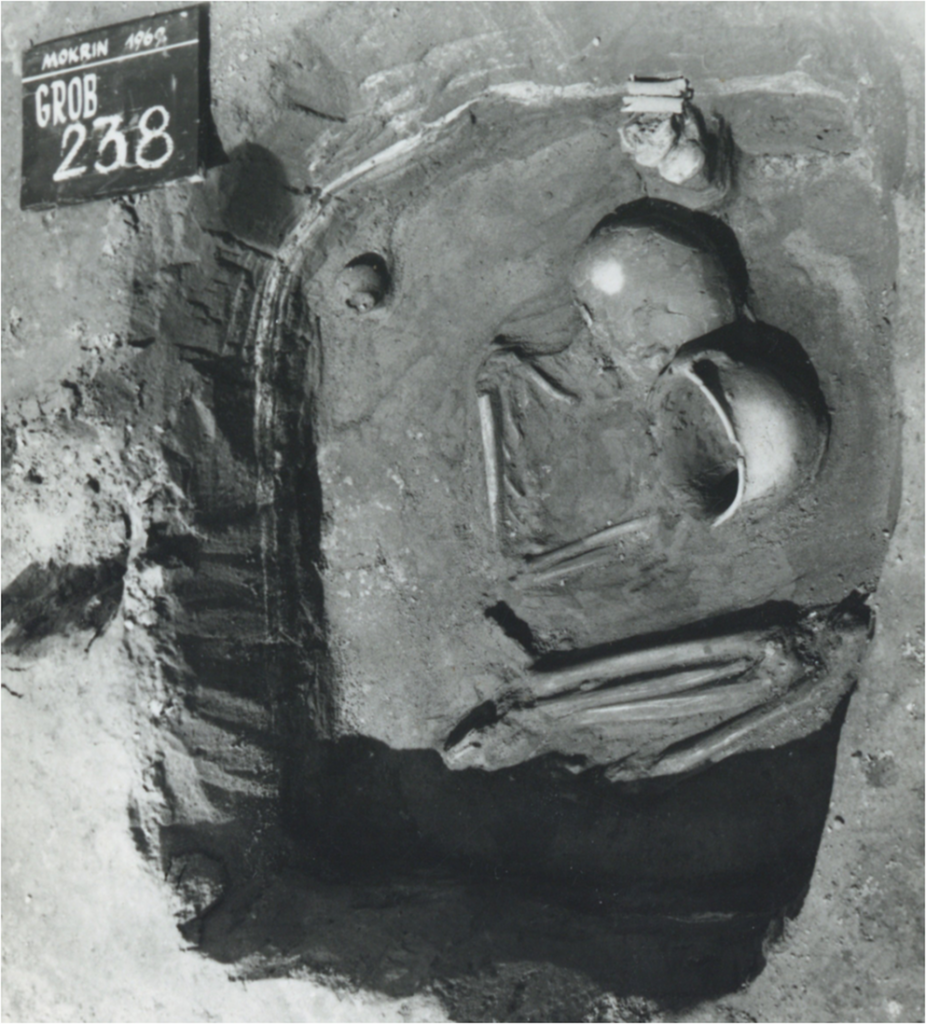
Grave 216 contained a girl aged approximately 8–9, buried on her left side with her head pointing north. Her grave also contained no objects, while Grave 238 belonged to another girl, aged approximately 14–15, whose burial included pottery and animal bones.
The older girl’s burial became particularly important when researchers returned to photographs from the original excavation. An earlier publication had recorded her as lying on her right side, but the photographs showed that she actually rested on her left, confirming that her burial followed the male pattern.
The researchers found no shared characteristic that could explain these three better-preserved exceptions. The children differed in age, grave location, and accompanying objects, leaving open the possibility that their burials reflected circumstances or decisions that cannot now be established.
Gender Distinctions Began in Childhood
The study indicates that Maros communities recognized distinctions between males and females from an early age, at least in the way they treated their dead. Children who had not reached adulthood generally received burial arrangements associated with adult men or women, suggesting that these categories were already important during childhood.
Other aspects of Maros burial customs also varied according to biological sex and social standing. Weapons were more commonly associated with adult male graves, while ornaments such as necklaces and decorative pins appeared more often in female burials. Children’s graves generally contained fewer objects than those of adults, making body position and orientation particularly useful for studying their funerary treatment.
The findings are consistent with earlier research at Franzhausen I, a Bronze Age cemetery in Austria, where scientists found that 62 of 63 children with comparable evidence followed the burial pattern associated with their biological sex. However, the authors emphasize that burial customs cannot establish how individuals understood their own identities or which roles they held during life.
The six unusual graves at Mokrin also leave questions unanswered, particularly in cases where the skeletons were sufficiently well preserved to examine the burial arrangement. While some differences may reflect errors in excavation records, others could have resulted from circumstances that remain unknown.
The results show that the distinctions applied to adult men and women in Maros funerary traditions generally extended to children as well. Even those who died long before adulthood received burial treatment that reflected the social categories recognized by their community.
Amzirkov, M., Porčić, M., Rebay-Salisbury, K. et al. Growing into gender: Funerary practice of boys and girls in the Bronze Age Maros culture (2100 − 1700 BC). Archaeol Anthropol Sci 18, 216 (2026). https://doi.org/10.1007/s12520-026-02578-3
