
13 January 2026 The Future is the Product of the Past

3,500-Year-Old Rice Discovery Marks Longest Early Ocean Journey

Breakthrough research reveals ancient rice remains in Guam, offering insight into early Austronesian culture and a remarkable 2,300-kilometer early ocean journey—the longest of its time.

In a groundbreaking discovery, archaeologists have uncovered 3,500-year-old rice remains in Guam—evidence of an early ocean journey spanning 2,300 kilometers from the Philippines, marking the longest known seafaring voyage of its time. This ancient find sheds new light on Pacific migration, suggesting that early Austronesian voyagers transported rice as a culturally significant crop during their bold expansion across Remote Oceania.

This breakthrough, recently published in the journal Science Advances, challenges long-held assumptions about early agriculture and the migration patterns of Austronesian-speaking peoples across the Pacific.

The discovery was made at the Ritidian Site Complex in northern Guam, where researchers unearthed microscopic remnants of rice husks and leaves embedded in red-slipped pottery, locally known as Marianas Red. These rice phytoliths—tiny fossil-like silica structures left behind by plant cells—were dated using advanced radiocarbon techniques to between 3,500 and 3,100 years ago.

The international research team, including experts from the University of Guam, the Australian National University, and institutes in China, utilized cutting-edge methods such as micro-computed tomography (micro-CT) scanning and thin-section petrography to confirm the rice’s presence. The evidence provides critical insights into the movements of ancient Austronesian populations who originated from Taiwan and began migrating throughout Island Southeast Asia and into the Pacific around 4,200 years ago.


📣 Our WhatsApp channel is now LIVE! Stay up-to-date with the latest news and updates, just click here to follow us on WhatsApp and never miss a thing!!


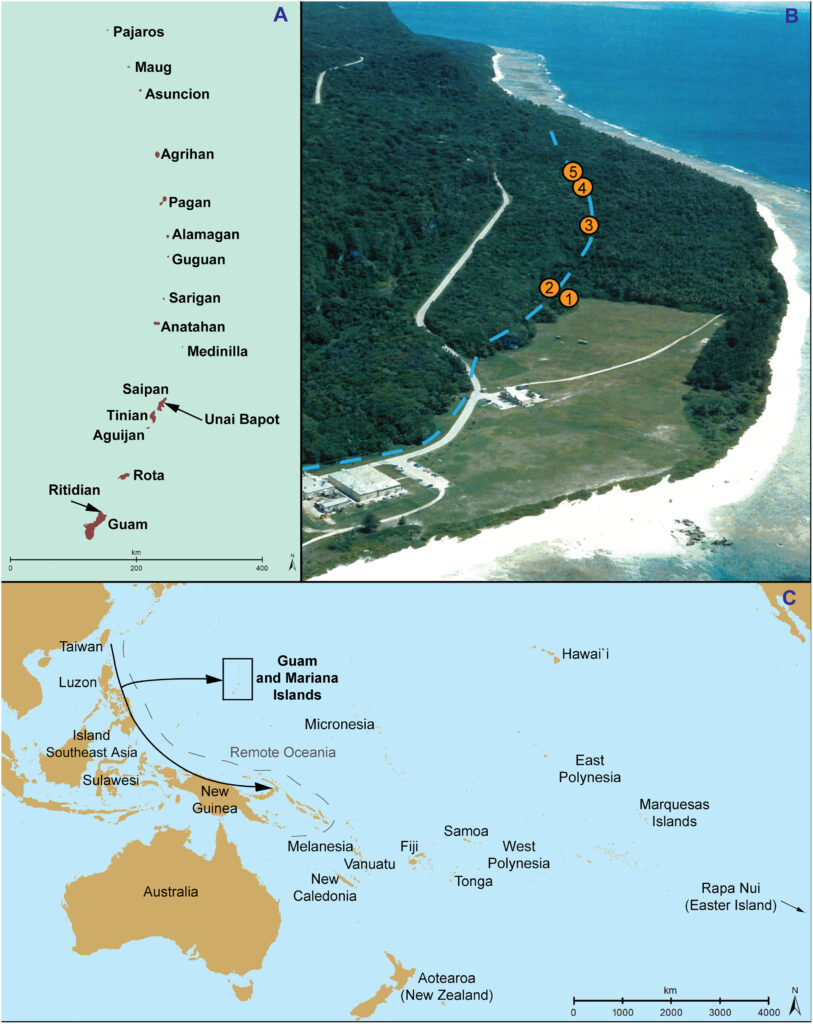
Location of the Ritidian Site Complex in Guam and its context in the Asia-Pacific region. (A) The Mariana Islands in western Micronesia, showing Ritidian in Guam and Unai Bapot in Saipan. (B) Ritidian area with key sites and the ancient shoreline dated to 3500–3100 years B.P.
(C) Main Austronesian migration routes from Island Southeast Asia into the Pacific (~4000–3500 years B.P.), based on archaeological, linguistic, and DNA evidence. Credit: Mike T. Carson et al. - Science Advances
Location of the Ritidian Site Complex in Guam and its context in the Asia-Pacific region. (A) The Mariana Islands in western Micronesia, showing Ritidian in Guam and Unai Bapot in Saipan. (B) Ritidian area with key sites and the ancient shoreline dated to 3500–3100 years B.P. (C) Main Austronesian migration routes from Island Southeast Asia into the Pacific (~4000–3500 years B.P.), based on archaeological, linguistic, and DNA evidence. Credit: Mike T. Carson et al. – Science Advances

Ancient Rice, Modern Revelations

Although rice has long been a dietary staple in Taiwan and the Philippines, it was notably absent from most Pacific islands during the time of early European contact—with the unique exception of Guam and the Mariana Islands. These latest findings not only affirm that rice was present in Guam millennia earlier than previously thought, but also suggest it was carried across a 2,300-kilometer ocean voyage from the Philippines, representing the longest known seafaring journey of its era.

“This discovery provides a missing link in the story of Pacific migration,” said Dr. Hsiao-chun Hung, an archaeologist at Australian National University. “It shows that rice wasn’t just an agricultural crop—it was a cultural symbol carried across great distances, likely used for ritual purposes rather than daily consumption.”

Indeed, no ancient rice fields, irrigation systems, or harvesting tools have been found in Guam, indicating that rice likely played a ceremonial rather than subsistence role in early islander societies. According to the researchers, the rice was likely cooked and prepared away from the Ritidian cave site, which lacked the environmental conditions needed for grain storage.

A Glimpse Into the Past

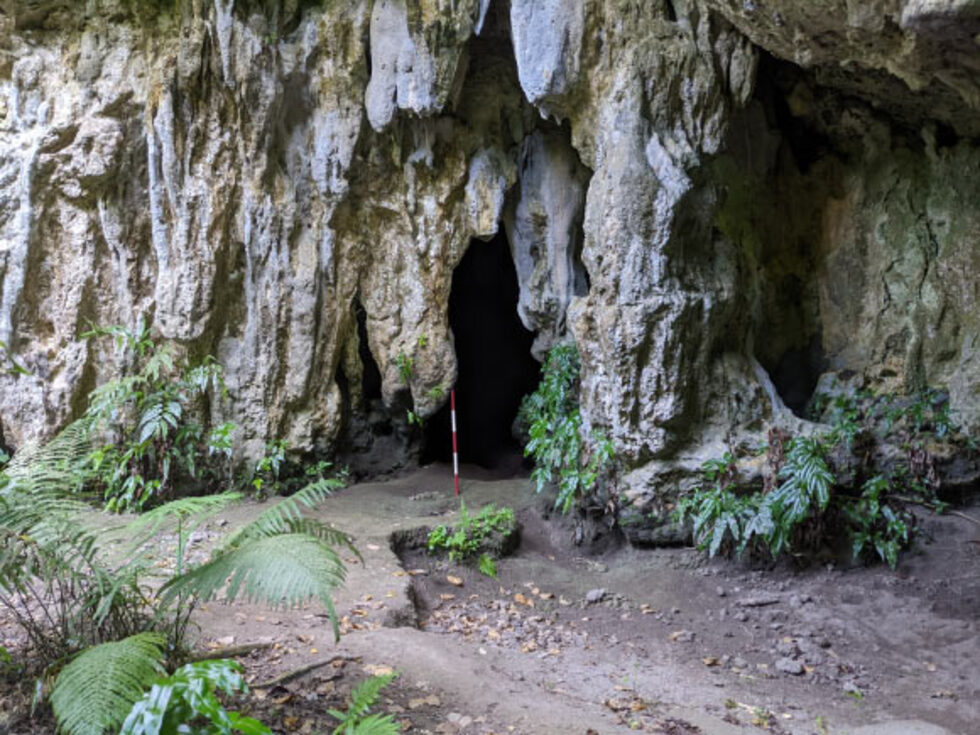
The Ritidian Beach Cave, where the rice was found, remains a culturally significant site today. Importantly, it is one of the few undisturbed archaeological locations on Guam, as many others were damaged during and after World War II. The cave’s well-preserved cultural layers allowed researchers to accurately trace the rice remains to the island’s earliest known inhabitants.

Dr. Michael T. Carson, a University of Guam archaeologist and lead author of the study, described the phytoliths as “fossils of ancient plant parts” that preserve detailed plant anatomy through their silica content. “These microscopic remains give us incredible insights into agricultural practices that existed over 3,000 years ago,” he said.
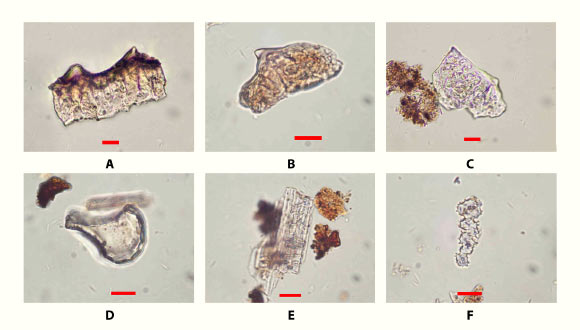
Rice phytoliths from excavations at Ritidian Beach Cave, Guam. Scale bars – 10 μm. Credit: Mike T. Carson et al. - Science Advances
Rice phytoliths from excavations at Ritidian Beach Cave, Guam. Scale bars – 10 μm. Credit: Mike T. Carson et al. – Science Advances

Redefining Pacific Prehistory

The findings significantly shift the timeline for rice cultivation in the Pacific. Previous archaeological evidence of rice in Remote Oceania dated back only 1,000 to 700 years ago, making this discovery over two millennia older.

Furthermore, the presence of rice strengthens the connection between early settlers of the Mariana Islands and their Asian homeland, reflecting an enduring bond with ancestral traditions. The study supports the theory that the Austronesian expansion into the Pacific was not merely a matter of migration but also involved deliberate cultural and agricultural planning.

“This discovery highlights the remarkable foresight, navigational skills, and cultural priorities of ancient Pacific Islanders,” said Dr. Hung. “It underscores how deeply intertwined food, migration, and identity were for these early voyagers.”

As scientists continue to explore the Pacific’s archaeological record, the ancient rice of Guam may open new pathways for understanding how agriculture and cultural practices traveled across vast oceans—reshaping our knowledge of human history in the process.

Mike T. Carson et al. 2025. Earliest evidence of rice cultivation in Remote Oceania: Ritual use by the first islanders in the Marianas 3500 years ago. Science Advances 11 (26); doi: 10.1126/sciadv.adw3591

Cover Image Credit: Ritidian Beach Cave, Guam. Hsiao-chun Hung.

Related Articles

Archaeologists Discover a New Pyramid from the Caral Culture, Known as South America’s Oldest Civilization

4 February 2025

4 February 2025

The team from the Caral Archaeological Zone has discovered a new pyramidal structure in the “Sector F” of the Chupacigarro...

Scientists unlock the ‘Cosmos’ on the Antikythera Mechanism

13 March 2021

13 March 2021

Scientists may have finally made a complete digital model of the 2000-year-old Cosmos panel of a mechanical device called the...

Whispers of Time: Exploring the Enigmatic Bronze Age Towers of Oman

24 February 2025

24 February 2025

The ancient Bronze Age towers scattered across Oman, dating back nearly 5,000 years, have long been a subject of curiosity...

4000-year-old Temple With A 2.30 Meters Central Monolith Discovered in Cyprus

9 July 2024

9 July 2024

An Italian archaeological mission, the Erimi Archaeological Project of the University of Siena, discovered a 4,000-year-old temple in Cyprus. This...

Unique Heart-Shaped Jesuit Ring from 1700s at Fort St Joseph, Michigan

18 September 2022

18 September 2022

An archeology student from the Fort St. Joseph Archeology project at Western Michigan University has uncovered a unique heart-shaped Jesuit...

Hidden past of Ani ruins in eastern Turkey to be uncovered by excavations

31 May 2021

31 May 2021

Archaeological excavations will reveal the historical mystery behind the ruins of Ani on the present-day Turkey-Armenia border. The Ani archaeological...

Oil drilling uncovers a 2,000-year-old cemetery with giant Urn-like tombs in Southwest Iran

16 July 2022

16 July 2022

An ancient cemetery with urn-like tombs was discovered in Ahvaz, the capital city of Khuzestan province in southwestern Iran. The...

Forged 5,000 Years Ago: The World’s Oldest Swords Discovered at Arslantepe Mound, Türkiye

10 June 2025

10 June 2025

In the arid plains of Eastern Anatolia, nestled along the western bank of the Euphrates River near Malatya, Turkey, lies...

Many Ancient Artifacts Discovered in Vietnam’s Rice Fields

28 December 2025

28 December 2025

In Vietnam’s central Ha Tinh province, archaeologists have uncovered a remarkable concentration of ancient artifacts beneath rice fields in the...

4000-year-old sword found in Finland

12 October 2021

12 October 2021

A Bronze Age sword dating back as far as 1700 B.C.was discovered broken in items in Finland this previous summer...

New fibula types discovered at prehistoric Kopilo graves in Bosnia

26 August 2022

26 August 2022

An archaeological dig at Kopilo, a hill settlement founded around 1300 BC about 70 miles west of Sarajevo, has discovered...

Stone-arched tunnel discovered near Achaemenid dam in southern Iran

4 February 2022

4 February 2022

A cultural heritage protection team has recently discovered a stone-arched tunnel located near an Achaemenid embankment dam in southern Iran....

Ancient ‘Cancer-Treating’ Magical Amulet Discovered in Türkiye’s Antioch of Pisidia

30 December 2024

30 December 2024

An intriguing artifact was discovered during excavations in the ancient city of Pisidia Antioch in Isparta province in western Türkiye:...

Archaeologists unearth the long-lost homestead of King Pompey in Lynn

3 July 2024

3 July 2024

Archaeologists from the University of New Hampshire (UNH) and a historian from Northeastern University believe they might have found the...

From Researchers, a New İnterpretation of Norse Religion

26 February 2021

26 February 2021

Recent research on pre-Christian Norse religions shows that the variation in Norse religions is far greater than previously imagined. Ten...