
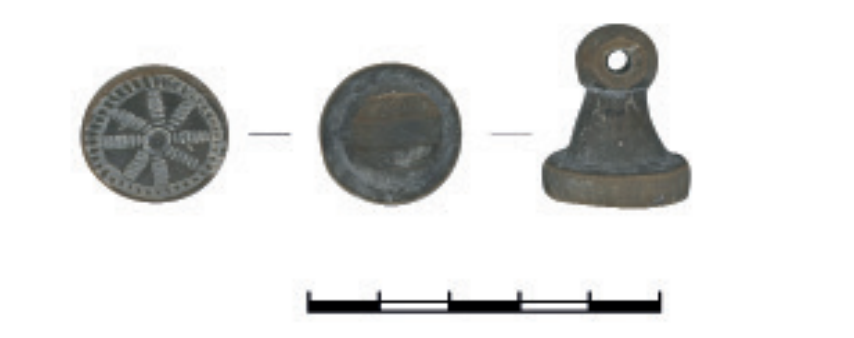
A remarkable archaeological discovery at Aşağıseyit Höyük in western Türkiye is offering fresh insights into the relationship between the Hittite Kingdom and the local kingdoms of Western Anatolia during the Late Bronze Age. Archaeologists working at the ancient settlement uncovered an Early Hittite stamp seal dating back nearly 3,500 years, a find that could reshape scholarly understanding of political and cultural interaction in the region.
According to archaeologist Erim Konakçı, who published the study on the discovery, the Early Hittite stamp seal dating back nearly 3,500 years could reshape current understanding of political and cultural interaction between the Hittites and Western Anatolian kingdoms.
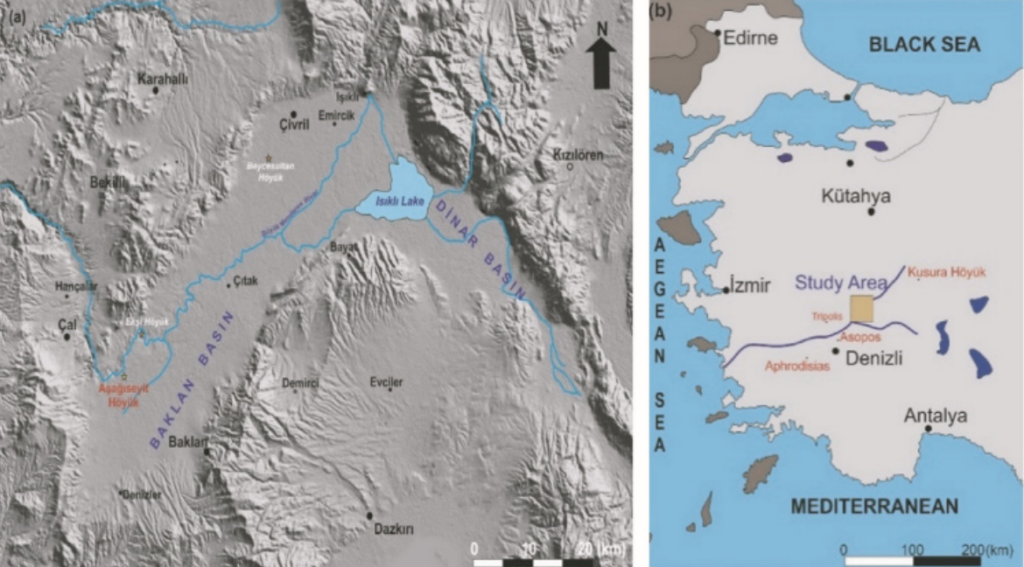
The seal was discovered during the 2024 excavation season at Aşağıseyit Höyük, an important archaeological mound located near Aşağıseyit Village in the Çal district of Denizli Province. Researchers believe the artifact demonstrates stronger-than-expected links between Central Anatolia’s Hittite heartland and western Anatolian settlements during the early Late Bronze Age.
A Key Bronze Age Settlement in Western Türkiye
Aşağıseyit Höyük is one of the most significant Bronze Age settlements in the Upper Menderes Basin of western Türkiye. Situated approximately 120 meters from the Büyük Menderes River, the mound occupies a strategic natural corridor connecting the Çivril and Baklan plains with the Çal Basin. This advantageous location likely made the settlement a vital military and trade route between the Aegean region and Central Anatolia.
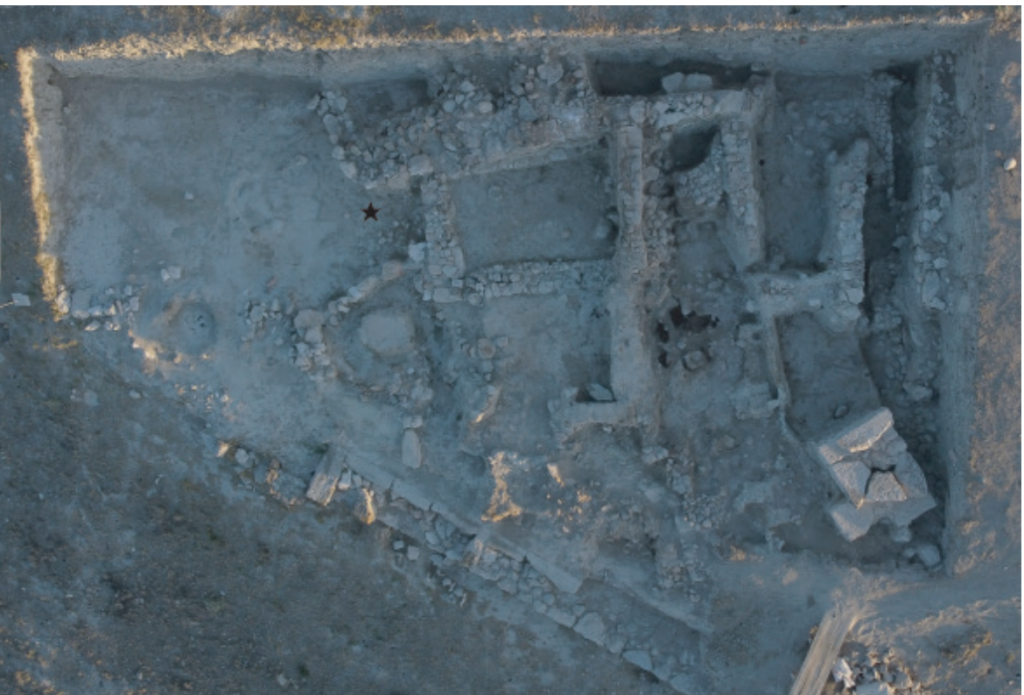
Archaeological investigations at the site began in 2021 and have revealed a long sequence of habitation stretching from the Early Bronze Age to the Roman period. Excavations have uncovered layers from the Early Bronze Age II, Late Bronze Age, Hellenistic, and Roman periods, showing that the settlement remained important for thousands of years.
Geoarchaeological studies indicate that the mound contains nearly eight meters of cultural deposits, highlighting its prolonged occupation and historical significance. Researchers have also identified at least nine occupational phases at the site, making Aşağıseyit Höyük one of the key settlements for understanding the development of western Anatolian civilizations.
Discovery of the Early Hittite Seal
The newly discovered seal was found in the early phase of the Late Bronze Age layer, dated between approximately 1634 and 1236 BCE. Archaeologists uncovered the artifact outside a domestic structure alongside crescent-shaped weights, pottery, and other everyday objects.
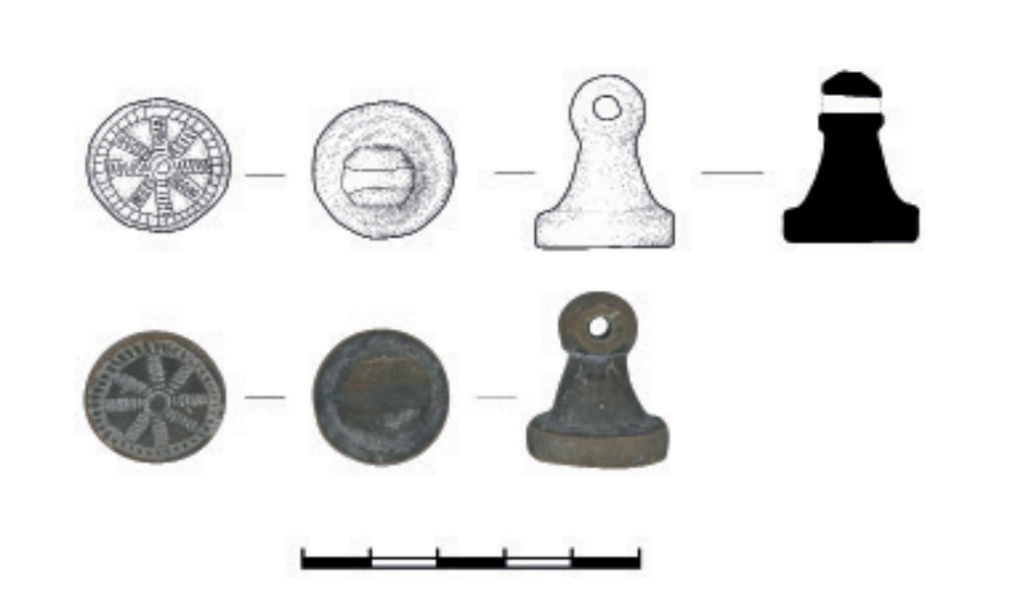
The round-headed seal measures 2.6 centimeters in height and features a circular stamping surface with a perforated conical handle. Its most striking feature is the geometric decoration engraved on its face: a rosette with eight petals surrounded by a double-rowed ladder or rope-like pattern.
According to archaeologists, the rosette motif may symbolize royal authority and could even be associated with the Hittite solar deity of Arinna, one of the most important cult symbols in Hittite religion.
What makes the artifact especially important is its strong similarity to seals discovered at Boğazköy-Hattusa, the capital city of the Hittite Empire. Several nearly identical seals have previously been unearthed in Hittite administrative contexts, suggesting the Aşağıseyit example may reflect official or political connections between the two regions.
How the Seal Changes Our Understanding of Anatolia
The seal provides rare physical evidence supporting historical accounts of Hittite interaction with western Anatolian kingdoms, often referred to in ancient texts as the “Arzawa Lands.” While Hittite written sources describe military campaigns into western Anatolia, archaeological proof of direct interaction has remained limited.
Experts say the Aşağıseyit seal may represent tangible evidence of communication networks, political influence, or trade relations between the Hittites and western Anatolian communities during the Late Bronze Age.
The discovery is particularly important because most knowledge about western Anatolia during this period comes from Hittite texts rather than local written records. Archaeological finds like this seal help historians reconstruct the region’s social, economic, and political structure more accurately.
Researchers also emphasize that the seal was found alongside artifacts commonly associated with Inner Western Anatolia, including bull-shaped attachments, crescent weights, and distinctive pottery types. Together, these finds suggest sustained cultural exchange between Central Anatolia and the western regions of the peninsula.
The Hittites and Western Anatolia
The Hittites were one of the great powers of the ancient Near East during the second millennium BCE. Centered in Central Anatolia, the Hittite Kingdom expanded aggressively during the Late Bronze Age and frequently campaigned into western Anatolia.
Ancient Hittite texts mention rulers such as Labarna and Hattusili I conducting military expeditions against western Anatolian territories. These campaigns aimed not only to secure political dominance but also to ensure in the region.
Scholars have long debated the extent of Hittite authority in western Anatolia. Some researchers believe local kingdoms maintained considerable independence, while others argue that many western settlements fell under strong Hittite influence.
The seal discovered at Aşağıseyit Höyük strengthens the argument for deeper interaction between the Hittite state and western Anatolian communities. Because the artifact closely resembles examples from Hattusa itself, archaeologists believe it may indicate direct cultural or administrative connections.
A Growing Archaeological Landscape
Aşağıseyit Höyük is part of a broader network of Bronze Age settlements currently being investigated across Inner Western Anatolia. Excavations at Beycesultan, Kaymakçı, Tavşanlı Höyük, Aphrodisias, and Laodikeia have collectively transformed understanding of the region during the second millennium BCE.
Archaeologists note that more than seventy Late Bronze Age settlements have already been identified in the surrounding area. Future excavations may uncover additional seals or administrative objects that further clarify the relationship between western Anatolia and the Hittite Empire.
The strategic position of Aşağıseyit Höyük between the Aegean coast and Central Anatolia makes it especially valuable for studying ancient interregional networks. Researchers believe the site may have functioned as an important intermediary center linking inland Anatolia with western trade routes.
A New Chapter in Anatolian Archaeology
The discovery of the Early Hittite seal at Aşağıseyit Höyük marks a major contribution to the archaeology of Bronze Age Türkiye. Beyond its artistic and historical value, the artifact provides critical evidence for understanding how ancient societies interacted across Anatolia more than three millennia ago.
As excavations continue, archaeologists hope Aşağıseyit Höyük will yield further discoveries that illuminate the political dynamics, trade systems, and cultural exchanges that shaped the ancient world of western Anatolia and the Hittite Empire.
Konakçı, E. (2026). Western Anatolia–Hittite Relations in the Light of an Early Hittite Seal from the Excavations at Aşağıseyit Höyük. Arkeoloji Dergisi, 36, 1-10. https://doi.org/10.51493/egearkeoloji.1841891
Cover Image Credit: Konakçı, E., 2026, Arkeoloji Dergisi
