
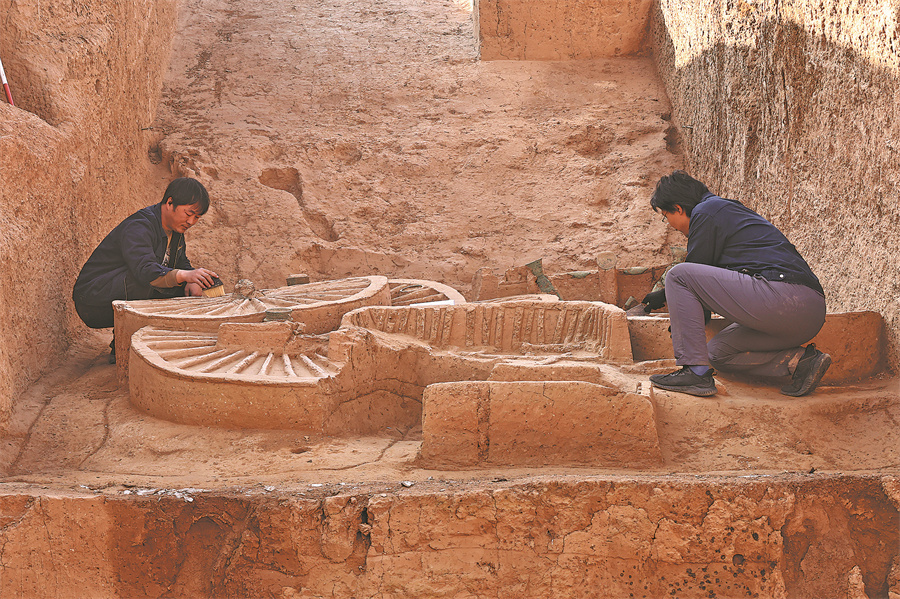
Archaeologists in China have identified a vast Western Zhou Dynasty fiefdom in Shaanxi province, a discovery that offers rare physical evidence for how royal power was organized beyond the dynasty’s great capitals nearly 3,000 years ago.
The site, known as Changchun, lies in Fuping county in the eastern Guanzhong region, an area that once formed part of the political heartland of the Western Zhou world. After four years of archaeological work, researchers now believe the site represents a complete caiyi, or aristocratic fief, dating to the middle-to-late Western Zhou period.
A royal fief between two capitals
The Western Zhou Dynasty, which ruled from around the 11th century to 771 B.C., depended on more than its major centers at Fenghao, near present-day Xi’an, and Luoyi, in modern Luoyang. Between these capitals stretched a network of estates granted to royal relatives and trusted officials.
These fiefs were not independent states. They collected revenue, managed local affairs, and supported the Zhou royal house, but they did not hold the full military or diplomatic authority of frontier vassal states. In practical terms, they helped the dynasty control territory, resources, and movement across its royal domain.
The Changchun site now gives archaeologists one of the clearest material examples of that system.
A cemetery of unusual scale
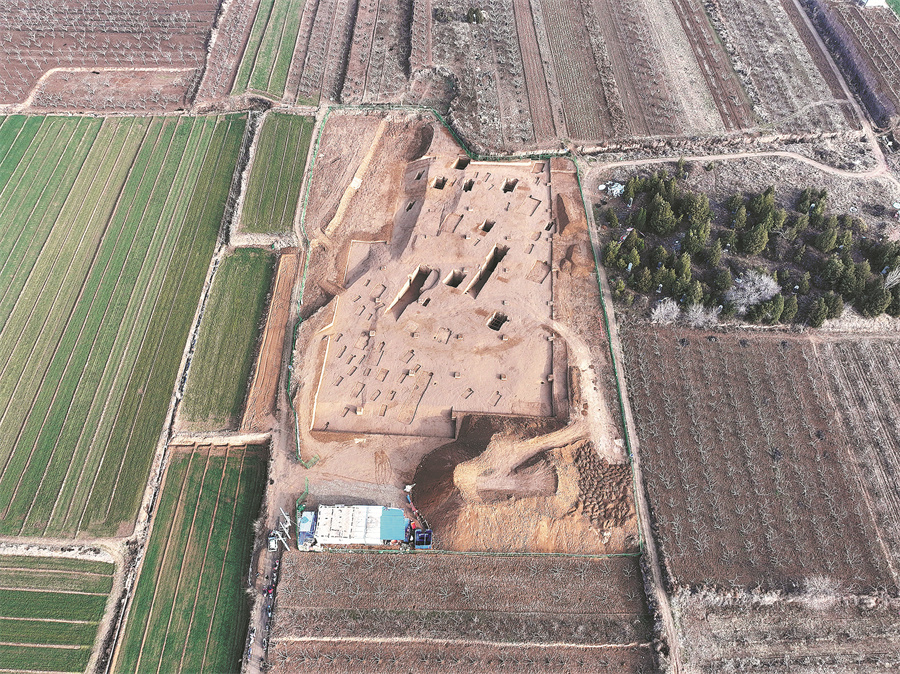
The discovery began in 2022 as a rescue excavation after looted tombs were found in the area. What archaeologists uncovered was far larger than expected: a site covering about 2.2 million square meters, with a major cemetery and a nearby settlement.
The cemetery alone extends across roughly 200,000 square meters and contains more than 3,150 tombs and chariot pits. Twelve large tombs include tomb passages, a feature usually associated with people of high social status.
According to lead archaeologist Li Yanfeng, nothing of this size and organization had previously been found in eastern Guanzhong. The cemetery was used only for burials, with no residential remains inside its boundaries. Its tombs all face northeast, and the graves were arranged in a clear hierarchy. Larger and medium-sized tombs occupy the higher northern section, while smaller burials are concentrated to the south.
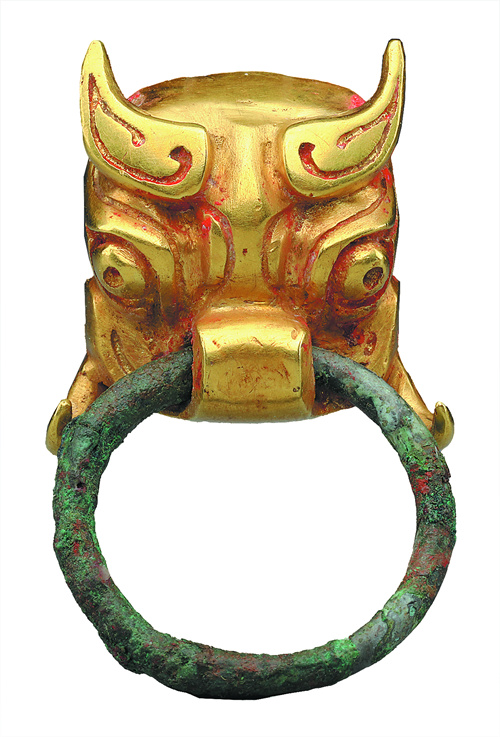
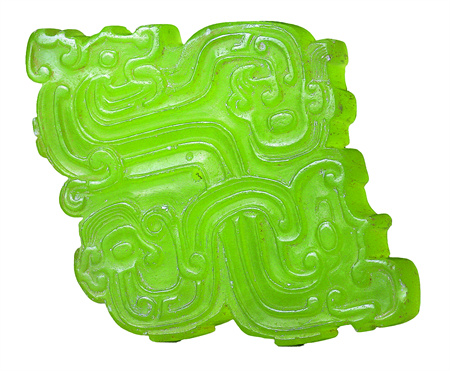
Although many graves had been looted in antiquity, surviving objects still point to elite occupants. Finds include a gold beast-mask ornament, a jade plaque with dragon motifs, and artifacts made from fossilized coral. High-ranking tombs also contained multiple coffins and dismantled chariots, both closely tied to Zhou burial traditions.
Workshops, water, and a planned settlement
South of the cemetery, archaeologists identified the settlement where the living community had been based. It covered about 2 million square meters and was enclosed by the Shichuan River, one of its tributaries, and two man-made ditches.
The layout is one of the most striking parts of the discovery. Researchers found a grid-like system of ditches that divided the settlement into organized zones. Veteran archaeologist Wang Wei of the Chinese Academy of Social Sciences noted that this type of water-linked multi-grid layout is the first discovered at a Western Zhou site.
Excavations also revealed a major craft production district. Remains of bronze casting, pottery making and antler-tool manufacturing suggest that Changchun was not simply a noble residence, but a managed economic center.
In one area of about 50,000 square meters, archaeologists found 30 pottery kilns, a scale comparable to ceramic workshop zones known from Fenghao, one of the Western Zhou capitals. Near an antler arrowhead workshop, the remains of four individuals were found in a pit. DNA analysis showed that two of them were mother and son. Skeletal evidence suggests long-term repetitive upper-body labor and poor health, matching the profile of professional craftspeople.
For researchers, this points to a household-based production system operating within a larger state-controlled workshop structure.
A buffer zone for a weakening dynasty
The location of Changchun may explain why such a large fief emerged in the middle-to-late Western Zhou period. Eastern Guanzhong stood near the edge of the royal domain, while the Shichuan River Basin formed a natural corridor through the region.
As Zhou’s royal authority weakened, archaeologists believe a planned aristocratic fief such as Changchun may have helped protect Fenghao and stabilize the surrounding territory. Its cemetery, workshops, settlement planning, and elite burials all point to a site designed for administration as much as residence.
The discovery is important because it turns a political system known largely from historical texts into visible archaeology. At Changchun, the Zhou world appears not as an abstract dynasty, but as a working landscape of nobles, craftspeople, tombs, workshops, rivers, and royal strategy.
Cover Image Credit: Professionals clean chariot remains at the Changchun site. CHINA DAILY
