
A young woman buried with Phoenician-style ivory, a man laid to rest with a deliberately damaged dagger and the only known Phrygian-style bronze belt from the early Iron Age Levant, and mysterious ceremonial vessels placed beneath the heads of the dead. All were found in a 3,000-year-old tomb in Jordan, where the burial offerings tell a story of cultural connections that reached far beyond the region.
A new chemical analysis of the ceremonial vessels has revealed another dimension of these connections. Researchers identified organic compounds potentially associated with exotic spices, including black pepper from India, alongside aromatic plants used in ancient rituals. Published in the Journal of Archaeological Science: Reports, the study suggests that long-distance exchange networks continued to operate even after the political and economic upheavals that followed the collapse of the Bronze Age kingdoms.
An Extraordinary Burial in Ancient Pella
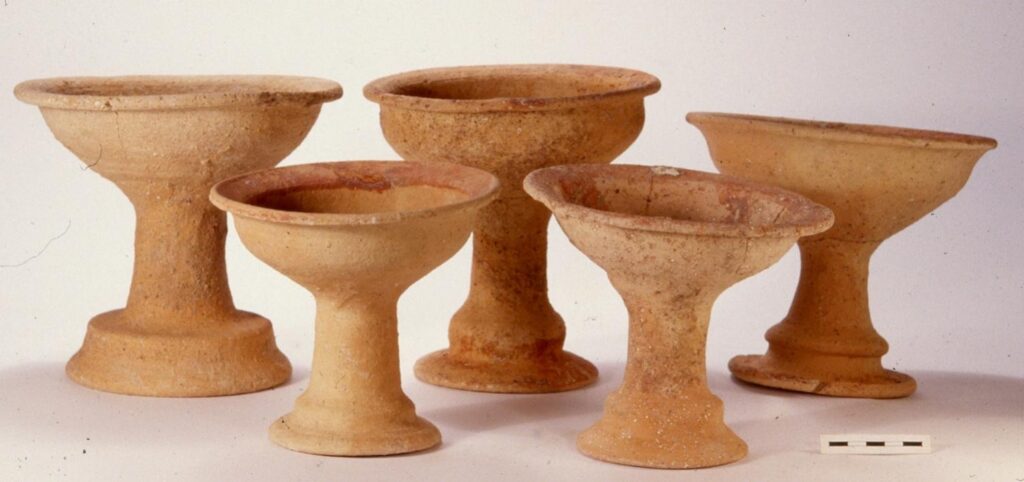
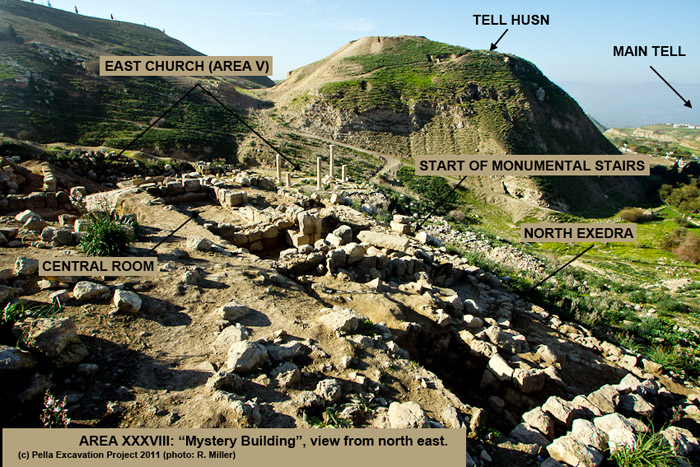
Archaeologists discovered Tomb 89 in 1987 at Pella, an ancient city in Jordan’s northern Jordan Valley. The undisturbed communal burial, dating to approximately 1000–900 BCE, contained the remains of at least 82 individuals and more than 200 funerary objects. Among these offerings were 21 ceramic chalices, an unusually large collection for a burial of this period.
One of the most striking discoveries involved a young woman, identified as Individual 16. She had been buried with a carved ivory ornament depicting a bull calf, originally part of a decorative furniture fitting and later repurposed as a chest ornament. The craftsmanship reflected the Syro-Phoenician ivory-carving tradition, while black glass beads found alongside it pointed toward Mediterranean exchange networks associated with Phoenician merchants.
Another burial presented an equally unusual combination of objects. A young man, Individual 8, had an iron-bladed dagger with a bronze hilt and a bronze belt, both deliberately damaged before burial. The dagger displayed connections with Aegean material culture, while the belt closely resembled examples from ancient Phrygia in Anatolia. Researchers describe it as the only known Phrygian-style bronze belt from the early Iron Age Levant.
Yet the weapons and ornaments were not the only unusual offerings. Archaeologists also found ceramic chalices beneath the heads of these individuals, an arrangement that would become particularly significant when researchers examined their chemical contents decades later.
Exotic Spices Hidden in Ancient Ceramics
Researchers from the University of Sydney analyzed seven of the 21 chalices using liquid chromatography–mass spectrometry (LC-MS), a technique capable of detecting organic compounds preserved within ancient pottery. Although the vessels had been excavated nearly four decades earlier, their porous ceramic walls still retained chemical traces of the substances they once held.
Among the most intriguing findings was piperine, a compound detected in three vessels. One lay beneath the young woman’s skull, another beneath the head of a young man identified as Individual 13, and the third had no direct association with a particular burial. Black pepper (Piper nigrum), native to India’s Western Ghats, is one of the richest natural sources of piperine.
The possibility of Indian black pepper reaching Jordan around 3,000 years ago is particularly striking, although the researchers caution that the compound alone cannot conclusively establish the presence of the spice. Black pepper had already reached parts of the ancient Near East through earlier exchange networks. Archaeologists famously identified peppercorns in the nostrils of the mummy of Ramesses II, while research at Megiddo has revealed evidence associated with exotic foods from South Asia.
The Pella vessels also contained compounds potentially associated with plants from the Mediterranean, Anatolia, the Caucasus, and Iran. Although their precise botanical origins remain uncertain, these findings raise the possibility that aromatic substances traveled along exchange routes that continued to operate after the collapse of the great Bronze Age kingdoms.
Burning Aromatic Offerings for the Dead
The chalices appear to have served a purpose beyond holding ordinary food or drink. All 21 examples from Tomb 89 displayed burning marks around their rims or inside their bowls, suggesting that people used them to heat oils and other substances. Similar vessels appear in temples, household shrines, and other religious settings across the ancient Levant, but their presence in funerary contexts is comparatively rare.
Chemical analysis revealed various plant-related lipids and natural compounds, including substances potentially associated with local aromatic herbs. Some findings pointed toward wormwood (Artemisia), a plant genus with a long history of medicinal and ritual use. All seven analyzed vessels contained a compound found in certain regional wormwood species, while five also contained another substance associated with the genus.
Because some wormwood species possess psychoactive properties, the researchers suggest that these plants may have contributed a psychotropic element to the funerary ceremonies. The evidence does not establish that participants deliberately sought hallucinogenic effects, however, and the exact plant species remain unconfirmed.
Another possible ingredient was Ferula tingitana, an aromatic plant native to the region. Its resin still features in some local Bedouin traditions, where burning it is believed to ward off the evil eye and restore peace within the household. This provides an intriguing comparison with the ancient practice of burning fragrant substances, although it does not demonstrate an uninterrupted ritual tradition spanning three millennia.
The chemical evidence also hints that some vessels may have served a single ceremonial occasion. Researchers found no long-chain ketones associated with repeated heating, raising the possibility that people burned offerings in these chalices during funerary rites before leaving them with the deceased.
A Window into Ancient Wealth and Long-Distance Trade
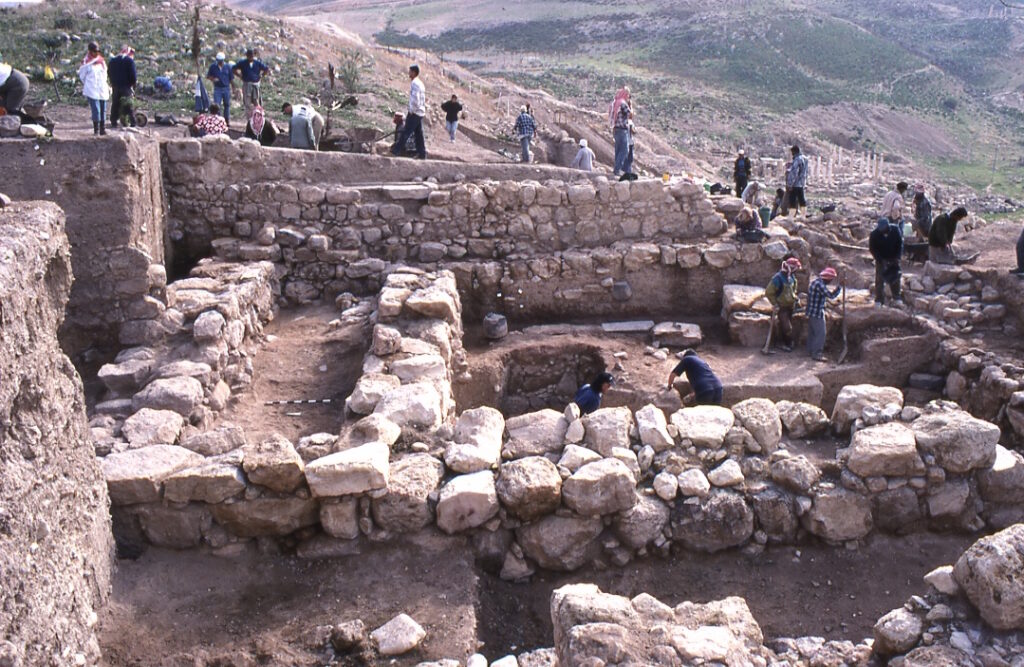
The discoveries take on greater significance when viewed against Pella’s turbulent history. Around 1150 BCE, widespread destruction devastated the city as the Late Bronze Age political order collapsed across much of the eastern Mediterranean. Settlement gradually resumed, but historians have often characterized the following centuries as a period of diminished urban life and restricted international exchange.
Tomb 89 offers a more complicated picture. Phoenician-style ivory, an Aegean-related dagger, and a Phrygian-style belt appeared among the possessions of individuals buried in the same communal tomb. The potential presence of exotic plant products suggests that the circulation of valuable goods and cultural influences did not disappear entirely during this period.
The study also raises questions about social status. Three chalices with particularly distinctive chemical profiles accompanied individuals buried with objects reflecting nonlocal cultural connections. This association suggests that certain people may have received specialized funerary offerings, possibly reflecting differences in wealth, status, or ritual importance.
The researchers emphasize that their conclusions remain preliminary. They examined only seven vessels, and further testing against reference standards is necessary to confirm the sources of several organic compounds. A broader investigation of ritual ceramics from Pella’s temples and other archaeological contexts could help establish whether the practices identified in Tomb 89 were reserved for particular individuals or formed part of a wider religious tradition.
Sheaves, P., Peng, K.-Y., Bourke, S., & Crossett, B. (2026). Closer to the gods: Residue analysis of chalices from Tomb 89, Pella, Jordan. Journal of Archaeological Science: Reports, 76, Article 106107. https://doi.org/10.1016/j.jasrep.2026.106107
