
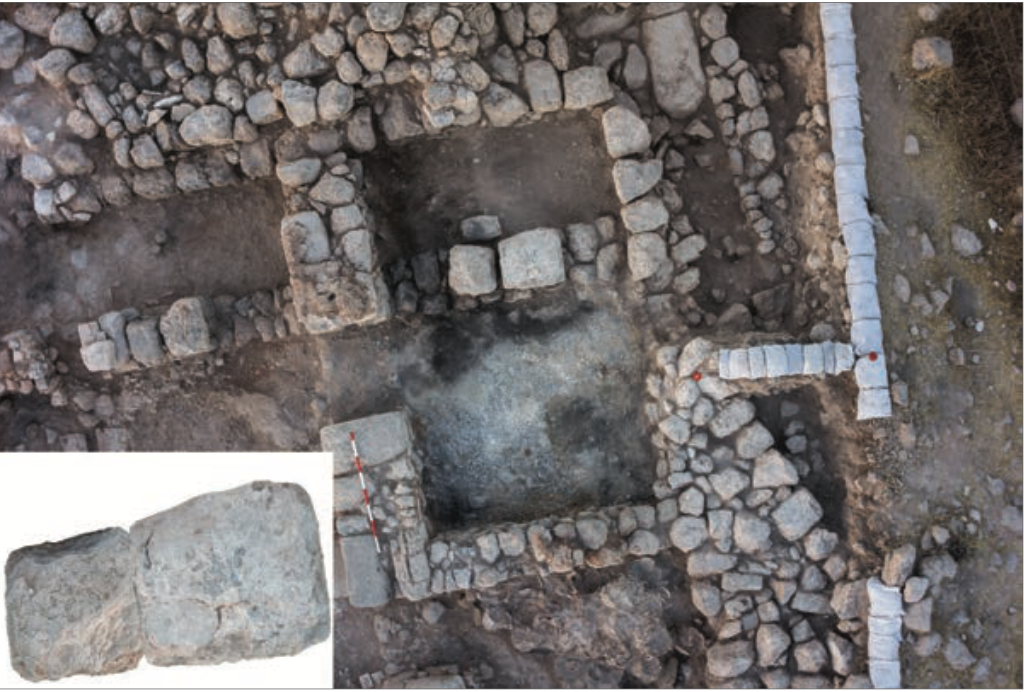
A 2,750-year-old standing stone hidden inside an Israelite mansion at Tel ‘Eton is adding a new and more intimate layer to the debate over Hezekiah’s Reform, one of the most disputed religious episodes in the history of ancient Judah.
The massive stone, found in a large Iron Age residence destroyed by the Assyrians in the late eighth century BCE, was not discovered in a temple, shrine or public cultic building. It was embedded in a domestic space, inside a four-room house interpreted by archaeologists as an elite residency. That detail matters. If the interpretation is correct, the find suggests that religious reform in Judah may have reached deeper than public sanctuaries. It may also have entered the household.
The study, by Prof. Avraham Faust of Bar-Ilan University and published in the 2026 issue of the Jerusalem Journal of Archaeology, argues that the stone was originally a standing stone, or massebah, a type of cultic monument known from the ancient Near East and biblical texts.
A massive stone hidden in Room 101B
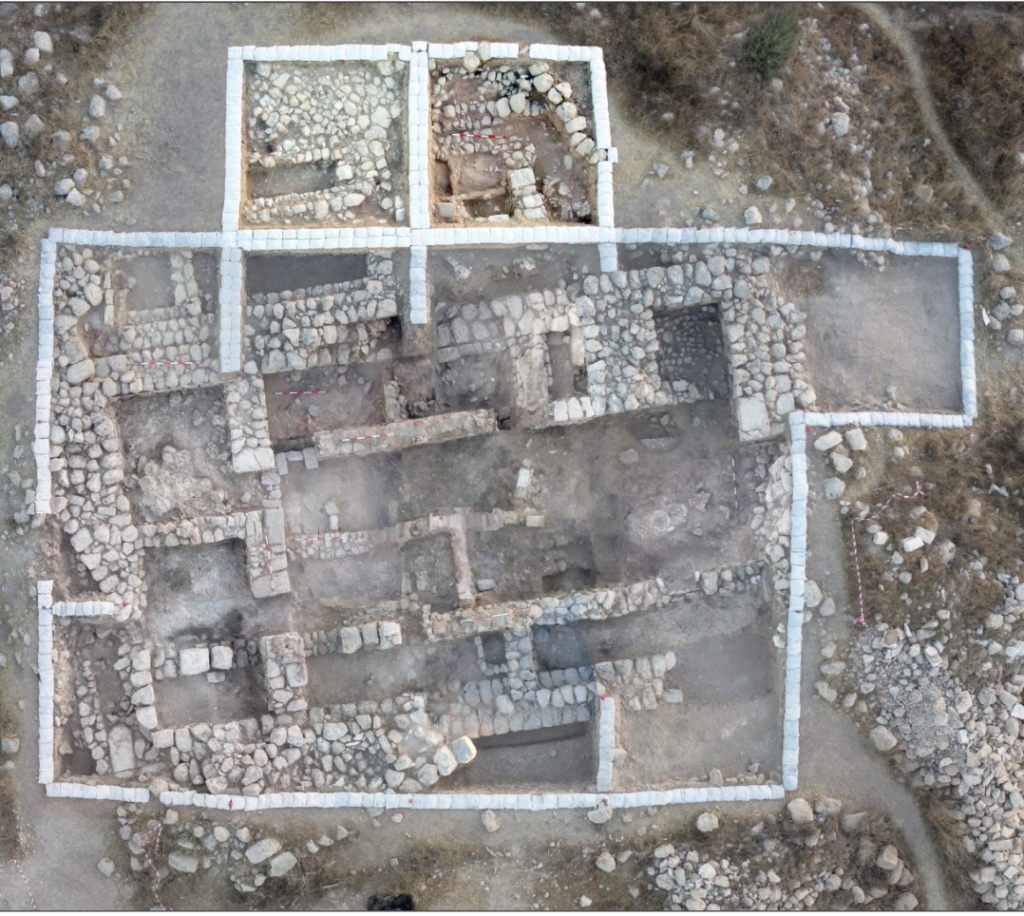
The stone was uncovered in Building 101 at Tel ‘Eton, a large site in the southeastern Judean Shephelah, the lowland zone between the Judean hill country and the coastal plain. The building stood at the top of the mound and was destroyed in a violent Assyrian campaign near the end of the eighth century BCE.
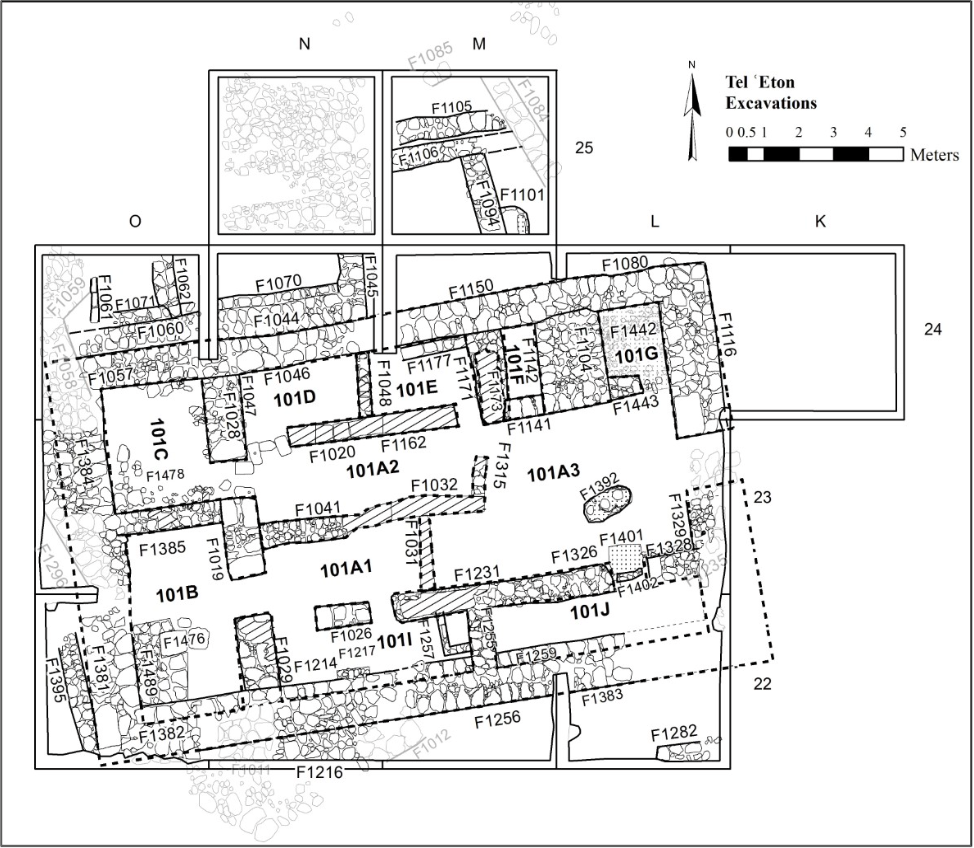
Excavations showed that Building 101 was no ordinary house. Its walls were preserved to a height of about 1 to 1.5 meters, and hundreds of vessels, artifacts, botanical remains and other finds were recovered inside. The structure contained storage rooms, domestic work areas, living spaces and evidence for several nuclear families. Faust and his team have interpreted it as a “governor’s residency,” a high-status house belonging to an elite household.
The key find came from Room 101B, the largest room in the building. The stone was found in two matching segments, together measuring about 1.4 meters high, 70 centimeters wide and 36 centimeters thick. Its estimated weight is around 750 kilograms.
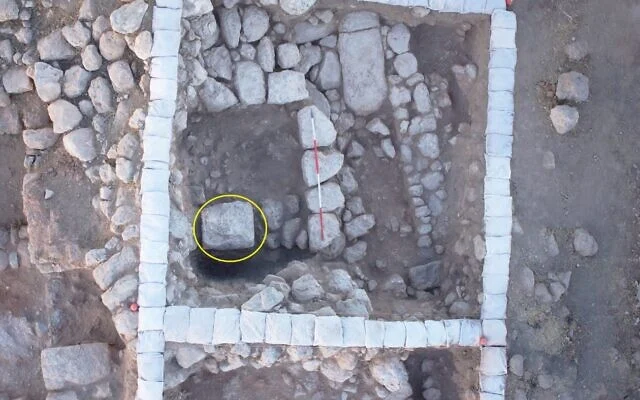
At first, the excavators thought the dense stone layer in the room might belong to a collapsed wall. Only later did the pattern become clearer. The thick stone layer did not cover the whole room. It formed a platform in the southwestern part of the space, built around the large worked stone.
A household cult object, not a building stone
The stone’s size, shape and placement make a practical explanation unlikely. It was too short to support a roof and too massive to have been used casually as ordinary construction material. Faust argues that it was most likely a massebah, a standing stone used in a religious setting.
In an interview with The Times of Israel, Faust summarized the broader scholarly view: “Their exact meaning is debated, but all scholars agree that they were used in religious contexts.”
Its original placement strengthens that interpretation. Room 101B was both one of the innermost rooms of the building and a space visible from the entrance or courtyard when the door was open. In other words, the stone stood in a protected but visually important position. It was not hidden away. It appears to have been placed where members of the household, and perhaps visitors entering the house, could recognize its importance.
The building’s architecture adds another clue. The large stone rested above a continuous foundation that crossed the room. Such foundations appear elsewhere in Building 101, especially under walls and doorways, but this is the only recorded case where one crossed a room in this way. Faust suggests that the foundation may have been built specifically to support the standing stone.
Carefully cancelled, not smashed
The most important question is not only what the stone was, but what happened to it.
At some point before the Assyrian destruction of Tel ‘Eton, the standing stone was taken down. But it was not smashed, thrown away or visibly defiled. Instead, it was laid down and incorporated into a stone platform. A cooking pot was later found on top of that platform, showing that the room had returned to ordinary domestic use by the time the building was destroyed.
This treatment is central to Faust’s argument. In cases of religious change, cultic objects can be destroyed, buried respectfully or treated in a more ambiguous way. Tel ‘Eton seems to fall into that third category. The stone was removed from active use, but not violently desecrated.
That may reflect the tension between official religious policy and household memory. If the stone had served as a family cult object for generations, the residents may have complied with new religious norms while still treating the object with a degree of respect. The result was neither open worship nor outright destruction. It was concealment.
Where Hezekiah’s Reform enters the debate
The Bible describes King Hezekiah of Judah as removing high places, breaking sacred stones and centralizing worship in Jerusalem. Scholars have long debated whether these passages preserve a historical reform or reflect later theological writing.
Until now, much of the archaeological debate has focused on public cultic contexts, especially Arad, Beersheba and Lachish. At Arad, cultic installations appear to have gone out of use. At Beersheba, altar stones were dismantled and reused. At Lachish, a gate shrine has been interpreted by some archaeologists as evidence for the deliberate cancellation of local cult.
Tel ‘Eton adds something different. It does not simply expand the list of possible reform-related sites. It shifts attention from public shrines to domestic religion.
That is the stronger angle of the study. Temples and public cult buildings from Iron Age Judah are rare. Household religious practice was probably far more common, but it is harder to identify archaeologically. If a domestic massebah could be cancelled in response to broader religious change, then archaeologists may need to look again at houses, room layouts, concealed objects and altered installations.
A narrow window before Assyrian destruction
The dating remains cautious. The stone must have been laid down before the destruction of Building 101, because the platform built around it was already in use when the house burned.
The destruction layer at Tel ‘Eton has often been compared with Lachish Level III, widely associated with Sennacherib’s campaign in 701 BCE. Faust, however, notes that the pottery, bullae and paleomagnetic evidence may point to a slightly earlier destruction. The study considers Sargon II’s 712/711 BCE campaign a plausible historical setting.
If that date is accepted, it would place the dismantling of the massebah sometime between Hezekiah’s accession and the Assyrian destruction of Tel ‘Eton. That does not prove Hezekiah’s Reform happened exactly as described in the biblical text. But it does make the association historically possible.
The paper is careful on this point. The Tel ‘Eton stone is not presented as a final answer. It is evidence for cultic change in a domestic setting, and its timing fits the broader discussion of religious reform in late eighth-century Judah.
A new way to read religious change in Judah
The Tel ‘Eton find is powerful because it brings a royal reform debate into the space of an elite household. The stone was not standing in a grand temple. It stood in a room where people lived, stored objects, cooked, worked and moved through daily routines.
That makes the find unusually human. Religious change in ancient Judah was not only a matter of royal decrees, temples and priestly institutions. It may also have involved difficult choices inside homes, where older objects retained meaning even after their official use ended.
For archaeologists, the next step may be methodological as much as historical. If domestic cult was widespread, then future evidence for Hezekiah’s Reform may not come only from public shrines. It may come from altered rooms, sealed platforms, missing cultic objects and stones that were not destroyed, but quietly put out of sight.
Faust, A. (2026). Hezekiah’s Reform? A view from Tel ‘Eton on the religious development in Judah. Jerusalem Journal of Archaeology, 9, 31–60. https://doi.org/10.52486/01.00009.3
Cover Image Credit: Aerial view of Room 101B after excavation, showing the large stones left in situ. Inset: the two matching segments of the standing stone were digitally joined to show their similar size, proportions and indentation. Photo: Griffin Aerial Imaging; inset prepared by Dvir Rotem. Faust, A. (2026)
