
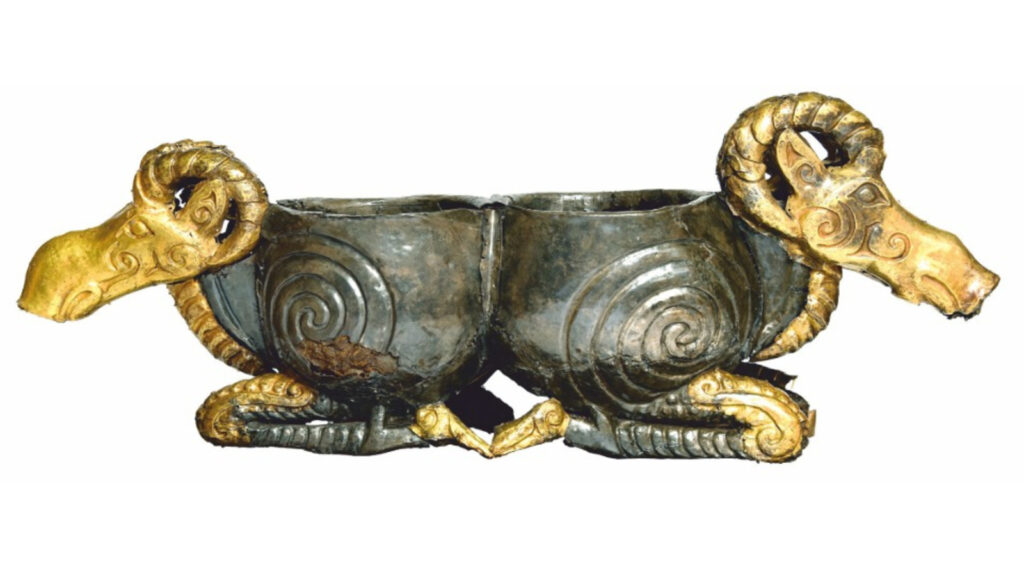
A striking vessel dating back roughly 2,400 years and adorned with golden animal heads may once have featured in rituals that forged symbolic ties of brotherhood among participants.
New research on this exceptional find, unearthed from a high-status burial mound in Russia’s Southern Urals, shows how early nomadic groups blended sophisticated metalwork, animal imagery, and artistic ideas drawn from the Persian Empire into objects reserved for ceremonial use.
Unlike any other known example from fourth-century BCE graves in the region, the vessel from the Filippovka 1 cemetery was carved from wood and then sheathed in gold and silver. Two linked bowls are framed by the sculpted heads of a mountain goat and a ram.
Researchers suggest its distinctive twin form may have allowed several people to share in ceremonies that expressed social bonds or symbolic brotherhood.
The study, published in the 2026 volume of the Ufa Archaeological Herald by Olga Melnikova of the Orenburg Governor’s Museum of Local Lore and Konstantin Okorokov of the Russian Academy of Sciences, examines the vessel’s construction, stylistic influences, and possible ritual role in greater detail.
Two Golden Animals Framing a Double Bowl
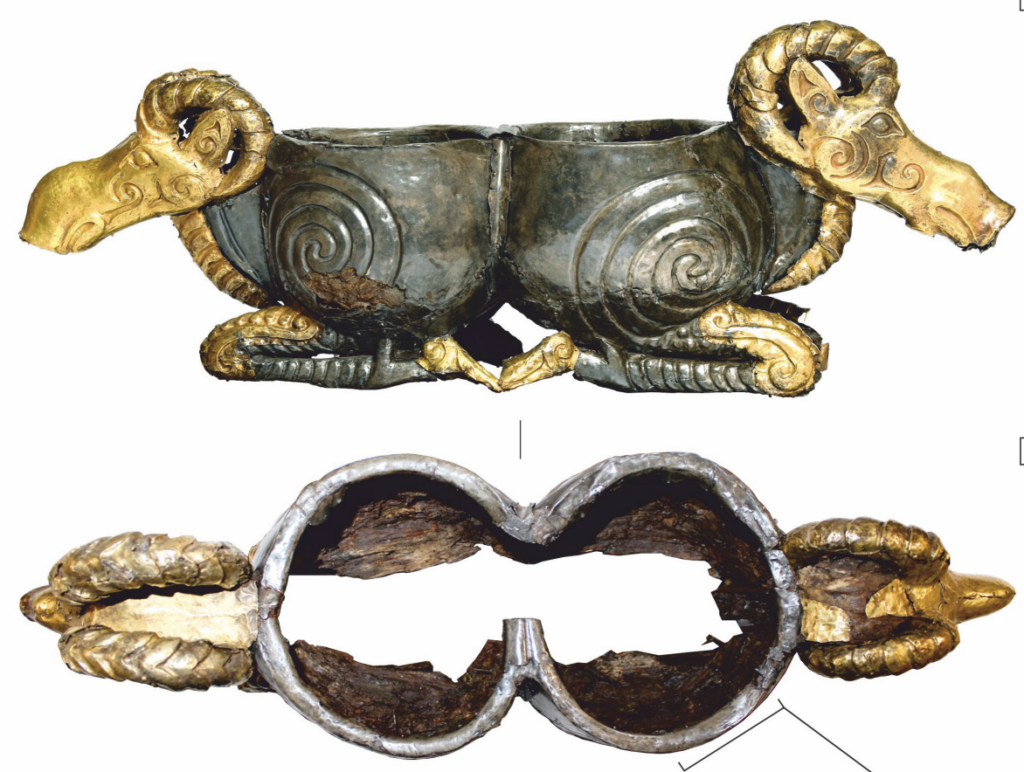
The vessel stretches 62.7 centimeters from end to end. Its two rounded, connected bowls create a clear figure-eight outline when seen from above. Golden animal heads project from either side, while the silver-clad bodies form the bowls themselves. The animals’ folded legs serve as a stable base for the whole piece.
Both heads are rendered with fine attention to detail: curving horns frame the faces, almond-shaped eyes are carefully marked, and spiraling patterns decorate the cheeks and bodies. One head measures about 20 centimeters from nose to horn tips; the other is slightly shorter at 18 centimeters. Gold also covers portions of the necks, legs, and hooves, producing a vivid contrast against the silver surfaces.
Scholars identify the creatures as a mountain goat and a mountain ram. Their balanced, opposing placement echoes the heraldic animal pairs common in Achaemenid Persian art, especially in architectural sculpture and luxury goods. While the composition recalls Persian models, including those known from Persepolis, the vessel also carries the distinctive animal-style traits of the Eurasian steppe.
Might the Vessel Have Sealed Bonds of Brotherhood?
The most thought-provoking aspect of the object is its double structure. Smaller wooden cups recovered from other Filippovka burials appear designed for individual use, yet these two joined bowls open the possibility of shared participation.
Melnikova and Okorokov argue that the vessel may have been made for collective ceremonies, perhaps those involving symbolic brotherhood. In that reading, the single object uniting two separate bowls would have carried special meaning. The idea remains a working hypothesis rather than proven fact.
The researchers stop short of identifying any liquid that might have filled the bowls or describing the exact rites in which the vessel took part. Still, its position among other items interpreted as sacrificial or ceremonial equipment supports the view that it held more than everyday practical value.
Found in the central burial of a major mound, the vessel is also linked to the highest social ranks of the nomadic community. Whether it expressed alliances, shared identity, or ceremonial obligations, it offers a rare window onto the symbolic practices of the people interred at Filippovka.
Golden Knives, a Bull-Shaped Lamp, and an Elite Grave
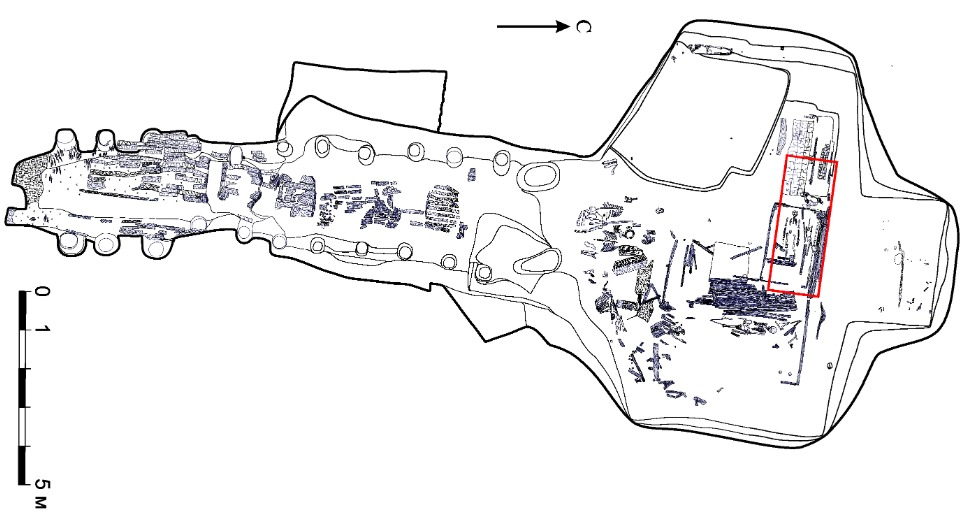
Archaeologists recovered the vessel in 2006 while investigating Kurgan 4, the second-largest mound at Filippovka 1. The mound originally rose about eight meters and measured roughly 80 meters across, enclosing an elaborate central burial chamber.
Excavation began after serious damage in 2005, when looters used heavy machinery to cut two trenches through the mound and destroy portions of its wooden structures. Despite the destruction, the team still retrieved an outstanding collection of objects from the northern sector of the chamber, lying between two wooden coffin frames.
Beside the vessel stood a bronze lamp in the form of a zebu bull. Underneath it, a woven basket held several iron knives—one with a silver deer-shaped handle, another fitted with a gold element topped by a wolf’s head—along with a small bone spoon ending in a deer’s head and a decorated piece that may have belonged to a whip.
Taken together, the finds demonstrate a refined blend of local steppe craftsmanship and Achaemenid artistic influence. The deer-shaped silver handle and diamond-patterned gold decoration especially point toward Persian traditions, while other animal motifs remain closer to the Filippovka style.
The objects need not have been imported directly from Persia; instead, they show how prestigious artistic ideas traveled between the Achaemenid realm and nomadic societies living far beyond its frontiers.
The Hidden Craftsmanship Beneath the Metal
Close examination and restoration work revealed that the vessel’s construction was more elaborate than its outer metal surfaces first suggested.
Artisans began by carving the core from willow wood, then fastened thin sheets of precious metal with tiny gold and silver nails.
Decorative reliefs were first modeled in the wood and later transferred to the metal covering through repoussé and related techniques. Even the nails themselves were produced by forging.
Chemical analysis showed high-purity silver on the bowls and gold of varying composition on the heads and extremities. Study of the surviving wood confirmed it belonged to the willow genus (Salix). This detail proved especially important because the same wood had been used for three well-known deer sculptures recovered from another mound at Filippovka.
Shared manufacturing methods and stylistic features lead the researchers to suggest that the vessel and at least one set of golden deer figures may have come from the same workshop—evidence of specialized craftsmen serving the nomadic elite of the Southern Urals.
The vessel received extensive restoration at the State Hermitage Museum, where specialists rebuilt its fragile structure around an internal support frame. It is now on permanent display in the exhibition “Gold of the Sarmatian Chiefs” at the Orenburg Governor’s Museum of Local Lore.
A Meeting of Two Artistic Worlds
What makes the Filippovka vessel exceptional is not only the precious metals that cover it, but the way it unites different traditions in a single object. Its sculpted animals recall the visual language of Achaemenid Persia, while the carved wooden core and distinctive ornamental details belong firmly to the artistic repertoire of the steppe.
The possible link with Filippovka’s golden deer sculptures further indicates that these external influences were being absorbed and reworked within a sophisticated local craft tradition.
Nearly 2,400 years after its creation, the double vessel still leaves one central question open: what took place when people gathered around it?
The suggestion that it served in rituals of symbolic brotherhood remains an attractive possibility, even though its exact purpose cannot yet be confirmed.
What the artifact does demonstrate clearly is that the nomadic elites of the Southern Urals commanded remarkable technical skill and took part in a cultural network that reached far beyond the Eurasian steppe.
Melnikova, O. A., & Okorokov, K. S. (2026). Vessel with ungulate protomes from central grave of Kurgan 4, Filippovka 1 cemetery. Ufa Archaeological Herald, 26(3), 500–512. https://doi.org/10.31833/uav/2026.26.3.027
