
19 June 2026 The Future is the Product of the Past

2,400-year-old Battlefield of Alexander the Great’s First Persian Victory found in Türkiye

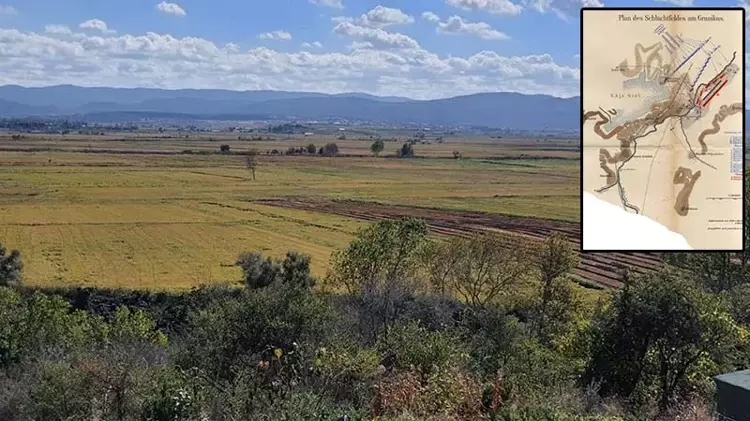
After 20 years of research, archaeologists in Türkiye have pinpointed the exact location of the legendary Battle of Granicus, where Alexander the Great won his first significant battle in his pursuit of Asia Minor.

Here, Alexander’s Macedonian army defeated the powerful Persian army for the first time (May 334 BCE), enabling one of the most illustrious empire builders in history to advance deep into his adversary’s territory.

The Battle of Granicus was the first of three major battles between the two armies that allowed Alexander the Great to march onward toward India, Professor Reyhan Korpe, scientific advisor to the project, told Daily Sabah.

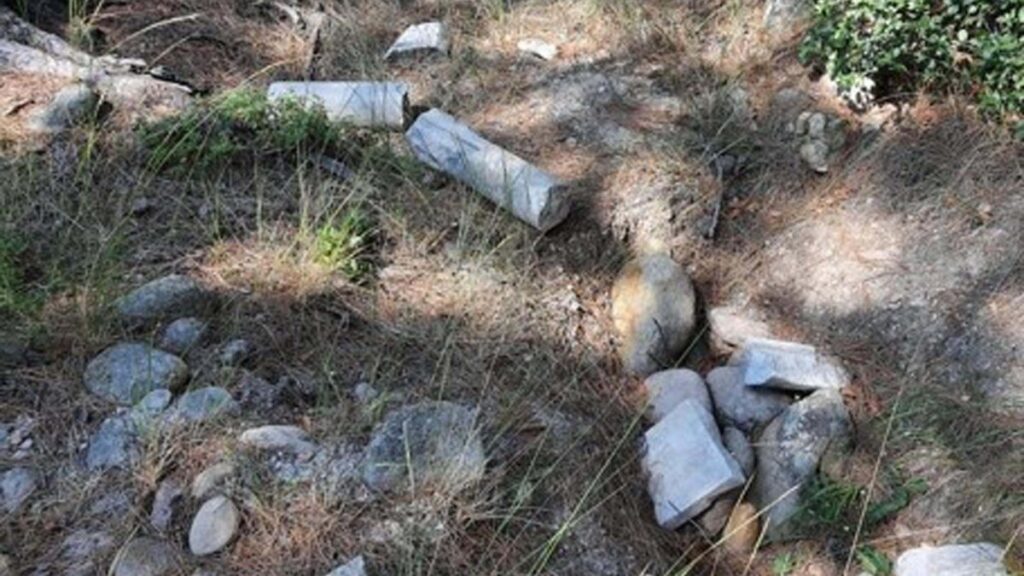
The exact location of one of the most legendary warring grounds in human history remained a mystery for more than 150 years. Professor Korpe, however, began his quest to find the epic piece of land twenty years ago, upon which approximately 90,000 men clashed to the death. This year, the team pinpointed the exact location of the 2,400-year-old battle site. The area will soon become a tourist attraction as part of the Alexander the Great Cultural Route Project.

Alexander’s victory over the Persians on the banks of the Granicus River provided definitive proof of his abilities, which is why scholars have long sought to pinpoint the exact location of this pivotal battle.


📣 Our WhatsApp channel is now LIVE! Stay up-to-date with the latest news and updates, just click here to follow us on WhatsApp and never miss a thing!!


Photo: DHA

“Over the last three years, we have focused on identifying the precise location of the battlefield, and this year, we made significant findings,” said Professor Reyhan Körpe, a historian from Çanakkale Onsekiz Mart University (ÇOMÜ). 

He noted that one of Alexander the Great’s most important battles took place in Çanakkale. “This battle occurred near a river once known as the Granicus, about 100 kilometers (62 miles) east of modern-day Çanakkale, in the heart of the Biga Plain,” he explained.

Researchers knew that the battle occurred along the Granicus River, but historians have long tried to pinpoint its coordinates as no one knew where it happened.

First, they identified the route that Alexander and his army took, which enabled them to focus their research. “We mapped out the exact route Alexander traveled, beginning in Ozbek village, crossing through Umurbey, Lapseki, and ultimately descending into the Biga Plain,” Professor Korpe said.

They not only found the site of the unforgettable battle but also detected the villages that were involved.

Körpe also said that the new route will be added to the existing cultural heritage routes in the region.

The ongoing project in Türkiye aims to transform the battlefield into a tourist destination with cultural significance, led by the Ministry of Culture and Tourism and local municipalities. The important cultural and historical sites will undoubtedly draw history buffs as the nation’s tourism industry grows.

Cover Image Credit: Nazif Cemhan ŞEN/ÇANAKKALE, (DHA)

Related Articles

A Mysterious ‘Buddha Bucket’ Survived 1,000 Years in a Viking Grave

25 December 2025

25 December 2025

A Mysterious “Buddha Bucket” Survived 1,000 Years in a Viking Grave — and despite spending a millennium beneath layers of...

2,000-Year-Old Dancing Man Statuette Unearthed in Siberia

6 May 2021

6 May 2021

During excavations for a new bridge over the Ob River in Novosibirsk, Russia’s third-largest district, a ten-centimeter-tall figurine was discovered....

A beautiful Medieval key discovered in Claverham village, UK

11 October 2023

11 October 2023

Earlier this year the Kemble fieldwork team from Cotswold Archaeology undertook a small excavation for Newland Homes on the edge...

The Walking Giants of Easter Island: How Physics Solved an 800-Year-Old Mystery

10 October 2025

10 October 2025

For centuries, the massive stone statues of Easter Island—known as the moai—have stood as one of archaeology’s greatest enigmas. How...

Archaeologist Reconstructs 2,000-Year-Old Roman Frescoes from Thousands of Fragments in ‘World’s Toughest Jigsaw’

19 June 2025

19 June 2025

What started as a pile of broken plaster fragments has become one of the most remarkable reconstruction projects in British...

“No Easy Way from Earth to the Stars”: Malta’s Prehistoric Temples (3800–2400 BCE) May Have Served as Celestial Navigation Schools

26 June 2025

26 June 2025

A new open-access study published in Archaeological and Anthropological Sciences has reignited the debate surrounding the purpose and cosmic alignment...

Women buried with thick twisted bronze neck rings and buckets on their feet found in Ukraine

20 January 2024

20 January 2024

Archaeologists discovered the remains of men buried with weapons such as axes, spearheads, and swords, and women buried with thick...

Göbeklitepe Monolith will be Exhibited in the United Nations

15 May 2021

15 May 2021

A copy of one of the famous ruins of Göbeklitepe, known as the oldest temple in the world, will be...

Carvings at Göbeklitepe could be World’s Oldest Calendar

6 August 2024

6 August 2024

Experts suggest that markings on a stone pillar at the 12,000-year-old Göbeklitepe archaeological site in Türkiye probably represent the oldest...

Researchers find the earliest record of aurora in old Chinese documents

15 April 2022

15 April 2022

Researchers have found the oldest known reference to a candidate aurora in a celestial event, described in an ancient Chinese...

Centuries-old burials discovered near Antandros Ancient City in Turkey

10 January 2022

10 January 2022

Ancient tombs were discovered during a foundation excavation at a building site near the ancient city of Antandros, which is...

Laodikeia’s Roman Asopos Bridge Carries Water Again After 1,300 Years

2 March 2026

2 March 2026

After more than a millennium of silence, water is once again flowing beneath the monumental arches of the Laodikeia Asopos...

Poland’s largest megalithic cemetery discovered

3 March 2021

3 March 2021

Archaeologists excavated in Poland discovered a large megalithic complex, including dozens of tombs dating back 5,500 years. The site was...

Prehistoric Cave Art Handprints With Missing Fingertips Point to Ritual Amputation

3 January 2024

3 January 2024

Researchers who examined prehistoric cave art in France and Spain, a new interpretation of Paleolithic cave art proposes that prehistoric...

Archaeologists Uncover Pre-Roman Veneti Sanctuary Beneath Roadworks in Italy

23 May 2026

23 May 2026

Archaeologists in Ponso, northern Italy, have uncovered an ancient Veneti sanctuary with Venetic and Latin inscriptions, temple foundations, and evidence...