
A 2,200-year-old Mother Goddess votive stele, a Hellenistic tomb, and two fortifications in İzmir’s Kiraz district reveal a rural sanctuary and strategic road network in ancient Lydia.
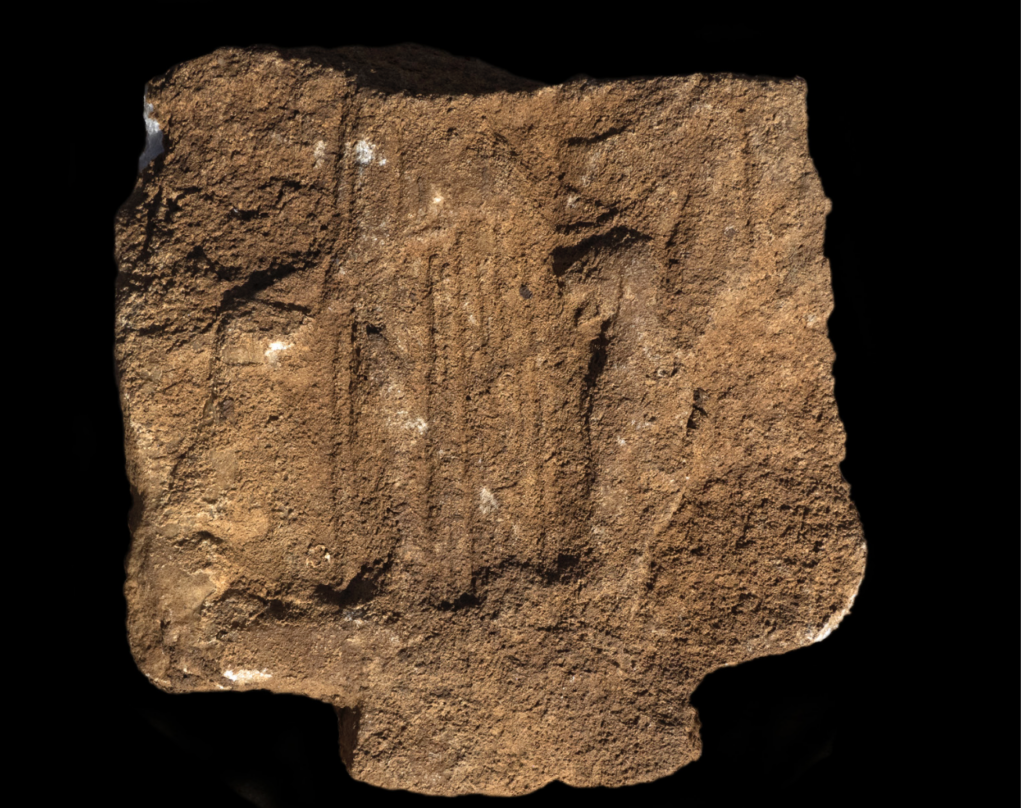
A broken stone stele found near an ancient road in western Türkiye may mark the presence of a previously unknown rural sanctuary dedicated to Kybele, the ancient Mother Goddess whose cult spread across Anatolia and the Mediterranean world.
The discovery comes from Çayağzı, a village in the Kiraz district of İzmir, where new archaeological findings are shedding light on a little-explored corner of the Hellenistic world. The area lies within the Küçük Menderes Valley, a fertile and water-rich landscape that formed part of ancient Lydia and served as a passage zone between major settlements such as Ephesos, Hypaipa, Palaiapolis, and Philadelphia, modern Alaşehir.
The findings, examined in a new study by researcher Ali Özkan, include two Hellenistic defensive structures at Karaburç and Çayağzı, a Kybele votive stele, and a nearby tomb dated to the 2nd century BCE. Together, they suggest that Kiraz was not a peripheral rural zone but a guarded, connected, and religiously active landscape during the Hellenistic period.
A stele found near an ancient road
The Kybele votive stele was identified in Çayağzı after a rescue investigation by the Ödemiş Museum in 2017, following reports of illicit digging in the area. The artifact was found close to a damaged tomb and near a route that continued from Kiraz toward ancient Philadelphia.
Although the upper part of the stele is broken and its surface is heavily worn, enough of the image survives to identify the central figure as Kybele. The goddess is shown standing, dressed in a chiton and probably a himation, with two lions positioned beside her. The surviving details place the object within the so-called “Ephesos type” of Kybele votive steles, a form known from western Anatolia from the Late Classical period onward.
This detail matters. The stele was not found in an urban temple, but in a rural setting near a stream and overlooking a route through the valley. For researchers, that location raises the possibility that Çayağzı once held an open-air sanctuary dedicated to Kybele.
Kybele was deeply associated with mountains, wild landscapes, fertility, and protection. In western Anatolia, her worship is often attested not only in formal sanctuaries but also in caves, rock-cut niches, and rural sacred spaces. The Çayağzı stele fits this wider pattern. It may have been a modest offering placed in a landscape where agricultural life, road movement, and divine protection overlapped.
The Mother Goddess in the countryside
Kybele, known in Phrygian tradition as the Mother, became one of Anatolia’s most enduring religious figures. Her cult reached Greek cities, Hellenistic kingdoms, and eventually Rome, but its roots remained closely tied to mountains, nature, and fertility.
In the Çayağzı stele, the goddess appears with her lions, one of her most recognizable attributes. The composition is damaged, but the study suggests that additional figures may once have accompanied her, possibly male attendants similar to those seen on other Ephesos-type steles. Comparable examples from Ephesos, Metropolis, and the wider Küçük Menderes region show that local workshops were producing such votive objects during the Hellenistic period.
The Çayağzı example is dated broadly between the 3rd and 2nd centuries BCE. Its presence in Kiraz adds a new piece to the religious map of the region, especially because systematic archaeological excavations have not yet been carried out in the district.
The stele also suggests something more human and local. This was likely not the offering of a distant ruler or a great city. It may have belonged to a rural community whose prosperity depended on fields, water, roads, and seasonal cycles. In that setting, Kybele was not an abstract deity. She was a protective force tied to land, fertility, and survival.
A damaged Hellenistic tomb nearby
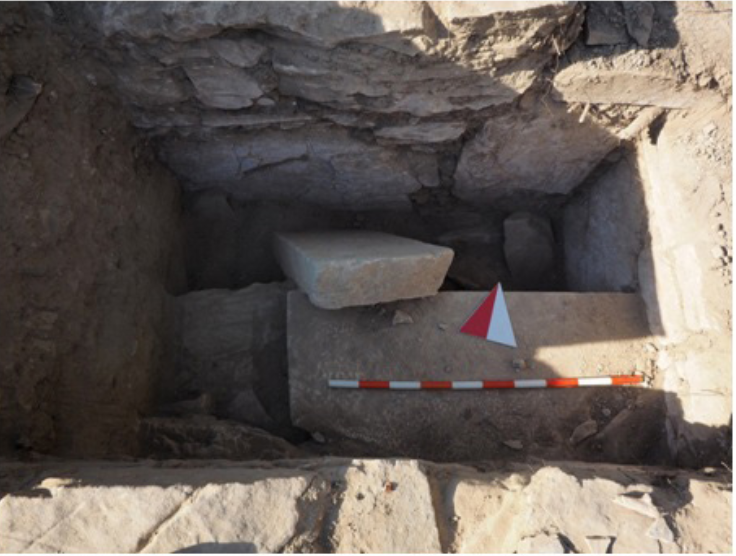
Close to the stele, archaeologists also documented a rectangular tomb that had been disturbed by illicit digging. The tomb was oriented north-south and measured about 2.60 meters long and 1 meter wide. Its walls were built with stones bonded by mud mortar, while one short side was closed with a single stone slab.
Despite the damage, the tomb still contained human remains, including a skull, teeth, and jaw fragments. Archaeologists also found two unguentaria and a lagynos. These ceramic vessels are crucial for dating the burial.
Unguentaria were small vessels often associated with oils, perfumes, or funerary practices. The examples from Çayağzı belong to the fusiform type, a form widely used during the Hellenistic period. Similar vessels from Metropolis, Ephesos, Sardis, and Laodikeia support a date in the 2nd century BCE.
The lagynos, a vessel with a long neck and sharp body profile, is also significant. The study notes that the Çayağzı example resembles ceramics associated with the Pergamene tradition. Although its painted decoration is no longer clearly preserved, traces of pigment suggest that it may once have carried painted ornamentation. This raises the possibility that objects produced under Pergamene artistic influence reached rural communities in the Küçük Menderes Valley.
That is an important detail. The tomb does not only preserves burial customs. It also points to trade, taste and cultural circulation in a rural landscape connected to larger Hellenistic powers.
Fortifications watching the valley
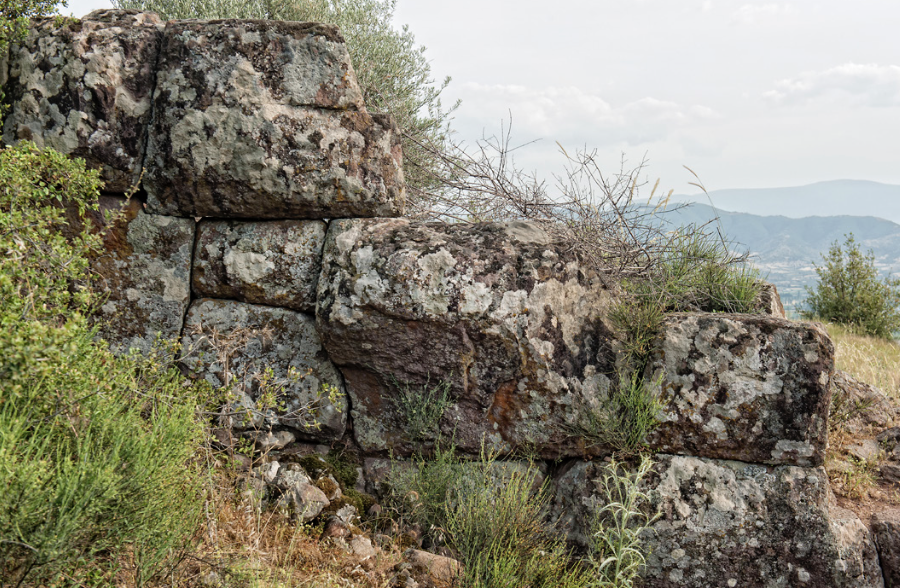
The religious and funerary discoveries are part of a wider archaeological picture. The study also examines two defensive structures at Karaburç and Çayağzı, located about 2 kilometers apart as the crow flies.
Both were placed on high, strategic points overlooking ancient routes and the Kilbos plain, the eastern part of the Küçük Menderes Valley. These structures likely monitored roads leading toward Philadelphia and other major centers. In times of instability, such fortifications could protect settlements, agricultural production and movement across the valley.
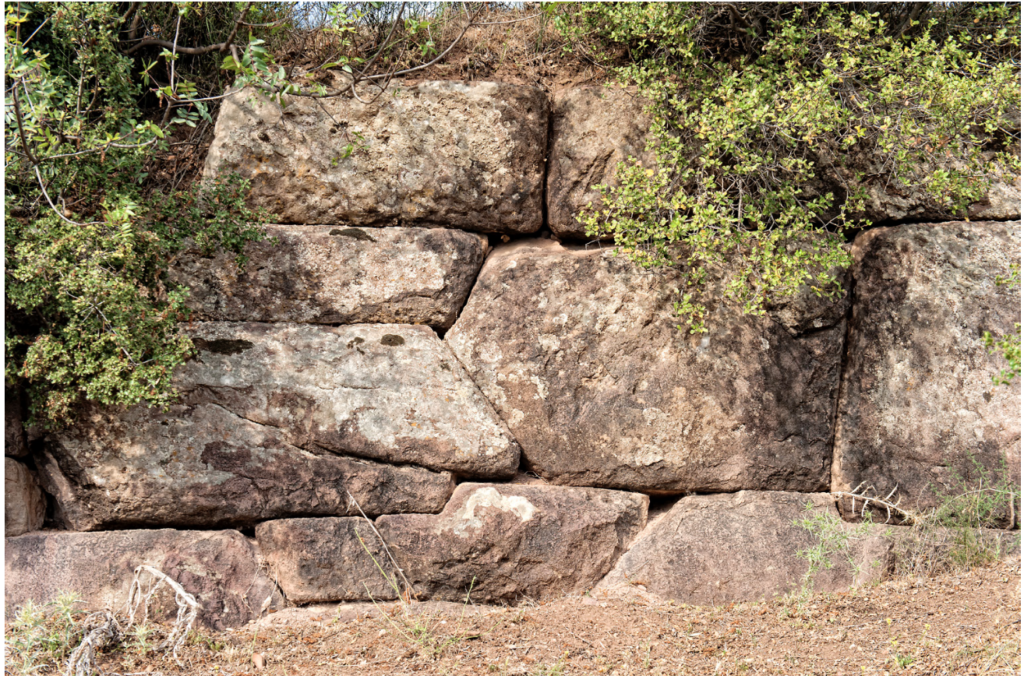
Karaburç shows a mixture of polygonal, trapezoidal, and isodomic masonry. This variation may indicate different building phases or a hurried construction process involving different groups of masons. Çayağzı, by contrast, displays a more regular isodomic emplekton technique, with cut stone blocks and a more homogeneous appearance.
The architectural comparisons suggest a broad date between the 3rd and 2nd centuries BCE. Karaburç may belong to the early Hellenistic period, perhaps around the age of Lysimachos, while Çayağzı may have been built or used under Seleucid or Attalid control.
This was a turbulent period in western Anatolia. After Alexander the Great, competing Hellenistic kingdoms fought for control of cities, roads and agricultural territories. The Küçük Menderes Valley, with its fertile land and strategic routes, would have been too valuable to leave unguarded.
A rural landscape comes into focus
The importance of the Kiraz discoveries lies in their combination. A Kybele stele suggests ritual activity. A tomb with imported or Pergamene-style ceramics points to funerary practice and exchange. Fortifications show the strategic value of the roads and fields.
Taken together, the finds reveal a rural Hellenistic landscape where defense, religion and daily life were closely connected. Kiraz was not merely a passage between better-known ancient cities. It was part of the system that made those cities function.
The discoveries from Çayağzı and Karaburç now give archaeologists a clearer starting point for understanding Hellenistic Kiraz. Future excavations may determine whether the Kybele stele truly came from an open-air sanctuary, how the tomb related to nearby settlements, and how the defensive structures fitted into the wider military network of western Anatolia.
For now, the broken stele is enough to change the picture. On a hillside near an ancient road, the Mother Goddess appears again, not in a grand temple, but in the countryside where people farmed, traveled, buried their dead and looked for protection more than two millennia ago.
Özkan, A. (2026). İzmir’in Kiraz İlçesi’nden Hellenistik Dönem’e Ait Yeni Bulgular. Arkeoloji Dergisi, 36, 115-137. https://doi.org/10.51493/egearkeoloji.1759260
Cover Image Credit: The Kybele votive stele discovered at Çayağzı in İzmir’s Kiraz district. Ali Özkan / Arkeoloji Dergisi, 2026
