
A rare Roman-era metalworking tool discovered in the Czech Republic is offering new insight into ancient craftsmanship—and possibly how legionary chainmail was produced.
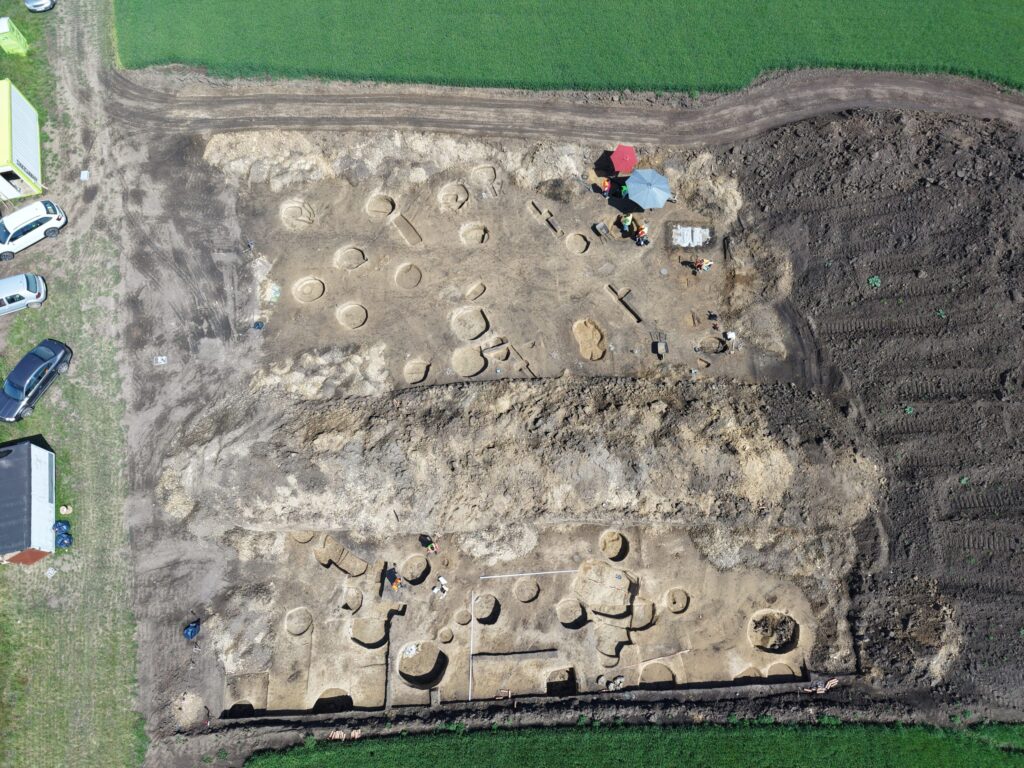
Archaeologists working along the route of a future high-speed railway between Nezamyslice and Kojetín have uncovered more than 1,000 archaeological features spanning over two millennia. Among them, one object stands out: a remarkably well-preserved Roman calibration plate, likely used to draw and refine metal wires.
Experts say the find is exceptional in Central Europe, both for its rarity and its state of preservation.
A Dense Archaeological Landscape Beneath a Modern Railway
The discovery comes from a rescue excavation led by the Archaeological Center Olomouc, conducted along a 1.2-kilometer section of the planned railway corridor.
Although only a small part of the broader infrastructure project, the site proved unusually rich. Archaeologists documented over 1,000 subsurface features, revealing continuous occupation of the Haná River valley from the Early Bronze Age through the Roman period.
“This is one of the most significant settlement complexes identified in this region,” said spokesperson Nikola Jandová.
The excavation, carried out between April and October, forms part of a larger modernization project of the Brno–Přerov rail line, where archaeological work must precede construction.
Bronze Age Villages and Fire-Scarred Houses
The earliest layers date to the Věteřov culture, an Early Bronze Age society known for its distinctive domestic architecture.
Excavations revealed post-built houses with walls originally woven from branches and coated in clay. When these structures burned, the clay hardened into reddish fragments known as daub, preserving fine details of construction techniques.
Some pieces even retained surface smoothing and decorative traces, while others preserved the impressions of wooden rods used in the original walls.
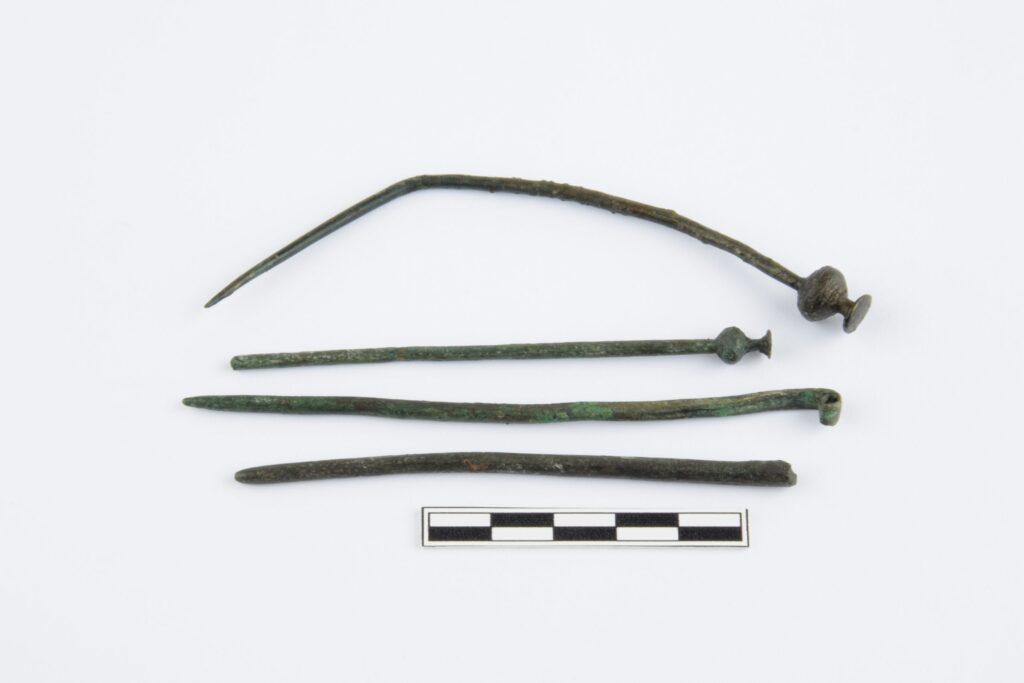
Artifacts from this phase include ceramics, spindle whorls, beads, and bone tools, along with a bronze pin featuring a Cypriot-style head—an indication of long-distance cultural connections.
Two burials were also discovered within the settlement area. In one case, the remains of an adult and a child were found together, a pattern consistent with known practices of the period. Anthropological analysis is now underway.
A Ritual Mystery: Six Skulls in a Single Pit
Later occupation layers linked to the Urnfield culture—a Late Bronze Age society known for cremation rituals—produced one of the site’s most puzzling discoveries.
Archaeologists identified four features containing partial human remains. In one of them, six human skulls were carefully arranged side by side within a pit.
This is highly unusual. Urnfield communities typically cremated their dead, leaving behind ash deposits rather than intact bones.
“The absence of complete skeletons suggests we may be looking at a specific ritual practice,” said lead archaeologist Arkadiusz Tajer.
The exact meaning remains unclear, but ongoing laboratory analysis could provide answers.
Evidence of Bronze Workshops and Early Industry
At the edge of the prehistoric settlement, archaeologists uncovered clear signs of metalworking activity.
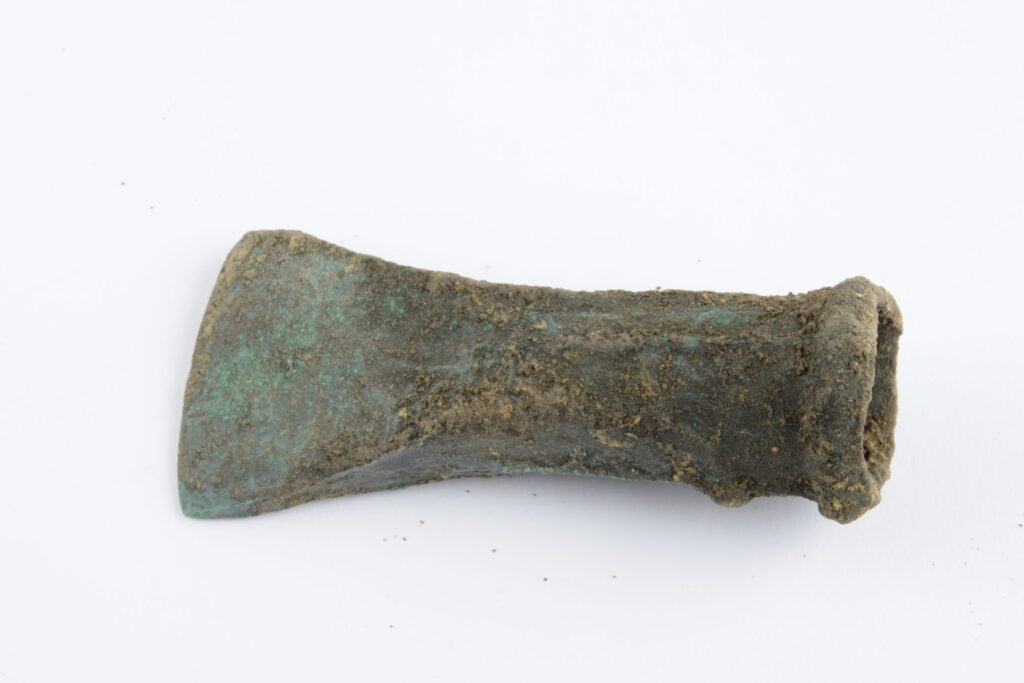
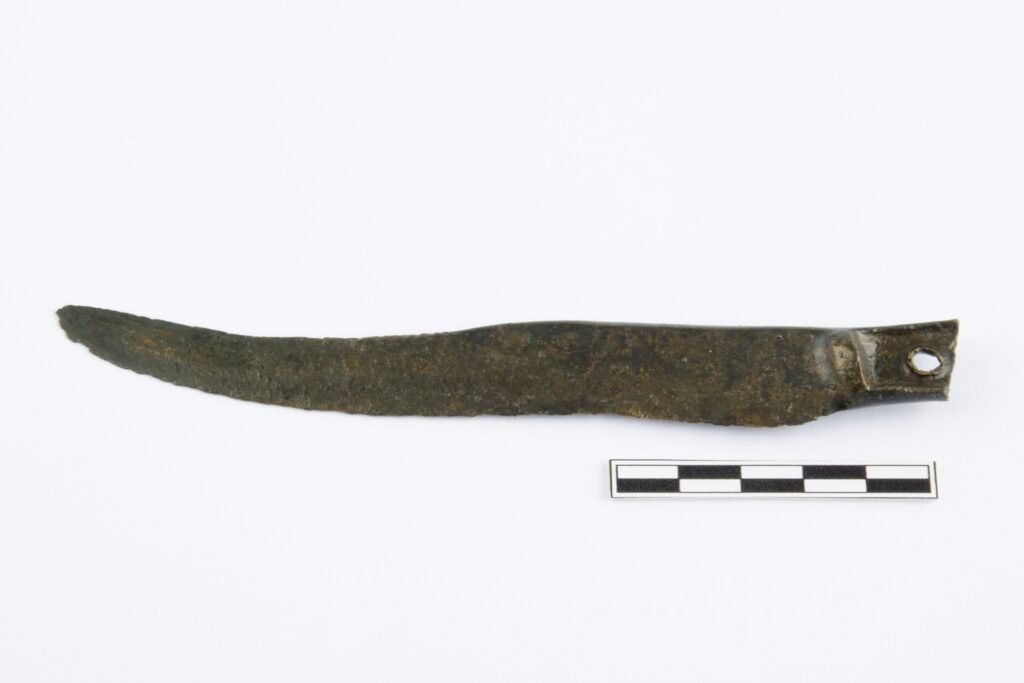
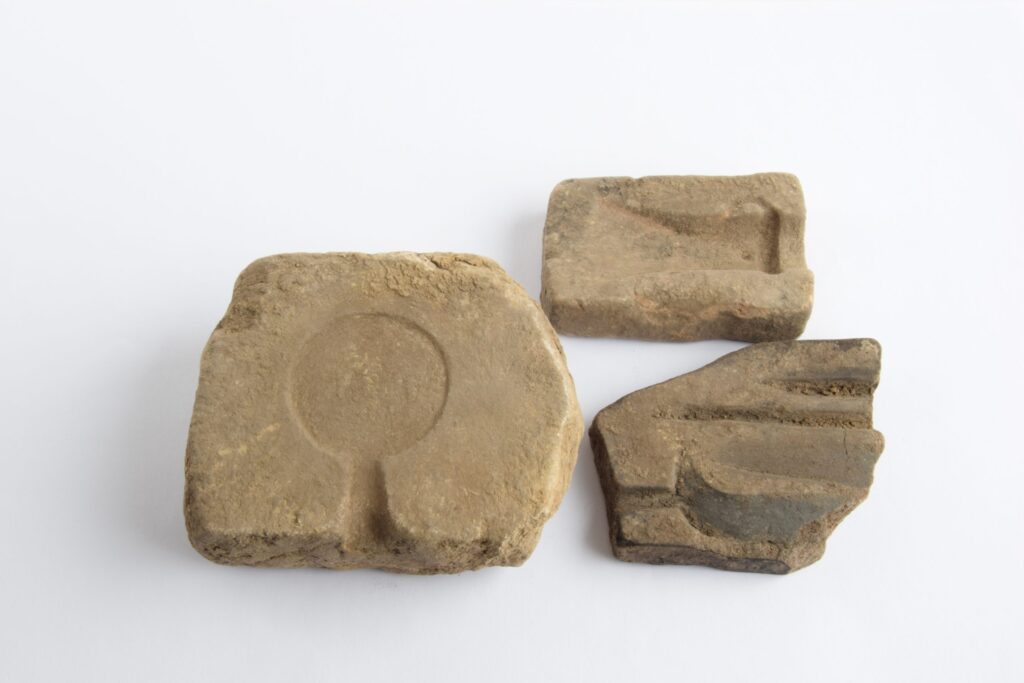
Stone casting molds and fragments of crucibles indicate the presence of specialized workshops used to melt and shape bronze. A small but significant group of finished objects—axes, needles, a bracelet, and a knife—suggests local production.
Researchers plan to conduct laboratory tests to determine whether these items were manufactured on-site, potentially confirming the existence of a dedicated Bronze Age production center.
The Roman Layer: A Tool Linked to Military Technology?
The most recent phase of occupation dates to the Roman period, when Germanic groups inhabited the region beyond the empire’s formal borders.
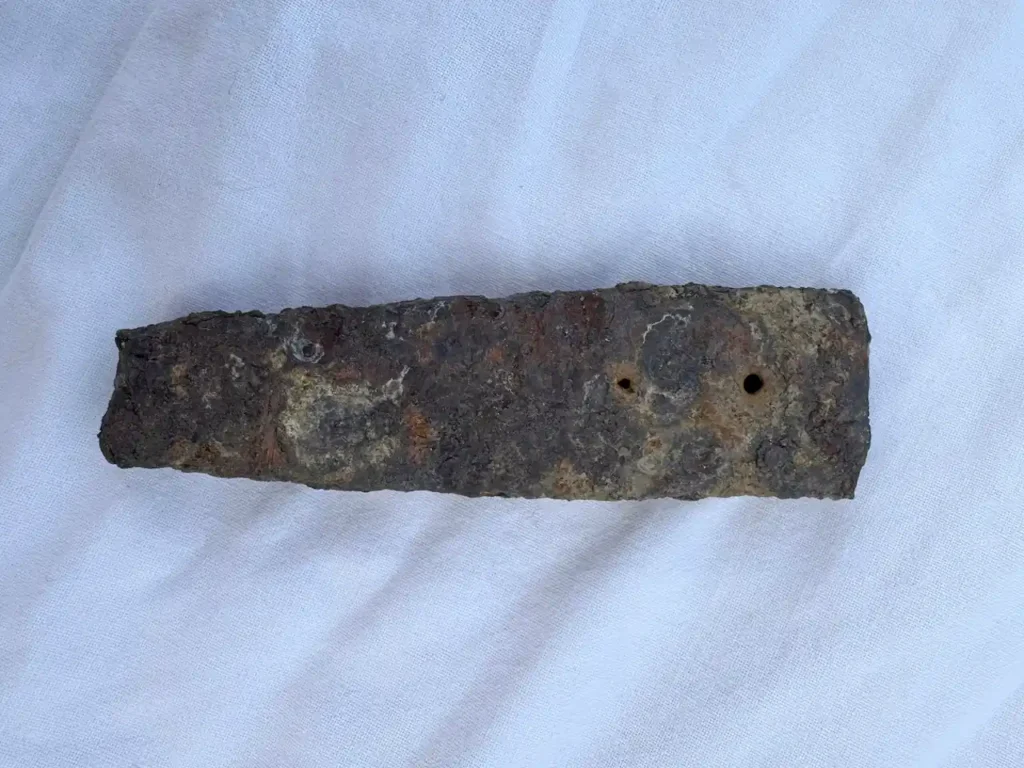
Among typical finds—such as a lime kiln used for construction materials—archaeologists uncovered a far more unusual object: a metal calibration plate.
This tool, pierced with a series of progressively smaller holes, was used to draw metal wires to precise thicknesses. Rust residues inside the отверстия suggest repeated use.
wire drawing techniques like this were essential in producing fine metal components—and possibly chainmail armor, a defining feature of Roman military equipment.
The plate will undergo spectrometric analysis to identify traces of the metal once processed through it.
If confirmed, it could represent direct evidence of wire production linked to military supply chains, a rare find in archaeological contexts.
Tracing Continuous Human Presence From the Bronze Age to Rome
While individual artifacts are important, the true significance of the site lies in its long-term continuity.
Few locations in Central Europe preserve such a clear sequence of settlement, from early agricultural societies to communities interacting with the Roman world.
The discovery also highlights the critical role of rescue archaeology, where major infrastructure projects create opportunities to uncover—and document—hidden historical landscapes.
At the same time, researchers warn that future legislative changes could limit funding for such work, potentially leading to the loss of invaluable data.
What Happens Next
All artifacts recovered from the site have been transferred to laboratory facilities for cleaning, conservation, and analysis.
Specialists are currently conducting:
Anthropological studies on human remains
Material analysis of metal objects and molds
Microscopic and spectrometric testing of the calibration plate
Results will be released gradually as research progresses.
For now, the Czech railway project has already delivered something unexpected: a rare glimpse into ancient life, death, and technology—preserved beneath a modern transport corridor.
Cover Image Credit: Drone shot of the archaeological site. Archaeological Center Olomouc
