
A rescue excavation at the ancient Roman site of Vindonissa has uncovered rare archaeological evidence of the settlement’s earliest military phase, including what may be the first Roman bread ever identified in Switzerland.
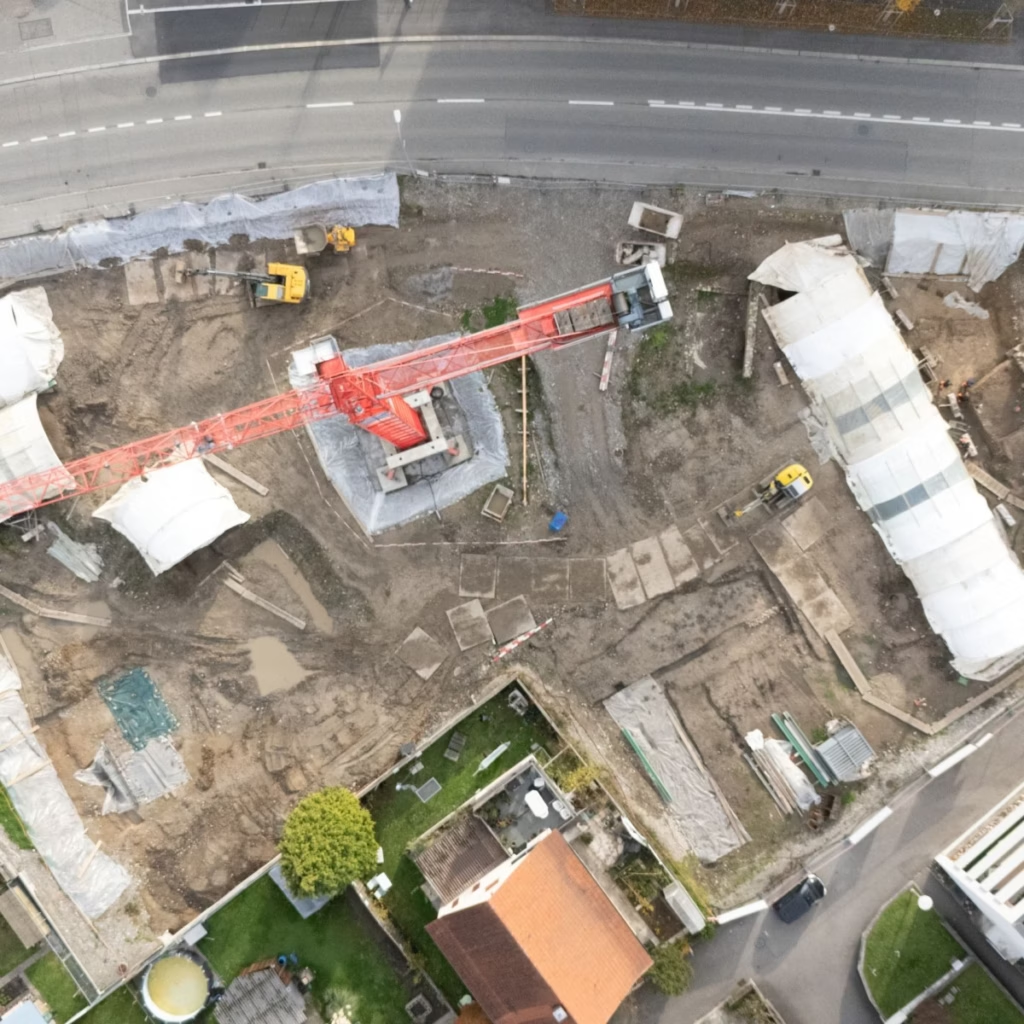
The findings, released by the Aargau Cantonal Archaeology service, come from an ongoing excavation launched in August 2025 ahead of a residential development project. The site, located just southwest of the known legionary fortress, is offering a deeper look into the transition from a temporary Roman encampment to a permanent military base.
Early Roman Fortifications Redefined
Archaeologists working across a 4,000-square-meter area between Zürcherstrasse and Scheuergasse have identified structural remains that predate the well-documented 1st-century AD legionary camp.
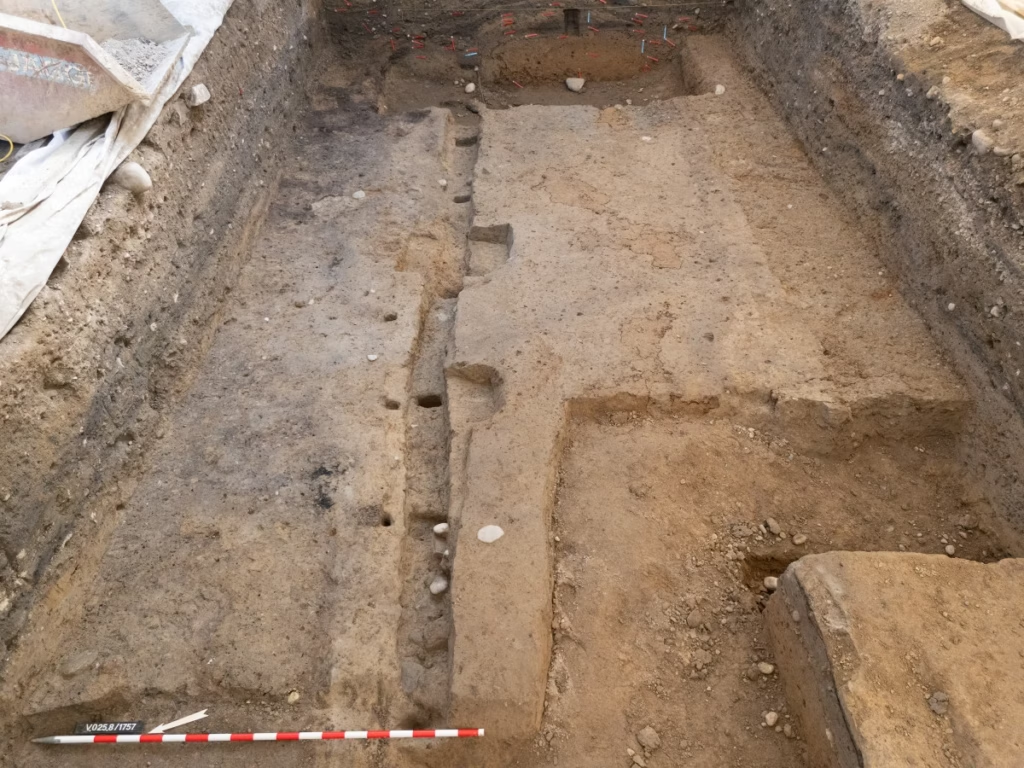
Two parallel ditches, marked by evenly spaced postholes, outline what researchers interpret as a wood-and-earth defensive wall. Just south of this structure, excavators uncovered a V-shaped ditch, a hallmark of early Roman military engineering.
This discovery is significant. Similar ditch structures were previously identified over 90 years ago near Königsfelden Park, but the newly exposed section allows researchers, for the first time, to estimate the full scale of the earliest camp. Current analysis suggests a north-south length approaching 400 meters.
That measurement may help resolve a long-standing historical question: whether Vindonissa evolved into a permanent legionary base during the reign of Augustus or under his successor Tiberius after 14 AD.
Internal Structures and Industrial Activity
Beneath a later Roman road that helped preserve earlier layers, archaeologists identified the remains of a structured building within the early camp. The layout is consistent: two smaller rooms positioned alongside a larger central space equipped with a hearth.
Elsewhere on the site, evidence points to intensive craft and industrial activity during the later occupation phase. Finds include metal tools, forging waste, and military equipment such as spearheads and projectile tips.
One standout feature is a carefully constructed clay furnace, located just inside the older defensive line. Its presence indicates that zones immediately behind the fortifications were already being used for production and manufacturing during the earliest stages of occupation.
A Rare Discovery: Roman Bread
Among the artifacts, one object stands apart.
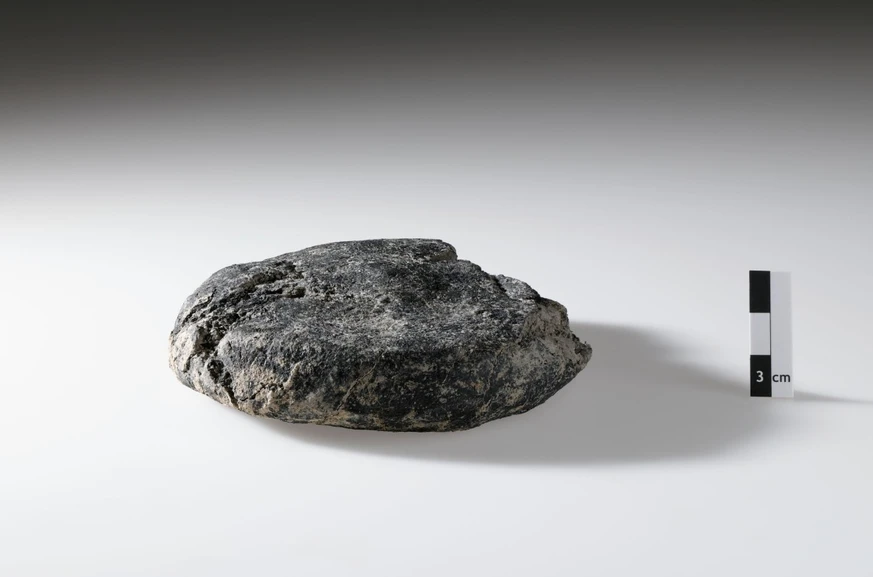
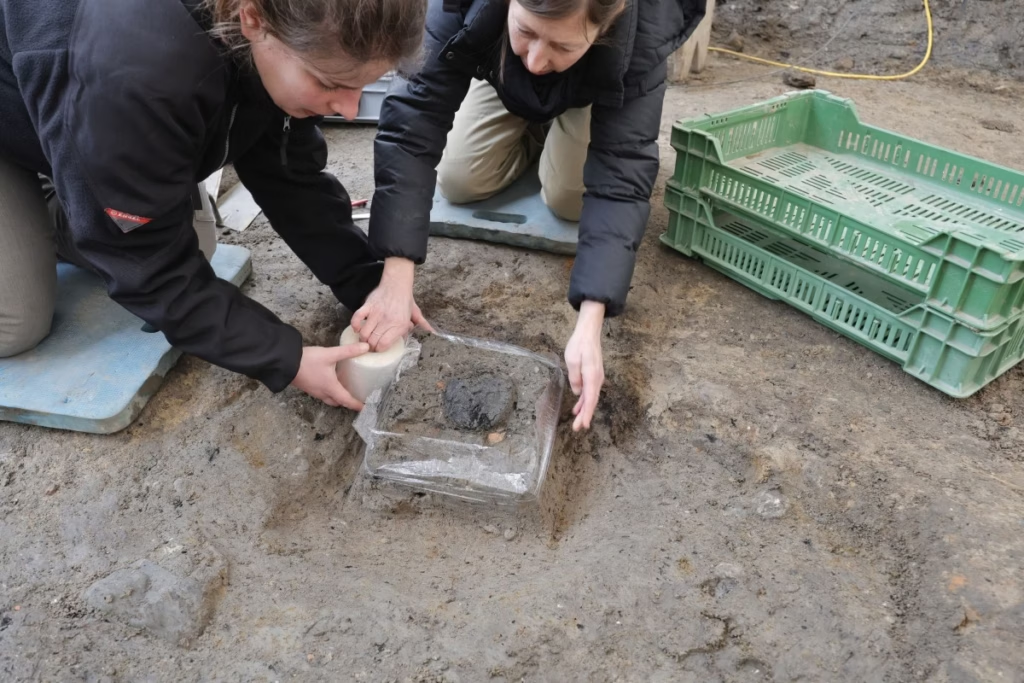
Excavators recovered a charred, round item that immediately drew attention. Removed as a soil block and analyzed in a laboratory, the object has been provisionally identified by specialists from the University of Basel as a carbonized Roman bread.
The bread measures approximately 10 centimeters in diameter and 3 centimeters thick, resembling a small flatbread. Further compositional analysis is planned at a specialized laboratory in Vienna.
Such finds are exceptionally rare. Organic materials like bread typically decay unless preserved under extreme conditions. In most known cases, survival occurs only through carbonization, as seen in the bakeries of Pompeii.
If confirmed, this would mark the first documented Roman bread discovered in Switzerland, adding a unique dimension to the archaeological record at Vindonissa.
Strategic Importance of Vindonissa
Vindonissa occupied a critical position in the Roman Empire’s northern frontier system. Located at the confluence of major river routes, it served as a logistical and ռազմական hub for Roman legions operating in the region corresponding to modern-day Switzerland.
The new discoveries reinforce the site’s importance, not only as a military installation but also as a complex settlement with organized infrastructure, economic activity, and daily life elements.
Excavation Timeline and Public Access
The excavation is scheduled to continue until July 2026. Before completion, the site will open to the public on May 9, 2026, offering guided tours and insights into ongoing archaeological work.
Visitors will be able to observe excavation methods, examine selected artifacts, and gain a closer understanding of how Roman military sites developed over time.
Credit: Canton of Aargau
What This Discovery Changes
The Vindonissa excavation is doing more than adding new artifacts to the record. It is reshaping the early timeline of Roman military presence in the region.
The newly identified fortification system suggests that organized military activity may have begun earlier than previously assumed. This pushes researchers to reconsider when and how Vindonissa evolved from a temporary outpost into a permanent legionary base.
At the same time, the charred bread introduces something rarely preserved in archaeology: a direct trace of daily life inside a Roman camp. It is not a monument or a weapon, but a reminder of routine, diet, and survival at the edge of the empire.
Taken together, the structural evidence and organic remains offer a more complete picture. Not just how the camp was built, but how it functioned as a living environment.
For archaeologists, it is a layered narrative: infrastructure, economy, and survival—captured in soil, timber traces, and a single piece of bread.
Cover Image Credit: Kanton Aargau
