
A quiet construction site in northern Switzerland has led to a discovery that is subtly reshaping how historians understand medieval life. Archaeologists working in the village of Würenlingen have uncovered rare physical evidence of a late medieval pottery workshop operating outside an urban center—a finding that challenges the long-standing belief that such crafts were almost exclusively city-based.
The results, now published in the new volume “Töpfern auf dem Lande – Spätmittelalterliches Töpferhandwerk in Würenlingen” by Ulla Wingenfelder, offer one of the clearest archaeological windows into rural craftsmanship in Switzerland between the 13th and early 15th centuries.
A Discovery Hidden Beneath Modern Construction
The story begins not in a laboratory, but during routine construction work. In 2020 and 2021, rescue excavations conducted by the Cantonal Archaeology of Aargau revealed two key sites in Würenlingen. One contained a refuse pit filled with ceramic debris. The other, discovered a few hundred meters away, exposed the remains of a pottery kiln dating to around 1400.
At first glance, these findings might seem modest. But together, they form a rare and coherent archaeological picture. Until recently, almost all known pottery kilns from this period in Switzerland came from urban environments such as Winterthur or Schaffhausen. The Würenlingen site breaks that pattern.
According to the study, this is the first confirmed archaeological evidence of late medieval pottery production in a rural Swiss setting.
Inside the Workshop: Kiln, Waste, and Craftsmanship
The kiln itself offers important technical insights. Measuring about 2.6 meters in length, it featured a pear-shaped firing chamber, narrowing toward the firebox. Remains of multiple kiln floors and fragments of a domed structure suggest repeated use over time, rather than a single firing episode.
Archaeologists also identified traces of a possible shelter or working structure nearby, indicated by postholes and construction remnants. These details point to a functioning workshop environment rather than an isolated installation.
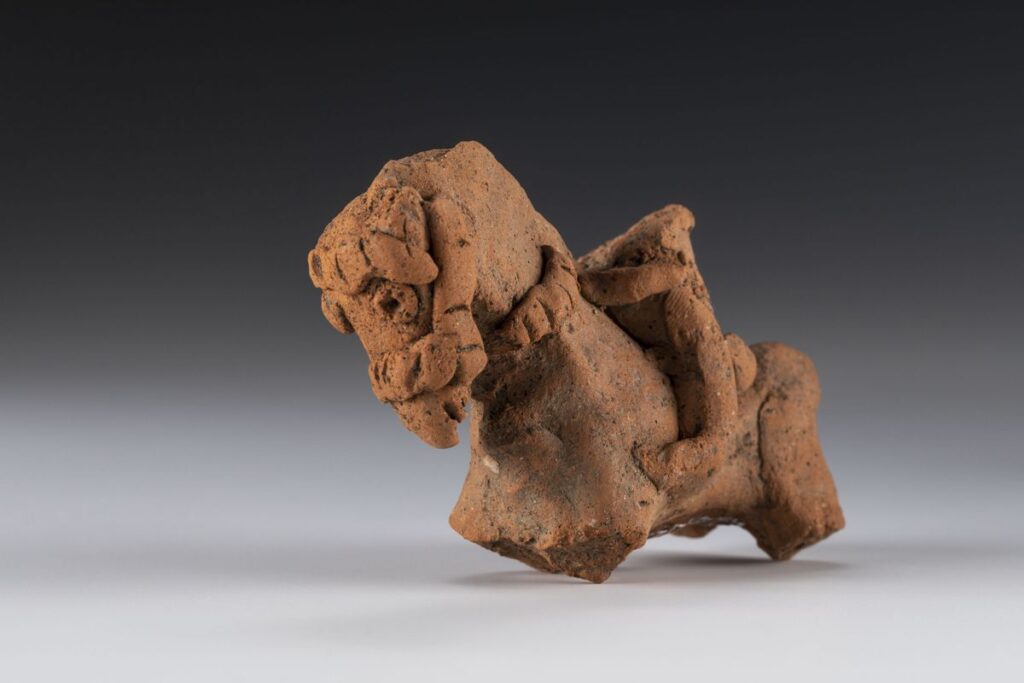
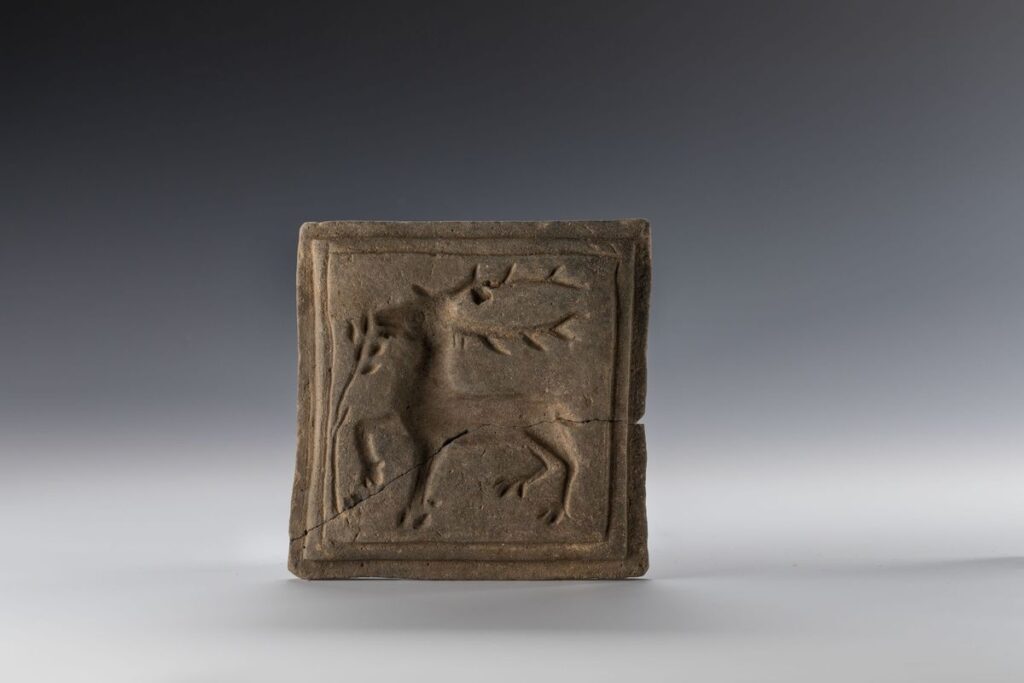
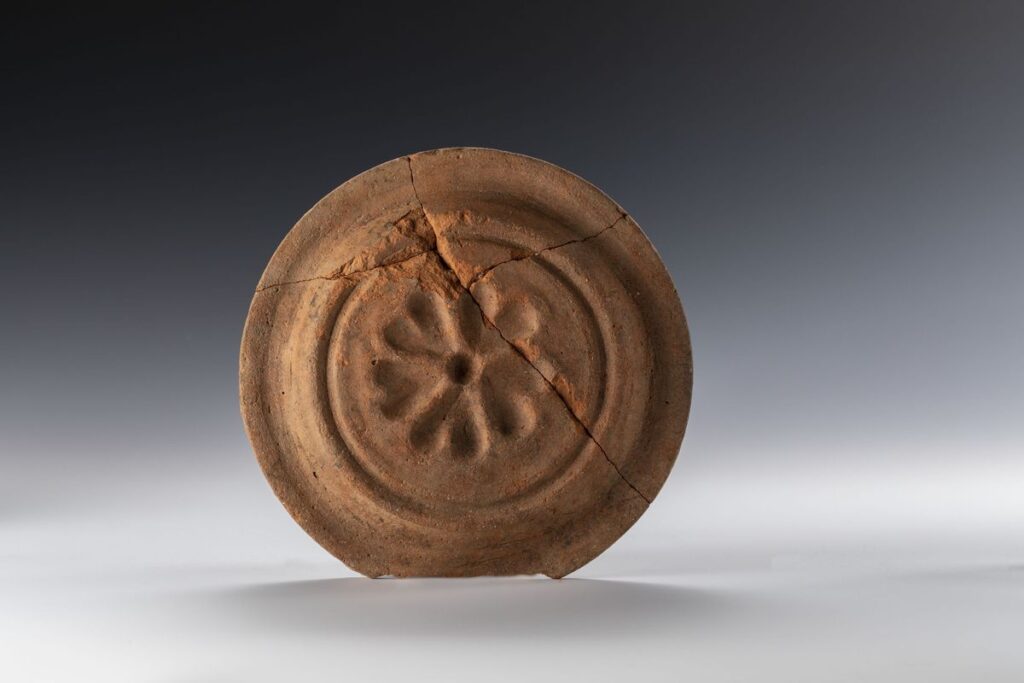
Even more revealing are the thousands of ceramic fragments recovered from the site. Over 11,000 pieces were documented from the kiln area alone, with an additional 2,500 finds from the earlier refuse pit. The majority consist of everyday vessel ceramics, but there are also fragments of stove tiles, molds, and a finely crafted clay figurine of a rider.
The ceramic forms date from the mid-13th century to the early 15th century, while decorative motifs—especially on tiles—are characteristic of the 14th century. This continuity suggests a long-lived local production tradition.
A Rural Industry That Was Anything But Marginal
One of the most striking conclusions of the research is that this pottery production was not marginal or improvised. On the contrary, it appears to have been organized, sustained, and economically viable.
The book highlights that pottery workshops required access to specific resources: suitable clay deposits, water for processing, and large quantities of wood for firing kilns. Würenlingen offered all three. The village lies near clay-rich geological formations, close to water sources, and within reach of forested areas that could supply fuel.
Equally important was its location within regional trade networks. Positioned between the towns of Baden and Bad Zurzach—both known for medieval markets—the village was ideally placed to distribute surplus goods.
Estimates suggest that even a small number of kiln firings per year could meet local demand. Any additional production would likely have been sold at nearby fairs, indicating a connection between rural craftsmanship and broader commercial systems.
Rethinking the Medieval Countryside
The implications go beyond pottery. For decades, historians have tended to view the late medieval countryside as economically dependent on cities, with limited specialized production. The Würenlingen findings challenge that assumption.
Instead, they point to a more dynamic rural economy, where skilled craftspeople operated independently and contributed to regional markets. As the authors note, such evidence encourages a reassessment of the idea that rural communities were technologically or economically “behind” urban centers.
The pottery itself further supports this shift in perspective. The quality and variety of the ceramics are comparable to urban products of the same period, suggesting that rural artisans were not only competent but competitive.
From Excavation to Publication
The results of the excavations have now been brought together in a comprehensive academic study, published as part of the Archäologie im Aargau series. The work is based on detailed analysis of both excavation sites, combining structural evidence with material culture.
The publication also explores broader questions: how such workshops were organized, how much they produced, and how they fit into the social and economic landscape of the time.
Importantly, the book is available as an open-access resource, making its findings accessible to both researchers and the wider public.
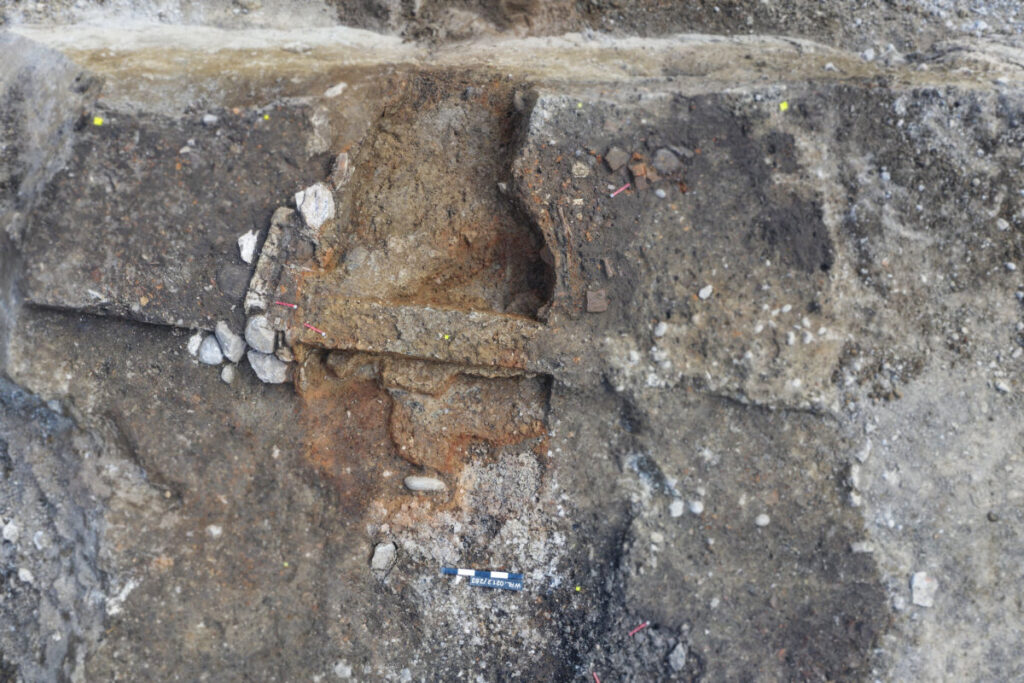
Archaeological remains of a horizontal kiln with firing chamber. Credit: Cantonal Archaeology Aargau, © Canton of Aargau
A Small Village, A Larger Story
What makes Würenlingen significant is not just the discovery itself, but what it represents. A single rural workshop, uncovered by chance, now provides rare evidence of craft specialization beyond city walls.
In doing so, it adds nuance to our understanding of medieval Europe. The countryside was not merely a passive backdrop to urban development. It was, in places like Würenlingen, an active participant in production, trade, and innovation.
The full findings have been brought together in the volume “Töpfern auf dem Lande – Spätmittelalterliches Töpferhandwerk in Würenlingen”, published within the Archäologie im Aargau series. Notably, the study is available as an Open Access publication, allowing readers worldwide to download and explore the research free of charge.
Cover Image Credit: Cantonal Archaeology Aargau, © Canton of Aargau
