
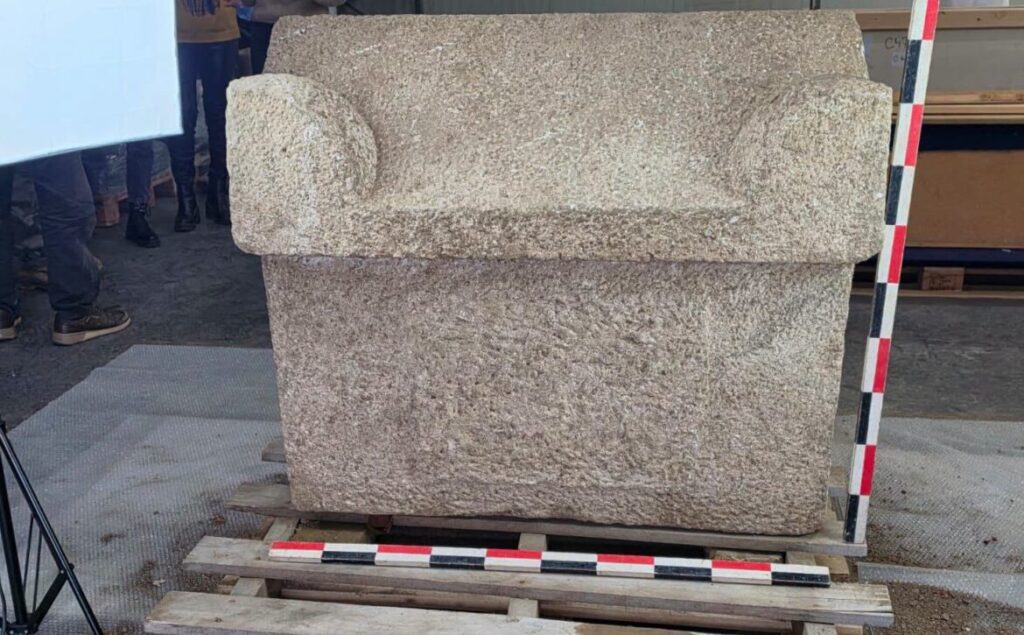
An intact Roman sarcophagus discovered in Constanța, Romania, contains the remains of a child buried nearly 1,800 years ago alongside toys, jewelry, and floral offerings. The exceptional preservation of the burial provides archaeologists with rare evidence of childhood and funerary practices in the ancient city of Tomis.
A stone sarcophagus sealed with lead clamps and mortar protected a child’s burial for approximately 18 centuries beneath modern Constanța, on Romania’s Black Sea coast. When archaeologists examined its contents, they encountered an unusually well-preserved collection of personal belongings and fragile organic remains, including parts of a wooden coffin and burial textiles.
Archaeologists Constantin Băjenaru and Cătălin Nopcea discovered the sarcophagus on October 22 during preventive excavations near the northern boundary of the Roman necropolis of Tomis. Specialists from the National History and Archaeology Museum of Constanța opened it on October 27, allowing researchers to document objects that had remained together since antiquity.
A Clay Horse and a Rooster That Still Rattles
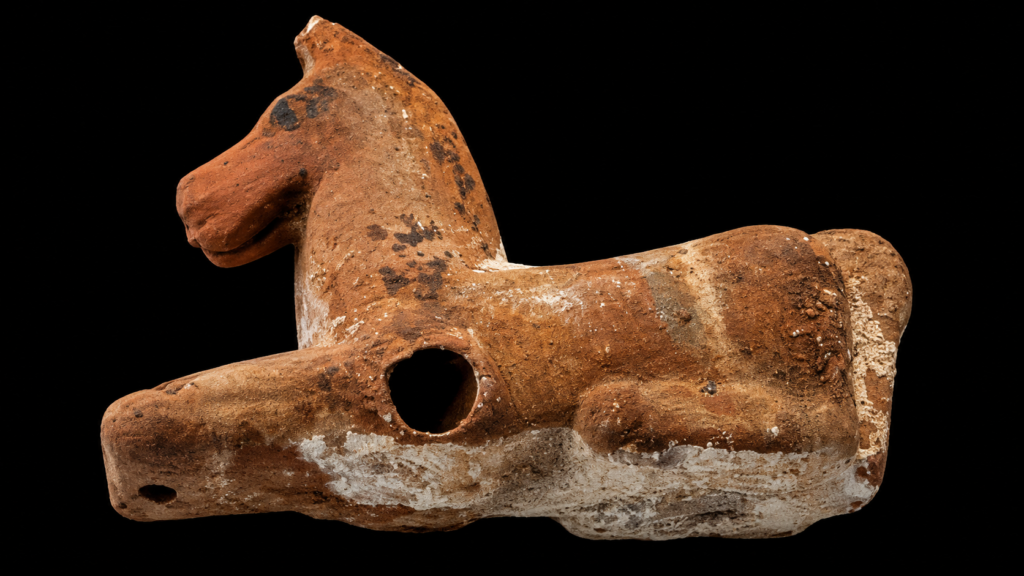
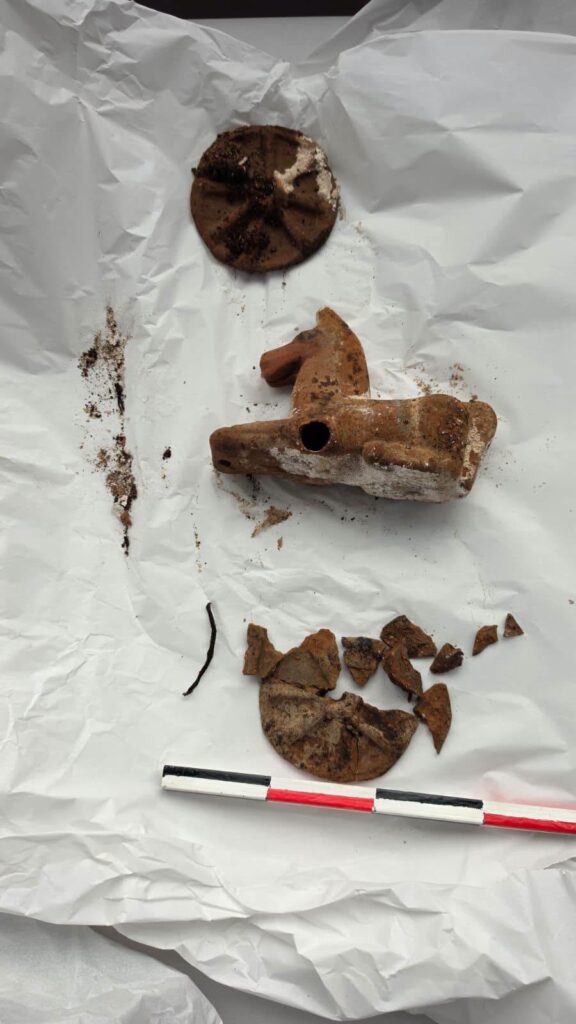
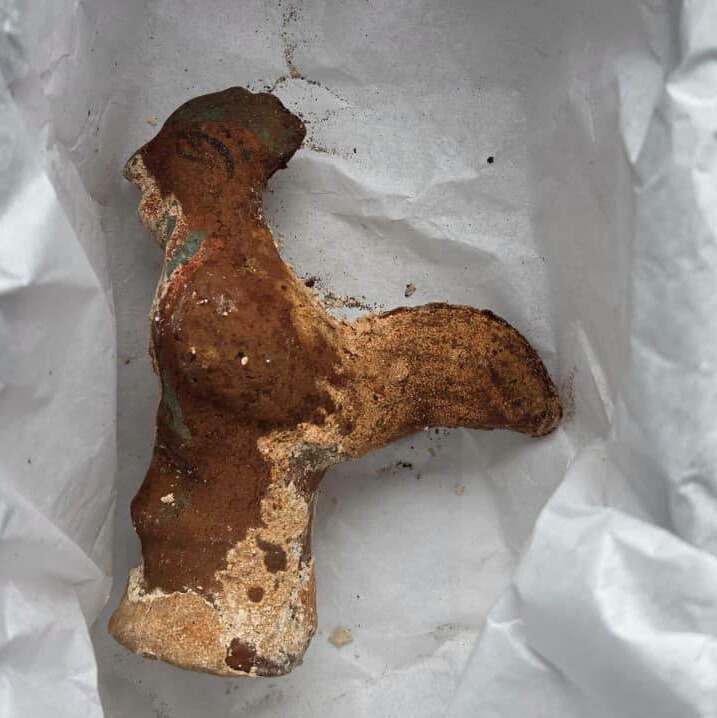
Among the grave goods were two clay toys: a small horse fitted with wheels and a rooster-shaped rattle. Both retained traces of painted decoration, including details of their eyes and faces.
Archaeologist Ana Hamat explained that the rooster contained small pellets that still produced a rattling sound when the object was moved. The discovery also prompted researchers to reconsider their initial estimate of the child’s age. Although the sarcophagus’s dimensions initially suggested a child of around four or five, the toys may point to a younger age. Osteological examination will be needed to establish this more reliably.
The grave also contained bronze bracelets and two pendants identified as bullae, protective amulets traditionally associated with freeborn Roman boys. Their presence raises the possibility that the deceased was male, but researchers have not yet established the child’s biological sex.
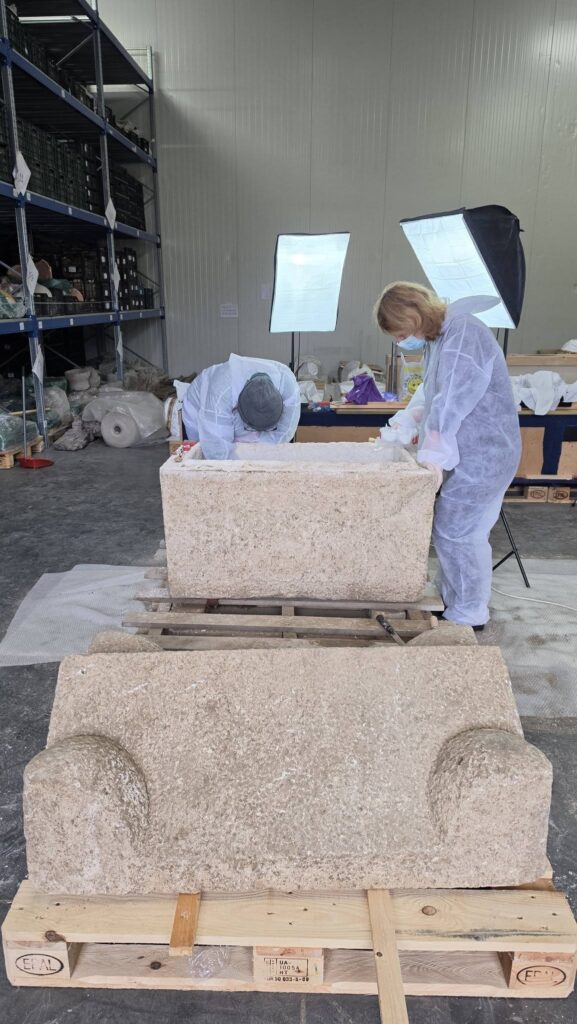
Specialists examine the contents of a Roman child’s stone sarcophagus discovered at ancient Tomis in Constanța, Romania. Credit: National History and Archaeology Museum of Constanța (MINAC)
An Exceptionally Preserved Roman Burial
The stone sarcophagus remained sealed for approximately 18 centuries. Two lead clamps secured its lid, while mortar along the joint created a protective barrier that helped preserve the burial’s contents.
Inside, archaeologists discovered the remains of a wooden coffin, including well-preserved side panels and carefully constructed dovetail joints. The child had also been wrapped in a burial shroud, portions of which survived.
Băjenaru described the preservation as exceptional, particularly for the wooden elements. Researchers now hope to determine whether substances used during burial contributed to the condition of the remains, although no chemical treatment has yet been established.
The grave also contained botanical remains associated with floral offerings. Among them were carefully folded leaves arranged into small bundles, whose composition and purpose require further laboratory analysis.
For the excavation team, these organic materials are as important as the more visually striking toys. Together, they may help reconstruct aspects of a Roman funeral that rarely survive in archaeological contexts.
A Child Buried Beyond the Walls of Ancient Tomis
The sarcophagus was discovered approximately 1.5 kilometers from the ancient city’s defensive boundary, near a road leading north toward Histria. According to Băjenaru, it represents the northernmost known extent of Tomis’s Roman-period necropolis.
Ancient Tomis, beneath modern Constanța on the Black Sea coast, originated as a Greek settlement associated with colonists from Miletus. Under Roman rule, it developed into an important urban and commercial center within the province of Moesia Inferior.
The burial dates to a period when the city formed part of the Roman Empire’s network of Black Sea settlements. Its location, outside the inhabited center and near an important road, reflects a broader Roman practice of establishing cemeteries beyond urban boundaries.
Researchers believe the quality of the sarcophagus and the accompanying grave goods may indicate a family with considerable financial resources. However, the child’s identity and precise social status remain unknown.
A Rare Record of Roman Childhood
Museum specialists consider this the first exceptionally preserved child’s sarcophagus of its kind discovered at Tomis. Earlier sarcophagi documented in the city largely belonged to adults, making the newly examined burial particularly valuable for understanding children’s funerary treatment.
The toys, bracelets, and protective pendants suggest that those who arranged the funeral included objects associated with the child’s life and identity. The bullae may also provide evidence about the child’s social position, although their contents remain unknown.
Researchers plan to examine the sealed pendants using non-invasive methods and conduct further studies of the human remains, wooden coffin, textiles, and botanical material.
National History and Archaeology Museum of Constanța (MINAC)
