17 December 2025 The Future is the Product of the Past

1419-year-old Islamic inscription found in Saudi Arabia

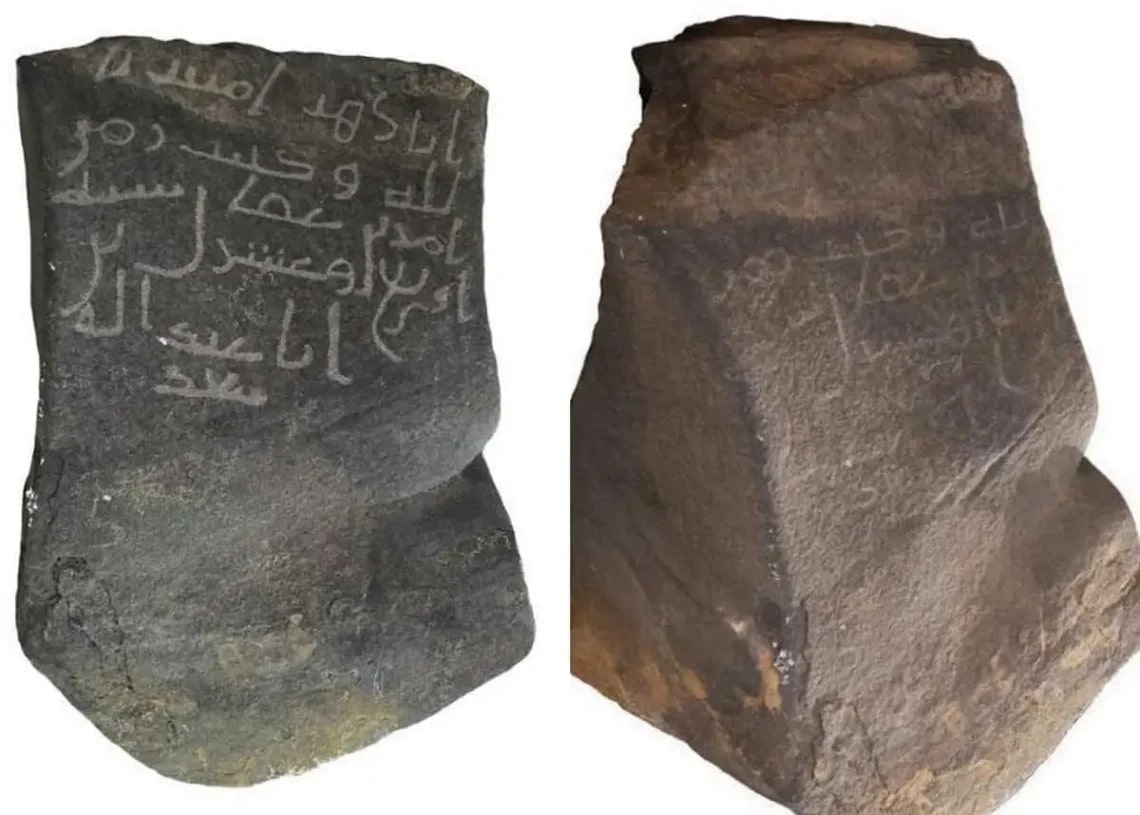
Saudi Arabia has announced a new archaeological discovery in Makkah. The Islamic inscription found dates back 1419 years to the third Caliph Uthman bin Affan, the Saudi Press Agency (SPA) reported.

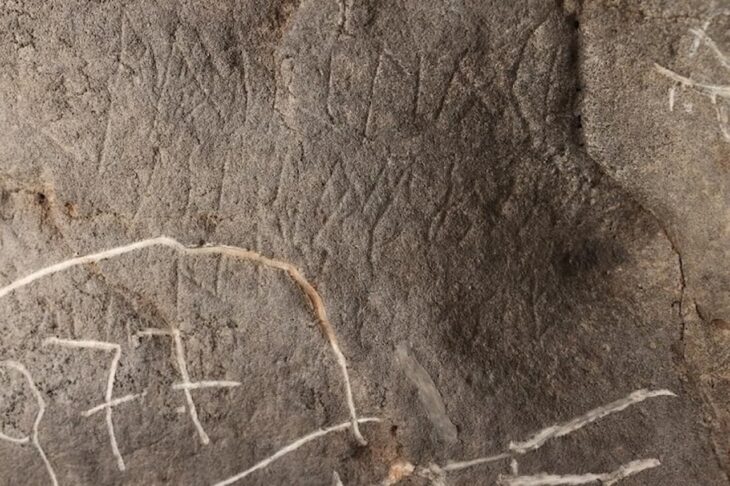
Heritage Authority in Saudi Arabia confirmed that the inscription dated to the 24th year of the Hijrah (migration) was found by a group of people interested in antiquities and heritage within the boundaries of the ‘Olaya Palace’ archaeological site of Makkah.

The archaeological inscription was found in the Qasr Alia area near   Mekka, the holiest city in Islam, situated in the west of the Kingdom of Saudi Arabia (KSA).

The 1419-year-old inscription is considered one of the most important archaeological finds of late, documenting one of the major events at the beginning of Islamic history.

The inscription contains Arabic letting written in primitive form without points or diacritics.


📣 Our WhatsApp channel is now LIVE! Stay up-to-date with the latest news and updates, just click here to follow us on WhatsApp and never miss a thing!!


Muhammad Al-Magdawi, a specialist in Islamic inscriptions, took part in the initial reading, and they uploaded a partial reading of the inscription on social media.

The authority explained that the archaeological studies conducted by Dr. Nayef Al-Qanour, Director of the Protection Department at the Heritage Authority – provided a reading of the inscription, after examining and documenting it. The mystery of the first line of the inscription reveals the name of the flag (Zuhair). “I Zuhair believed – in God and wrote a time – Amr bin Affan in the year twenty-four.”

The inscription appears similar to the content of the Zuhair inscription in the Al-Ula Governorate, in which its writer documented the time during which Caliph Omar Ibn Al-Khattab died.

The Heritage Authority said it studying the inscription as it is the third oldest dated rock document of Islamic inscriptions after the Salamah inscription in Yanbu Al Nakhl dated 23 AH and the Zuhair inscription in the Al Ula governorate (24 AH).

The Saudi Heritage Authority is continuing its efforts to conduct a survey of archaeological sites for the current 2022 season, to complete work on archaeological sites in northwest Makkah.

Related Articles

Bronze belt of Urartian warrior found in the ancient city Satala

29 May 2022

29 May 2022

During the excavations in the ancient city of Satala, located in the Kelkit district of Gümüşhane province in Turkey, a...

Smoke archeology finds evidence Humans visited Nerja Cave for 40,000 Years

26 April 2023

26 April 2023

A new study by a team from the University of Córdoba reveals that Nerja is the European cave with the...

1,500-Year-Old Church-Like Structure Offers New Insight into Christian–Zoroastrian Relations in Northern Iraq

10 December 2025

10 December 2025

Goethe University archaeologists return with discoveries that reshape understanding of Christian–Zoroastrian life 1,500 years ago A research team from Goethe...

Hidden Iron Age Treasure Links Sweden to Ancient Baltic–Iberian Trade Routes

8 September 2025

8 September 2025

Archaeologists have discovered Sweden’s first complete plano-convex ingot, revealing Iron Age maritime trade links between the Iberian Peninsula, Scandinavia, and...

Rare medieval bone flute unearthed in Kent, southeastern coast of England

22 November 2022

22 November 2022

Archaeologists from Cotswold Archaeology have unearthed a rare medieval bone flute during excavations in Herne Bay, located in Kent, southeastern...

Ancient DNA From Turkish Cave Reveals 5,000-Year-Old Charcoal Therapy and Hidden Antibiotic Resistance

13 September 2025

13 September 2025

Ancient DNA recovered from İnönü Cave in Türkiye’s Zonguldak province has uncovered evidence that prehistoric people used charcoal-based remedies to...

The New Study, Reveals Invisible Stews

25 November 2022

25 November 2022

New Results of Organic Residue Analyzes of Beveled Rim Bowls in Mesopotamia Reveal Invisible Stews. The world’s first urban state...

2,000-year-old bamboo slips discovered in Yunnan

31 March 2023

31 March 2023

Thousands of bamboo slips (rectangles tied together to form books) have been discovered at the Hebosuo archaeological site in southwestern...

Young Metal Detectorist Discovers Huge Viking Treasure Hoard in Denmark

23 April 2023

23 April 2023

A group of hobby metal detectorists has discovered two Viking treasures buried a few meters apart near the ruins of...

DNA Cracks a 750-Year-Old Murder: The Vicious Killing of a Forgotten Duke Finally Exposed

16 November 2025

16 November 2025

For more than seven centuries, the violent end of a young medieval nobleman remained an unresolved whisper in European history—half...

Kevenli Castle Reveals Van’s Largest Ancient Urartian Storage Center – 76 Pithoi Marked with Cuneiform Measurements Found

7 September 2025

7 September 2025

Excavations at the ruins of Kevenli Castle in Van’s İpekyolu district have brought to light the largest known storage center...

1,500-Year-Old Roman Mosaic Unearthed in Mardin: Hidden Masterpiece Rescued from Smugglers

24 October 2025

24 October 2025

A 1,500-year-old mosaic depicting vivid animal figures has been recovered during an anti-smuggling operation in southeastern Türkiye’s Mardin province. Buried...

Archaeologists discovered how wine was cooled in Roman legions on the Danube

15 September 2023

15 September 2023

Lead archaeologist Piotr Dyczek, a professor at the Center for Research on Antiquities of Southeastern Europe at the University of...

Poseidon Temple in Greece Larger than Previously Assumed

27 January 2024

27 January 2024

New excavations at Kleidi-Samikon in Greece’s Western Peloponnese show that the temple, discovered in 2022, is more monumental than previously...

Ancient eggshell in the Northern Cape hiding 300,000 years of history

12 July 2021

12 July 2021

Evidence from an ancient eggshell has revealed important new information about the extreme climate change faced by human early ancestors....