
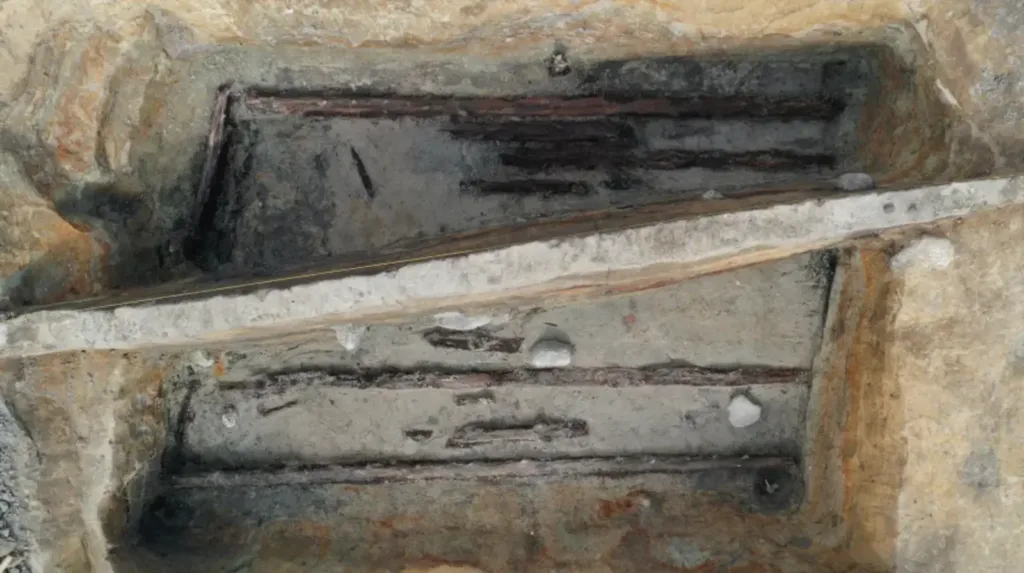
For generations, a windswept hill outside the medieval town of Puck was remembered simply as a place associated with windmills. Archaeologists now believe one of those mills may have lived a far more dramatic second life: when war reached the town in the 15th century, people appear to have surrounded it with defensive ditches and turned the hill into a fortified position.
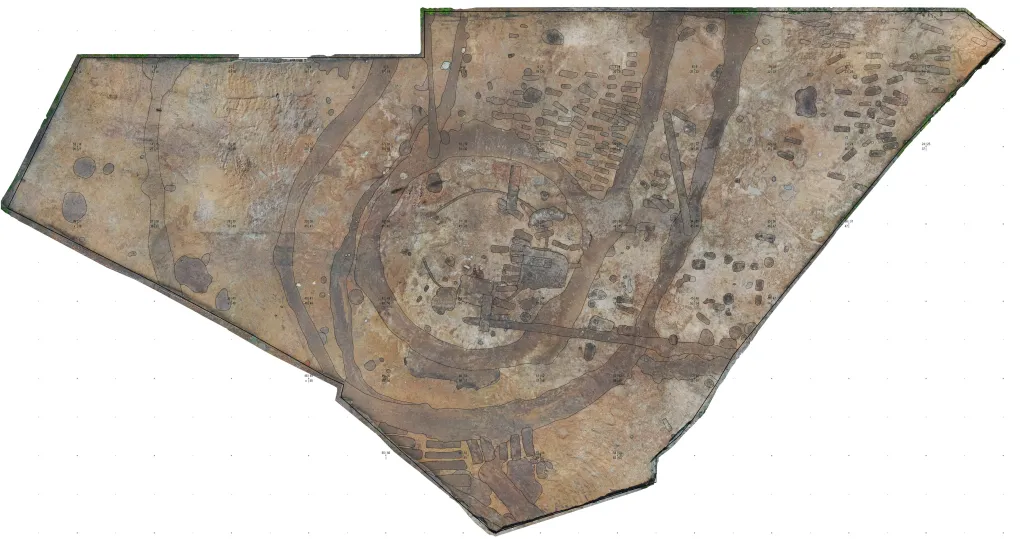
Excavations at Wzgórze Wiatraczne, or Windmill Hill, in northern Poland have uncovered more than 300 archaeological features across an area of over 5,000 square meters. Among them are two large circular ditches surrounding what researchers identify as the probable site of a medieval windmill, together with stone cannonballs and fragments of massive granite millstones.
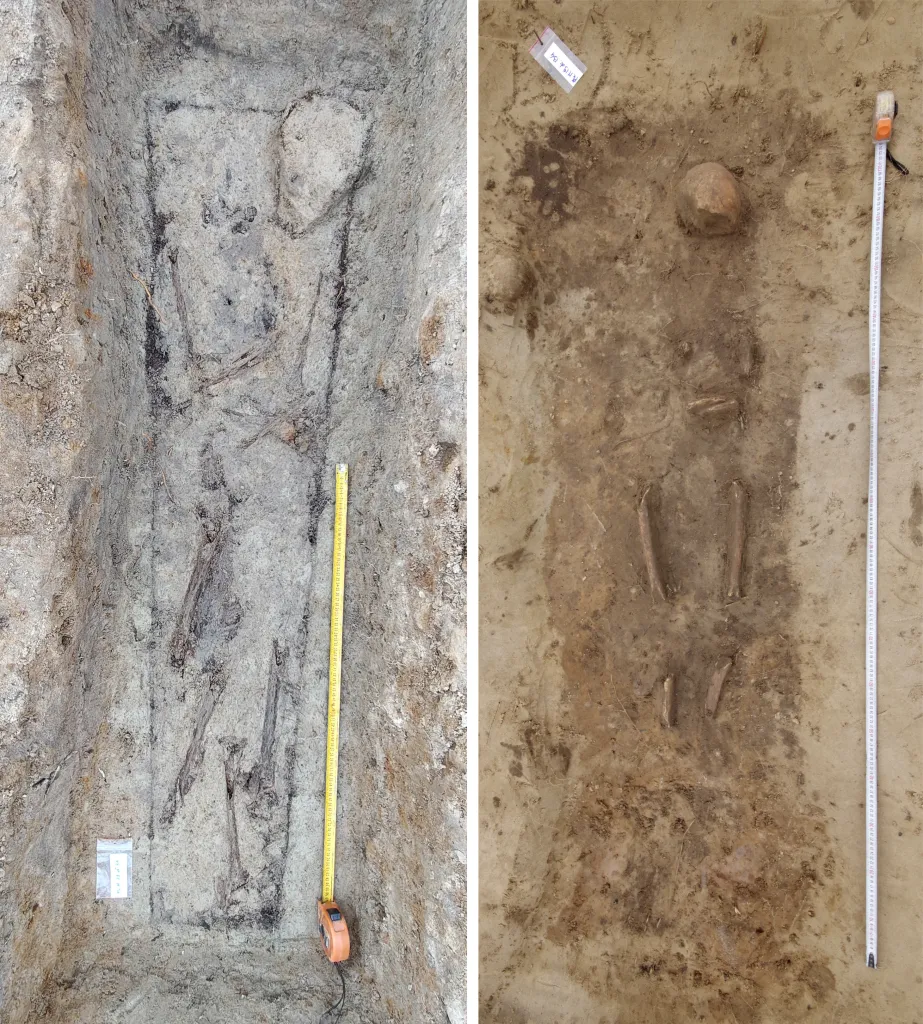
The same hill later took on a very different role. Archaeologists also uncovered around 150 graves belonging to a Lutheran cemetery established after the fighting had ended, creating an unusual archaeological record in which warfare, everyday work and burial all occupy the same ground.
A windmill surrounded by defenses
Historical sources had already given archaeologists reason to look closely at the hill. A map from 1634 called the area Muhlenberg, or Mill Hill, while written records mentioned two windmills in the area during the 15th century.
What researchers found underground went much further than expected. Near the center of the site, the team uncovered two roughly circular ditches measuring about 30 and 50 meters in diameter. They reached around 1.5 meters deep and measured between approximately 1.5 and 2.5 meters across.
Inside the enclosed area, archaeologists found the filled cellar of another structure and substantial fragments of grooved granite millstones. Their manufacture matches techniques used from the late medieval period onward, strengthening the connection between the site and the windmill known from historical records.
The team believes the central structure was probably a 15th-century windmill associated with the Teutonic Order. Although the wooden mill itself has disappeared, its millstones and the surrounding earthworks may preserve the story of what happened when the peaceful working landscape suddenly became strategically important.
When war reached the hill
A windmill standing on elevated ground could become a liability during a siege. Whoever controlled the hill could overlook approaches to the town, and archaeologists think defenders responded by surrounding the position with two rings of ditches, probably accompanied by a modest earthen rampart.
Several stone cannonballs found at the site add weight to the military interpretation. Researchers have not yet established exactly when the defenses were constructed, but the most compelling possibility places them during the Thirteen Years’ War, fought between 1454 and 1466.
Puck became a battleground twice during that conflict. In 1460, Teutonic forces captured the town after a short siege. Four years later, the situation reversed when forces from Gdańsk besieged the Teutonic troops holding Puck.
Dr. Michał Starski of the University of Warsaw believes the exposed position of Windmill Hill would have forced defenders to secure it. The windmill itself may not have survived those episodes of fighting. If future research confirms the proposed dating and military function of the ditches, the site could represent the first known field fortifications connected with the Thirteen Years’ War.
A cemetery replaced the wartime landscape
The story of the hill did not end with the destruction or abandonment of the windmill. During the 16th century, much of the area passed to the local Protestant community, which established a Lutheran cemetery there.
Archaeologists have so far uncovered about 150 graves. Human remains generally survive in poor condition, but objects found with some of the dead provide glimpses of burial customs and personal lives during the early modern period.
Four coins date from the second half of the 15th century and the 16th century. Researchers suggest their presence may reflect the long-lived tradition sometimes described as Charon’s obol, in which a coin accompanied the dead. A one-piece clay pipe dating to the 17th century appears to have been a personal possession placed with one individual.
The cemetery therefore adds another layer to a hill already shaped by centuries of activity. A place that may once have supplied flour to a medieval town, and then stood in the middle of a military confrontation, later became ground where local families buried their dead.
More than 2,000 years of activity
The windmill and cemetery are only the most striking chapters in a much longer history. Archaeologists also identified remains associated with a Lusatian Culture settlement, probably dating to the first half of the first millennium BC, as well as several pits from the early medieval period.
Further research will focus on refining the chronology of both the defensive structures and the burials. Scientists also hope to learn more about the people buried in the cemetery, including their biological condition and the lives of Puck’s early modern population.
For now, Windmill Hill offers an unusually compact picture of how the meaning of one landscape could change over time. People lived there, worked there, and eventually buried their dead there, but for a brief period in the 15th century, a windmill on the hill may also have found itself on the front line of a war.
